
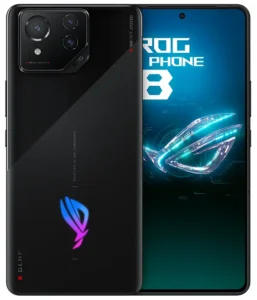
ASUS ROG Phone 8 Overview, Features, and Buying Guide
The ASUS ROG Phone 8 represents a significant shift in the gaming phone landscape. Released in January 2024, this device balances hardcore gaming capabilities with everyday smartphone practicality. Unlike its predecessors that leaned heavily into aggressive gamer aesthetics, the ROG Phone 8 adopts a more refined approach while retaining the performance credentials that made the series legendary among mobile gamers.
At its core, the phone packs Qualcomm’s Snapdragon 8 Gen 3 processor, paired with up to 16GB of RAM and 256GB of blazing-fast UFS 4.0 storage. The 6.78-inch LTPO AMOLED display pushes a 165Hz refresh rate, making every swipe and scroll feel incredibly responsive. What sets this apart is the clever integration of pressure-sensitive gaming triggers embedded into the frame, transforming the device into a portable gaming console without external accessories.
ASUS hasn’t sacrificed durability for performance either. The IP68 rating means the phone can survive submersion up to 1.5 meters for 30 minutes, while Gorilla Glass Victus 2 protects both front and back panels. The illuminated RGB logo on the rear might appeal to gaming enthusiasts, though it can be disabled for those preferring a subtler look.
What Makes the ASUS ROG Phone 8 Worth Buying?
The display alone justifies serious consideration. With 165Hz refresh rate and peak brightness reaching 2500 nits, outdoor visibility remains excellent even under direct sunlight. The LTPO technology intelligently adjusts refresh rates to conserve battery, ranging from 1Hz when viewing static content to the full 165Hz during intense gaming sessions. This isn’t just about numbers—games feel incredibly smooth, and the 1 billion color support ensures visuals pop with remarkable vibrancy.
Gaming performance hits another level thanks to the Snapdragon 8 Gen 3 chipset. The octa-core CPU configuration, led by a 3.3GHz Cortex-X4 prime core, demolishes demanding titles without breaking a sweat. The Adreno 750 GPU handles graphics-intensive games at maximum settings while maintaining stable frame rates. Real-world testing shows titles like Genshin Impact and Call of Duty Mobile running flawlessly at highest graphics presets.
The camera system surprises with genuine versatility. The international variant features a 50MP main sensor with gimbal OIS, a 32MP telephoto with 3x optical zoom, and a 13MP ultrawide. That gimbal stabilization makes a noticeable difference when shooting video or capturing photos in challenging conditions. The 8K video recording capability at 24fps and 4K at 60fps puts this phone in league with dedicated content creation devices.
Battery life impresses despite the power-hungry components. The 5500mAh capacity easily pushes through a full day of mixed usage, including several hours of gaming. The 65W wired charging (on international models) refills the tank completely in just 39 minutes—a genuine convenience when you’re rushing between gaming sessions or need a quick top-up before heading out.
Audio quality deserves special mention. Dual stereo speakers deliver punchy, clear sound with surprising depth for a smartphone. The inclusion of a 3.5mm headphone jack, increasingly rare in flagship devices, supports 32-bit/384kHz Hi-Res audio playback. Wireless audio enthusiasts benefit from aptX Lossless support via Bluetooth 5.4, ensuring lag-free, high-quality sound during gaming.
Things to Know Before Choosing the ASUS ROG Phone 8
Software support follows a limited trajectory. ASUS promises up to two major Android upgrades, meaning the phone ships with Android 14 and should receive updates through Android 16. Compared to competitors offering four or five years of OS updates, this feels conservative, particularly for a premium device. Security patches will arrive, but the upgrade window is narrower than what Samsung or Google provides.
The lack of expandable storage might frustrate some users. There’s no microSD card slot, so the 256GB internal storage must suffice for apps, games, photos, and videos. Modern games often exceed 5GB each, and high-resolution video recording eats storage quickly. Those who accumulate massive media libraries should seriously consider cloud storage solutions or regular file management.
Weight and size demand consideration. At 225 grams and measuring 163.8 x 76.8 x 8.9mm, this phone has substantial heft. Extended one-handed use can tire your hand, and it won’t slip discreetly into smaller pockets. The dimensions suit gaming perfectly—providing ample screen real estate and comfortable landscape grip—but daily portability requires adjustment if coming from lighter devices.
Camera capabilities vary by region. The international model receives the full treatment with telephoto and gimbal OIS, while SEA, China, and India variants substitute a simpler setup featuring a 5MP macro instead of the telephoto lens. This regional difference significantly impacts photography versatility, particularly for users interested in zoom capabilities and video stabilization.
Wireless charging maxes out at 15W, which feels modest compared to the blazing 65W wired option. Recharging wirelessly takes considerably longer, and the 10W reverse wired charging for accessories provides basic functionality without impressive speeds. If wireless charging convenience ranks high on your priority list, the relatively slow speeds might disappoint.
The India-specific variant ships with only 30W wired charging instead of the 65W available internationally. This cuts charging speed nearly in half, extending full recharge time significantly. Buyers in India should factor this limitation into their decision, especially if rapid charging between gaming sessions matters.
Is the ASUS ROG Phone 8 Right for You?
Mobile Gamers: This phone was built for you. The 165Hz display, pressure-sensitive triggers, advanced cooling, and flagship processor create the ultimate mobile gaming experience. The large battery ensures marathon sessions, while the audio setup delivers immersive soundscapes. If gaming forms your primary smartphone usage, few alternatives compete at this level.
Content Creators: The camera system and video capabilities make this surprisingly viable for content creation. Gimbal stabilization smooths handheld footage, 8K recording provides future-proofing, and the large, color-accurate display helps review content on the go. The 32MP front camera handles vlogging duties competently, though dedicated camera phones might edge ahead in pure image quality.
Power Users: Heavy multitaskers benefit from the generous RAM allocation and powerful processor. Running multiple apps simultaneously, switching between productivity tools, and handling resource-intensive applications happens without slowdown. The UFS 4.0 storage ensures apps and files load instantly, while the dual USB-C ports offer unique connectivity options.
Everyday Users: The phone handles daily tasks effortlessly, though it might be overkill for basic needs. The weight and size could feel excessive for casual users who primarily browse social media, take occasional photos, and make calls. The premium price point also positions this above mainstream devices better suited for standard smartphone usage.
Budget-Conscious Buyers: This sits firmly in flagship territory with pricing to match. While the performance justifies the cost for gamers and enthusiasts, budget-focused shoppers find better value in mid-range devices offering 90% of the functionality at half the price. The gaming-specific features command a premium that only dedicated users will fully appreciate.
Photography Enthusiasts: The camera performs well but doesn’t target photography specialists. Dedicated camera phones from competitors offer more advanced computational photography, better low-light performance, and superior zoom capabilities. The gimbal OIS helps, but if photography ranks as your top priority, other flagships might serve better.
Best Alternatives to the ASUS ROG Phone 8
Samsung Galaxy S24 Ultra: Offers superior software support with seven years of updates, a more refined camera system with 10x optical zoom, and the versatile S Pen functionality. Lacks gaming-specific features like pressure triggers but provides a more complete overall package for diverse users.
Lenovo Legion Phone Duel 3: Another gaming-focused alternative with side-mounted pop-up camera, dual cooling fans, and dual USB-C ports. The more aggressive gaming aesthetic and unique landscape-oriented design appeal to hardcore gamers willing to sacrifice mainstream usability.
OnePlus 12: Delivers flagship performance with Snapdragon 8 Gen 3, faster 100W charging, and a versatile camera system at a lower price point. Misses gaming-specific features but offers excellent value for performance-focused buyers not requiring dedicated gaming hardware.
RedMagic 9 Pro: A direct gaming competitor featuring built-in cooling fan, shoulder triggers, and aggressive design language. Typically prices lower than the ROG Phone 8 while maintaining competitive gaming performance, though camera quality and software polish lag behind.
iPhone 15 Pro Max: For iOS users, Apple’s flagship provides excellent gaming performance via the A17 Pro chip, superior software longevity, and a mature ecosystem. Lacks Android gaming flexibility and customization options but offers unmatched optimization and five-plus years of support.
ASUS ROG Phone 8 Frequently Asked Questions
Does the ASUS ROG Phone 8 support 5G networks?
Yes, the ASUS ROG Phone 8 fully supports 5G connectivity alongside GSM, CDMA, HSPA, and LTE networks. The device works across multiple 5G bands, ensuring compatibility with carriers worldwide. This future-proofs the phone as 5G networks continue expanding globally, providing faster download speeds, lower latency, and improved network capacity for gaming and streaming.
How long does the battery last during intensive gaming?
The 5500mAh battery delivers approximately 4-6 hours of continuous intensive gaming depending on graphics settings and screen brightness. Casual gaming at moderate settings extends this significantly. The 65W fast charging (international model) recharges the phone to 100% in just 39 minutes, minimizing downtime between gaming sessions. The LTPO display’s adaptive refresh rate also conserves power during less demanding tasks.
Can the pressure-sensitive gaming triggers be customized?
Yes, the pressure-sensitive zones function as customizable gaming triggers through ASUS’s gaming software. Users can map these to specific in-game actions, adjust sensitivity levels, and create game-specific profiles. This eliminates the need for external controllers while providing console-like control precision. The triggers respond to different pressure levels, enabling advanced control schemes for competitive gaming.
Is the ASUS ROG Phone 8 water-resistant?
The phone features IP68 certification, meaning it’s dust-tight and can withstand immersion in water up to 1.5 meters deep for 30 minutes. This protection guards against accidental spills, rain exposure, and brief submersion. However, it’s not designed for swimming or prolonged underwater use, and water damage from improper use isn’t covered under warranty.
What’s the difference between regional camera configurations?
The international model includes a 50MP main camera with gimbal OIS, a 32MP telephoto with 3x optical zoom and OIS, and a 13MP ultrawide lens. The SEA, China, and India variants replace the telephoto lens with a 13MP ultrawide and add a 5MP macro camera instead. This means international buyers get superior zoom capabilities and advanced video stabilization, while other regions receive a more basic camera setup focused on wide-angle and close-up photography.