
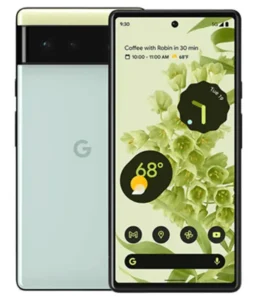
The Google Pixel 6 represents a bold new direction for Google’s smartphone lineup, introducing the company’s first custom-designed Tensor processor. Launched in October 2021, this device combines cutting-edge computational photography with Google’s AI expertise, delivering a flagship experience that emphasizes intelligent features over raw specs. The Pixel 6’s striking design, with its distinctive camera bar and two-tone finish, makes it instantly recognizable in any lineup.
What makes the Pixel 6 special isn’t just the hardware—it’s how Google optimized every component to work together. The custom Tensor chip powers advanced AI features that transform everyday tasks, from erasing photobombers to real-time translation. With five years of guaranteed Android updates, a premium build quality featuring Gorilla Glass Victus, and Google’s legendary camera prowess elevated by a 50MP sensor, the Pixel 6 delivers flagship performance at a competitive price point.
What Makes the Google Pixel 6 Worth Buying?
The Google Tensor chip changes everything about how this phone handles tasks. Unlike generic processors found in most phones, Tensor is purpose-built for AI and machine learning operations. This translates to real-world benefits like Magic Eraser removing unwanted objects from photos, Live Translate working across apps in real-time, and voice recognition that understands context and nuance. The Mali-G78 MP20 GPU handles graphics-intensive tasks smoothly, making this phone capable for both productivity and entertainment.
That camera system is extraordinary. The 50MP main sensor captures 150% more light than the previous generation, producing stunning images in any lighting condition. Paired with the 12MP ultrawide lens offering a 114-degree field of view, users can capture everything from expansive landscapes to detailed close-ups. The Tensor chip’s computational photography takes things further with features like Motion Mode for action shots, Face Unblur to fix blurry subjects, and Real Tone to accurately represent all skin tones.
Software support sets a new standard. Five major Android upgrades mean the Pixel 6 will receive updates through Android 16, keeping it current for years. This long-term support ensures access to new features, security patches, and performance improvements that many competitors simply don’t offer. The phone shipped with Android 12 and its Material You design language, which adapts the entire interface color scheme to match your wallpaper.
The 6.4-inch AMOLED display with 90Hz refresh rate delivers smooth, responsive interactions. While not the fastest 120Hz panels available, the 90Hz refresh feels noticeably better than standard 60Hz screens for scrolling social media, browsing websites, and gaming. HDR10+ support brings movies and videos to life with vibrant colors and impressive contrast, protected by the toughest Gorilla Glass Victus on the market.
Build quality feels genuinely premium. The combination of Gorilla Glass Victus on the front, Gorilla Glass 6 on the back, and an aluminum frame creates a device that looks and feels expensive. IP68 water resistance provides peace of mind against spills and splashes. The unique camera bar design, while polarizing, gives the phone a distinctive identity and distributes weight evenly when placed on surfaces.
Battery life impresses with the 4614mAh capacity. The efficient Tensor chip manages power intelligently, and most users easily make it through a full day of heavy use. The 30W wired charging reaches 50% in just 30 minutes, while 21W wireless charging offers convenient cable-free options. Reverse wireless charging turns your phone into a charging pad for earbuds or smartwatches.
Things to Know Before Choosing the Google Pixel 6
The Tensor chip runs warm during intensive tasks. Heavy gaming sessions, extended video recording, or using demanding apps can cause the phone to heat up noticeably. While this doesn’t typically affect performance dramatically, it’s worth noting for users planning intensive use. The thermal management, though improved over early units, remains more aggressive than some competitors.
Fingerprint sensor performance has been inconsistent for some users. The under-display optical sensor works but tends to be slower and less reliable than physical fingerprint readers or ultrasonic alternatives. Cold weather, screen protectors, or slightly damp fingers can affect recognition accuracy. Face unlock isn’t available as an alternative, making the fingerprint sensor the only biometric option beyond PIN or pattern.
Storage options remain limited with no expansion. The 128GB or 256GB variants can’t be expanded via microSD card, requiring careful management of photos, videos, and apps. Users who shoot lots of 4K video or download large games might find the base 128GB filling up quickly. Google offers generous cloud storage for photos, but original quality uploads count against your storage quota.
The headphone jack is absent. Audio enthusiasts with favorite wired headphones need USB-C adapters or wireless options. While the stereo speakers deliver clear, reasonably loud sound, they can’t replace quality headphones. The lack of a headphone jack has become standard for flagship phones, but it’s still an adjustment for some users.
The 90Hz display refresh rate, while smooth, falls behind competitors offering 120Hz panels. The difference isn’t dramatic for most users, but those upgrading from 120Hz devices will notice the less fluid scrolling and animations. Gaming enthusiasts seeking maximum responsiveness might prefer higher refresh rates available on similarly priced alternatives.
Camera performance, while excellent, shows the Tensor chip’s first-generation limitations in some scenarios. Extended 4K60 video recording can trigger thermal throttling, potentially interrupting longer shoots. The lack of a telephoto lens means zoom shots rely on digital cropping rather than optical magnification, though Google’s AI processing helps maintain quality.
Is the Google Pixel 6 Right for You?
Photography enthusiasts will love what the Pixel 6 offers. The combination of improved hardware and Tensor-powered computational photography produces consistently stunning images with minimal effort. Features like Magic Eraser, Face Unblur, and Real Tone handle scenarios that would challenge other phones. The ultrawide lens adds creative versatility, and the improved low-light performance means capturing memories in any environment.
Users who prioritize software experience and longevity should seriously consider the Pixel 6. The five-year update commitment ensures this phone stays relevant and secure far longer than most Android devices. Pure Android 12 with Material You offers a clean, customizable interface without bloatware or duplicate apps. Features arrive directly from Google as soon as they’re ready, without carrier or manufacturer delays.
AI-focused features appeal to users who want their phone to do more automatically. Live Translate works across calls and messages without switching apps. The Recorder app transcribes conversations in real-time with impressive accuracy. Call screening handles spam calls intelligently. Hold for Me waits on customer service lines and alerts you when someone picks up. These AI-powered conveniences, enabled by the Tensor chip, genuinely improve daily life.
The device suits professionals and students who need reliable all-day performance. The 4614mAh battery handles a full day of mixed use, and fast charging provides quick top-ups between meetings or classes. IP68 water resistance protects against accidents, and the premium build quality feels appropriate for professional settings. The large display makes productivity tasks comfortable.
Mobile gamers seeking maximum performance should look at alternatives. While the Tensor chip handles most games competently, it’s not the most powerful processor available at this price point. Heavy gamers running demanding titles at max settings will find phones with Snapdragon 888 or equivalent chips offering better sustained performance and less thermal throttling.
Users who need expandable storage or prefer physical fingerprint sensors might find better matches elsewhere. The fixed storage and sometimes-temperamental under-display sensor represent compromises that won’t suit everyone. Those coming from phones with lightning-fast ultrasonic fingerprint readers might find the Pixel 6’s sensor frustrating.
Best Alternatives to the Google Pixel 6
The Samsung Galaxy S21 FE offers a 120Hz display, Snapdragon 888 processor for better gaming performance, and expandable storage options. It includes a telephoto camera for optical zoom and slightly faster 25W charging. However, it doesn’t match Google’s update commitment or computational photography prowess, and Samsung’s One UI adds more visual complexity than stock Android.
OnePlus 9 delivers flagship performance with Snapdragon 888 and a 120Hz Fluid AMOLED display. The Hasselblad-tuned camera system produces excellent colors, and 65W Warp Charge fills the battery incredibly fast. OxygenOS provides a clean Android experience with useful additions, though update support isn’t as extensive as Google’s five-year commitment.
Apple iPhone 13 provides the iOS experience with the powerful A15 Bionic chip, exceptional video recording capabilities, and long battery life. MagSafe accessories expand functionality, and iOS receives years of updates. However, the ecosystem is entirely different, making it best for those already invested in Apple services or willing to switch platforms entirely.
Xiaomi Mi 11 packs flagship specs including Snapdragon 888, 120Hz AMOLED display, and 55W fast charging at a competitive price. The 108MP camera captures detailed photos, and MIUI offers extensive customization options. However, software updates are less consistent, and the user interface includes more bloatware than Google’s clean Android approach.
Google Pixel 6 Frequently Asked Questions
What is the Google Tensor chip in the Pixel 6?
The Google Tensor is Google’s first custom-designed smartphone processor, built on 5nm technology. It features an octa-core CPU configuration with 2×2.80 GHz Cortex-X1, 2×2.25 GHz Cortex-A76, and 4×1.80 GHz Cortex-A55 cores, paired with a Mali-G78 MP20 GPU. This chip is specifically optimized for AI and machine learning tasks, enhancing features like computational photography, real-time translation, and voice recognition.
How long will the Pixel 6 receive software updates?
The Google Pixel 6 receives up to 5 major Android upgrades, starting from Android 12 and upgradable through Android 16. This exceptional update support ensures the device stays current with the latest features, security patches, and performance improvements for years after purchase, making it one of the longest-supported Android devices available.
Does the Pixel 6 support wireless charging?
Yes, the Pixel 6 supports 21W wireless charging for cable-free convenience. It also includes fast wired charging using a 30W charger (PD3.0) that can charge the phone to 50% in just 30 minutes. The device additionally features reverse wireless charging, allowing users to charge compatible accessories or other phones wirelessly using the Pixel 6 as a power source.
Is the Google Pixel 6 water resistant?
Yes, the Pixel 6 has an IP68 rating, making it dust tight and water resistant. The device can withstand submersion in up to 1.5 meters of water for 30 minutes without damage. This protection allows safe use in rain, near pools, or if accidentally dropped in water, though prolonged submersion or underwater photography is not recommended.
What camera features does the Pixel 6 have?
The Pixel 6 features a dual rear camera system with a 50MP main sensor (f/1.9, OIS, dual pixel PDAF) and a 12MP ultrawide lens (114-degree field of view). Enhanced by Google Tensor’s AI capabilities, the camera includes Laser AF, Dual-LED flash, Pixel Shift technology, and Auto-HDR. It can record 4K video at 60fps with both gyro-EIS and OIS for incredibly stable footage. The 8MP front camera handles selfies and video calls effectively.