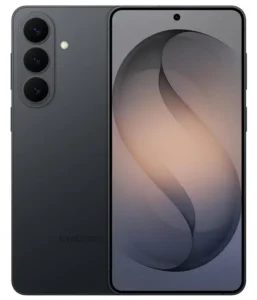
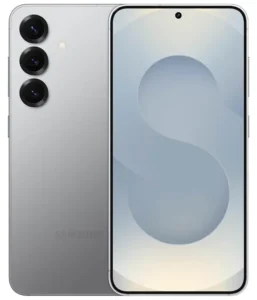
On paper, the Galaxy S26 and S25 look almost identical — same triple-camera layout, same 25W charging speed, same IP68 rating. But once you start digging into the chipset differences, battery bump, and software changes, a clearer picture emerges. The S26 is a refinement, not a revolution — and whether that matters depends entirely on what you’re upgrading from.
This comparison goes spec-by-spec and scenario-by-scenario to cut through the marketing and give a straight answer: which one actually deserves your money?
Head-to-Head Camera Analysis
Both phones share the same triple-camera configuration on paper — 50MP wide, 10MP 3x telephoto, and 12MP ultrawide — but the S26 brings meaningful sensor refinements. The wide camera on the S26 uses a 1/1.56″ sensor with 1.0µm pixels and dual pixel PDAF, giving it a slight edge in resolving fine detail, particularly in mixed or artificial lighting. The S25 handles its wide shooter competently, but side-by-side the S26 pulls sharper edges without as much overprocessing in highlights.
The ultrawide is where both phones share more ground. Samsung’s 12MP f/2.2 ultrawide with Super Steady video carries over with minimal changes — expect the same slightly soft edges at the periphery that has defined this ultrawide for a couple of generations. Neither phone surprises here, and that’s the honest critique.
Telephoto consistency is arguably the more interesting battle. The 3x optical zoom on both phones sits at f/2.4 with OIS, but the S26’s pairing with a newer image signal processor allows more natural subject isolation at mid-range distances. The S25’s telephoto can look slightly sharpened at 100% crop, a known quirk of Samsung’s processing pipeline. The S26 dials this back a notch — not entirely, but enough to notice.
- Low-light wide: S26’s larger sensor captures more light, reducing smearing in dark interiors.
- 8K video: Both shoot 8K at 24/30fps — S26’s newer chip handles heat better during extended clips.
- Front camera: Identical 12MP f/2.2 selfie shooter with dual pixel PDAF on both devices.
- HDR processing: S26 applies slightly more restrained HDR tone mapping versus the S25’s punchier, sometimes overcooked look.
Performance & Real-World Usage
The Snapdragon 8 Elite in the S25 was a genuinely fast chip when it launched — fast enough that most users will not feel the gap in everyday tasks. But the S26’s Snapdragon 8 Elite Gen 5 (or Exynos 2600 in international markets) shifts the goalposts on sustained performance. The newer CPU cores run at higher peak clocks — 4.74GHz on the Elite Gen 5 versus 4.47GHz on the Elite — and that difference shows up most in demanding workloads: video exports, real-time AI processing, and extended gaming sessions.
Thermal management is where the S26 earns its keep. Samsung has historically struggled with thermal throttling on compact S-series devices under prolonged load, and while neither phone is immune, the S26’s 3nm refinement and improved power efficiency mean it sustains peak performance longer before the clocks roll back. Playing a GPU-intensive game for 30+ minutes on the S25 introduces noticeable frame drops; the S26 keeps the frame pacing steadier.
RAM sits at 12GB on both, so multitasking behavior is nearly identical — app retention in memory is solid, and background process handling feels the same day-to-day. The storage jump from UFS 4.0 on the S25 to UFS 4.X on the S26 is real but only tangible when transferring large files or running storage-intensive apps.
- Gaming: S26’s Adreno 840 (or Xclipse 960) delivers better sustained GPU performance under heat.
- AI tasks: S26 handles on-device AI features with lower latency, especially in camera processing and Samsung’s AI suite.
- Everyday use: Both feel snappy — scrolling, app launches, and switching are indistinguishable for most users.
Battery Life & Charging Experience
Samsung made a quiet but important change here. The S26 ships with a 4300mAh battery, up from the S25’s 4000mAh — a 300mAh increase that sounds modest but combines with the more efficient chip to produce meaningfully longer screen-on time. In mixed usage (social media, streaming, some navigation), the S26 will comfortably outlast the S25 by 45 minutes to an hour. That gap widens under heavier use.
Charging, frustratingly, stays at 25W on both. The S25 charges to 50% in 30 minutes; the S26 hits 55% at the same mark — a marginal improvement that reflects the larger pack more than any wired charging upgrade. Neither phone comes close to the fast-charging speeds competitors offer, and that remains a legitimate criticism of Samsung’s entire S-series line. Wireless charging at 15W Qi2 Ready is present on both, as is 4.5W reverse wireless charging.
The S26’s bigger battery and more efficient chipset genuinely tip the scales here. It’s not a dramatic leap, but for heavy users who are regularly watching the percentage gauge drop by mid-afternoon, the S26 provides more breathing room.
Display, Design & Build Feel
Both phones use Dynamic LTPO AMOLED 2X panels with 120Hz adaptive refresh and 2600 nits peak brightness — the viewing experience in direct sunlight is equally excellent on both. The S26 stretches to 6.3 inches while the S25 sits at 6.2 inches; that 0.1-inch difference is barely perceptible in-hand but does give the S26 a marginally larger canvas for media and reading.
Resolution lands at 1080 x 2340 on both, which means the S25 technically achieves a slightly higher pixel density at ~416 ppi versus the S26’s ~411 ppi — an academic difference that requires a loupe to detect in real use. HDR10+ support and Gorilla Glass Victus 2 protection are shared across both screens, so the durability story is identical.
In terms of build, both use an Armor Aluminum 2 frame with Gorilla Glass Victus 2 front and back, and both carry IP68 certification. The S26 is marginally larger at 149.6 x 71.7 x 7.2mm and 167g compared to the S25’s 146.9 x 70.5 x 7.2mm and 162g. Neither phone feels chunky, but the S25’s slightly lighter, more compact frame makes it fractionally more comfortable for single-handed use.
- Display size: S26 at 6.3″ versus S25 at 6.2″ — minimal real-world difference.
- Pixel density: S25 edges ahead at 416 ppi vs 411 ppi — imperceptible in daily use.
- Weight: S25 is 5g lighter, offering a slightly more pocketable feel.
- Thickness: Both are 7.2mm — equally slim profile.
Software, Updates & AI Features
This is where the generational gap becomes most tangible. The S26 launches with Android 16 and One UI 8.5, while the S25 ships on Android 15 with One UI 8 — and both are promised seven major Android upgrades. Over time, both phones will reach similar software endpoints, but the S26 starts a full OS generation ahead and benefits from whatever AI and feature improvements Samsung has baked into One UI 8.5 from day one.
Samsung DeX and Wireless DeX are present on both devices, giving them equal footing as desktop productivity options. The S26’s newer silicon enables faster on-device AI inference, which translates to snappier responses from Samsung’s AI features — live translation, photo editing suggestions, and the like feel more immediate on the S26 even when performing the same tasks.
For S25 owners, the software gap is temporary — Android 16 and a comparable One UI update will arrive over time. But out of the box, the S26 delivers a more polished, forward-looking software experience.
Price & Value Proposition
The S25 now occupies a more attractive price point as a previous-generation flagship. Its performance remains genuinely competitive, its camera system is still capable, and its software support runway is long. For anyone on an older device — or budget-conscious buyers — the S25 represents outstanding value per dollar spent.
The S26 carries a price premium that is harder to justify for existing S25 owners. A 300mAh battery bump, a moderately faster chip, and a one-inch display increase are real improvements — but they are evolutionary, not transformational. The strongest case for the S26 is someone upgrading from an S23 or older, where the cumulative generational gains are substantial.
Neither phone offers expandable storage, and both start at 256GB on the S26 (versus 128GB base on the S25) — a small win for the S26 at comparable pricing tiers.
Final Verdict: Which One Should You Buy?
The Samsung Galaxy S26 is the better phone by a measured margin — better battery life, a faster and cooler-running chip, a slightly more refined camera system, and a newer software foundation. If starting fresh or upgrading from a device that is two or more generations old, the S26 is the clear pick.
The Galaxy S25, however, is not a phone to dismiss. Its display is equally excellent, its cameras hold up well, and at a reduced price it becomes one of the most capable Android phones available. For S25 owners, there is no compelling reason to upgrade. For S24 or earlier owners weighing options, the S25’s price drop makes it a sharper value than it has ever been.
- Buy the S26 if: You want the best sustained performance, longest battery life, and latest software out of the box.
- Buy the S25 if: You want flagship-tier performance at a lower price, or prefer a slightly lighter, more compact device.
- Skip both if: You already own an S25 — the upgrade does not justify the cost.
Samsung Galaxy S26 vs Samsung Galaxy S25 Frequently Asked Questions
Is the Samsung Galaxy S26 significantly faster than the S25?
In everyday tasks — app launching, scrolling, multitasking — both phones feel equally responsive. The S26 pulls ahead under sustained workloads like gaming, video rendering, and AI-assisted features, where its newer chip maintains higher performance without throttling as quickly. For casual users, the difference is minimal; for power users, it is noticeable.
Which phone takes better photos, the S26 or the S25?
The S26 edges ahead in low-light wide-angle shots and produces slightly more natural HDR processing compared to the S25’s occasionally oversharpened results. Both share the same 3x telephoto and ultrawide hardware, so zoom and ultrawide performance is comparable. The gap is real but not dramatic — the S25 remains a capable camera phone.
Does the S26 last longer on battery than the S25?
Yes. The S26’s 4300mAh battery combined with its more efficient chipset extends screen-on time by roughly 45 minutes to an hour over the S25’s 4000mAh pack in typical mixed usage. Heavy users will feel the difference most acutely.
Is the display on the S26 better than the S25?
Both displays are excellent — same LTPO AMOLED 2X panel type, same 120Hz refresh rate, and identical 2600 nits peak brightness. The S26’s screen is 0.1 inches larger; the S25 has a marginally higher pixel density. In real-world use, the two displays are visually indistinguishable.
Which phone has better software support?
Both the S26 and S25 are guaranteed seven major Android upgrades. The S26 launches on Android 16 with One UI 8.5, giving it a one-generation head start. Over time, both phones will reach similar software milestones — the difference is most relevant in the first year of ownership.
Should S25 owners upgrade to the S26?
No. The improvements in the S26 — battery, chipset, display size — are incremental rather than transformative. S25 owners would not experience a meaningful day-to-day improvement that justifies the cost of upgrading within the same generation cycle.
Which phone is better for gaming?
The S26 handles extended gaming sessions better. Its newer GPU and improved thermal management sustain higher frame rates for longer before throttling sets in. The S25 is still a strong gaming device, but side-by-side in demanding titles, the S26 maintains smoother frame pacing over 30-minute sessions.
Do both phones support Samsung DeX?
Yes — both the S26 and S25 support Samsung DeX and Samsung Wireless DeX, allowing them to function as desktop computing environments when connected to a monitor. The feature set is equivalent across both devices.