
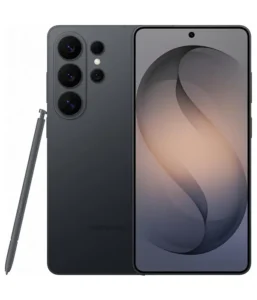
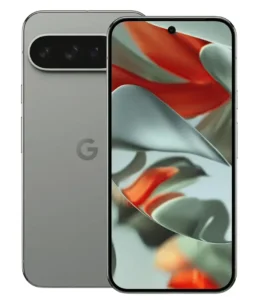
This matchup doesn’t pit two phones from the same era — it pits two different philosophies against each other across a hardware generation gap. The Galaxy S26 Ultra arrives as Samsung’s most fully loaded Android flagship, armed with a Snapdragon 8 Elite Gen 5 chip, a quad-camera system anchored by a 200MP main sensor, and a built-in stylus. The Pixel 9 Pro XL came to market running Android 14 on Google’s Tensor G4, a chip that never chased benchmark supremacy, built instead around on-device AI and camera computation. Choosing between them isn’t just a specs decision — it’s a question of what kind of phone experience actually suits day-to-day life.
Head-to-Head Camera Analysis
The S26 Ultra’s 200MP f/1.4 main sensor is the headline, and in controlled daylight conditions it delivers on the pixel count promise. Detail is sharp, dynamic range is wide, and zooming into crops reveals texture that most phone cameras simply can’t match. The recurring criticism, though, is Samsung’s processing pipeline: aggressive noise reduction in challenging lighting leaves mid-range textures looking waxy, and HDR processing frequently pushes skies and highlights past what a scene actually looked like. It’s a camera that wins specification comparisons while sometimes losing to instinct in the real world.
The Pixel 9 Pro XL’s 50MP f/1.7 main sensor on a 1/1.31-inch capture area keeps up more convincingly than the megapixel gap implies. Google’s computational photography pipeline — now refined across multiple hardware generations — handles mixed lighting with consistent accuracy. Skin tones stay realistic across indoor and outdoor conditions, and shadow recovery avoids the over-lifted, artificial look that Samsung sometimes leans into. For someone shooting quickly without manually adjusting settings, the Pixel’s default output is more reliably pleasing.
Zoom tells a clearer story in Samsung’s favor. The S26 Ultra runs a genuine three-lens telephoto setup: a 10MP 3x and a 50MP 5x periscope, giving it both close-range and long-range optical coverage. The Pixel 9 Pro XL relies on a single 48MP 5x periscope, which performs admirably at that focal length but has no equivalent for the 3x range. At 30x and beyond, Samsung’s hardware lead in reach becomes decisive. At everyday zoom distances — portraits, architectural detail, street photography — the Pixel competes closely enough that the gap is academic for most users.
Front camera is a significant and underreported advantage for the Pixel 9 Pro XL. Its 42MP ultrawide selfie camera with PDAF captures face detail and depth that the S26 Ultra’s 12MP front shooter simply cannot match. In portrait selfies, video calls, and front-facing 4K video, the difference is visible immediately. For creators who depend on the front camera as a primary shooting tool, this gap alone could drive the decision.
Video performance leans Samsung for native resolution. The S26 Ultra captures 8K at 24 and 30fps natively on-device, while the Pixel 9 Pro XL’s 8K mode relies on cloud-based upscaling from 4K footage. Both support 4K at up to 60fps with 10-bit HDR, but for cinematographers who want genuine 8K capture without a cloud step, the S26 Ultra is the only option here.
- Daylight Stills: S26 Ultra delivers more raw detail; Pixel 9 Pro XL produces more natural color rendering
- Low Light: Pixel handles shadows more realistically; Samsung brightens aggressively, sometimes beyond the scene’s actual mood
- Zoom Coverage: S26 Ultra’s triple telephoto system covers more focal lengths; Pixel’s single 5x lens performs well but can’t match 3x optical reach
- Selfie Camera: Pixel 9 Pro XL’s 42MP front shooter decisively outclasses the S26 Ultra’s 12MP unit
- 8K Video: S26 Ultra shoots natively; Pixel 9 Pro XL upscales from 4K via cloud processing
Performance & Real-World Usage
The performance gap between these two phones is real and meaningful. The Snapdragon 8 Elite Gen 5 in the S26 Ultra operates on a 3nm process with Oryon V3 CPU cores that push clock speeds well past anything Tensor G4 was designed to compete with. In gaming, the Adreno 840 GPU sustains high frame rates in titles like Call of Duty Mobile and Genshin Impact at maximum graphics settings, while the Tensor G4’s Mali-G715 MC7 GPU starts to show frame drops and thermal strain under the same workloads. For serious mobile gaming, this isn’t a close comparison.
The Tensor G4 runs on a 4nm process and uses a more conservative CPU cluster — a setup that Google deliberately tuned for efficiency and AI throughput rather than peak performance. For everyday tasks — app switching, browsing, social media, streaming — the Pixel 9 Pro XL feels entirely smooth and responsive. The chip’s Titan M2 security coprocessor adds a layer of hardware-level protection that keeps Google’s on-device AI features running with strong data isolation. That’s a meaningful benefit that raw CPU benchmarks don’t capture.
RAM allocation slightly favors the Pixel across most configurations. Every Pixel 9 Pro XL model ships with 16GB RAM, while the S26 Ultra’s 256GB and 512GB options carry 12GB — only the 1TB tier matches the Pixel’s 16GB. That extra headroom keeps more apps loaded in background memory, reducing reload delays during heavy multitasking. It’s a quiet advantage that doesn’t appear in benchmark sheets but shows up in daily switching behavior.
Storage speed also splits between the two. The S26 Ultra uses UFS 4.X for faster read and write throughput — meaningful for large file transfers, 8K video offloading, and burst shot processing. The Pixel 9 Pro XL’s UFS 3.1 is capable but noticeably slower in sequential transfer tasks. For most users this difference is invisible, but power users moving large media files regularly will notice.
Battery Life & Charging Experience
The Pixel 9 Pro XL holds a slight capacity edge at 5060mAh versus the S26 Ultra’s 5000mAh, but the more significant battery story is charging speed. The S26 Ultra’s 60W wired charging reaches 75% in 30 minutes — enough to top up meaningfully during a short break. The Pixel 9 Pro XL’s 37W cap is noticeably slower, reaching 70% in 30 minutes but with a lower ceiling that extends full-charge times considerably. For users who rely on quick mid-day charge sessions, Samsung’s charging speed advantage is a genuine quality-of-life difference.
Wireless charging also splits clearly. The S26 Ultra supports 25W Qi2.2 wireless, which is among the fastest wireless speeds available on any current Android device. The Pixel 9 Pro XL supports up to 23W on the Pixel Stand and 12W on standard Qi pads — competitive for general use but slower than Samsung on comparable hardware. Both phones support reverse wireless charging, useful for topping up earbuds or smartwatches in a pinch.
Real-world battery endurance tends to favor the Pixel 9 Pro XL in everyday mixed usage — browsing, calls, navigation, and light media. Tensor G4’s efficiency tuning and the slightly smaller display’s power draw add up to a phone that consistently reaches end of day with more reserve than the S26 Ultra under equivalent workloads. Push either phone into sustained gaming or 4K video recording and both drop quickly, but the S26 Ultra’s Snapdragon chip generates more heat and draws more power during peak loads.
Display, Design & Build Feel
The S26 Ultra’s 6.9-inch Dynamic LTPO AMOLED 2X panel runs at 500 ppi with a 2600-nit peak — a display that handles direct sunlight and HDR content with equal confidence. Gorilla Armor 2 on the front brings both superior scratch resistance at Mohs level 6 and a DX anti-reflective coating that meaningfully reduces glare outdoors. The Pixel 9 Pro XL’s 6.8-inch LTPO OLED reaches a higher 3000-nit peak, making it slightly more readable at the absolute brightest point, but its Gorilla Glass Victus 2 front glass sits at Mohs level 4 — visibly less scratch-resistant than Samsung’s Armor glass in daily carry without a case.
In the hand, the S26 Ultra at 214g and 7.9mm thick feels slim and relatively easy to manage for its screen size. The Pixel 9 Pro XL at 221g and 8.5mm is heavier and noticeably chunkier — that extra thickness accommodates its battery and camera module depth but makes one-handed use more demanding. Samsung’s slightly tapered frame edges also contribute to a more comfortable grip during extended hold time.
The S26 Ultra’s built-in S Pen stylus is a feature the Pixel 9 Pro XL simply doesn’t address. For annotation, note-taking, or precise editing on a large display, the S Pen is a legitimate productivity tool — and its integration into the phone’s body means it’s always available without an accessory. Both phones carry IP68 dust and water resistance, so submersion protection is equal across this comparison.
- Display Peak Brightness: Pixel 9 Pro XL reaches 3000 nits; S26 Ultra peaks at 2600 nits but handles reflections better
- Scratch Resistance: S26 Ultra’s Gorilla Armor 2 (Mohs 6) outperforms Pixel’s Victus 2 (Mohs 4) in daily carry
- Weight: S26 Ultra is 7g lighter and significantly thinner at 7.9mm vs 8.5mm
- Stylus: S26 Ultra includes a built-in S Pen; Pixel 9 Pro XL has no stylus support
- Water Resistance: Both rated IP68 — equal protection
Software, Updates & AI Features
The software gap between these phones starts with their launch OS versions and closes over time. The Pixel 9 Pro XL launched on Android 14 and is already running Android 16 through its seven-update commitment. The S26 Ultra ships natively on Android 16 with One UI 8.5 — a more feature-dense skin that layers Samsung DeX desktop mode, Wireless DeX, and the full Galaxy AI suite on top of the base OS. For users who plug their phone into a monitor and keyboard to work, DeX provides a capability the Pixel simply can’t replicate.
Google’s software experience on the Pixel 9 Pro XL runs leaner and updates faster. OS patches and security updates arrive on Pixel devices immediately, without waiting for a manufacturer’s approval cycle. Google’s on-device AI features — real-time transcription, call screening, Live Translate, and photo tools — run natively on Tensor G4 without sending data to external servers. The integration feels more seamless because these features were designed together with the chip, not added on top of a general-purpose processor.
Satellite SOS is exclusive to the Pixel 9 Pro XL in this comparison, enabling emergency messaging from areas beyond cellular coverage. The S26 Ultra has no equivalent feature. For outdoor enthusiasts, frequent travelers, or users in areas with inconsistent network coverage, this is a safety-tier differentiator that no software update to the S26 Ultra can address.
Price & Value Proposition
The S26 Ultra commands a premium price that reflects its position as Samsung’s top-tier hardware product. The 200MP camera system, Snapdragon 8 Elite Gen 5 chip, S Pen, DeX support, and 60W fast charging all contribute to a phone that genuinely delivers at the high end. The 12GB RAM on the 256GB and 512GB base models is the one concession worth noting — buyers who want 16GB need to step up to the 1TB configuration, which pushes the cost higher than the equivalent Pixel tier.
The Pixel 9 Pro XL frequently sells at a discount relative to Samsung’s flagship pricing, and every storage tier includes 16GB RAM without requiring an upgrade. For buyers who prioritize camera consistency, AI-first software, clean Android, and the satellite SOS safety net, the Pixel 9 Pro XL delivers substantial flagship capability at a price that often undercuts the S26 Ultra meaningfully. The UFS 3.1 storage and slower charging are real trade-offs, but they won’t matter to the majority of everyday users.
Final Verdict: Which One Should You Buy?
The Samsung Galaxy S26 Ultra makes the most sense for power users who push their phones hard and want the best available Android hardware. Sustained gaming performance, native 8K video, multi-focal-length zoom coverage, DeX desktop mode, and the S Pen stylus form a combination that no other Android phone currently matches. The 60W fast charging is a practical daily advantage for anyone who relies on quick top-ups between sessions.
The Google Pixel 9 Pro XL is the smarter buy for users who want a clean, reliable flagship experience without paying for hardware they won’t use. Its computational camera produces more consistent real-world results, its AI features are genuinely useful and deeply integrated, and satellite SOS adds a safety layer that the S26 Ultra doesn’t offer. Battery life in mixed daily use tends to edge out the S26 Ultra, and 16GB RAM across every model is a quiet long-term advantage.
Choose the S26 Ultra for raw power, gaming, and stylus productivity. Choose the Pixel 9 Pro XL for everyday photography reliability, AI software depth, and a flagship ownership experience that costs less and stays current through seven years of updates.
Samsung Galaxy S26 Ultra vs Google Pixel 9 Pro XL Frequently Asked Questions
Is the Pixel 9 Pro XL’s camera better than the S26 Ultra’s despite fewer megapixels?
In many real-world scenarios, yes. The S26 Ultra’s 200MP sensor captures more raw detail in ideal conditions, but Samsung’s processing pipeline frequently over-sharpens edges and pushes HDR beyond natural limits. The Pixel 9 Pro XL’s computational photography produces more accurate color and more realistic shadow handling — especially in challenging or mixed lighting. For photographers who value consistent, natural output over maximum pixel count, the Pixel often wins the shot-to-shot comparison despite its smaller sensor resolution.
How big is the performance gap between the Snapdragon 8 Elite Gen 5 and Tensor G4?
Significant in sustained, heavy workloads — particularly gaming and video rendering. The S26 Ultra’s Snapdragon 8 Elite Gen 5 is a newer, faster chip on a 3nm process with higher-clocked CPU cores and a substantially more capable GPU. The Tensor G4 operates on a 4nm process and prioritizes AI task efficiency over raw CPU throughput. For gaming, video export, and benchmark performance, Samsung wins clearly. For everyday tasks and AI-driven features, the Pixel’s Tensor chip is more than sufficient.
Which phone charges faster?
The S26 Ultra charges faster at 60W wired, reaching 75% in 30 minutes. The Pixel 9 Pro XL supports 37W wired charging, reaching 70% in the same window but with a lower peak rate that extends full-charge duration. Samsung also leads on wireless charging at 25W Qi2.2 versus the Pixel’s 23W maximum on its proprietary Pixel Stand. For users who rely on quick mid-day charge sessions, the S26 Ultra’s charging speed is a practical daily advantage.
Does the Pixel 9 Pro XL still receive timely software updates?
Yes. The Pixel 9 Pro XL launched on Android 14 and is committed to seven major OS upgrades, bringing it to feature parity with the S26 Ultra’s update commitment over time. Critically, Pixel devices receive OS and security updates immediately without waiting for a manufacturer’s testing cycle. The S26 Ultra ships on Android 16 natively, but its updates flow through Samsung’s approval process, which can introduce delays of weeks or months compared to Pixel’s immediate release cadence.
Which phone is better for gaming?
The Samsung Galaxy S26 Ultra is significantly better for mobile gaming. The Snapdragon 8 Elite Gen 5 paired with the Adreno 840 GPU sustains higher frame rates in demanding titles at maximum graphics settings. The Pixel 9 Pro XL’s Mali-G715 MC7 GPU starts to show frame rate drops and thermal strain under the same workloads. The S26 Ultra also benefits from a larger 6.9-inch display and Samsung’s Game Booster performance tools. For serious mobile gaming, the S26 Ultra is the clear choice.
Does the Pixel 9 Pro XL have satellite SOS?
Yes, the Pixel 9 Pro XL includes satellite SOS connectivity, enabling emergency messaging from locations beyond cellular network coverage. The Samsung Galaxy S26 Ultra does not offer this feature. For users who travel in remote areas, hike, camp, or regularly move through regions with unreliable network coverage, this is a meaningful safety advantage that no software update can add to the S26 Ultra.
Which phone is more comfortable to hold and carry daily?
The S26 Ultra is more comfortable for most users — it’s 7g lighter at 214g and noticeably thinner at 7.9mm versus the Pixel’s 8.5mm. Samsung’s slightly tapered frame edges also make it easier to grip during extended one-handed use. The Pixel 9 Pro XL’s extra thickness and weight feel more deliberate and solid in the hand, which some users prefer, but for lighter daily carry the S26 Ultra’s slimmer profile is the easier companion.
Which phone offers better value for most buyers?
For most everyday users, the Pixel 9 Pro XL offers stronger value. It frequently sells at a lower price than the S26 Ultra while delivering 16GB RAM across all storage tiers, a more natural camera output, satellite SOS, and a clean software experience with immediate updates. The S26 Ultra’s premium is justified for power users who actively use the stylus, DeX mode, or sustained gaming performance — but for the majority of buyers, the Pixel delivers 90% of the flagship experience at a meaningfully lower cost.