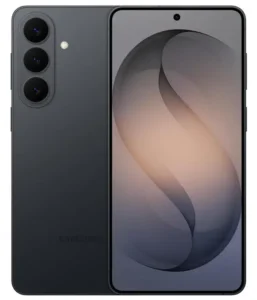
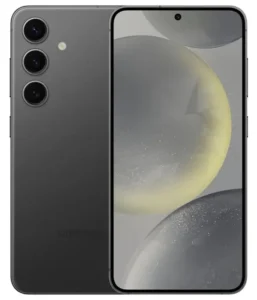
Two generations separate the Galaxy S26 and Galaxy S24, but on the surface they share more than most users expect — same resolution, same peak brightness, same charging speeds. The real question isn’t whether the S26 is better. It clearly is. The question is whether the improvements are meaningful enough to justify leaving the S24 behind, and the honest answer depends heavily on what matters in daily use.
Head-to-Head Camera Analysis
Both phones share the same core camera configuration on paper: 50MP main, 10MP 3x telephoto, 12MP ultrawide, and a 12MP front shooter. The specs look nearly identical in a side-by-side list, which makes the real differences easy to underestimate. Where they diverge is in the engineering behind those numbers.
The Galaxy S26’s main camera uses a larger 1/1.56″ sensor with 1.0µm pixels and dual-pixel PDAF, paired with an f/1.8 aperture and OIS. In low-light scenarios — a dim restaurant, an indoor concert — the S26 pulls noticeably more detail and less noise from the same scene. The S24’s main camera carries the same aperture and OIS but works with a smaller sensor, which means less light-gathering capacity when the scene gets dark. The gap isn’t dramatic in well-lit conditions, but at dusk or indoors without artificial light, the S26 produces cleaner, more usable shots.
The S26 also adds Horizon Lock to its rear camera feature set — a stabilization mode that keeps the horizon level during video, particularly handy for handheld walking shots or action recording. The S24 doesn’t carry this feature. Both phones record 8K at 24/30fps and 4K across standard frame rates, but the S26 adds 10-bit HDR video capture and stereo sound recording that the S24 lacks. For hybrid shooters who treat video as seriously as stills, those additions matter in post-production flexibility.
The front cameras match on paper — 12MP, f/2.2 — but the S26 specifies a larger 1/3.2″ sensor with 1.12µm pixels and dual-pixel PDAF, delivering sharper autofocus in selfie mode. The S24’s front camera covers the basics without those enhancements. Both record 4K at 30/60fps up front, keeping the video ceiling equal.
- Main camera sensor: S26 uses a 1/1.56″ sensor with dual-pixel PDAF; S24’s sensor is smaller with less low-light advantage.
- Video extras: S26 adds 10-bit HDR and stereo sound recording; S24 records HDR10+ but lacks both.
- Stabilization: S26 includes Horizon Lock for video; S24 does not.
- Front camera: S26 specifies dual-pixel PDAF and a larger sensor; S24’s selfie camera covers standard use without those additions.
- Core config: Both use the same 50MP + 10MP + 12MP rear layout — differences are in execution, not structure.
Performance & Real-World Usage
This is where the generational gap shows most clearly. The Galaxy S24 runs Snapdragon 8 Gen 3 (US/Canada/China) or Exynos 2400 (international), both built on 4nm. The Galaxy S26 uses Snapdragon 8 Elite Gen 5 (US/CN) on 3nm or Exynos 2600 on 2nm internationally. That’s not just a spec bump — it reflects fundamentally different CPU architecture. The S26’s Oryon V3 cores clock at 4.74 GHz on the performance cluster versus the S24’s architecture running meaningfully lower clock speeds across the board.
In sustained workloads — prolonged gaming sessions, video export, or heavy multitasking — the S26 holds frame rates longer and generates less heat doing it. Thermal throttling on the S24 becomes noticeable during extended GPU-intensive gaming, particularly after 20 to 30 minutes of demanding titles. The S26’s newer node efficiency allows it to run the same workload with less power, which translates to lower surface temperatures and more consistent performance over time.
The RAM situation also shifts between generations. The S24 ships base configurations with 8GB RAM — functional, but tighter when running multiple heavy apps simultaneously. The S26 standardizes at 12GB RAM across all configurations, giving every variant more breathing room for multitasking. Storage bandwidth improves too: the S26 uses UFS 4.X throughout, while the S24’s base 128GB variant runs the older UFS 3.1. App installs, large file transfers, and camera buffer clearing all benefit from the faster storage on the S26.
- Chipset generation: S26 runs 3nm/2nm Snapdragon 8 Elite Gen 5 or Exynos 2600; S24 uses 4nm Snapdragon 8 Gen 3 or Exynos 2400.
- RAM: S26 standardizes at 12GB across all models; S24’s base models ship with 8GB.
- Storage speed: S26 uses UFS 4.X throughout; S24’s base tier uses UFS 3.1.
- Sustained performance: S26 throttles later and runs cooler under prolonged load.
Battery Life & Charging Experience
The Galaxy S26 carries a 4300mAh battery against the S24’s 4000mAh — a 300mAh advantage that sounds modest but compounds across a day. With the S26’s more efficient 3nm chipset processing the same tasks at lower power draw, real-world screen-on time tends to extend noticeably beyond what the raw capacity difference alone would suggest. Heavy users pushing navigation, streaming, and social media throughout the day will feel the gap more than moderate users who can squeeze through a full day on either phone.
Wired charging speed lands identically on both phones at 25W with PD3.0. Samsung hasn’t moved this needle between generations, which remains a genuine frustration compared to the 65W and 100W wired charging available on competing flagships. The S26 reaches 55% in 30 minutes versus the S24’s 50% in the same window — a marginal improvement, but not a meaningful real-world shift. Both phones charge wirelessly at 15W and support 4.5W reverse wireless charging for accessories.
The S26 adds Qi2 Ready certification to its wireless charging spec, which the S24 does not carry. Qi2 standardizes the magnetic alignment system and enables faster, more efficient wireless charging with compatible accessories — a feature worth noting for anyone invested in the Qi2 accessory ecosystem. For everyone else, the wireless charging experience is practically equivalent between the two phones.
- Battery capacity: S26 holds 4300mAh; S24 runs 4000mAh — S26 edges ahead in all-day endurance.
- Wired charging: Both charge at 25W; S26 hits 55% in 30 minutes vs S24’s 50% in the same time.
- Wireless charging: Both deliver 15W wireless; S26 adds Qi2 Ready certification.
- Reverse charging: Both support 4.5W reverse wireless — no change between generations.
Display, Design & Build Feel
On display specs, the generational gap nearly disappears. Both phones use Dynamic LTPO AMOLED 2X panels with 120Hz adaptive refresh, HDR10+ support, and the same 2600-nit peak brightness. Both use 1080×2340 resolution and Gorilla Glass Victus 2 protection. The S24 is slightly smaller at 6.2 inches versus the S26’s 6.3 inches, with a marginally higher pixel density of 416ppi against the S26’s 411ppi — a difference invisible in normal use. Either screen looks excellent in direct sunlight, holds color accuracy well, and responds smoothly to touch.
The design language is closely related, but the dimensions shift enough to notice. The S24 measures 147×70.6×7.6mm; the S26 comes in at 149.6×71.7×7.2mm. The S26 is slightly taller and wider but meaningfully thinner at 7.2mm versus the S24’s 7.6mm. Both weigh 167g, making them equally comfortable for long periods in hand. The Armor aluminum 2 frame and Gorilla Glass Victus 2 front and back appear on both, giving them nearly identical build quality and durability. IP68 protection is shared across both generations.
Where the S26 quietly advances is connectivity. It ships with Wi-Fi 7 (tri-band), while the S24 tops out at Wi-Fi 6e. In dense wireless environments — apartment buildings, conference venues, airports — Wi-Fi 7’s multi-link operation delivers more stable throughput. Bluetooth advances from 5.3 on the S24 to 5.4 on the S26, which brings minor efficiency and connection stability improvements. The USB port spec matches on both: USB Type-C 3.2 with DisplayPort 1.2 and OTG.
Software, Updates & AI Features
Both phones carry Samsung’s seven-year major OS upgrade commitment — an industry-leading promise that keeps either device relevant for an unusually long ownership window. The S24 shipped on Android 14 with One UI 8.0, while the S26 launches on Android 16 with One UI 8.5. Over the course of their shared update lifetime, both phones will eventually reach the same Android versions, which blunts the software version gap as a purchase argument in isolation.
What does differ is the starting point and the optimization depth. One UI 8.5 on the S26 is built around the Snapdragon 8 Elite Gen 5’s capabilities, with deeper hardware-software integration for AI-driven features including on-device processing tasks that benefit from the newer chip’s NPU. Samsung DeX and Samsung Wireless DeX appear on both phones, maintaining the desktop interface capability that remains one of the most genuinely useful productivity features in the Android ecosystem.
For S24 owners currently running One UI updates, the software experience has matured significantly since launch. The gap between One UI 8.0 and 8.5 is real but not dramatic for everyday tasks. The practical software advantage of upgrading to the S26 is most apparent for users who push AI-assisted camera features, on-device processing, and Samsung’s evolving Galaxy AI capabilities — areas where the newer chipset’s NPU provides meaningfully more horsepower.
Price & Value Proposition
The Galaxy S24 now sells at significantly reduced prices compared to its launch — through carriers, retailers, and trade-in programs, it often lands at a steep discount that makes it an objectively strong value for buyers entering the Samsung ecosystem for the first time or on a tighter budget. The S26 commands a full flagship price premium that reflects the newer chipset, larger sensor, 12GB RAM floor, Qi2 Ready certification, and Wi-Fi 7 support.
For existing S24 owners considering an upgrade, the calculus is less straightforward. The display is nearly identical. Charging speed hasn’t changed. The design is similar. The camera improvements are real but incremental. The chipset jump is substantial, but for users who don’t push their S24 into thermal throttling territory, that advantage stays largely theoretical in daily use. The S26 is unambiguously the better phone — the question is whether the improvements matter enough to justify the cost of switching at this point in the S24’s supported lifecycle.
First-time Samsung buyers or those upgrading from S22 and older will find the S26’s improvements compound into a genuinely different experience. For S24 owners, the smarter financial move is often waiting for the S27 generation, when the delta becomes large enough to feel unmistakable from day one.
Final Verdict: Which One Should You Buy?
Buy the Samsung Galaxy S26 if: the phone is a new purchase rather than a direct upgrade from S24, gaming performance and sustained workload efficiency matter, the improved camera sensor and video capabilities align with shooting habits, or Wi-Fi 7 and Qi2 Ready wireless charging are relevant to the current accessory setup.
Stick with the Samsung Galaxy S24 if: it’s already in hand and performing well, budget is a priority, or the display and day-to-day experience already meet expectations. The S24 still receives Samsung’s full update commitment and handles everyday tasks without breaking a sweat. Nothing about it feels outdated in practical use.
If buying new and budget isn’t the primary constraint, the S26 is the right choice — it’s more future-proof, more capable under load, and carries better video credentials. But the S24 is not a phone to feel embarrassed about owning, and it absolutely does not demand an urgent replacement.
Samsung Galaxy S26 vs Samsung Galaxy S24 Frequently Asked Questions
Is the Samsung Galaxy S26 camera significantly better than the Galaxy S24?
The camera configurations look nearly identical — both use 50MP main, 10MP telephoto, and 12MP ultrawide. The real differences show up in low-light performance, where the S26’s larger main sensor gathers more light. The S26 also adds 10-bit HDR video, stereo sound recording, and Horizon Lock stabilization that the S24 doesn’t offer. For still photography in good light, the gap is small. For video creators and low-light shooters, the S26 is meaningfully better.
How much faster is the Galaxy S26 chipset compared to the Galaxy S24?
The S26 uses the Snapdragon 8 Elite Gen 5 on a 3nm process (US/CN), a full generation newer than the S24’s Snapdragon 8 Gen 3 on 4nm. Performance-per-watt is substantially improved, which means the S26 handles the same tasks with less heat and more sustained frame rates. For everyday tasks the S24 keeps up fine, but demanding gaming sessions and heavy multitasking reveal the S26’s advantage clearly.
Does the Galaxy S26 charge faster than the Galaxy S24?
Both phones charge at 25W wired and 15W wireless, so the raw charging speed is the same. The S26 reaches 55% in 30 minutes versus the S24’s 50%, a marginal difference. The S26 does add Qi2 Ready certification for wireless charging, which benefits users with Qi2-compatible accessories. Neither phone charges fast by current flagship standards — both fall well behind the 65W and 100W charging speeds available on competing devices.
Are the displays the same on the Galaxy S26 and Galaxy S24?
Nearly. Both use Dynamic LTPO AMOLED 2X panels with 120Hz adaptive refresh, 2600-nit peak brightness, HDR10+ support, and 1080×2340 resolution protected by Gorilla Glass Victus 2. The S26 screen is fractionally larger at 6.3 inches versus 6.2 inches. The S24 has a slightly higher pixel density at 416ppi versus 411ppi — invisible in normal use. For display quality, these phones are effectively equivalent.
Should Galaxy S24 owners upgrade to the Galaxy S26?
For most S24 owners, the upgrade isn’t urgent. The display is essentially the same, charging speed hasn’t changed, and the design is closely related. The chipset jump is real and the camera adds are meaningful, but S24 owners who don’t push their phone into thermal throttling territory won’t feel those differences in day-to-day use. Waiting for the next generation typically delivers a larger experiential gap and better trade-in value timing.
Which phone is better for gaming — the Galaxy S26 or Galaxy S24?
The Galaxy S26 wins for sustained gaming. The Snapdragon 8 Elite Gen 5’s 3nm process runs demanding titles at lower temperatures and throttles later than the S24’s 4nm Snapdragon 8 Gen 3. Casual gaming is smooth on both devices, but extended sessions of GPU-heavy games will reveal the S26’s thermal efficiency advantage. Both phones share the same 167g weight, so the physical comfort of holding either for long sessions is equivalent.
Does the Galaxy S26 have better connectivity than the Galaxy S24?
Yes, in two notable areas. The S26 supports Wi-Fi 7 tri-band while the S24 tops out at Wi-Fi 6e — a relevant upgrade in dense wireless environments. Bluetooth advances from 5.3 on the S24 to 5.4 on the S26. Both phones use USB Type-C 3.2 with DisplayPort 1.2 and OTG, and both include NFC. Neither phone includes an infrared blaster or a 3.5mm headphone jack.
How long will the Galaxy S24 receive software updates?
Samsung committed to seven major Android OS upgrades for the Galaxy S24, matching the same promise given to the Galaxy S26. That means the S24 remains a fully supported, software-current device for years to come. Both phones will eventually run the same Android versions. The S26 starts on a newer Android version and a more optimized version of One UI, but the long-term software trajectory is identical for both.