
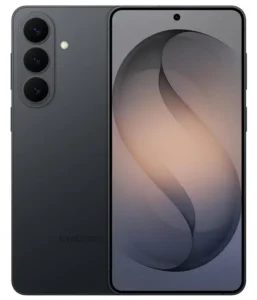

Two compact flagships, one shared chipset generation, and a set of trade-offs that cut in genuinely different directions. The Samsung Galaxy S26 and Xiaomi 15 both occupy the same physical footprint — roughly 6.3 inches of screen in a sub-153mm frame — but they represent entirely different approaches to what a small flagship should prioritize. Samsung bets on ecosystem depth and software longevity. Xiaomi counters with Leica camera tuning, aggressive charging speeds, and a display that pushes measurably harder on peak brightness. Choosing between them is less about which phone is objectively better and more about which trade-offs matter in daily life.
Head-to-Head Camera Analysis
The most immediately visible difference between these camera systems is Xiaomi’s decision to run all three rear lenses at 50MP, while Samsung uses a mixed configuration of 50MP, 10MP, and 12MP. On the main camera, Xiaomi’s 1/1.31″ sensor at f/1.6 outpaces the Samsung’s 1/1.56″ sensor at f/1.8 in raw light-gathering capacity. In practice, the Xiaomi 15’s main camera pulls more shadow detail and produces lower-noise frames in dim restaurant lighting, evening street scenes, and indoor environments where the Samsung’s smaller sensor starts to compress highlights and lift noise earlier.
Leica’s influence on the Xiaomi 15’s color science is real and observable. Xiaomi leans toward natural, film-adjacent rendering with controlled saturation and careful skin tone reproduction — a philosophy Leica has consistently applied to its camera partnerships. The Galaxy S26 processes with Samsung’s characteristic boosted contrast and sharpening, which reads as vibrant on the phone’s own display but can look oversharpened when examined critically on a larger monitor. Neither approach is wrong — they suit different shooting aesthetics — but the Leica tuning consistently produces images that age better without editing.
The telephoto comparison introduces a real structural difference. Samsung’s 10MP 3x telephoto captures at 67mm with PDAF and OIS, a practical focal length for portraits and general zoom use. Xiaomi’s 50MP 2.6x telephoto lands at 60mm — slightly less reach but dramatically more resolution. At equivalent crop distances, the Xiaomi 15’s telephoto preserves far more detail, and the option to crop a 50MP frame at 2.6x gives meaningful flexibility that the S26’s 10MP unit cannot replicate. Where Samsung gains is on ultrawide video — its Super Steady mode is specifically designed for action and walking footage — while Xiaomi’s ultrawide, despite the same 115-120 degree field of view, doesn’t carry equivalent stabilization tooling.
The front camera gap is significant. Xiaomi’s 32MP selfie shooter at f/2.0 with a 1/3.14″ sensor outresolves Samsung’s 12MP f/2.2 unit substantially. For content creators, video callers, and portrait selfie shooters, the Xiaomi 15’s front camera is in a different tier — particularly with gyro-EIS on front video and HDR10+ recording that the S26 doesn’t match up front.
- Main camera sensor: Xiaomi 15’s 1/1.31″ sensor at f/1.6 gathers more light than Samsung’s 1/1.56″ at f/1.8 — a tangible low-light advantage.
- Color science: Xiaomi’s Leica tuning produces natural, film-adjacent rendering; Samsung processes with boosted contrast and sharpening that can look oversharpened on larger screens.
- Telephoto resolution: Xiaomi’s 50MP 2.6x telephoto outresolves Samsung’s 10MP 3x unit significantly at similar crop distances.
- Video extras: Xiaomi 15 records 4K in 10-bit Dolby Vision HDR and 10-bit LOG format; Samsung captures 10-bit HDR and HDR10+ but without Dolby Vision or LOG options.
- Selfie camera: Xiaomi 15’s 32MP front camera leads Samsung’s 12MP unit by a wide margin for stills and video quality.
- Ultrawide stabilization: Samsung’s Super Steady video mode provides better stabilization for handheld action footage on the ultrawide.
Performance & Real-World Usage
Both phones run on the same Snapdragon 8 Elite platform at 3nm — but not the same version. The Galaxy S26 (US/CN) uses the newer Snapdragon 8 Elite Gen 5 with Oryon V3 cores clocking at 4.74 GHz on the performance cluster. The Xiaomi 15 runs the original Snapdragon 8 Elite with Oryon V2 cores at 4.32 GHz. The Adreno 840 in the S26 succeeds the Adreno 830 in the Xiaomi 15. In practical gaming and sustained compute tasks, the S26 holds higher sustained frame rates and generates less heat, with its newer process efficiency giving it the edge in thermal management over long sessions.
That said, the Xiaomi 15 is far from slow. The original Snapdragon 8 Elite is still an elite chip, and for everyday multitasking, photography processing, and gaming at moderate session lengths, users won’t notice a gap. The difference surfaces under extended pressure — running demanding GPU-intensive games for forty minutes or more, or processing large video files, where the S26’s generational advantage shows up in fewer dropped frames and a cooler chassis. For casual to heavy users who don’t push sustained workloads, both phones feel equally snappy.
The Xiaomi 15 offers more RAM ceiling and more storage options. It scales up to 16GB RAM and 1TB storage across its configuration lineup, while the Samsung S26 standardizes at 12GB RAM with a 512GB maximum. For power users who run parallel demanding apps, keep browser-heavy workflows open, or manage large media libraries on-device, the Xiaomi 15’s headroom is genuinely useful. Samsung uses UFS 4.X storage while Xiaomi uses UFS 4.0 — both fast, with the Samsung having a marginal sequential speed advantage.
- Chipset version: S26 uses Snapdragon 8 Elite Gen 5 (Oryon V3, 4.74GHz); Xiaomi 15 runs original Snapdragon 8 Elite (Oryon V2, 4.32GHz).
- Sustained performance: S26 throttles later and runs cooler under extended GPU-intensive load.
- RAM ceiling: Xiaomi 15 reaches 16GB RAM and 1TB storage; S26 tops at 12GB RAM and 512GB.
- Storage speed: S26’s UFS 4.X provides marginally faster sequential throughput than Xiaomi 15’s UFS 4.0.
Battery Life & Charging Experience
The battery comparison is one-sided in hardware terms. The Xiaomi 15 carries a 5240mAh silicon-carbon cell (5400mAh in China) against the Galaxy S26’s 4300mAh lithium-ion battery — a nearly 1000mAh gap that translates directly into all-day endurance differences. Combined with the silicon-carbon chemistry’s higher energy density and the Snapdragon 8 Elite’s baseline efficiency, Xiaomi 15 users consistently push further into the evening without hunting for a charger. Heavy users hammering navigation, social media, and video playback throughout the day will feel this gap most acutely.
Charging speed is where the comparison becomes genuinely lopsided. The Xiaomi 15 charges at 90W wired — reaching a substantial charge level in minutes rather than the Galaxy S26’s slower 25W wired pace, which hits 55% in 30 minutes. In real terms, a ten-minute cable session on the Xiaomi 15 provides usable charge headroom that a similar stint on the S26 cannot match. Wireless charging follows the same pattern: Xiaomi delivers 50W wireless while the S26 provides 15W Qi2 Ready. The S26 supports 4.5W reverse wireless charging; Xiaomi counters with 10W reverse wireless — more than double for charging accessories off the back of the phone.
- Battery capacity: Xiaomi 15 holds 5240mAh Si/C vs S26’s 4300mAh Li-Ion — significant all-day endurance advantage for Xiaomi.
- Wired charging: Xiaomi 15 at 90W charges far faster than the S26’s 25W — a major practical gap.
- Wireless charging: Xiaomi 15 delivers 50W wireless; S26 provides 15W Qi2 Ready.
- Reverse wireless: Xiaomi 15 offers 10W reverse wireless; S26 provides 4.5W.
Display, Design & Build Feel
Both panels are LTPO AMOLED with 120Hz adaptive refresh, sitting virtually neck-and-neck in screen size — 6.3 inches on the S26 versus 6.36 inches on the Xiaomi 15. The resolution difference matters: Xiaomi’s 1200×2670 panel hits 460ppi against the S26’s 411ppi at 1080×2340. That pixel density gap is subtle but visible on fine text, detailed maps, and high-resolution photos when zoomed in. More striking is the brightness difference — the Xiaomi 15 reaches 3200 nits peak versus the S26’s 2600 nits. In direct sunlight, the Xiaomi 15 pushes harder, remaining readable in conditions where the S26 starts to struggle.
The Xiaomi 15 adds Dolby Vision support and 1920Hz PWM dimming — the latter reducing flicker-induced eye strain at low brightness settings, particularly noticeable for late-night reading in dark environments. The S26’s panel doesn’t publish equivalent PWM specs. Glass protection diverges interestingly: the S26 uses Corning Gorilla Glass Victus 2 (Mohs level 5), while Xiaomi’s Shield Glass claims Mohs level 6 — harder on the scratch resistance scale. Real-world durability testing shows Xiaomi Shield Glass handling keys and abrasive surfaces well, though neither glass is drop-proof.
In the hand, the S26’s 7.2mm frame and 167g weight make it the more comfortable one-handed device — noticeably thinner and lighter than the Xiaomi 15’s 8.1-8.5mm thickness and 189-192g weight depending on the variant. Both phones maintain IP68 water resistance. Connectivity diverges on two points: the S26 includes no infrared blaster while the Xiaomi 15 does, and audio quality leans toward Xiaomi with 24-bit/192kHz Hi-Res audio support and aptX HD, aptX Adaptive, and LHDC 5 Bluetooth codecs that the S26 doesn’t match. For wired headphone users and audiophiles using high-resolution Bluetooth earphones, the Xiaomi 15 delivers a meaningfully richer audio experience.
Software, Updates & AI Features
The software longevity gap is decisive and unambiguous. Samsung commits to seven major Android OS upgrades on the Galaxy S26, starting from Android 16 with One UI 8.5. Xiaomi commits to four major upgrades from Android 15 with HyperOS 2. That’s a three-year difference in guaranteed major version support — meaningful for anyone who keeps phones for four or five years and expects to receive current Android security patches and feature updates throughout ownership.
One UI 8.5 is a mature, deeply integrated software environment with Samsung DeX and Samsung Wireless DeX providing a full desktop interface mode when connected to external displays. Samsung’s Galaxy AI features run on the Snapdragon 8 Elite Gen 5’s NPU with on-device processing for generative editing, translation, and intelligent camera assist. HyperOS 2 on the Xiaomi 15 is a genuinely clean, capable software experience — lighter in feel than One UI and less cluttered — but it doesn’t offer a comparable desktop mode, and Xiaomi’s AI features are less mature and less deeply integrated into the hardware pipeline.
For users embedded in the Samsung ecosystem — Galaxy Watch, Galaxy Buds, SmartThings — the S26’s software integration is irreplaceable. For users who don’t have that ecosystem investment, HyperOS 2’s cleaner interface and lighter footprint can feel more approachable, particularly for users coming from stock Android environments.
Price & Value Proposition
The Xiaomi 15 competes at a notably lower price point than the Galaxy S26 in most markets, particularly outside North America where Xiaomi’s global pricing is aggressive. For the hardware delivered — Leica-tuned triple 50MP camera system, 5240mAh battery with 90W charging, 3200-nit display, and up to 16GB RAM — the Xiaomi 15 represents exceptional value per specification. The spec sheet comparison heavily favors Xiaomi on raw hardware metrics at its asking price.
The Galaxy S26 justifies its premium through Samsung’s ecosystem, seven-year software support, Samsung DeX functionality, the newer Snapdragon 8 Elite Gen 5 chipset, and the trust built through years of global service and support infrastructure. For buyers in regions where Xiaomi’s after-sales service is less established, that last point carries real weight. For buyers in markets where Xiaomi has strong local support, the value case for the S26’s hardware premium becomes harder to defend on specs alone.
Final Verdict: Which One Should You Buy?
Choose the Samsung Galaxy S26 if: long-term software support is a non-negotiable priority, Samsung DeX is part of a professional workflow, the newer chipset generation matters for sustained performance, one-handed use and a lighter frame are daily priorities, or the Samsung ecosystem already includes Galaxy Watch and Buds accessories.
Choose the Xiaomi 15 if: camera quality is the top priority and Leica color science aligns with a natural-rendering preference, fast charging and larger battery capacity are essential, the higher-resolution display and peak brightness ceiling matter, high-resolution audio output through Bluetooth is part of the daily routine, or a lower price point makes the value proposition compelling.
For camera enthusiasts and heavy users who drain phones fast, the Xiaomi 15 is the more capable hardware package at a lower price. For buyers who value software longevity, ecosystem integration, and the assurance of seven years of updates, the Galaxy S26 is the smarter long-term investment despite the hardware spec gap it concedes on paper.
Samsung Galaxy S26 vs Xiaomi 15 Frequently Asked Questions
Which phone has a better camera system, the Samsung Galaxy S26 or Xiaomi 15?
For still photography and low-light performance, the Xiaomi 15 holds an edge. Its Leica-tuned triple 50MP system delivers natural color rendering, a larger main sensor at f/1.6, and a high-resolution telephoto that outresolves Samsung’s 10MP 3x unit. The S26 fights back with stronger video stabilization via Super Steady mode on the ultrawide and a more mature video processing pipeline. Selfie quality also favors Xiaomi 15’s 32MP front camera over the S26’s 12MP unit by a substantial margin.
How much faster does the Xiaomi 15 charge compared to the Galaxy S26?
Significantly faster. The Xiaomi 15 charges at 90W wired versus the Galaxy S26’s 25W, and at 50W wireless versus the S26’s 15W. In practical terms, the Xiaomi 15 can top up meaningfully during a short charging session that would barely move the needle on the S26. For users who frequently charge in short bursts rather than overnight, the gap is a daily quality-of-life difference.
Does the Xiaomi 15 have better battery life than the Samsung Galaxy S26?
Yes, in most usage scenarios. The Xiaomi 15’s silicon-carbon 5240mAh cell holds more capacity than the S26’s 4300mAh lithium-ion battery, and the silicon-carbon chemistry maintains higher energy density over charge cycles. Heavy users navigating, streaming, and shooting photos throughout the day will consistently get more screen time from the Xiaomi 15 before needing a charge.
Which phone has a better display, the Samsung Galaxy S26 or Xiaomi 15?
The Xiaomi 15 leads on display specs. It reaches 3200 nits peak brightness versus the S26’s 2600 nits, delivers higher pixel density at 460ppi versus 411ppi, supports Dolby Vision, and uses 1920Hz PWM dimming for reduced eye strain at low brightness. The S26’s display remains excellent for its class, but the Xiaomi 15 pushes harder in outdoor visibility and fine-detail rendering.
Which phone offers better long-term software support?
The Samsung Galaxy S26 by a wide margin. Samsung commits to seven major Android OS upgrades from Android 16. Xiaomi commits to four major upgrades from Android 15 — a three-year difference in guaranteed major version support. For buyers planning to keep their phone for four or more years, the S26’s software longevity is a decisive practical advantage.
Is the Samsung Galaxy S26 more powerful than the Xiaomi 15?
In sustained workloads, yes. The S26 runs the newer Snapdragon 8 Elite Gen 5 with Oryon V3 cores and Adreno 840, while the Xiaomi 15 uses the original Snapdragon 8 Elite with Oryon V2 cores and Adreno 830. Both are fast in daily use, but extended gaming sessions and heavy compute tasks reveal the S26’s thermal efficiency and performance ceiling advantages. The Xiaomi 15 scales higher on RAM, reaching 16GB on its top configuration versus the S26’s 12GB maximum.
Does the Xiaomi 15 have an infrared blaster?
Yes, the Xiaomi 15 includes an infrared blaster that works as a universal remote for TVs, air conditioners, and other IR-compatible devices. The Samsung Galaxy S26 does not include an infrared blaster. For users who rely on phone-based device control, this is a meaningful practical difference.
Which phone has better audio quality, the Samsung Galaxy S26 or Xiaomi 15?
The Xiaomi 15 delivers higher audio fidelity through both wired and wireless connections. It supports 24-bit/192kHz Hi-Res audio and advanced Bluetooth codecs including aptX HD, aptX Adaptive, and LHDC 5. The Samsung Galaxy S26 supports high-bitrate audio but does not publish equivalent codec support or Hi-Res wireless audio certification. For audiophiles using high-resolution Bluetooth headphones, the Xiaomi 15 provides a noticeably richer listening experience.