
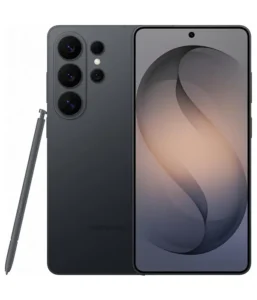

This is not a close matchup. The Samsung Galaxy S26 Ultra and the Apple iPhone Air occupy the same flagship price conversation but represent polar-opposite design philosophies. The S26 Ultra is Samsung’s most capable phone — a productivity powerhouse built around a 200MP quad camera, an integrated S Pen, a massive 5000mAh battery, and a 6.9-inch display designed for professional-grade work. The iPhone Air is Apple’s thinnest phone ever, engineered around disappearing into a pocket while delivering the A19 Pro chip’s processing muscle. Choosing between them is essentially choosing between versatility and elegance.
Head-to-Head Camera Analysis
The camera gap between these phones is one of the widest in any flagship comparison. The Galaxy S26 Ultra runs four rear cameras — a 200MP main at f/1.4, a 10MP 3x telephoto, a 50MP 5x periscope telephoto, and a 50MP ultrawide with dual-pixel PDAF — while the iPhone Air carries a single 48MP rear camera with no telephoto at all. On optical versatility alone, the S26 Ultra is in an entirely different category. The 200MP main sensor at f/1.4 on a 1/1.3″ sensor gathers extraordinary amounts of light and resolves fine detail that smaller-sensor systems simply cannot reproduce at equivalent crop distances.
The S26 Ultra’s 50MP 5x periscope telephoto alone covers a use case the iPhone Air cannot address optically — outdoor portraits at distance, wildlife, architectural detail, sporting events. The 50MP ultrawide with PDAF extends the system further, enabling close-focus versatility that fixed-focus ultrawides miss. Laser AF and Horizon Lock round out a rear camera toolkit that is genuinely professional in scope. The iPhone Air’s 48MP main camera at f/1.6 with sensor-shift OIS is a capable single-lens system that produces excellent stills in a wide range of conditions, and Apple’s computational photography pipeline processes scenes naturally — but it operates without optical zoom and without a second perspective. For dedicated photographers, the comparison isn’t nuanced. The S26 Ultra wins comprehensively.
The front camera reverses the advantage. The iPhone Air’s 18MP ultrawide front camera with PDAF and a 3D SL depth sensor delivers genuine spatial depth mapping for portrait selfies and Face ID authentication that the S26 Ultra’s 12MP front camera cannot match. For video calls, social content, and biometric accuracy, Apple’s front system is structurally superior. The S26 Ultra compensates with Best Face and Horizon Lock on the front video side, but a 12MP sensor against an 18MP unit with 3D depth mapping is a clear resolution and capability gap. For rear camera work, the S26 Ultra leads decisively. For selfies and front video, the iPhone Air wins.
- Rear camera system: S26 Ultra packs four cameras including a 200MP main and dual telephotos; iPhone Air carries one 48MP rear camera with no optical zoom.
- Main aperture: S26 Ultra opens to f/1.4 vs iPhone Air’s f/1.6 — more light and a larger 1/1.3″ sensor on Samsung.
- Telephoto reach: S26 Ultra offers both 3x and 5x optical zoom; iPhone Air offers no optical telephoto whatsoever.
- Video formats: S26 Ultra records 8K and 4K120fps with 10-bit HDR; iPhone Air tops at 4K60fps with Dolby Vision HDR.
- Front camera: iPhone Air’s 18MP 3D front camera outperforms the S26 Ultra’s 12MP unit on resolution, depth mapping, and biometric accuracy.
- Laser AF and Horizon Lock: Both features present on S26 Ultra; iPhone Air carries neither.
Performance & Real-World Usage
Both phones use 3nm chips, but the architectures differ fundamentally. The Galaxy S26 Ultra runs Snapdragon 8 Elite Gen 5 with Oryon V3 cores at 4.74 GHz and an Adreno 840 GPU. The iPhone Air uses Apple’s A19 Pro with a hexa-core CPU and 5-core Apple GPU. Apple’s silicon architecture consistently delivers best-in-class single-core performance, and the A19 Pro neural engine handles on-device AI processing with remarkable efficiency. In everyday tasks — app launches, UI transitions, web browsing — both phones feel equally instant. The perceptible speed difference doesn’t exist at that level of use.
The sustained workload story diverges more meaningfully. The S26 Ultra’s 7.9mm chassis provides thermal mass that the iPhone Air’s 5.6mm titanium frame simply cannot match. In extended gaming sessions — forty-five minutes of GPU-intensive titles at maximum settings — the S26 Ultra manages heat more effectively, maintaining higher average frame rates before throttling. The iPhone Air’s A19 Pro is highly efficient, but physics limits how much heat a 5.6mm chassis can dissipate. For light gaming and productivity, both phones handle everything without perceivable lag. For enthusiasts who game hard and long, the S26 Ultra sustains peak performance longer.
The S26 Ultra’s RAM ceiling extends to 16GB on the 1TB configuration, versus 12GB across all iPhone Air storage tiers. That additional RAM provides genuine headroom for professional video workflows, multiple demanding apps running simultaneously, and the on-device AI processing that modern Samsung software increasingly uses for real-time tasks. For most users, 12GB is sufficient. For professionals pushing the phone as a workstation substitute — particularly with Samsung DeX connected to an external display — the S26 Ultra’s 16GB ceiling matters.
- Chipset: S26 Ultra runs Snapdragon 8 Elite Gen 5; iPhone Air uses Apple A19 Pro — both on 3nm with different architecture advantages.
- Single-core peak: Apple A19 Pro leads in single-core benchmarks; S26 Ultra leads in sustained multi-core and GPU-heavy sustained workloads.
- Thermal management: S26 Ultra’s 7.9mm chassis dissipates heat longer than the iPhone Air’s 5.6mm profile under extreme loads.
- Peak RAM: S26 Ultra offers 16GB on 1TB model; iPhone Air tops at 12GB across all configurations.
Battery Life & Charging Experience
The battery comparison is the starkest hardware gap in this entire matchup. The S26 Ultra carries a 5000mAh cell — more than 58% more capacity than the iPhone Air’s 3149mAh battery. Even accounting for the A19 Pro’s superior power efficiency, raw capacity limits what silicon efficiency can compensate for across a full demanding day. Heavy S26 Ultra users navigating, gaming, shooting 8K video, and working in Samsung DeX sessions can push through a full day comfortably. iPhone Air users with similar workloads will reach for a charger earlier, sometimes significantly so. For light-to-moderate users, the A19 Pro’s efficiency keeps the Air viable through a standard day. But the S26 Ultra’s endurance advantage is not a spec on paper — it’s felt in daily use.
The charging speed comparison reinforces the gap. The S26 Ultra charges at 60W wired, hitting 75% in 30 minutes. The iPhone Air charges at a slower wired pace, reaching 50% in 30 minutes from a much smaller starting cell. The S26 Ultra also pushes 25W wireless via Qi2.2 — substantially faster than the iPhone Air’s 20W MagSafe. Reverse wireless charging sits at 4.5W on the S26 Ultra while the iPhone Air provides 4.5W reverse wired. The S26 Ultra’s USB-C port runs at USB 3.2 with DisplayPort 1.2 — genuinely fast for wired file transfers and external display connections. The iPhone Air’s USB-C port runs at USB 2.0 speeds, which creates a real bottleneck for transferring large video files or connecting external monitors at full resolution.
- Battery capacity: S26 Ultra holds 5000mAh; iPhone Air carries 3149mAh — a 58% capacity deficit for Apple.
- Wired charging: S26 Ultra at 60W reaches 75% in 30 minutes; iPhone Air reaches 50% in 30 minutes from a smaller cell.
- Wireless charging: S26 Ultra at 25W Qi2.2 leads iPhone Air’s 20W MagSafe.
- USB-C speed: S26 Ultra uses USB 3.2 with DisplayPort 1.2; iPhone Air uses USB 2.0 — a serious data transfer and display output limitation.
Display, Design & Build Feel
The display comparison runs heavily in the S26 Ultra’s favor on size and resolution. Its 6.9-inch Dynamic LTPO AMOLED 2X panel at 1440×3120 resolution hits 500ppi — denser and larger than the iPhone Air’s 6.5-inch 1260×2736 panel at 460ppi. Both panels use LTPO adaptive 120Hz refresh. Peak brightness tips toward the iPhone Air at 3000 nits versus the S26 Ultra’s 2600 nits, giving Apple a visibility edge in harsh direct sunlight. The iPhone Air also supports Dolby Vision for streaming content, which the S26 Ultra’s HDR10+ panel doesn’t match on that specific format.
Glass protection diverges interestingly at the front. The S26 Ultra uses Corning Gorilla Armor 2 with Mohs level 6 DX anti-reflective coating — harder and more scratch-resistant than the iPhone Air’s Ceramic Shield 2 at Mohs level 5. The S26 Ultra also includes a Privacy Display mode that limits viewing angles on demand — useful in public or professional settings — that the iPhone Air doesn’t replicate. The S26 Ultra’s rear carries Gorilla Glass Victus 2, while the iPhone Air uses Ceramic Shield on the back.
These phones feel completely different in hand. The S26 Ultra at 214g and 7.9mm is the heavier, thicker, larger device — deliberately so, as it accommodates a 5000mAh battery, four camera modules, and an integrated S Pen silo. The iPhone Air at 165g and 5.6mm is 49g lighter and 2.3mm thinner, with a grade 5 titanium frame providing structural integrity at an extreme profile. Both carry IP68, but the iPhone Air’s rating covers immersion up to 6 meters while the S26 Ultra covers 1.5 meters — Apple’s deeper water resistance advantage is consistent across its lineup. The S26 Ultra also carries Ultra Wideband support, matching the iPhone Air’s UWB gen2 chip for precision spatial tracking and nearby device interaction.
Software, Updates & AI Features
The Galaxy S26 Ultra ships on Android 16 with One UI 8.5 and Samsung’s seven-year major OS upgrade commitment. The iPhone Air runs iOS 26 with Apple’s historically long software support — typically six or more years of iOS updates. Both platforms deliver long-term viability for multi-year ownership, with Apple’s track record slightly more consistent in practice on older hardware. The functional software experience is where the comparison splits most dramatically along ecosystem lines.
Samsung DeX and Samsung Wireless DeX transform the S26 Ultra into a desktop computing interface when connected to an external display — a genuine productivity mode with no equivalent on iOS. For professionals who want a single device covering both mobile and desktop workflows, this remains the most compelling feature the S26 Ultra offers that the iPhone Air categorically cannot. The iPhone Air counters with Emergency SOS and Messages via satellite, Apple Pay integration, and the Apple ecosystem’s tightly woven iMessage, AirDrop, Handoff, and Continuity Camera features — all deeply useful for users already invested in Apple hardware. Both phones include Ultra Wideband support for precision device finding and spatial interaction.
On-device AI sits at the center of both software experiences. Samsung’s Galaxy AI on the S26 Ultra processes generative photo editing, live translation, and intelligent camera assist through the Snapdragon 8 Elite Gen 5’s NPU. Apple Intelligence on the iPhone Air runs through the A19 Pro’s Neural Engine with a privacy-first architecture. Both deliver capable on-device AI — differentiated more by which platform the user already inhabits than by raw processing outcome.
Price & Value Proposition
These phones don’t compete at the same price point. The Galaxy S26 Ultra is Samsung’s most expensive phone, carrying a premium that reflects the 200MP quad camera system, S Pen integration, 5000mAh battery, 60W wired charging, and 6.9-inch high-resolution display. The iPhone Air is Apple’s thinnest and most accessible flagship — priced between the standard iPhone and iPhone Pro, making it a premium device but not Apple’s most expensive offering.
For buyers genuinely choosing between these two, the price difference means the S26 Ultra must justify a larger outlay. On hardware specs alone, it does — the camera system, battery, charging speed, and display resolution all exceed what the iPhone Air delivers. But hardware specs don’t capture ecosystem value. The iPhone Air’s integration with Mac, iPad, Apple Watch, and AirPods creates compounding utility that doesn’t appear on any spec sheet. For Android users or new platform switchers, the S26 Ultra’s hardware superiority is the dominant factor. For established Apple ecosystem users, the iPhone Air’s seamless integration often outweighs the S26 Ultra’s raw specification lead.
Final Verdict: Which One Should You Buy?
Choose the Samsung Galaxy S26 Ultra if: professional-grade camera versatility with optical zoom at multiple focal lengths is essential, battery endurance under heavy daily use is non-negotiable, Samsung DeX desktop functionality is part of the productivity workflow, the S Pen’s precision input aligns with note-taking, illustration, or document annotation habits, or fast wired and wireless charging at 60W and 25W respectively matters for daily convenience.
Choose the Apple iPhone Air if: the thinnest possible flagship form factor is the primary design goal, deep Apple ecosystem integration with Mac, iPad, AirPods, and Apple Watch is already in place, the 18MP 3D front camera and Face ID are preferred authentication and selfie tools, Dolby Vision video recording and satellite emergency communication are relevant features, or 6-meter IP68 water resistance is a priority for outdoor and water-adjacent use.
The S26 Ultra is the objectively more capable device on nearly every measurable hardware dimension. The iPhone Air is the more elegant object that, within the Apple ecosystem, delivers an integrated experience that hardware specs alone don’t convey. Picking the wrong one for the wrong person is a real risk — which is exactly why these two phones coexist without one making the other obsolete.
Samsung Galaxy S26 Ultra vs Apple iPhone Air Frequently Asked Questions
How does the Samsung Galaxy S26 Ultra camera compare to the Apple iPhone Air?
The comparison is lopsided in Samsung’s favor for rear photography. The S26 Ultra runs four cameras — 200MP main, 10MP 3x telephoto, 50MP 5x periscope telephoto, and 50MP ultrawide — versus the iPhone Air’s single 48MP rear camera with no optical zoom. For still photography versatility, low-light capture, and zoom range, the S26 Ultra is in a different class. The iPhone Air counters only on front camera quality, where its 18MP 3D sensor with PDAF outperforms the S26 Ultra’s 12MP front unit on resolution and spatial depth mapping.
Which phone has better battery life, the Galaxy S26 Ultra or iPhone Air?
The Galaxy S26 Ultra wins decisively. Its 5000mAh cell holds more than 58% more energy than the iPhone Air’s 3149mAh battery. Even with Apple’s A19 Pro efficiency advantage, the capacity gap translates directly to longer endurance under heavy use — extended navigation, gaming, video shooting, or multi-app workloads. Moderate iPhone Air users can finish a standard day, but heavy users will reach a charger earlier than S26 Ultra owners consistently.
Is the iPhone Air much thinner and lighter than the Galaxy S26 Ultra?
Yes, dramatically so. The iPhone Air measures 5.6mm thick and weighs 165g. The Galaxy S26 Ultra measures 7.9mm thick and weighs 214g — 2.3mm thicker and 49g heavier. The S26 Ultra’s additional mass accommodates a 5000mAh battery, four camera modules, and an S Pen silo. The iPhone Air’s titanium frame enables structural rigidity at a profile that makes the S26 Ultra feel chunky in direct comparison.
Does the Galaxy S26 Ultra have a better display than the iPhone Air?
On size and resolution, yes. The S26 Ultra’s 6.9-inch 1440×3120 panel at 500ppi is larger and sharper than the iPhone Air’s 6.5-inch 1260×2736 panel at 460ppi. Peak brightness tips toward the iPhone Air at 3000 nits versus the S26 Ultra’s 2600 nits, and the iPhone Air adds Dolby Vision for streaming compatibility. The S26 Ultra counters with Gorilla Armor 2 scratch protection at Mohs level 6 — harder than the iPhone Air’s Ceramic Shield 2 at Mohs level 5 — and a Privacy Display mode the iPhone Air doesn’t offer.
Which phone charges faster, the Galaxy S26 Ultra or iPhone Air?
The Galaxy S26 Ultra charges substantially faster. It supports 60W wired charging, reaching 75% in 30 minutes, and 25W wireless via Qi2.2. The iPhone Air charges at a slower wired pace — reaching 50% in 30 minutes from its smaller 3149mAh cell — and provides 20W MagSafe wireless. The S26 Ultra’s USB 3.2 port also enables fast wired file transfers and DisplayPort output that the iPhone Air’s USB 2.0 port cannot match.
Does the iPhone Air have an S Pen like the Galaxy S26 Ultra?
No. The Galaxy S26 Ultra includes an integrated S Pen stylus for precision writing, drawing, annotation, and document markup. The iPhone Air has no stylus support of any kind. For users who rely on handwritten notes, PDF annotation, or creative illustration on a phone, the S26 Ultra’s S Pen is a feature with no iOS equivalent at this form factor.
Which phone has better water resistance, the Galaxy S26 Ultra or iPhone Air?
Both carry IP68 ratings, but the iPhone Air covers immersion up to 6 meters for 30 minutes while the Galaxy S26 Ultra covers 1.5 meters for the same duration. For pool, beach, water-sport, or outdoor wet-environment use, the iPhone Air provides meaningfully deeper water protection. For everyday rain, splashes, and accidental shallow water drops, both phones offer equivalent protection.
Can the Galaxy S26 Ultra function as a desktop computer unlike the iPhone Air?
Yes. Samsung DeX and Samsung Wireless DeX allow the S26 Ultra to project a full desktop interface to an external monitor — with a taskbar, resizable windows, and keyboard and mouse support. This turns the phone into a functional workstation for document editing, web browsing, and productivity tasks. The iPhone Air offers no comparable desktop mode. Its USB-C port also runs at USB 2.0 speeds, limiting both external display output and wired file transfer speeds that the S26 Ultra’s USB 3.2 with DisplayPort 1.2 handles without restriction.