
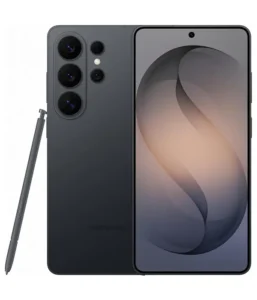
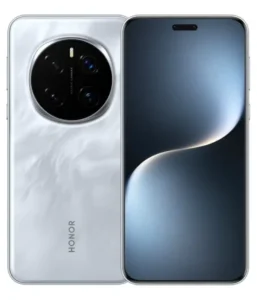
The Samsung Galaxy S26 Ultra and Honor Magic 7 Pro represent contrasting flagship philosophies from two manufacturers targeting the premium segment. Samsung refines its established Ultra formula with dual telephoto lenses and the latest Snapdragon silicon, while Honor pushes boundaries with a 200MP periscope telephoto, unprecedented 5000-nit peak brightness, and charging speeds that dwarf Samsung’s conservative approach. Both devices command premium pricing, yet their strengths divide along clear lines that make the choice less about overall superiority and more about which specific capabilities matter most.
Head-to-Head Camera Analysis
Camera philosophies diverge immediately in sensor selection and focal length coverage. Samsung deploys its proven 200MP main sensor with f/1.4 aperture, backed by dual telephoto lenses at 3x and 5x optical zoom, plus a 50MP ultrawide with dual-pixel PDAF. Honor takes an unconventional approach: a 50MP main sensor with variable f/1.4-2.0 aperture that adjusts mechanically, a massive 200MP periscope telephoto at 3x, and a 50MP ultrawide. The trade-off crystallizes quickly—Samsung offers more focal length versatility through its dual telephoto setup, while Honor bets on computational prowess from that enormous 200MP telephoto sensor.
Main sensor performance splits along interesting lines. Samsung’s 200MP sensor excels in consistent detail retention and dynamic range, with the f/1.4 aperture pulling exceptional light in challenging conditions. Honor’s variable aperture mechanism provides genuine utility beyond gimmickry—closing to f/2.0 in bright light increases depth of field for sharper landscapes, while opening to f/1.4 maximizes light gathering at night. The 50MP resolution seems modest compared to Samsung’s 200MP, yet Honor’s computational photography leans heavily on multi-frame stacking that extracts impressive detail from the smaller pixel count. Side-by-side daylight shots show Samsung’s slight edge in resolving fine textures, though Honor compensates with punchier color science that some users prefer.
Telephoto capabilities reveal fundamentally different strategies. Samsung’s dual telephoto approach with dedicated 3x and 5x lenses provides genuine optical reach—the 50MP 5x periscope delivers stunning detail at distance without resorting to digital cropping until well beyond 10x. Honor’s 200MP 3x telephoto initially seems limited by lacking a secondary zoom lens, yet that massive sensor resolution enables surprisingly clean digital zoom to 6x through pixel binning, though it cannot match Samsung’s true 5x optical quality. Photographers frequently shooting distant subjects or wildlife strongly favor Samsung’s dedicated 5x lens, while portrait shooters find Honor’s 3x focal length perfectly positioned for flattering perspectives.
Ultrawide photography tilts toward parity with both devices employing 50MP sensors featuring advanced autofocus. Samsung’s dual-pixel PDAF ultrawide focuses faster on close subjects, benefiting macro-style shots that leverage the 120-degree field of view. Honor matches this capability while adding a color spectrum sensor that improves white balance accuracy under mixed lighting—a subtle advantage that surfaces when shooting interiors with both natural and artificial light sources. Low-light ultrawide performance remains comparable, with both devices showing typical ultrawide struggles with edge softness and increased noise compared to their main sensors.
Front camera hardware strongly favors Honor with its 50MP sensor and TOF 3D depth mapping versus Samsung’s 12MP unit. The resolution advantage translates to noticeably sharper selfies with better detail in hair and skin texture, while the TOF sensor enables more accurate portrait mode edge detection. Samsung’s front camera performs adequately for video calls and casual selfies but feels dated compared to Honor’s comprehensive approach. Content creators prioritizing front-facing capability find Honor’s superior hardware compelling, particularly for high-resolution selfie content destined for social platforms.
Video recording capabilities favor Samsung’s mature ecosystem. The S26 Ultra offers 8K recording at 30fps plus 4K120fps for high-frame-rate content, backed by superior stabilization that combines optical and electronic systems across all lenses. Honor maxes out at 4K60fps with competent but less refined stabilization. The S26 Ultra’s 10-bit HDR recording across all modes provides greater flexibility in post-production color grading, while Honor’s video features feel adequate rather than exceptional. Serious videographers requiring maximum recording flexibility gravitate toward Samsung’s more comprehensive video specifications.
Performance & Real-World Usage
Chipset differences prove more significant than version numbers suggest. Samsung’s Snapdragon 8 Elite Gen 5 runs its performance cores at 4.74 GHz compared to Honor’s previous-generation Elite topping out at 4.32 GHz. Benchmark scores predictably favor Samsung, yet real-world usage reveals more nuanced performance characteristics. Both devices handle daily tasks with flagship-appropriate smoothness, but sustained workloads expose thermal management differences that impact practical performance.
Gaming performance diverges during extended sessions. The S26 Ultra maintains higher sustained frame rates in demanding titles like Genshin Impact or Call of Duty Mobile, with thermal throttling remaining minimal even after hour-long sessions. Honor’s slightly older chipset and thicker 8.8mm chassis create more noticeable heat buildup during intensive gaming, though performance remains strong for 30-40 minute sessions before throttling becomes apparent. Competitive mobile gamers chasing maximum frame stability prefer Samsung’s superior thermal management, while casual players notice little practical difference during typical 15-20 minute gaming sessions.
Storage technology favors Samsung through UFS 4.X versus Honor’s UFS 4.0 implementation. Sequential read and write speeds show measurable advantages during large file transfers, app installations, and camera burst shooting. The difference surfaces when shooting dozens of 200MP photos in rapid succession—Samsung writes files noticeably faster, reducing buffer clearing time between bursts. For users frequently transferring large video files or working with extensive photo libraries, Samsung’s faster storage proves genuinely beneficial rather than merely theoretical.
Multitasking performance remains comparable given both devices offer up to 16GB RAM configurations. App retention feels excellent on both phones, with neither showing aggressive background process management during typical multi-app workflows. Honor’s MagicOS provides slightly more aggressive RAM management by default, occasionally requiring manual adjustment to prevent favorite apps from being killed during extended multitasking sessions. Samsung’s One UI adopts a more permissive approach that keeps more apps active in memory, benefiting users who frequently switch between numerous applications.
Battery Life & Charging Experience
Battery capacity creates the headline difference: Honor’s 5850mAh cell on global models versus Samsung’s 5000mAh pack represents a substantial 17% advantage. Real-world endurance reflects this gap consistently, with Honor delivering 7-8 hours screen-on time during mixed use compared to Samsung’s respectable but lesser 6-7 hours. Heavy users pushing both devices hard find Honor more reliably reaches the end of intensive days with usable charge remaining, while Samsung occasionally requires a late-afternoon top-up during particularly demanding usage.
The European Honor variant complicates this comparison with its reduced 5270mAh capacity—still larger than Samsung’s 5000mAh, but diminishing Honor’s endurance advantage significantly. European buyers comparing these devices face a tighter battery life race, with Honor maintaining only marginal superiority versus the substantial lead global models enjoy. This regional variation deserves consideration for buyers determining which market version they’re purchasing.
Charging speeds represent Honor’s most dramatic advantage. The Magic 7 Pro’s 100W wired charging reaches full capacity in just 33 minutes, while Samsung’s conservative 60W solution requires roughly 50 minutes for a complete charge. The gap widens further with wireless charging: Honor’s 80W wireless technology fully charges in 44 minutes compared to Samsung’s 25W wireless requiring nearly 90 minutes. For users prioritizing charging convenience and speed, Honor’s aggressive approach proves transformative—quick morning top-ups deliver substantial charge in minutes, while Samsung’s slower speeds feel increasingly dated against Chinese flagship competitors.
The charging philosophy divide extends beyond raw numbers. Samsung’s conservative approach prioritizes long-term battery health and heat management, with charging speeds throttling intelligently to minimize cell degradation over multiple years. Honor’s extreme speeds raise valid questions about battery longevity—sustained 100W charging generates more heat and stress than Samsung’s gentle approach. Users planning 3-4 year ownership should weigh immediate charging convenience against potential battery capacity loss over time, though modern battery chemistry has improved dramatically compared to earlier fast-charging implementations.
Display, Design & Build Feel
Display technology reveals competing priorities in brightness and resolution. Samsung’s 6.9-inch Dynamic LTPO AMOLED 2X panel delivers 1440p resolution yielding 500 ppi density, protected by Gorilla Armor 2 with anti-reflective coating that dramatically improves outdoor legibility. Honor counters with slightly lower 1280 x 2800 resolution producing 453 ppi, yet compensates with staggering 5000-nit peak brightness—nearly double Samsung’s 2600-nit capability. The brightness gap proves genuinely significant when using devices under direct sunlight, where Honor’s screen remains clearly visible in conditions that challenge Samsung’s panel despite its anti-reflective treatment.
The resolution difference becomes noticeable when viewing text and fine details side-by-side. Samsung’s 500 ppi delivers sharper text rendering and crisper UI elements, particularly evident when reading small fonts or examining detailed photos. Honor’s 453 ppi remains perfectly acceptable for typical viewing distances, though users accustomed to ultra-sharp displays may notice the slight softness compared to Samsung’s panel. The trade-off balances sharpness against brightness—Honor prioritized outdoor visibility over maximum pixel density, a reasonable choice for users frequently using phones in bright environments.
Honor’s 4320Hz PWM dimming rate deserves attention for users sensitive to display flicker. The ultra-high frequency effectively eliminates visible flicker that bothers sensitive individuals at low brightness levels, where Samsung’s lower PWM rate occasionally causes eye strain for susceptible users. This feature alone makes Honor more comfortable for extended low-brightness usage, benefiting users reading at night or those experiencing headaches from typical smartphone displays.
Build quality and protection ratings favor different priorities. Samsung’s IP68 certification and Gorilla Armor 2 with Mohs level 6 rating provides superior scratch resistance and traditional water protection. Honor counters with IP68 plus IP69 certification—the latter protecting against high-pressure water jets and steam cleaning, a rating typically reserved for rugged devices. The IP69 certification proves overkill for most users, though it demonstrates Honor’s commitment to comprehensive protection. Both devices feel premium in hand, though Honor’s 223-gram weight and 8.8mm thickness make it noticeably chunkier than Samsung’s more refined 214-gram, 7.9mm profile.
Samsung’s stylus support remains exclusive to the S26 Ultra, providing genuine utility for note-taking, document annotation, and creative work. Honor offers no stylus compatibility, leaving users requiring pen input with no alternative. This feature alone serves as a decisive factor for professionals, students, or creative users who depend on stylus functionality for productivity workflows.
Software, Updates & AI Features
Software experiences diverge through manufacturer customization approaches. Samsung ships Android 16 with One UI 8.5—a mature, feature-dense skin offering deep customization, extensive productivity features, and tight integration with Samsung’s ecosystem including DeX desktop mode and Galaxy device continuity. Honor delivers Android 15 with MagicOS 9, presenting a lighter touch with cleaner aesthetics closer to stock Android, though lacking Samsung’s ecosystem depth and desktop functionality.
Both manufacturers commit to seven major Android upgrades, placing them among industry leaders for software longevity. This parity ensures both devices receive updates through 2033, maintaining security and feature relevance well beyond typical upgrade cycles. The commitment eliminates software support as a differentiating factor, allowing buyers to focus on current software experience rather than future update concerns.
One UI 8.5 delivers superior productivity features through Samsung DeX, extensive multitasking enhancements, and deeper AI integration leveraging the Elite Gen 5’s enhanced neural processing. Features like intelligent photo editing, real-time translation, and advanced object recognition feel more polished than Honor’s AI implementations. MagicOS provides adequate AI features including smart suggestions and photo enhancements, though they lack the depth and refinement Samsung achieves through years of software development and closer Qualcomm collaboration on the latest silicon.
Honor includes one unique feature unavailable on Samsung: emergency SOS via satellite communication, though this capability remains limited to China-market devices. Global Honor units lack this feature, eliminating it as a practical consideration for most international buyers. The limitation highlights Honor’s tendency to reserve certain advanced features for its home market while international models receive reduced feature sets.
Price & Value Proposition
Pricing positions both devices in the premium flagship tier, though regional availability and specific market pricing create variable value equations. Samsung enjoys broader global distribution with consistent pricing across major markets, while Honor’s availability remains concentrated in Asia, Europe, and select regions with notable absence from North American markets. This availability gap alone eliminates Honor from consideration for buyers in markets where official support and warranty coverage prove unavailable.
Samsung justifies its premium through comprehensive camera versatility, stylus support, superior ecosystem integration, proven long-term reliability, and broader service network. The S26 Ultra serves as Samsung’s ultimate traditional flagship, delivering polished refinement across every aspect without experimental features or compromises. Buyers seeking maximum versatility and established brand reliability find Samsung’s value proposition compelling despite premium pricing.
Honor competes through aggressive specifications: larger battery, dramatically faster charging, higher peak brightness, and competitive camera hardware at pricing often positioned slightly below Samsung’s flagship tier. The value proposition appeals to spec-focused buyers prioritizing specific features like charging speed and battery capacity over ecosystem integration and brand prestige. Honor’s challenge remains convincing buyers that its combination of features justifies choosing a less-established brand over Samsung’s proven flagship experience.
Final Verdict: Which One Should You Buy?
Choose the Samsung Galaxy S26 Ultra for superior camera versatility through dual telephoto lenses, stylus support, faster storage performance, comprehensive ecosystem integration, and refined software experience. The device excels for photographers requiring maximum zoom reach, professionals depending on stylus functionality, users invested in Samsung’s Galaxy ecosystem, and anyone prioritizing established brand reliability and broader service network availability. The S26 Ultra represents Samsung’s most refined traditional flagship, sacrificing nothing for experimental features.
The Honor Magic 7 Pro makes compelling sense for users prioritizing battery life, extreme charging speeds, and peak brightness above all else. The substantially faster 100W wired and 80W wireless charging proves transformative for users frequently needing quick top-ups, while the massive battery delivers superior endurance. The 5000-nit peak brightness benefits anyone using phones extensively outdoors, and the 4320Hz PWM dimming helps users sensitive to display flicker. Honor suits buyers comfortable with less-established brands, those prioritizing specific hardware advantages over ecosystem depth, and users in markets where Honor provides adequate service infrastructure.
The fundamental choice distills to refinement versus specification aggression. Samsung delivers polished flagship excellence through comprehensive versatility and proven reliability, while Honor pushes specific capabilities to extreme levels while accepting compromises in camera versatility, ecosystem depth, and global availability. Neither device serves as a universal recommendation—Samsung suits users valuing comprehensive capability and established ecosystems, while Honor appeals to spec-focused buyers willing to sacrifice refinement for standout features in battery, charging, and display brightness.
Samsung Galaxy S26 Ultra vs Honor Magic 7 Pro Frequently Asked Questions
Which phone has better overall camera quality for photography?
The Samsung Galaxy S26 Ultra delivers superior camera versatility through its dual telephoto system with dedicated 3x and 5x optical zoom lenses, providing genuine reach impossible on Honor’s single 3x telephoto. Samsung’s mature computational photography and 8K video recording surpass Honor’s capabilities, making it better for serious photographers requiring comprehensive focal length coverage. However, Honor’s 200MP telephoto sensor produces impressive results within its 3x optical range, and its 50MP front camera significantly outperforms Samsung’s 12MP unit. The variable aperture on Honor’s main sensor adds creative flexibility Samsung lacks, making Honor competitive for users prioritizing portraits and selfies over extreme zoom capability.
How significant is the charging speed difference in daily use?
The charging gap proves transformative for specific usage patterns. Honor’s 100W wired charging reaches full capacity in 33 minutes versus Samsung’s 60W requiring roughly 50 minutes, while Honor’s 80W wireless charging dramatically outpaces Samsung’s 25W solution. Users grabbing quick 10-15 minute morning charges see Honor deliver 40-50% battery versus Samsung’s 20-25%, making the difference genuinely practical rather than merely theoretical. However, Samsung’s conservative approach may benefit long-term battery health over 3-4 year ownership periods, creating a trade-off between immediate convenience and potential longevity concerns with Honor’s aggressive charging speeds.
Does Honor’s higher peak brightness actually matter outdoors?
Honor’s 5000-nit peak brightness versus Samsung’s 2600 nits creates clearly visible differences under direct sunlight. In harsh midday conditions where Samsung’s display becomes challenging to read despite its anti-reflective coating, Honor’s screen remains legible with less squinting and better color accuracy. The advantage matters most for users frequently using navigation, taking outdoor photos, or working outside. However, Samsung’s Gorilla Armor 2 anti-reflective coating partially compensates for lower brightness through reduced glare, making the real-world gap smaller than raw numbers suggest. Indoor usage shows no meaningful difference, as both displays provide ample brightness for typical environments.
Is the 200MP telephoto on Honor better than Samsung’s dual telephoto setup?
Samsung’s dual telephoto approach with dedicated 3x and 5x lenses provides superior versatility for photographers requiring genuine optical reach beyond 3x magnification. The 50MP 5x periscope maintains excellent detail at distance that Honor’s 200MP 3x sensor cannot match through digital zoom alone, despite its massive resolution enabling cleaner cropping than typical telephoto sensors. Honor’s 200MP telephoto excels within its 3x optical range and produces surprisingly good results up to 6x through pixel binning, making it competitive for users rarely shooting beyond moderate zoom levels. Photographers frequently shooting distant subjects, wildlife, or sports strongly favor Samsung’s true 5x optical capability.
Which phone offers better battery life in real-world usage?
Honor’s larger 5850mAh battery on global models consistently delivers longer screen-on time, typically achieving 7-8 hours versus Samsung’s 6-7 hours during mixed usage. Heavy users pushing both devices through intensive days find Honor more reliably reaches evening with substantial charge remaining, while Samsung occasionally requires late-afternoon top-ups. European Honor models with reduced 5270mAh capacity narrow this gap significantly, though still maintain slight advantage over Samsung. The battery life difference matters most for power users, travelers without frequent charging access, or anyone prioritizing maximum endurance above other considerations.
Does Samsung’s stylus support justify choosing it over Honor?
Stylus support serves as an absolute requirement for specific user profiles while remaining irrelevant to others. Professionals taking handwritten notes, students annotating documents, creative users sketching or editing photos, and anyone requiring precise input find stylus functionality indispensable—Honor offers no alternative, making Samsung the only choice. However, users who have never needed stylus input or prefer typing over handwriting gain no benefit from this feature. The stylus becomes a binary decision point: if workflows require it, Samsung wins by default; if not, other factors should drive the purchase decision.
How does software experience compare between One UI and MagicOS?
Samsung’s One UI 8.5 delivers more comprehensive features through Samsung DeX desktop mode, extensive customization options, tighter ecosystem integration with Galaxy devices, and more polished AI implementations. The interface feels feature-dense, occasionally overwhelming for users preferring simplicity. Honor’s MagicOS 9 maintains cleaner aesthetics closer to stock Android with lighter customization and faster navigation, though it lacks Samsung’s productivity depth and ecosystem breadth. Both receive seven years of updates, eliminating support concerns. The choice depends on preference: comprehensive features and ecosystem integration favor Samsung, while cleaner interface and simpler experience lean toward Honor.
Should I worry about Honor’s availability and service network?
Regional availability creates genuine concerns for North American buyers where Honor lacks official presence, eliminating warranty support and service infrastructure. European and Asian buyers enjoy better access to official channels, though Samsung’s established global service network remains more comprehensive. Users in markets without official Honor support face significant risks—hardware failures require importing devices for repair or accepting third-party service with questionable quality. This consideration alone eliminates Honor from serious consideration in regions lacking official support, regardless of specification advantages. Buyers should verify Honor’s official presence and service infrastructure in their specific market before purchase.