
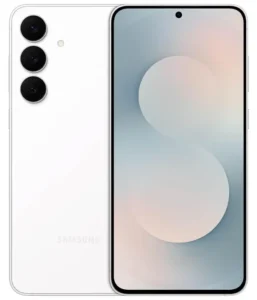
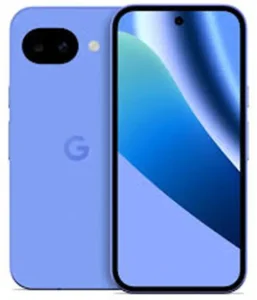
The Samsung Galaxy S25 FE and Google Pixel 10a are the kind of phones that make the mid-range market genuinely exciting. Neither asks for flagship money, yet both deliver experiences that would have passed for premium just a few generations ago. Samsung takes the Fan Edition formula it’s refined over multiple generations: a large display, a triple-camera setup, fast wired charging, and the full One UI software suite. Google counters with the Pixel 10a’s strengths: a smaller and more pocketable form, a superior main sensor aperture, Satellite SOS support, a larger battery, and the Pixel camera intelligence that punches above its sensor specs in ways that are harder to quantify on a spec sheet.
This is not a clear-cut comparison. Both phones make genuine trade-offs, and which one is right depends almost entirely on what the buyer values most. Here’s where the real differences lie.
Head-to-Head Camera Analysis
The Samsung Galaxy S25 FE runs a triple-camera system — 50MP main, 8MP 3x telephoto, and 12MP ultrawide — while the Pixel 10a keeps it to a dual-camera setup with a 48MP main and 13MP ultrawide. On paper, Samsung appears to win decisively, and for zoom photography specifically it does. The S25 FE’s 3x optical telephoto with OIS gives it a reach the Pixel 10a simply cannot replicate. Anyone who regularly shoots at zoom — portraits with background separation at distance, events, wildlife at a casual level — will miss that telephoto on the Pixel.
The main sensor comparison is more nuanced. The Pixel 10a’s 48MP f/1.7 main sits on a 1/2.0″ sensor with 0.8µm pixels and dual-pixel PDAF — a wider aperture than the S25 FE’s f/1.8, which admits more light at the primary shooting focal length. In low light without a telephoto in play, the Pixel 10a’s main camera benefits from Google’s computational photography pipeline, which has long been considered among the best in the industry for recovering detail in dim conditions. Samsung’s Exynos 2400-powered ProVisual Engine processes images well, but the Pixel’s approach to night photography tends to produce more natural-looking results with less artificial sharpening than Samsung’s processing pipeline typically applies.
Ultrawide coverage is close: the S25 FE’s 12MP f/2.2 ultrawide covers 123° while the Pixel 10a’s 13MP ultrawide covers 120°. The S25 FE goes slightly wider; the Pixel’s ultrawide sits on a larger 1/3.1″ sensor with bigger 1.12µm pixels, which generally helps in low-light ultrawide shots. For casual ultrawide use, both deliver acceptable results — neither ultrawide stands out as exceptional in this price tier.
Front cameras tell an interesting story. The S25 FE uses a 12MP f/2.2 front camera with 4K@30/60fps capability, while the Pixel 10a uses a 13MP f/2.2 ultrawide front unit — wider field of view for group selfies or video calls but maxing at 4K@30fps. The S25 FE edges out on front video flexibility with 60fps 4K support. Both include gyro-EIS stabilization on the front.
- Telephoto: S25 FE wins outright with 3x optical zoom OIS; Pixel 10a has none
- Main aperture: Pixel 10a’s f/1.7 is wider than S25 FE’s f/1.8 — advantage in low light
- Camera processing: Pixel’s computational pipeline produces more natural results; Samsung’s can over-sharpen
- Ultrawide coverage: S25 FE at 123° slightly wider than Pixel’s 120°
- Video ceiling: S25 FE shoots 8K; Pixel 10a caps at 4K
- Front video: S25 FE supports 4K@60fps front; Pixel tops at 4K@30fps
Performance & Real-World Usage
The Exynos 2400 in the Samsung Galaxy S25 FE is a capable chip — a 10-core design with a Cortex-X4 prime core at 3.2 GHz and the Xclipse 940 GPU. The Google Tensor G4 in the Pixel 10a runs a broadly similar CPU architecture with a Cortex-X4 at 3.1 GHz, but the Tensor platform is designed with a different priority: on-device AI acceleration. Google engineers the Tensor chipset specifically around its AI and machine learning workloads — voice recognition, real-time transcription, photo processing, and live translation. Raw CPU and GPU benchmarks tend to favor the Exynos 2400, particularly for sustained gaming performance where the Xclipse 940 has more graphical headroom than the Tensor G4’s Mali-G715 MP7 GPU.
In practical daily use, the Pixel 10a is fast and fluid for all the tasks most mid-range buyers actually perform: browsing, social media, streaming, messaging, and camera use. The performance gap between these chips becomes tangible during sustained gaming sessions at high settings, where the Exynos 2400 holds frame rates more consistently and resists thermal throttling better. The Tensor G4’s comparative weakness in GPU-heavy gaming is a known trade-off that Pixel buyers accept in exchange for Google’s AI-first experience. For users who don’t game heavily, the Tensor G4’s snappiness in everyday tasks makes the difference largely academic.
Storage speed is another gap worth noting. The S25 FE uses UFS 4.0 storage, which outpaces the Pixel 10a’s UFS 3.1 in read and write throughput — an advantage that surfaces during large file transfers, video exports, and app installations. Both phones lock in at 8GB RAM across all configurations, so multitasking behavior is comparable in typical workloads.
- CPU performance: Exynos 2400 edges out Tensor G4 in sustained performance
- GPU gaming: Xclipse 940 outperforms Mali-G715 MP7 for graphically intensive games
- AI processing: Tensor G4 is purpose-built for Google AI features; Exynos 2400 is more general-purpose
- Storage speed: S25 FE’s UFS 4.0 is faster than Pixel 10a’s UFS 3.1
- RAM: Both locked at 8GB across all variants
Battery Life & Charging Experience
The Pixel 10a carries a 5100mAh battery against the S25 FE’s 4900mAh — a modest but real 200mAh capacity advantage. Combined with the Tensor G4’s relatively conservative GPU draw in everyday tasks, the Pixel 10a consistently lands as the stronger endurance device. Heavy users who push streaming, navigation, and social media throughout a long day will typically find the Pixel lasting longer before the battery warning arrives. That said, both phones are designed for all-day use and neither will leave a moderate user scrambling for a charger before evening.
Charging speed reverses the advantage. The S25 FE charges at 45W wired, reaching 65% in 30 minutes, and supports 15W wireless charging with Qi2 compatibility. The Pixel 10a charges at 30W wired, hitting 50% in 30 minutes — slower in both percentage and absolute time. The S25 FE also supports reverse wireless charging, allowing it to top up wireless earbuds or accessories. The Pixel 10a counters with bypass charging — a feature that routes power directly to the phone’s components during heavy use while bypassing the battery, reducing heat and long-term battery wear during plugged-in gaming or video sessions. It’s a niche advantage but a meaningful one for users who frequently use their phone on charge.
The Pixel 10a’s wireless charging caps at 10W — significantly slower than the S25 FE’s 15W Qi2 wireless. For users who charge primarily on a wireless pad, the S25 FE recovers battery more quickly throughout the day.
- Battery capacity: Pixel 10a’s 5100mAh beats S25 FE’s 4900mAh for endurance
- Wired charging: S25 FE at 45W is 50% faster than Pixel 10a’s 30W
- Wireless charging: S25 FE at 15W Qi2 outpaces Pixel 10a’s 10W
- Reverse wireless: S25 FE supports it; Pixel 10a does not
- Bypass charging: Pixel 10a only — reduces battery wear during plugged-in heavy use
Display, Design & Build Feel
The S25 FE’s 6.7-inch Dynamic LTPO AMOLED 2X display at 1080 x 2340 pixels hits ~385 ppi and peaks at 1900 nits. The Pixel 10a’s 6.3-inch P-OLED panel at 1080 x 2424 hits ~422 ppi and peaks at 3000 nits. The Pixel is sharper per inch, meaningfully brighter at peak, and more compact — a trifecta that makes the Pixel 10a the better display in a direct spec comparison. The S25 FE’s larger screen real estate benefits media consumption and productivity tasks where extra screen area matters; the Pixel 10a’s higher brightness is more valuable in direct sunlight readability. Both run at 120Hz with HDR support.
Build materials tell a story of different budget priorities. The S25 FE uses Gorilla Glass Victus+ on front and back — stronger glass than the Pixel 10a’s Gorilla Glass 7i front — with an enhanced armor aluminum frame. The Pixel 10a uses a plastic back with an aluminum frame, which keeps weight down to 183g versus the S25 FE’s 190g. Plastic backs are more impact-resistant than glass (they flex rather than shatter on drops), but they carry a perceived quality disadvantage that’s real even if it’s aesthetic. Both phones are IP68 rated for submersion up to 1.5 meters, putting them on equal footing for water protection.
The Pixel 10a is the more pocketable device at 153.9 x 73 x 9mm versus the S25 FE’s 161.3 x 76.6 x 7.4mm. The Pixel is thicker at 9mm but narrower and shorter — a form factor that fits more naturally in a jeans pocket or smaller hand. The S25 FE’s slim 7.4mm profile looks and feels more refined, but the extra length makes one-handed operation less comfortable. The Pixel 10a adds Satellite SOS support — emergency messaging via satellite in areas without cellular coverage — a safety feature the S25 FE does not include.
- Display size: S25 FE at 6.7″ is substantially larger than Pixel 10a’s 6.3″
- Pixel density: Pixel 10a at ~422 ppi is sharper than S25 FE’s ~385 ppi
- Peak brightness: Pixel 10a at 3000 nits far exceeds S25 FE’s 1900 nits
- Back material: S25 FE uses glass; Pixel 10a uses plastic — plastic absorbs drops better
- Glass protection: S25 FE’s Gorilla Glass Victus+ is stronger than Pixel’s Glass 7i
- Satellite SOS: Pixel 10a includes it; S25 FE does not
- Pocketability: Pixel 10a is shorter and narrower despite being thicker
Software, Updates & AI Features
Both phones commit to seven major Android upgrades — a genuinely impressive promise for devices in this price tier. The S25 FE ships on Android 16 with One UI 8; the Pixel 10a ships on Android 16 with Google’s near-stock Android interface. For buyers who care about software longevity, the playing field is level. For buyers who care about how their phone feels to use day-to-day, the software experience diverges significantly.
One UI 8 on the S25 FE includes Galaxy AI features — Generative Edit, Note Assist, Live Translate, Circle to Search — and Wireless Samsung DeX for connecting to an external display as a desktop environment. It’s a feature-rich software suite, and buyers who engage with Samsung’s ecosystem will find plenty to use. One UI’s density can feel heavy for users who prefer a cleaner interface — it ships with more pre-installed apps and a more complex settings structure than stock Android.
The Pixel 10a runs clean Android 16 with Google’s AI tooling integrated directly into the operating system: Magic Eraser, Best Take, Photo Unblur, Audio Magic Eraser for video, and real-time transcription powered by the Tensor G4’s dedicated processing blocks. Google’s on-device AI feels more seamlessly embedded into everyday use than Samsung’s Galaxy AI suite, particularly in the camera app where Pixel features activate automatically without navigating menus. For users who value a clean, fast, and intuitive software experience, the Pixel 10a’s stock Android with AI enhancements is a meaningful quality-of-life advantage.
Price & Value Proposition
The Samsung Galaxy S25 FE commands a slightly higher price in most markets, reflecting its triple-camera system, faster charging, larger display, stronger glass, Wireless DeX, and UFS 4.0 storage. For buyers who need a telephoto lens, want the fastest wired charging in this class, or prefer a larger screen, the S25 FE’s premium is justifiable on a feature-by-feature basis.
The Pixel 10a is the more compelling value proposition for buyers who don’t need a telephoto, prefer a compact form factor, want Satellite SOS emergency capability, and value Google’s camera intelligence and clean software experience over Samsung’s broader feature set. Google’s computational photography consistently extracts more from a smaller camera hardware investment, and the Pixel 10a’s 5100mAh battery with bypass charging addresses long-term battery health in a way the S25 FE doesn’t. At its typical price, the Pixel 10a is one of the strongest cases for mid-range value in the current Android market.
Final Verdict: Which One Should You Buy?
The Samsung Galaxy S25 FE is the better phone for users who prioritize zoom versatility, a larger display, faster charging in all modes, and Samsung’s broad ecosystem of features including Wireless DeX. The 3x telephoto lens is a genuine differentiator that affects how usable the camera feels across a wide range of shooting scenarios. Eight-kilobyte video ceiling, UFS 4.0 storage speed, and 15W Qi2 wireless charging round out a hardware package that’s hard to beat at this price.
The Google Pixel 10a wins on display brightness, compactness, battery endurance, camera intelligence per dollar, clean software, and Satellite SOS safety coverage. Its f/1.7 main sensor and Google’s computational photography pipeline produce exceptional stills — particularly in challenging lighting — despite the absence of a telephoto. For users who shoot primarily at wide and ultrawide focal lengths, the Pixel 10a’s camera experience is arguably more satisfying in everyday use than the S25 FE’s aggressive processing pipeline.
Buy the S25 FE for zoom, speed, screen size, and Samsung’s feature ecosystem. Buy the Pixel 10a for camera intelligence, compactness, battery endurance, and the cleanest mid-range Android software available.
Samsung Galaxy S25 FE vs Google Pixel 10a Frequently Asked Questions
Which phone has the better camera — the Samsung Galaxy S25 FE or Google Pixel 10a?
The Samsung Galaxy S25 FE has the more versatile camera system with a dedicated 3x optical telephoto lens that the Pixel 10a entirely lacks. For zoom photography, the S25 FE wins without contest. For overall image quality at the main focal length, the Pixel 10a’s f/1.7 aperture and Google’s computational photography pipeline produce more natural and detail-rich results, especially in low light. The S25 FE also shoots 8K video, which the Pixel 10a cannot match. The best camera depends on the type of shooting — telephoto users should choose the S25 FE; primary-lens shooters may prefer the Pixel 10a’s results.
Which phone has better battery life?
The Google Pixel 10a edges out the S25 FE for endurance. Its 5100mAh battery is larger than the S25 FE’s 4900mAh, and its Tensor G4 chip tends to draw conservatively in everyday tasks, extending screen-on time. The S25 FE charges faster at 45W wired versus the Pixel 10a’s 30W, and supports 15W wireless charging versus the Pixel’s 10W. For raw longevity between charges, the Pixel 10a leads; for recovering battery quickly, the S25 FE is faster.
Does the Google Pixel 10a have a telephoto camera?
No. The Google Pixel 10a uses a dual-camera system with a 48MP main and 13MP ultrawide — there is no telephoto lens of any kind. The Samsung Galaxy S25 FE includes a dedicated 8MP 3x optical telephoto with OIS, giving it meaningful zoom reach that the Pixel 10a cannot replicate optically. For buyers who regularly shoot portraits at distance, events, or subjects beyond arm’s length, this is a significant difference.
Which phone has the better display?
For brightness and sharpness, the Google Pixel 10a wins. Its P-OLED panel peaks at 3000 nits — substantially brighter than the S25 FE’s 1900-nit peak — and its smaller screen achieves ~422 ppi versus the S25 FE’s ~385 ppi, making text and detail crisper. The Samsung Galaxy S25 FE counters with a larger 6.7-inch screen that provides more real estate for media, documents, and multitasking. Both run at 120Hz with HDR support. Buyers who want a more compact and brighter display should favor the Pixel; buyers who want more screen area should choose the S25 FE.
Does the Samsung Galaxy S25 FE support wireless charging?
Yes. The Samsung Galaxy S25 FE supports 15W wireless charging with Qi2 compatibility, and also includes reverse wireless charging to top up accessories like earbuds. The Google Pixel 10a supports wireless charging at 10W. For users who charge primarily via wireless pads, the S25 FE’s faster and more flexible wireless charging is a practical advantage.
Which phone is easier to use one-handed?
The Google Pixel 10a is noticeably more comfortable one-handed. At 153.9 x 73mm and 183g, it is shorter, narrower, and lighter than the S25 FE’s 161.3 x 76.6mm frame and 190g. The Pixel 10a’s compact footprint fits more naturally in smaller hands and jeans pockets. The S25 FE’s larger 6.7-inch display requires more reach for top-of-screen elements, though its slim 7.4mm profile makes it feel refined to hold.
Does the Pixel 10a have Satellite SOS?
Yes. The Google Pixel 10a includes Satellite SOS support for emergency messaging in areas without cellular coverage — a safety feature that the Samsung Galaxy S25 FE does not offer. For users who travel to remote areas, hike, or simply want an added layer of emergency communication safety, this is a meaningful advantage that no software update can bring to the S25 FE.
Which phone is better for gaming?
The Samsung Galaxy S25 FE performs better for sustained gaming. Its Exynos 2400 with the Xclipse 940 GPU delivers higher frame rates in graphically demanding titles and handles thermal throttling better under extended play sessions than the Pixel 10a’s Tensor G4 with Mali-G715 MP7. The Tensor G4 is optimized for AI workloads rather than GPU-intensive gaming, which shows up in performance drop-offs during longer gaming sessions at maximum settings. For casual gaming the Pixel 10a is adequate; for regular mobile gaming at higher settings, the S25 FE is the better platform.