

Head-to-Head Camera Analysis
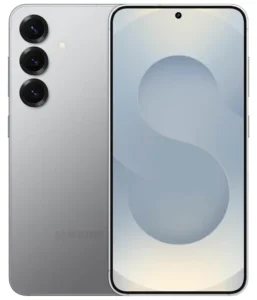
The iPhone Air makes a bold statement by launching with a single rear camera — a 48MP wide shooter with f/1.6 aperture, sensor-shift OIS, and a 1/1.56″ sensor. The Galaxy S25 counters with a full triple-camera system: a 50MP main, a 10MP telephoto with 3x optical zoom, and a 12MP ultrawide. The trade-off is immediate and real — the iPhone Air cannot zoom optically at all, while the S25 handles portraits, distant subjects, and wide scenes with three dedicated lenses.
Despite the hardware gap in versatility, the iPhone Air’s single lens punches hard where it counts. The f/1.6 aperture edges Samsung’s f/1.8, pulling in more light in dim restaurants and evening shots without pushing exposure compensation. Apple’s computational processing tends toward natural, controlled rendering — less prone to the oversharpened edges and lifted shadows that can creep into Samsung’s aggressive image pipeline. The Air’s main sensor resolves detail cleanly; the S25’s main sensor is a strong performer but often adds saturation that looks great on screen and slightly artificial when examined at full resolution.
Ultrawide shooting is simply absent on the iPhone Air. Users who routinely shoot architecture, group photos in tight spaces, or sweeping landscapes will feel that absence immediately. The Galaxy S25’s 12MP ultrawide at 120° covers those scenarios without hesitation. It’s one of the clearest real-world trade-offs in this comparison — the Air was built thin, and the second and third lenses didn’t make the cut.
Front cameras break clearly toward Apple. The iPhone Air’s 18MP ultrawide front camera with PDAF and SL 3D sensor resolution destroys the S25’s 12MP wide selfie cam in both resolution and low-light flexibility. Group selfies, wide environmental portraits, and Face ID depth sensing all benefit from that 18MP ultrawide configuration. Samsung’s front camera is competent for everyday selfies — the iPhone Air’s is noticeably more capable.
Video tells a similar story to stills. The iPhone Air records in Dolby Vision HDR up to 4K@60fps — a format that integrates directly into professional editing pipelines. The Galaxy S25 supports 8K@24/30fps and 10-bit HDR, offering raw resolution headroom. For most creators, Dolby Vision is the more practical format; 8K remains a niche use case that few workflows actually demand.
- Main camera low light: iPhone Air’s f/1.6 aperture edges the S25’s f/1.8 in dim conditions
- Telephoto zoom: Galaxy S25 wins with 3x optical; iPhone Air has no telephoto whatsoever
- Ultrawide: Galaxy S25 only — iPhone Air drops this lens entirely
- Front camera: iPhone Air’s 18MP ultrawide selfie cam outclasses S25’s 12MP unit
- Video format: iPhone Air leads with Dolby Vision; S25 counters with 8K and 10-bit HDR
Performance & Real-World Usage
The A19 Pro inside the iPhone Air is Apple’s current top mobile chip — a step above the standard A19 in the iPhone 17, with a more capable GPU and Neural Engine. Paired with 12GB of RAM across all storage tiers, the iPhone Air is the most powerful Apple has put in such a slim chassis. The Snapdragon 8 Elite in the Galaxy S25 is Qualcomm’s strongest offering, with Oryon V2 cores clocking at up to 4.47 GHz and Adreno 830 GPU. These are two of the fastest mobile processors available, and both handle any real-world task without hesitation.
For gaming, the Adreno 830 at 1200 MHz is a potent dedicated GPU — graphically demanding titles run smoothly and sustained frame rates hold longer before thermal throttling sets in. The iPhone Air’s 5-core Apple GPU benefits from Apple silicon efficiency, but the 5.6mm chassis presents a thermal challenge. Thin devices dissipate heat less effectively, and during extended gaming sessions, the Air will throttle sooner than a thicker device would. It’s not a dealbreaker for casual use, but competitive gamers should factor it in.
Multitasking is matched spec-for-spec at 12GB RAM on both devices. Apple’s memory management is tight enough that iOS rarely needs to reload background apps even at 8GB; at 12GB the Air handles aggressive multitasking comfortably. The S25’s UFS 4.0 storage is fast and reliable. The iPhone Air uses NVMe — a different architecture that Apple optimizes heavily for iOS file operations, resulting in snappy app launches and quick file exports.
The Galaxy S25 supports Samsung DeX and Samsung Wireless DeX, enabling a desktop-style experience with an external monitor. The iPhone Air has no equivalent mode. For professionals who occasionally want laptop-like productivity from their phone, the S25 is the only option in this comparison.
One connectivity note worth flagging: the iPhone Air uses USB-C 2.0, which caps wired data transfer at 480 Mbps. The Galaxy S25 uses USB-C 3.2 with DisplayPort 1.2 and OTG support — meaningfully faster for transferring large video files or connecting peripherals. For a phone positioned as a creative tool, Apple’s USB-C 2.0 choice is puzzling and limits the Air’s utility in professional workflows.
- Chipset tier: Both are top-tier; A19 Pro leads in single-core, Adreno 830 competes in sustained GPU
- Thermal performance: S25’s thicker 7.2mm body manages heat better than the Air’s 5.6mm chassis
- Desktop mode: Galaxy S25 supports Samsung DeX; iPhone Air does not
- USB transfer speed: S25’s USB-C 3.2 far outpaces iPhone Air’s USB-C 2.0
Battery Life & Charging Experience
The iPhone Air carries a 3149mAh battery — the smallest cell in a modern flagship comparison by a significant margin. The Galaxy S25 ships with a 4000mAh battery, over 800mAh more. On paper, the S25 should last longer. In practice, the A19 Pro’s efficiency partially closes that gap, but Apple’s own messaging positions the Air as a lighter daily use device rather than an endurance champion. Heavy users — those streaming video, gaming, or navigating for hours — will notice the battery ceiling sooner on the Air.
Wired charging is equal in one narrow metric: both reach 50% in approximately 30 minutes. The S25 does this via 25W wired charging; the iPhone Air uses PD2.0 and hits the same 50% milestone. From a dead battery, the S25’s faster maximum wattage theoretically fills a larger battery to full in a comparable window. Wireless charging on the Air tops out at 20W via MagSafe — slightly faster than the S25’s 15W Qi2. Both support 4.5W reverse wired charging.
The battery story is the most honest argument against the iPhone Air. At 3149mAh, it is the price paid for the 5.6mm chassis. Users who spend long days away from chargers, or who use their phone intensively for work, should weigh that limitation carefully. The Galaxy S25’s 4000mAh cell is not exceptional by Android standards, but it is comfortably larger and paired with a chip known for solid efficiency.
- Battery capacity: Galaxy S25 at 4000mAh vs iPhone Air’s 3149mAh — a significant gap
- Wired charging to 50%: Both reach 50% in 30 minutes via different wattage approaches
- Wireless charging: iPhone Air at 20W MagSafe edges S25’s 15W Qi2
- Endurance verdict: S25 wins for heavy users; Air suits lighter daily patterns
Display, Design & Build Feel
The iPhone Air carries a 6.5-inch LTPO Super Retina XDR OLED at 460 ppi — sharper than the Galaxy S25’s 6.2-inch Dynamic LTPO AMOLED at 416 ppi. Both run 120Hz adaptive refresh; both cover HDR content. Apple peaks at 3000 nits versus Samsung’s 2600 nits, making the Air more readable in harsh direct sunlight. Samsung’s panel leans toward vivid, punchy rendering that looks spectacular for media; Apple’s display calibration trends toward accuracy and restraint. Neither is wrong — they serve different visual preferences.
The build story is where the iPhone Air becomes genuinely remarkable. At 5.6mm thick and 165g, it is one of the thinnest and lightest smartphones ever produced at this screen size. The titanium grade 5 frame — the same material used in the iPhone Pro lineup — gives it a premium rigidity that no plastic or aluminum frame can replicate. The Galaxy S25 at 7.2mm and 162g is nearly the same weight but noticeably thicker. Side by side, the Air feels almost implausibly thin, while the S25 feels like a conventional, refined flagship.
IP68 water resistance is present on both, but Apple rates the Air to 6 meters depth for 30 minutes — four times deeper than the S25’s 1.5 meter rating. For users who swim, kayak, or simply drop their phone in a sink, the difference is real. Ceramic Shield 2 on the Air and Gorilla Glass Victus 2 on the S25 both sit at Mohs level 5 scratch resistance — an even draw there. Both use aluminum or titanium frames with no expandable storage.
- Display sharpness: iPhone Air at 460 ppi bests S25’s 416 ppi
- Peak brightness: iPhone Air at 3000 nits vs S25’s 2600 nits — better outdoor visibility
- Thinness: iPhone Air at 5.6mm is dramatically thinner than S25’s 7.2mm
- Frame material: iPhone Air uses grade 5 titanium; S25 uses Armor Aluminum 2
- Water resistance: iPhone Air rated to 6m vs S25’s 1.5m — a major real-world gap
Software, Updates & AI Features
The iPhone Air ships on iOS 26 with Apple Intelligence built in — writing tools, image generation, enhanced Siri with app awareness, and deep integration across Apple’s ecosystem. Updates arrive on launch day for all users worldwide, and Apple’s long-term support history stretches well beyond the seven-year Android promise. The Galaxy S25 runs Android 15 with One UI 8 and Samsung’s seven-year update commitment — a serious pledge that narrows the long-term software gap considerably from where it stood a few generations ago.
Samsung’s Galaxy AI suite is wide-reaching: Circle to Search, live call translation, Generative Edit, and Note Assist are ready out of the box. One UI 8 is feature-dense, which is both a strength and a trade-off — settings are deep, preloaded apps are present, and the interface carries more visual weight than iOS. Apple Intelligence on the Air takes a more curated approach, delivering fewer features but integrating them more tightly into the native experience. Neither platform is objectively better; they reflect fundamentally different philosophies about what software should feel like.
The iPhone Air is eSIM-only in most markets — a forward-looking choice that removes the physical SIM tray entirely, contributing to the thin chassis. The Galaxy S25 retains physical SIM compatibility alongside eSIM. For international travelers accustomed to swapping local SIM cards, the Air’s eSIM-only approach requires planning that the S25 does not.
Price & Value Proposition
The iPhone Air starts at 256GB with 12GB RAM — a generous base storage tier that skips the cramped 128GB entry point. The Galaxy S25 starts at 128GB, also with 12GB RAM, typically at a lower price. Samsung’s entry point gives buyers more flexibility to save money at the base tier. Apple’s 1TB option for the Air extends to a tier Samsung doesn’t currently match in the S25 lineup.
Value judgment here hinges on priorities. The iPhone Air charges a premium for its titanium construction, record-breaking thinness, sharper display, and stronger front camera. The Galaxy S25 offers more camera versatility with three lenses, better battery endurance, faster USB-C, and Samsung DeX — all at a lower starting price. Neither phone represents poor value; they simply represent different definitions of what a flagship should prioritize.
Final Verdict: Which One Should You Buy?
The iPhone Air is the right phone for users who want the most elegant, thin, and light smartphone experience available — and who operate within Apple’s ecosystem. The titanium build, exceptional front camera, sharper display, and A19 Pro chip make it a genuinely premium device. The trade-offs are real: no telephoto, no ultrawide, a small battery, and USB-C 2.0 are concessions made in the name of a 5.6mm chassis.
The Galaxy S25 is the pragmatic choice for users who want camera versatility, reliable all-day battery life, faster data transfer, and Samsung DeX productivity. It is a more balanced phone across the full spec sheet — not as dramatically thin or light, but more capable in the scenarios that matter most to most people.
For design-first buyers and Apple ecosystem users, the Air is extraordinary. For everyone else — especially those who shoot varied subjects, game heavily, or live away from chargers — the Galaxy S25 is the more dependable daily tool.
iPhone Air vs Samsung Galaxy S25 Frequently Asked Questions
Does the iPhone Air have an ultrawide or telephoto camera?
No. The iPhone Air has a single rear camera — a 48MP wide shooter with OIS. There is no ultrawide lens and no telephoto. The Galaxy S25 includes all three: a 50MP main, a 12MP ultrawide, and a 10MP telephoto with 3x optical zoom. For versatile shooting, the S25 is the clear choice.
How does the iPhone Air’s battery compare to the Galaxy S25?
The Galaxy S25’s 4000mAh battery is significantly larger than the iPhone Air’s 3149mAh cell. Both reach 50% in roughly 30 minutes via wired charging. The S25 will last longer for heavy users. The Air’s A19 Pro efficiency partially offsets the gap, but intensive users will hit the battery ceiling sooner on the Air.
Is the iPhone Air thinner than the Galaxy S25?
Yes, dramatically so. The iPhone Air measures 5.6mm thick, while the Galaxy S25 is 7.2mm. The Air is among the thinnest large-screen smartphones ever produced. The S25 is a refined, slim device by conventional standards, but it cannot match the Air’s profile.
Which phone has better water resistance?
The iPhone Air is rated IP68 to 6 meters depth for 30 minutes. The Galaxy S25 is also IP68 but rated to only 1.5 meters. Both survive splashes and brief submersion comfortably, but the iPhone Air offers four times the rated water depth — a meaningful edge for users around water.
Does the Galaxy S25 support Samsung DeX?
Yes. The Galaxy S25 supports both Samsung DeX and Samsung Wireless DeX, allowing the phone to connect to an external monitor and function as a basic desktop environment. The iPhone Air has no equivalent desktop mode — iOS does not support this feature.
Which phone is better for selfies and video calls?
The iPhone Air is considerably better for selfies. Its 18MP ultrawide front camera with PDAF and SL 3D sensor outresolves the Galaxy S25’s 12MP front camera. Group selfies, wide-angle shots, and Face ID depth performance all benefit from the Air’s superior front setup.
Does the iPhone Air charge faster than the Galaxy S25?
Wired charging is nearly equal — both reach 50% in about 30 minutes. Wireless charging tips toward the iPhone Air at 20W MagSafe versus the S25’s 15W Qi2. The S25 supports reverse wireless charging; the Air supports reverse wired charging at 4.5W. Neither is a fast-charging leader in absolute terms.
Which phone is better for Android users considering a switch?
The Galaxy S25 is the natural choice for Android users. It maintains familiar UI patterns, full file system access, Samsung DeX, sideloading, and the Android ecosystem. The iPhone Air requires committing to iOS, Apple’s ecosystem, and eSIM-only SIM management in most markets — a steeper transition that pays off fully only for users already invested in Apple’s platform.