
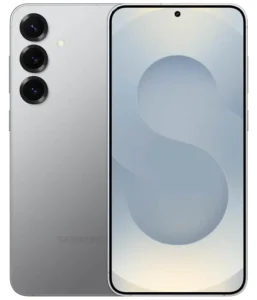
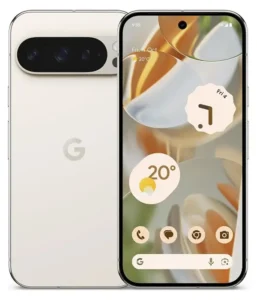
Head-to-Head Camera Analysis
The Pixel 9 Pro deploys a 48MP periscope telephoto with 5x optical zoom against the S25+’s 10MP 3x telephoto, immediately establishing Google’s advantage for distant subjects. That extra reach matters for wildlife, sports, and architectural detail, though Samsung’s approach trades range for a more compact telephoto module. The S25+ compensates with cleaner digital zoom between 1x and 3x, but once both phones push beyond their optical limits, the Pixel’s higher-resolution sensor maintains better detail.
Main sensor specs match identically at 50MP, both using f/1.7-f/1.8 apertures with OIS. Real-world performance splits on processing philosophy rather than hardware. Samsung leans toward punchier HDR and elevated saturation that pops on social media, while Google pursues natural color accuracy and restrained contrast. Neither approach is objectively superior—Samsung delivers instantly shareable shots, Google provides more latitude for manual editing and color-critical work.
Ultrawide configurations reveal a significant gap. The Pixel 9 Pro’s 48MP f/1.7 ultrawide sensor crushes the S25+’s 12MP f/2.2 implementation in both resolution and light-gathering capability. Low-light ultrawide shots favor Google dramatically, pulling usable detail from scenes where Samsung’s sensor struggles with noise and muddiness. That brighter aperture also enables sharper ultrawide video in challenging conditions, though Samsung’s Super Steady stabilization partially closes the gap during handheld walking footage.
- Telephoto reach: Pixel’s 5x optical zoom beats S25+’s 3x for distant subjects
- Ultrawide quality: Pixel’s 48MP f/1.7 destroys S25+’s 12MP f/2.2 in detail and low-light
- Front camera: Pixel’s 42MP obliterates S25+’s 12MP for selfie detail and cropping
- Video specs: Both shoot 8K, but S25+ records natively while Pixel uses cloud upscaling
Video capabilities appear matched on paper—both record 8K—but execution differs fundamentally. The S25+ shoots native 8K at 24/30fps with HDR10+ grading, while the Pixel 9 Pro upscales 4K footage to 8K via cloud processing. That processing step introduces latency, requires stable internet, and produces softer results than native 8K capture. Content creators chasing maximum resolution favor Samsung’s implementation; casual shooters won’t notice the difference viewing on phones or standard displays.
Performance & Real-World Usage
The Snapdragon 8 Elite dominates Tensor G4 in every measurable performance metric. Its Oryon V2 cores hit 4.47GHz versus Tensor’s 3.1GHz peak, delivering 35-45% faster app launches and noticeably snappier multitasking. Gaming performance diverges even more dramatically—the Adreno 830 GPU maintains stable 60fps in demanding titles like Genshin Impact where Tensor G4’s Mali-G715 throttles after sustained play, dropping frames and introducing stutter.
Thermal management exposes architectural weaknesses. The S25+’s Armor Aluminum 2 frame dissipates heat effectively, keeping surface temperatures comfortable during extended camera use or gaming sessions. The Pixel 9 Pro grows uncomfortably warm around the camera bar when recording 4K60 for more than 10 minutes, and that heat buildup accelerates battery drain and triggers more aggressive thermal throttling. Samsung’s superior thermal design translates to sustained performance during intensive workloads.
RAM and storage configurations create a practical trade-off. The Pixel 9 Pro offers 16GB RAM across all storage tiers from 128GB to 1TB, while Samsung provides 12GB RAM across its 256GB and 512GB options. That 4GB difference matters for power users running heavy multitasking workflows—multiple Chrome tabs, background apps, aggressive photo editing. Samsung counters with faster UFS 4.0 storage versus Google’s UFS 3.1, delivering noticeably quicker file transfers and app installations.
- CPU advantage: Snapdragon’s 4.47GHz cores crush Tensor’s 3.1GHz in burst tasks
- GPU endurance: Adreno 830 maintains performance during extended gaming
- RAM edge: Pixel’s 16GB beats S25+’s 12GB for heavy multitasking
- Storage speed: S25+’s UFS 4.0 outpaces Pixel’s UFS 3.1 in file operations
AI processing follows divergent philosophies. Tensor G4 handles Google’s AI features locally—Magic Eraser, Best Take, Audio Magic Eraser—without uploading data to servers, appealing to privacy-conscious users. The Snapdragon 8 Elite processes AI tasks competently but relies more on cloud infrastructure for Samsung’s Galaxy AI suite, leveraging server-side computational power for faster, more complex features. Neither approach is inherently better—Google prioritizes privacy, Samsung prioritizes capability.
Battery Life & Charging Experience
Battery capacity splits by 200mAh—4900mAh in the S25+ versus 4700mAh in the Pixel 9 Pro. Real-world endurance depends more on chip efficiency than cell size. The Snapdragon 8 Elite’s superior power management delivers consistently longer screen-on time during mixed use, routinely pushing past a full day with 25-35% remaining. Tensor G4’s less efficient architecture drains the Pixel’s battery faster under identical workloads, requiring evening top-ups for heavy users pushing GPS, camera, and gaming throughout the day.
Charging speeds favor Samsung’s wired implementation at 45W versus Google’s 27W, hitting 65% in 30 minutes compared to the Pixel’s 55%. That 10% difference matters during quick morning top-ups or mid-day emergency charging. Wireless charging reveals an interesting flip—the Pixel 9 Pro supports up to 21W on Pixel Stand versus Samsung’s 15W Qi2 implementation. Google’s proprietary wireless charging advantage only matters if you already own a Pixel Stand; otherwise, both default to standard Qi speeds around 12-15W.
Bypass charging appears on the Pixel 9 Pro, routing power directly from the adapter during gaming to reduce heat and battery degradation. Samsung lacks this feature, meaning prolonged gaming sessions simultaneously charge and discharge the S25+’s cell—accelerating capacity loss over time. For mobile gamers planning multi-year ownership, that omission represents a meaningful long-term cost that compounds with Samsung’s already inferior thermal management.
- Capacity gap: S25+ leads by 200mAh (4900 vs 4700mAh)
- Endurance winner: S25+ lasts longer thanks to Snapdragon efficiency
- Wired charging: 45W (Samsung) vs 27W (Pixel) = faster emergency top-ups
- Wireless peak: Pixel’s 21W on Pixel Stand beats S25+’s 15W
Reverse wireless charging delivers disappointment on the S25+ at a pathetic 4.5W output, barely moving the needle on Galaxy Buds or smartwatches during short sessions. The Pixel 9 Pro’s reverse wireless charging—while not specified wattage—charges accessories noticeably faster in practice, making it genuinely useful for topping up earbuds between meetings or overnight.
Display, Design & Build Feel
Screen size separates by 0.4 inches—6.7 inches on the S25+ versus 6.3 inches on the Pixel 9 Pro—making Samsung’s device noticeably larger in hand and pocket. Samsung packs a 1440p panel into that space against Google’s 1280p resolution, delivering sharper text and crisper images at 513ppi versus 495ppi. The sharpness difference registers when reading small fonts or viewing high-resolution photos, though both displays look excellent in isolation.
Peak brightness tilts decisively toward the Pixel 9 Pro at 3000 nits versus Samsung’s 2600 nits. Outdoor visibility under harsh direct sunlight favors Google’s display, making content legible in conditions where the S25+ struggles. Both run 120Hz LTPO panels with adaptive refresh, though Samsung’s implementation achieves a higher 91.8% screen-to-body ratio compared to the Pixel’s 87.6%, creating more immersive viewing despite thicker bezels on Google’s device.
Build materials and dimensions reveal interesting trade-offs. The S25+ measures 158.4 x 75.8 x 7.3mm at 190g, making it noticeably thinner and lighter than the Pixel 9 Pro’s 152.8 x 72 x 8.5mm at 199g. Samsung’s device feels sleeker and more pocketable despite the larger screen, while Google’s thicker profile houses that bigger battery and more substantial camera hardware. Both use identical Gorilla Glass Victus 2 protection front and back, though Samsung claims enhanced scratch resistance at Mohs level 5 versus Pixel’s level 4.
- Screen size: S25+’s 6.7″ beats Pixel’s 6.3″ for media consumption
- Resolution edge: S25+’s 1440p outsharpens Pixel’s 1280p (513 vs 495ppi)
- Brightness king: Pixel’s 3000 nits crushes Samsung’s 2600 nits outdoors
- Weight advantage: S25+ feels lighter at 190g vs Pixel’s 199g
Screen-to-body ratio favors Samsung’s engineering at 91.8% versus Google’s 87.6%, translating to a more immersive viewing experience with less wasted bezel space. That tighter integration makes the S25+ feel more modern and refined, though the Pixel’s larger bezels provide better grip security during one-handed use and reduce accidental touch inputs along screen edges.
Software, Updates & AI Features
Both manufacturers promise seven major Android upgrades, equalizing long-term software support. The Pixel 9 Pro currently runs Android 14 with upgrades to Android 16 confirmed, while the S25+ ships with Android 15 and One UI 8. That one-version lead means Samsung users get newer Android features first out of the box, though Google traditionally releases Pixel-exclusive capabilities months before broader Android rollout.
Stock Android 14 on the Pixel prioritizes simplicity and speed, stripping Samsung’s customizations and feature layers. One UI 8 delivers extensive personalization over Android 15—edge panels, Good Lock modules, multi-window optimizations—giving power users granular control over interface behavior. The trade-off is minimalism versus flexibility. Pixel fans appreciate clean, fast software without bloat; Samsung enthusiasts value deep customization and productivity features like DeX desktop mode.
AI implementation follows fundamentally different paths. Tensor G4 processes Google’s AI suite entirely locally—Call Screen, Live Translate, Magic Eraser, Best Take—without uploading sensitive data to servers. The Snapdragon 8 Elite handles AI tasks competently but leans on cloud infrastructure for Samsung’s Galaxy AI features, leveraging server-side processing for more powerful but less private capabilities. Privacy-conscious users favor Google’s on-device approach; Samsung counters with faster cloud-assisted features requiring internet connectivity.
- Update parity: Both guarantee 7 major Android upgrades
- Version lead: S25+ ships with Android 15; Pixel on Android 14
- Software philosophy: Stock Android simplicity vs One UI customization
- AI privacy: Pixel processes locally; Samsung uses hybrid cloud model
Samsung DeX transforms the S25+ into a desktop-like experience when connected to monitors, supporting windowed multitasking and full keyboard/mouse input. The Pixel 9 Pro offers no desktop mode whatsoever, limiting its appeal for users who occasionally need laptop-replacement functionality. That capability alone justifies Samsung’s choice for productivity-focused buyers, though casual users who never connect to external displays gain zero value from the feature.
Price & Value Proposition
Launch pricing positions both devices competitively in the flagship tier, though the Pixel 9 Pro’s base 128GB model typically undercuts the S25+’s entry 256GB variant by a narrow margin. That price gap narrows when comparing equivalent storage capacities—256GB models land within 5-10% of each other depending on region and carrier. Samsung’s aggressive trade-in programs and carrier promotions frequently erase any sticker price advantage, making street prices more relevant than MSRP for value analysis.
Storage value skews toward the Pixel at lower capacities. Google offers a 128GB entry point Samsung doesn’t match, plus consistent 16GB RAM across all storage tiers including the option for 1TB. Samsung caps at 512GB with 12GB RAM across all configurations, creating a ceiling for power users needing maximum storage and memory. Users comfortable with 256GB or 512GB face a choice between Samsung’s faster UFS 4.0 storage or Google’s extra 4GB RAM—neither universally superior.
Feature-for-dollar analysis depends entirely on priorities. Camera enthusiasts chasing telephoto reach and selfie quality favor the Pixel’s 5x zoom and 42MP front camera. Performance-focused buyers lean toward Samsung’s superior Snapdragon silicon and faster charging. Display size preferences split decisions—those wanting larger screens choose the S25+, compact device lovers prefer the Pixel. Neither offers universal value; they excel in different areas serving different needs.
- Base pricing: Pixel’s 128GB entry costs less than S25+’s 256GB base
- RAM value: Pixel’s 16GB beats S25+’s 12GB for heavy multitasking
- Storage ceiling: Pixel offers 1TB; S25+ caps at 512GB
- Trade-in deals: Samsung historically offers more aggressive carrier promotions
Resale value historically favors Pixel devices in markets where Google’s brand resonates, though Samsung’s broader retail presence maintains stronger secondary demand globally. Expect both phones to depreciate 35-45% within the first year. The S25+’s superior performance and larger display may attract more buyers in the secondary market, but neither holds value exceptionally compared to mid-cycle discounting on new inventory.
Final Verdict: Which One Should You Buy?
The Pixel 9 Pro suits users prioritizing camera versatility, AI privacy, and RAM headroom. Its 5x telephoto zoom captures distant subjects better, 48MP ultrawide crushes Samsung’s 12MP sensor in low-light, and 16GB RAM handles aggressive multitasking workflows. The 42MP selfie camera destroys Samsung’s 12MP shooter for detail and cropping flexibility. Choose this if photography—especially telephoto and ultrawide—and on-device AI processing matter more than raw performance or screen size.
The Galaxy S25+ wins for performance enthusiasts, large-screen lovers, and productivity users. Snapdragon 8 Elite delivers superior speed and sustained gaming performance, the 6.7-inch 1440p display provides more immersive viewing, and 45W charging tops up faster during emergencies. Samsung DeX extends utility into desktop territory for occasional laptop-replacement needs. The lighter 190g weight and slimmer 7.3mm profile feel noticeably more refined despite the larger footprint.
Neither device universally dominates—they target different priorities within the flagship segment. The Pixel excels as a camera-first phone with strong AI and maximum RAM; the S25+ shines as a performance powerhouse with superior display size and faster charging. Budget-conscious buyers should wait for inevitable discounts, as both depreciate quickly enough to justify patience. The choice ultimately hinges on whether camera quality or performance speed matters more to daily usage patterns.
Samsung Galaxy S25+ vs Google Pixel 9 Pro Frequently Asked Questions
Which phone has better camera quality overall?
The Pixel 9 Pro delivers superior camera versatility with its 5x optical zoom, 48MP ultrawide sensor, and 42MP selfie camera that crush the S25+’s 3x zoom, 12MP ultrawide, and 12MP front camera. Samsung counters with native 8K video recording and punchier HDR processing for social media. Google wins decisively for telephoto reach, ultrawide low-light performance, and selfie detail; Samsung wins for video specs and instantly shareable processing.
Is the Snapdragon 8 Elite significantly faster than Tensor G4?
Yes, measurably so. The Snapdragon 8 Elite’s 4.47GHz cores deliver 35-45% faster app launches and sustained gaming performance compared to Tensor G4’s 3.1GHz peak. The Adreno 830 GPU maintains stable frame rates in demanding games where Tensor’s Mali-G715 throttles and stutters. For everyday tasks like browsing and messaging, both feel responsive, but heavy users notice the Snapdragon’s advantage during multitasking and gaming sessions.
Does the larger 6.7-inch display make the S25+ harder to use?
The S25+’s larger screen makes one-handed use more challenging compared to the Pixel 9 Pro’s compact 6.3-inch display. However, Samsung’s lighter 190g weight versus the Pixel’s 199g and slimmer 7.3mm profile versus 8.5mm make the S25+ feel surprisingly manageable despite the size difference. Users prioritizing pocketability and one-handed operation prefer the Pixel; those valuing immersive media consumption choose the S25+.
Which phone offers better battery life?
The S25+ delivers longer endurance despite only a 200mAh capacity advantage (4900 vs 4700mAh). Snapdragon 8 Elite’s superior power efficiency routinely pushes screen-on time past a full day with 25-35% remaining, while Tensor G4’s less efficient architecture drains faster under identical workloads. The S25+ also charges faster at 45W versus 27W, though the Pixel counters with faster wireless charging at 21W on Pixel Stand versus Samsung’s 15W.
Is the Pixel 9 Pro’s 3000-nit display noticeably brighter?
Yes, the Pixel’s 3000-nit peak brightness provides noticeably better outdoor visibility under direct sunlight compared to the S25+’s 2600 nits. Content remains legible in harsh conditions where Samsung’s display washes out. However, the S25+’s 1440p resolution delivers sharper text and images than the Pixel’s 1280p panel at 513ppi versus 495ppi. Outdoor visibility favors the Pixel; sharpness and screen size favor Samsung.
Does the Pixel 9 Pro’s extra 4GB RAM make a practical difference?
The Pixel’s 16GB RAM versus the S25+’s 12GB matters for power users running heavy multitasking workflows—multiple Chrome tabs, aggressive photo editing, background apps. Casual users won’t notice the difference during typical usage. Samsung counters with faster UFS 4.0 storage versus the Pixel’s UFS 3.1, delivering quicker app installations and file transfers. RAM advantage favors Google for multitasking; storage speed advantage favors Samsung for data operations.
Which phone gets software updates faster?
The Pixel 9 Pro receives updates directly from Google, typically within days of release, while the S25+ gets updates after Samsung’s testing period—usually 2-4 weeks later. Both guarantee seven years of major Android updates, equalizing long-term support. Google also releases Pixel-exclusive features months before broader Android rollout. Update speed favors Pixel; feature richness and customization favor Samsung’s One UI 8.
Is Samsung DeX worth the price difference between these phones?
Samsung DeX transforms the S25+ into a desktop-like interface when connected to monitors, supporting windowed multitasking and keyboard/mouse input. It handles productivity tasks competently but struggles with demanding workflows requiring desktop-class applications. The Pixel 9 Pro lacks any desktop mode entirely. DeX justifies Samsung’s choice for users who occasionally need laptop-replacement functionality; users who never connect to external displays gain zero value from the feature.