
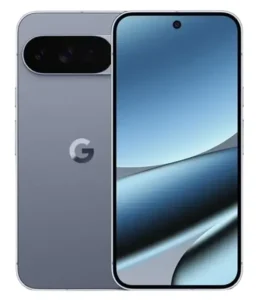
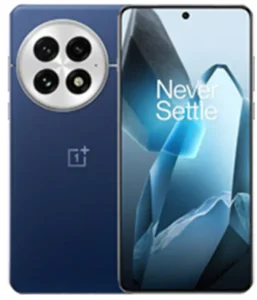
The Google Pixel 10 Pro XL and OnePlus 13 both arrive at the top of the Android market, but they arrive from completely different directions. Google’s flagship is a refined computational photography platform with a new custom chip, a generous software commitment, and deep AI integration baked into every corner of the OS. The OnePlus 13 is a brute-force value play — a phone that stacks raw specs aggressively, charges faster than almost anything in its class, and undercuts on price without feeling cheap.
Choosing between them requires knowing which trade-offs are acceptable. The Pixel 10 Pro XL makes you accept a smaller battery and slower charging in exchange for superior camera software, seven years of updates, and AI features that feel genuinely native rather than bolted on. The OnePlus 13 makes you accept a shorter update window and less sophisticated computational photography in exchange for a significantly faster chip, a monstrous battery, and charging speeds that make the Pixel’s numbers look dated.
Head-to-Head Camera Analysis
Both phones open with 50MP main sensors, but the Pixel 10 Pro XL’s larger 1/1.31-inch sensor with 1.2µm pixels collects more light per pixel than the OnePlus 13’s comparable setup — a difference that pays dividends in low-light shots where shadow detail matters. The Pixel’s f/1.7 aperture matches closely with the OnePlus 13’s f/1.6, but Google’s image processing pipeline consistently extracts more usable detail from those photons. The OnePlus 13 with Hasselblad Color Calibration produces punchy, vibrant output that looks great on its own display; in a direct side-by-side under mixed lighting, though, the Pixel’s tonal accuracy and noise management hold up better under scrutiny.
Telephoto is where the two phones split most decisively. The Pixel 10 Pro XL’s 48MP periscope at 5x optical zoom gives it a clear reach advantage over the OnePlus 13’s 50MP periscope at 3x. Shooting subjects at distance — wildlife, stadium moments, architectural detail — the Pixel pulls in more optical information before digital processing has to compensate. The OnePlus 13’s 3x lens is sharp and reliable in its native range, and Hasselblad’s color tuning gives midrange telephoto shots a distinctively natural look, but users who zoom frequently will hit its ceiling faster than the Pixel’s.
The ultrawide comparison is tighter than expected. The Pixel 10 Pro XL’s 48MP f/1.7 ultrawide covers 123 degrees with dual-pixel PDAF across the full frame — one of the more capable ultrawides in the segment. The OnePlus 13’s 50MP ultrawide at f/2.0 narrows to 120 degrees and gives up light at the aperture end, but its resolution holds up well in daylight. In dim environments, the Pixel’s brighter ultrawide aperture keeps detail visible where the OnePlus 13 begins to smooth over finer texture.
The front camera gap is significant. The Pixel 10 Pro XL’s 42MP ultrawide selfie sensor with PDAF produces sharp, consistently focused portraits and handles face tracking in video with a precision the OnePlus 13’s 32MP fixed-focus front camera doesn’t match. For video creators, selfie shooters, or anyone on frequent video calls, the Pixel’s front camera is the clearer tool.
- Low-light stills: Pixel 10 Pro XL leads with a larger sensor, brighter ultrawide aperture, and superior noise processing
- Telephoto reach: Pixel’s 5x periscope outpaces OnePlus 13’s 3x by a meaningful optical margin
- Color rendering: OnePlus 13 with Hasselblad calibration delivers vibrant output; Pixel prioritizes tonal accuracy and consistency
- Video: Both shoot 8K at 30fps; OnePlus 13 adds Dolby Vision recording and 480fps slow motion; Pixel adds 10-bit HDR and Pixel Shift
- Selfie camera: Pixel 10 Pro XL’s 42MP PDAF unit leads clearly over OnePlus 13’s 32MP fixed-focus sensor
- AI camera features: Pixel 10 Pro XL adds Best Take, Zoom Enhance, and Ultra-HDR — none of which the OnePlus 13 replicates
Performance & Real-World Usage
Google’s Tensor G5 moves to a 3nm process and gets a meaningful CPU upgrade — a 3.78 GHz Cortex-X4 prime core alongside five Cortex-A725 efficiency cores. That’s a genuine step forward from the Tensor G4. But the Snapdragon 8 Elite in the OnePlus 13 runs its prime cores at 4.32 GHz and pairs them with a broader cluster architecture that still leads the Tensor G5 in raw CPU output. Both chips share a 3nm process node, so manufacturing efficiency is matched, but Qualcomm’s Oryon architecture extracts more peak performance from the same generation of silicon.
In everyday use — scrolling, app switching, streaming, messaging — neither phone shows any friction. The gap surfaces under sustained load. Extended gaming sessions on demanding titles push the Adreno 830 in the OnePlus 13 further before thermal throttling becomes a factor, while the Pixel 10 Pro XL’s PowerVR DXT-48-1536 GPU handles moderate gaming capably but reaches its ceiling sooner under extended peak demand. The OnePlus 13 also tops out at 24GB of RAM on the 1TB model; the Pixel 10 Pro XL is fixed at 16GB across all storage tiers, giving the OnePlus 13 more overhead for memory-intensive multitasking.
Where the Pixel 10 Pro XL reclaims ground is in AI-accelerated workloads. Tensor G5’s dedicated TPU accelerates on-device inference tasks — real-time transcription, generative photo editing, Live Translate, and Gemini integration — noticeably faster than the Snapdragon 8 Elite handles the same operations. For users whose daily workload centers on Google’s AI feature stack, Tensor’s advantage in that specific domain is real and consistent. For users who game hard, run heavy video exports, or push intensive parallel workloads, the OnePlus 13’s broader performance lead is the more useful advantage.
- Raw CPU performance: OnePlus 13’s Snapdragon 8 Elite leads with higher clock speeds and stronger sustained throughput
- AI processing: Pixel 10 Pro XL’s Tensor G5 accelerates on-device AI tasks more efficiently
- GPU gaming: OnePlus 13’s Adreno 830 sustains higher frame rates under extended load
- RAM ceiling: OnePlus 13 reaches 24GB on the top model; Pixel 10 Pro XL is fixed at 16GB
- Storage: Both use UFS 4.0 — matched on read/write speeds
Battery Life & Charging Experience
The OnePlus 13 holds a 6000mAh silicon-carbon battery against the Pixel 10 Pro XL’s 5200mAh conventional lithium-ion cell. That 800mAh capacity gap, combined with the silicon-carbon chemistry’s better energy density and degradation profile, translates to an endurance advantage that shows up consistently in heavy use. The Pixel 10 Pro XL’s more efficient Tensor G5 chip and LTPO display management help close the gap somewhat, but under a demanding day — navigation, camera use, heavy data — the OnePlus 13 extends further into the evening.
Charging speed is where the comparison becomes lopsided. The OnePlus 13’s 100W wired charging reaches 50% in 13 minutes and full charge in 36 minutes. The Pixel 10 Pro XL improves on its predecessor with 45W wired, hitting 70% in 30 minutes — a meaningful upgrade from the Pixel 9 Pro XL’s 37W, but still in a different category from what OnePlus delivers. Wireless charging follows the same arc: 50W on the OnePlus 13 versus 25W Qi2 magnetic on the Pixel. For users who charge opportunistically throughout the day, the OnePlus 13’s speed makes top-ups a non-event; on the Pixel, a full charge still requires a committed charging window.
The Pixel 10 Pro XL does include bypass charging — routing power directly from the adapter during intensive plugged-in use, reducing heat buildup in the battery itself. It’s a thoughtful feature for long gaming or navigation sessions while plugged in, and one the OnePlus 13 doesn’t offer. It doesn’t close the charging speed gap, but it does make the Pixel smarter about preserving long-term battery health under heavy plugged-in workloads.
- Capacity: OnePlus 13 at 6000mAh vs Pixel 10 Pro XL at 5200mAh — clear endurance lead for OnePlus
- Wired charging: OnePlus 13 at 100W (full in 36 min) vs Pixel at 45W (70% in 30 min) — no contest
- Wireless charging: OnePlus 13 at 50W; Pixel 10 Pro XL at 25W Qi2 magnetic
- Bypass charging: Pixel 10 Pro XL supports it; OnePlus 13 does not
- Reverse charging: OnePlus 13 offers both 10W reverse wireless and 5W reverse wired; Pixel supports reverse wired
Display, Design & Build Feel
The OnePlus 13 wins the display specification comparison decisively. Its LTPO 4.1 AMOLED panel peaks at 4500 nits — significantly ahead of the Pixel 10 Pro XL’s 3300 nits — and brings Dolby Vision, HDR Vivid, and 2160Hz PWM dimming for cleaner low-brightness rendering that reduces eye fatigue in dark environments. Resolution also favors the OnePlus 13 at 1440 x 3168 pixels and 510 ppi versus the Pixel’s 1344 x 2992 pixels and 486 ppi. In practical terms, text appears marginally crisper on the OnePlus 13, and the brightness headroom makes outdoor use in direct sunlight more comfortable.
That said, the Pixel 10 Pro XL’s display is not a weak point in isolation. At 3300 nits peak, it handles all but the harshest outdoor conditions without issue, and Google’s color calibration produces accurate, balanced output that some users will prefer over the OnePlus 13’s more aggressive HDR rendering. The Pixel also adds Ultra-HDR image display support, letting its camera’s HDR captures render with full dynamic range on screen — a feature that closes some of the gap in HDR content enjoyment.
Build and dimensions are almost identical between the two phones — 162.8 x 76.6 x 8.5mm for the Pixel versus 162.9 x 76.5 x 8.5mm for the OnePlus 13, making them effectively the same footprint. Weight diverges more noticeably: the Pixel 10 Pro XL comes in at 232g while the OnePlus 13 weighs 210g — a 22-gram difference that becomes perceptible over extended one-handed use. The Pixel uses Gorilla Glass Victus 2 front and back; the OnePlus 13 uses Ceramic Guard glass on the front, which historically shows stronger scratch resistance in daily use, with an optional eco-leather back variant for grip preference.
Water resistance deserves specific attention. The OnePlus 13 holds IP68 and IP69 certifications simultaneously — the IP69 rating covering resistance to high-pressure water jets, beyond what standard IP68 submersion covers. The Pixel 10 Pro XL holds IP68 only. For outdoor use in rain, near water, or in environments where pressure spray is possible, the OnePlus 13 provides a meaningfully wider margin of safety. The OnePlus 13 also includes an infrared blaster for controlling TVs and home appliances — a small but practical feature the Pixel omits.
- Peak brightness: OnePlus 13 at 4500 nits vs Pixel 10 Pro XL at 3300 nits — clear outdoor advantage
- Resolution: OnePlus 13 at 510 ppi vs Pixel at 486 ppi — marginal but visible on fine text
- HDR support: OnePlus 13 with Dolby Vision and HDR Vivid; Pixel 10 Pro XL with Ultra-HDR image rendering
- Weight: OnePlus 13 at 210g vs Pixel 10 Pro XL at 232g — a noticeable 22g difference in hand
- Water resistance: OnePlus 13 holds IP68 + IP69; Pixel 10 Pro XL is IP68 only
- Infrared blaster: OnePlus 13 includes one; Pixel 10 Pro XL does not
Software, Updates & AI Features
The update commitment gap is the most consequential long-term difference between these two phones. Google guarantees seven major Android upgrades for the Pixel 10 Pro XL — the longest update runway available on any Android device. The OnePlus 13 commits to four major upgrades. For buyers planning to keep their phone for five or six years, that three-upgrade gap translates to years of additional security patches, feature access, and OS compatibility. The Pixel 10 Pro XL ships on Android 16; the OnePlus 13 launched on Android 15 and will top out earlier in the upgrade cycle.
On-device AI integration runs deeper on the Pixel 10 Pro XL than any Android alternative currently offers. Tensor G5’s TPU powers Gemini Nano directly on the device — enabling features like real-time call screening, on-device transcription, generative photo editing through Magic Eraser and Best Take, and contextual search that works without a cloud round-trip. OxygenOS 16 on the OnePlus 13 is polished and stable, and it includes its own AI-assisted features, but they sit as a layer atop the OS rather than being woven into the core system in the way Google achieves with its own hardware-software integration.
OxygenOS 16 has grown more feature-dense compared to earlier, more minimal versions — closer in complexity to a Samsung-style skin than the stripped-back OxygenOS that OnePlus built its reputation on. Users who prefer a bloat-free, clean Android experience will find the Pixel’s near-stock implementation more comfortable. Users who want a richer out-of-box feature set and don’t mind navigating a more layered OS will find OxygenOS 16 fully functional and far from frustrating.
Price & Value Proposition
The OnePlus 13 typically prices below the Pixel 10 Pro XL at equivalent storage tiers, making its spec-per-dollar ratio genuinely difficult to argue against. A faster chip, a brighter display, a larger battery, dramatically faster charging, IP69 certification, and up to 24GB of RAM — all for less money — is a compelling hardware proposition on paper.
The Pixel 10 Pro XL justifies its premium through longevity and ecosystem depth. Seven years of major Android updates is a concrete long-term value argument — spread across a six-year ownership period, the Pixel’s update commitment alone changes the cost-per-year calculation. The Pixel also includes Ultra Wideband support and Satellite SOS connectivity, hardware features the OnePlus 13 doesn’t offer, and its camera’s AI feature set — Best Take, Zoom Enhance, Ultra-HDR — represent genuine differentiators for photography-focused users.
For buyers who prioritize hardware performance, battery life, charging speed, and immediate value, the OnePlus 13 delivers more for less. For buyers who plan a longer ownership cycle, live in Google’s ecosystem, or use the camera as their primary creative tool, the Pixel 10 Pro XL earns its price over time in ways that raw spec comparisons don’t fully capture.
Final Verdict: Which One Should You Buy?
The OnePlus 13 wins on raw specification value. It’s lighter, faster in benchmarks, brighter in sunlight, charges at a category-different speed, and costs less. For buyers who game heavily, stream constantly, or simply want a phone that survives a full day without anxiety and recharges before a meeting ends, the OnePlus 13 is the easier recommendation.
The Pixel 10 Pro XL wins on camera versatility, software longevity, and AI feature depth. Its 5x telephoto reaches where the OnePlus 13 cannot, its computational photography pipeline is more consistent across lighting scenarios, its selfie camera is a generation ahead, and its seven-year update commitment changes the long-term math substantially. For Google ecosystem users, camera enthusiasts who prioritize versatility, and buyers who hold phones for four or more years, the Pixel 10 Pro XL justifies every penny of its premium.
Both phones are genuinely excellent. The decision comes down to a single honest question: does the OnePlus 13’s charging and performance lead matter more than the Pixel 10 Pro XL’s camera depth and software longevity? Answer that, and the choice makes itself.
Google Pixel 10 Pro XL vs OnePlus 13 Frequently Asked Questions
Which phone has the better overall camera system?
The Pixel 10 Pro XL leads in overall camera versatility. Its 5x periscope telephoto reaches significantly further than the OnePlus 13’s 3x, its ultrawide aperture performs better in low light, its 42MP front camera with PDAF outclasses the OnePlus 13’s 32MP fixed-focus selfie unit, and its AI-powered features — Best Take, Zoom Enhance, Ultra-HDR — have no direct equivalent on the OnePlus 13. The OnePlus 13 with Hasselblad calibration produces impressive, vivid shots in good light, but the Pixel delivers more consistent results across a wider range of conditions.
How big is the performance gap between Tensor G5 and Snapdragon 8 Elite?
In raw CPU and GPU benchmarks, the Snapdragon 8 Elite in the OnePlus 13 leads the Tensor G5 meaningfully. The Snapdragon’s prime cores run at 4.32 GHz versus the Tensor G5’s 3.78 GHz, and the Adreno 830 GPU handles sustained gaming load better than the Pixel’s PowerVR DXT GPU. In AI-specific tasks — on-device transcription, generative photo editing, Gemini Nano inference — the Tensor G5’s dedicated TPU closes the gap significantly. For gaming and heavy compute workloads, the OnePlus 13 leads; for AI-forward workflows, the Pixel catches up.
Is the OnePlus 13’s charging speed really that much better?
Yes, by a wide margin. The OnePlus 13 reaches full charge in 36 minutes at 100W wired and 50% in just 13 minutes. The Pixel 10 Pro XL at 45W hits 70% in 30 minutes — better than its predecessor but still in a different speed category. Wireless charging follows the same pattern: 50W on the OnePlus 13 versus 25W Qi2 on the Pixel. For users who rely on quick charging windows between meetings or commutes, the difference is felt daily.
Which phone will receive software updates for longer?
The Pixel 10 Pro XL commits to seven major Android upgrades. The OnePlus 13 commits to four. For buyers planning to keep their phone beyond four years, the Pixel’s longer update runway means continued access to new Android features, security patches, and OS compatibility well after the OnePlus 13 reaches end of support. This is one of the Pixel’s most concrete long-term advantages.
Which phone is better for gaming?
The OnePlus 13. Its Snapdragon 8 Elite and Adreno 830 GPU sustain higher performance longer under demanding gaming loads, the 6000mAh battery provides more endurance for extended sessions, and up to 24GB of RAM keeps background processes active without compromise. The Pixel 10 Pro XL handles casual and moderate gaming without issue, but under sustained high-demand gaming, the OnePlus 13’s thermal management and GPU performance hold up better.
How does the display compare between the two phones?
The OnePlus 13 leads on measured display specs. It reaches 4500 nits peak brightness versus 3300 nits on the Pixel 10 Pro XL, renders at higher resolution (510 ppi vs 486 ppi), and supports Dolby Vision and HDR Vivid. Outdoor visibility is noticeably better on the OnePlus 13 in direct sunlight. The Pixel counters with Ultra-HDR image rendering that makes its own camera’s captures look more vivid on screen, and Google’s color calibration produces accurate, balanced tones that some users will prefer to the OnePlus 13’s more aggressive HDR processing.
Which phone has better water resistance?
The OnePlus 13 holds both IP68 and IP69 ratings. The IP69 certification covers resistance to high-pressure water jets — a protection level that the Pixel 10 Pro XL’s IP68-only rating does not include. For outdoor activities, rain exposure, or environments where pressure spray is likely, the OnePlus 13 offers a broader safety margin.
Is the Pixel 10 Pro XL worth buying over the OnePlus 13 for camera users?
For most camera-focused users, yes. The Pixel 10 Pro XL’s 5x telephoto reach, stronger ultrawide low-light performance, superior front camera, and AI features like Best Take and Zoom Enhance give it a clear edge in photographic versatility. The OnePlus 13 with Hasselblad Color Calibration is a capable camera phone — particularly in daylight — but the Pixel’s computational photography pipeline handles a wider range of shooting scenarios more reliably. Users who shoot telephoto frequently or rely on front camera quality will feel the difference immediately.