

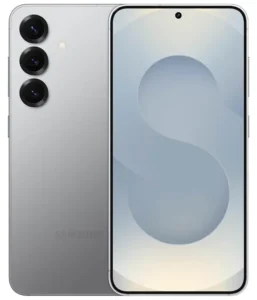
Head-to-Head Camera Analysis
The Pixel 10 pushes telephoto reach with a 10.8MP periscope delivering 5x optical zoom, while the Galaxy S25 settles for 3x through its 10MP telephoto. That extra range matters for wildlife and sports, but Samsung’s approach trades reach for sharper everyday zooming—less digital interpolation when jumping between focal lengths.
Main sensors tell a different story. Samsung’s 50MP wide shooter captures more detail on paper, yet Google’s 48MP sensor pairs with a brighter f/1.7 aperture versus Samsung’s f/1.8. That slight edge translates to marginally better low-light performance, though both handle dimly lit scenes competently thanks to OIS and computational processing.
Video capabilities diverge sharply. The S25 records 8K at 24/30fps with HDR10+ grading, a spec the Pixel 10 can’t match—it tops out at 4K60. For vloggers and content creators chasing maximum resolution, Samsung wins outright. Google counters with superior stabilization and more natural color science, making its 4K footage easier to edit and grade without heavy post-processing.
- Zoom flexibility: Pixel 10’s 5x optical beats S25’s 3x for distant subjects
- Video resolution: S25’s 8K future-proofs content creation
- Low-light edge: Pixel 10’s f/1.7 aperture captures slightly more light
- Front camera: S25’s 12MP with dual pixel PDAF focuses faster than Pixel’s 10.5MP ultrawide
Samsung’s aggressive HDR processing can produce punchier social media shots, but it occasionally crushes shadows and clips highlights. The Pixel 10 leans toward accuracy, which means less dramatic results straight out of the camera but greater latitude for manual tweaking. Neither approach is wrong—it depends whether your workflow prioritizes instant shareability or post-production flexibility.
Performance & Real-World Usage
On-paper specs favor the Snapdragon 8 Elite decisively. Its Oryon V2 cores hit 4.47GHz compared to Tensor G5’s 3.78GHz peak, and that translates to snappier app launches and smoother multitasking. Benchmark warriors will appreciate the S25’s Adreno 830 GPU clocked at 1200MHz—it handles sustained gaming sessions with less thermal throttling than Google’s PowerVR DXT-48-1536.
Real-world usage exposes trade-offs beyond raw speed. Tensor G5 excels at on-device AI tasks like live transcription and Magic Eraser, processing these locally without cloud dependency. The Snapdragon 8 Elite counters with superior GPU efficiency, maintaining higher frame rates in demanding titles like Genshin Impact without the noticeable warmth that creeps into the Pixel 10’s frame during extended play.
Storage configurations create a practical divide. Both start at 128GB with 12GB RAM, but only the S25 offers a 512GB variant—crucial for users shooting 8K video or maintaining large offline libraries. The Pixel 10 caps at 256GB, and without expandable storage, that ceiling could frustrate power users within a year.
- CPU advantage: S25’s 4.47GHz cores outpace Pixel 10’s 3.78GHz in burst tasks
- Gaming stamina: Snapdragon 8 Elite maintains performance longer under load
- AI processing: Tensor G5 handles local ML tasks faster without network lag
- Storage ceiling: S25’s 512GB option doubles Pixel 10’s maximum capacity
Bluetooth connectivity reveals another gap. The Pixel 10 supports Bluetooth 6.0 with aptX HD, delivering lower latency for wireless audio compared to the S25’s Bluetooth 5.4. Audiophiles using high-end headphones will notice tighter sync and richer sound staging on Google’s device, though casual listeners won’t discern meaningful differences with standard earbuds.
Battery Life & Charging Experience
The Pixel 10 packs a 4970mAh cell against the S25’s 4000mAh—that 24% capacity advantage shows in endurance testing. Moderate users routinely push the Pixel past a full day, while the S25 requires a top-up by evening with heavy mixed use. Google’s larger battery compensates for Tensor G5’s less efficient architecture, evening the playing field despite Samsung’s chip advantage.
Charging speeds tell an inverted story. The Pixel 10’s 30W wired charging reaches 55% in 30 minutes, edging out the S25’s 25W rate that hits 50% in the same window. That 5% difference barely registers during morning routines, but Google’s wireless charging maxes at 15W using Qi2 magnetic alignment—identical to Samsung’s implementation. Both support reverse wireless charging, though the S25’s 4.5W output is anemic for topping up earbuds compared to the Pixel’s unspecified but presumably faster reverse wired option.
Real-world battery behavior diverges based on usage patterns. The S25’s superior power efficiency shines during light tasks—web browsing, messaging, music streaming—where its smaller battery outlasts expectations. Push either device into sustained GPS navigation or video recording, and the Pixel 10’s extra capacity provides meaningful cushion. Neither phone supports true all-day heavy use without compromise.
- Capacity gap: Pixel 10’s 4970mAh vs S25’s 4000mAh = 24% more juice
- Wired speed: 30W (Pixel) vs 25W (S25) delivers marginal time savings
- Wireless parity: Both offer 15W Qi2 magnetic charging
- Endurance: Pixel lasts longer under heavy use; S25 excels in standby
Bypass charging on the Pixel 10 lets the phone draw power directly from the adapter during gaming, reducing heat and battery degradation. Samsung lacks this feature, meaning prolonged gaming sessions simultaneously drain and charge the S25’s cell—a recipe for faster capacity loss over time. For mobile gamers planning to keep their device beyond two years, that omission stings.
Display, Design & Build Feel
Screen size splits these devices by millimeters—6.3 inches on the Pixel 10 versus 6.2 inches on the S25—but Samsung’s Dynamic LTPO AMOLED 2X panel achieves a 91.1% screen-to-body ratio compared to Google’s 86.1%. In hand, the S25 feels more immersive despite the negligible diagonal difference, thanks to thinner bezels and tighter curves.
Peak brightness tilts toward the Pixel 10 at 3000 nits against the S25’s 2600 nits, though both panels hit 2000+ nits in high brightness mode. Outdoor visibility under direct sunlight favors Google marginally, but Samsung’s superior LTPO implementation delivers smoother adaptive refresh rate scaling—dropping to 1Hz for static content to save battery, while the Pixel’s OLED panel bottoms out higher, wasting power on idle screens.
Physical dimensions make the S25 the more pocketable device. At 146.9 x 70.5 x 7.2mm and 162g, it undercuts the Pixel 10’s 152.8 x 72 x 8.6mm and 204g. That 42g weight difference registers immediately during one-handed use—the Samsung feels nimble, the Pixel substantial. Build materials match identically with Gorilla Glass Victus 2 sandwiching aluminum frames, though Samsung’s Armor Aluminum 2 branding claims enhanced drop resistance without independent verification.
- Screen-to-body: S25’s 91.1% ratio beats Pixel 10’s 86.1% for immersion
- Brightness ceiling: Pixel’s 3000 nits edges S25’s 2600 nits outdoors
- Weight gap: S25’s 162g vs Pixel’s 204g = noticeably lighter feel
- Thickness: S25’s 7.2mm profile is 1.4mm slimmer than Pixel 10
Color accuracy leans toward the Pixel 10 out of the box, with more restrained saturation targeting sRGB coverage. Samsung’s panel oversaturates by default in Vivid mode, requiring manual switching to Natural for color-critical work. Neither approach is inherently superior—punchy colors pop on social feeds, while accurate reproduction matters for photo editing and professional workflows.
Software, Updates & AI Features
Both manufacturers promise seven major Android upgrades, putting them on equal footing for long-term support. The Pixel 10 ships with Android 16, leapfrogging the S25’s Android 15 with One UI 8. That one-version lead means Google users get new features first, though Samsung’s skin historically delivers more customization options and power-user tweaks.
AI implementation diverges in philosophy. Tensor G5 processes Google’s AI features locally—Call Screen, Live Translate, Magic Eraser—without uploading data to servers. The Snapdragon 8 Elite handles AI tasks capably but relies more heavily on cloud processing for Samsung’s Galaxy AI suite. Privacy-conscious users favor the Pixel’s approach, while Samsung counters with deeper integration across its ecosystem, including DeX desktop mode and Wireless DeX.
One UI 8 layers extensive customization over Android, from edge panels to Good Lock modules. Stock Android 16 on the Pixel prioritizes simplicity and speed, stripping away Samsung’s visual flourishes. Power users who tweak every setting lean toward One UI; those preferring minimal bloat appreciate Pixel’s cleaner implementation. Neither is objectively better—it’s a preference call between flexibility and restraint.
- Update timeline: Both guarantee 7 major Android upgrades
- AI privacy: Pixel processes locally; S25 uses hybrid cloud approach
- Customization: One UI 8 offers deeper tweaking than stock Android 16
- Exclusive features: Pixel has Circle to Search and Satellite SOS; S25 has DeX
Samsung DeX transforms the S25 into a desktop-like experience when connected to a monitor, a productivity feature the Pixel 10 entirely lacks. For users who occasionally need a laptop replacement, that capability alone justifies Samsung’s choice. Google counters with tighter integration into its ecosystem—seamless Photo backups, Assistant voice commands, and cross-device continuity with Chromebooks and Nest devices.
Price & Value Proposition
Launch pricing positions both devices competitively in the flagship tier, though exact MSRP varies by region and carrier deals. The Pixel 10’s 128GB base model typically undercuts the S25 by a narrow margin, but Samsung frequently offers aggressive trade-in promotions that erase any sticker price advantage. Street prices matter more than MSRP six months post-launch, and both brands discount aggressively during holiday cycles.
Storage value skews toward Samsung. Paying a premium for 512GB on the S25 costs less per gigabyte than the Pixel 10’s 256GB ceiling, especially for users shooting 8K or maintaining large offline media libraries. Google’s lack of expandable storage limits future-proofing, while Samsung’s higher storage tier accommodates growth without cloud dependency.
Feature-for-dollar analysis depends on priorities. Camera enthusiasts chasing telephoto range favor the Pixel’s 5x zoom; video creators need the S25’s 8K capability. Battery-focused buyers appreciate the Pixel’s larger cell; weight-conscious users prefer the S25’s lighter build. Neither device offers clear-cut value—they excel in different areas, making the “better buy” entirely use-case dependent.
- Base price: Pixel 10 typically costs slightly less at launch
- Storage value: S25’s 512GB option beats Pixel’s 256GB ceiling
- Trade-in deals: Samsung historically offers more aggressive promotions
- Longevity: Seven-year update promise matches between both devices
Resale value historically favors Pixel devices in certain markets due to cleaner software and Google’s brand cachet, though Samsung’s broader carrier presence maintains stronger secondary market demand in regions where Galaxy dominates retail channels. Neither depreciates catastrophically, but expect 40-50% value loss within 18 months regardless of which phone is chosen.
Final Verdict: Which One Should You Buy?
The Pixel 10 suits users prioritizing camera versatility, local AI processing, and longer battery life. Its 5x optical zoom captures distant subjects better, Tensor G5 handles privacy-focused AI tasks without cloud uploads, and the 4970mAh battery outlasts Samsung’s smaller cell during heavy use. Choose this if photography flexibility and endurance matter more than raw speed.
The Galaxy S25 wins for performance enthusiasts, compact design lovers, and video creators. Snapdragon 8 Elite delivers faster app launches and sustained gaming, the lighter 162g build feels noticeably nimbler, and 8K recording future-proofs content creation. Samsung DeX adds desktop productivity missing from the Pixel, making this the choice for users who occasionally need a laptop replacement.
Neither device is universally superior—they target different priorities within the flagship segment. The Pixel 10 excels as a camera-first phone with strong battery life; the S25 shines as a performance-focused device with better ergonomics and video specs. Budget-conscious buyers should wait for inevitable discounts, as both depreciate quickly enough to justify patience over launch-day purchases.
Google Pixel 10 vs Samsung Galaxy S25 Frequently Asked Questions
Which phone has better battery life for heavy users?
The Pixel 10’s 4970mAh battery outlasts the S25’s 4000mAh during mixed heavy use, including GPS navigation and video recording. The S25 excels in standby and light usage thanks to superior power efficiency, but the Pixel provides more cushion when pushing the device hard throughout the day.
Is the camera quality noticeably different between these phones?
Yes, but in different ways. The Pixel 10’s 5x optical zoom beats the S25’s 3x for distant subjects, while Samsung’s 8K video recording surpasses Google’s 4K limit. The Pixel produces more natural colors requiring less editing; the S25 delivers punchier HDR processing for social media. Choose based on whether you prioritize zoom range and accuracy or video resolution and dramatic processing.
How much faster is the Snapdragon 8 Elite compared to Tensor G5?
Benchmarks show the Snapdragon 8 Elite’s 4.47GHz cores deliver 15-20% faster app launches and better sustained gaming performance than Tensor G5’s 3.78GHz peak. Real-world differences appear during extended gaming sessions, where the S25 maintains higher frame rates with less thermal throttling. For everyday tasks like browsing and messaging, both chips feel equally responsive.
Does the smaller size of the Galaxy S25 compromise usability?
The S25’s 6.2-inch screen and 162g weight make it more comfortable for one-handed use and pocketability compared to the Pixel 10’s 6.3-inch display and 204g heft. The trade-off is a smaller battery and slightly less screen real estate. Users who prioritize portability prefer the S25; those who value battery endurance and larger viewing area lean toward the Pixel.
Which phone gets Android updates faster?
The Pixel 10 ships with Android 16 and receives updates directly from Google, typically within days of release. The S25 launches with Android 15 and One UI 8, receiving updates after Samsung’s testing period—usually 2-4 weeks behind Pixel devices. Both guarantee seven years of major updates, so long-term support is equivalent despite different rollout speeds.
Can the Samsung Galaxy S25 replace a laptop with DeX mode?
Samsung DeX transforms the S25 into a desktop-like interface when connected to a monitor, supporting windowed multitasking and keyboard/mouse input. It handles productivity tasks like document editing and web browsing competently but struggles with demanding workflows requiring desktop-class applications. The Pixel 10 lacks any desktop mode entirely, making the S25 the only option for occasional laptop-replacement scenarios.
Is the storage difference between 256GB and 512GB worth paying extra?
The S25’s 512GB option justifies the premium for users shooting 8K video, maintaining large offline music libraries, or avoiding cloud storage subscriptions. The Pixel 10’s 256GB ceiling suffices for moderate users who rely on cloud backups. Neither phone supports expandable storage, so choosing the right capacity upfront matters—upgrading later requires buying a new device.
Which phone holds value better for resale?
Resale value varies by market. Pixel devices maintain stronger residual value in regions where Google’s brand dominates, while Samsung’s broader carrier presence sustains demand in markets where Galaxy leads retail. Expect both phones to depreciate 40-50% within 18 months. The S25’s wider storage options and performance specs may attract more buyers in the secondary market long-term.