
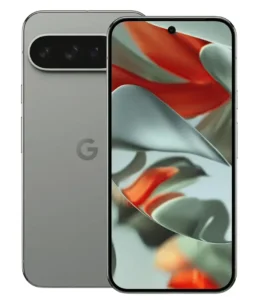
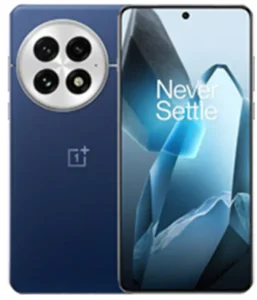
Put the Google Pixel 9 Pro XL and the OnePlus 13 side by side and the philosophical divide becomes obvious immediately. Google builds a camera-first device with AI at its core and a promise of seven years of updates. OnePlus builds a raw performance machine with a monstrous battery and charging speeds that embarrass most of the competition. Both cost serious money. Only one is right for a given buyer.
The specs alone don’t tell the full story. The Pixel 9 Pro XL runs Google’s own Tensor G4 chip, a custom silicon with specific AI accelerators that prioritize computational photography over raw benchmark scores. The OnePlus 13 runs the Snapdragon 8 Elite, one of the fastest mobile processors available, paired with up to 24GB of RAM. These are fundamentally different engineering priorities, and the experience reflects that at every level.
Head-to-Head Camera Analysis
Both phones open with 50MP main sensors, but the Pixel 9 Pro XL’s f/1.7 aperture matches the OnePlus 13’s f/1.6 closely enough that neither dominates purely on light collection. Where the Pixel pulls ahead is in computational processing. Google’s image pipeline handles dynamic range, skin tones, and noise reduction with a consistency that the OnePlus 13, despite its Hasselblad Color Calibration, struggles to match across varied lighting conditions. The OnePlus 13 leans toward punchy, saturated output that looks impressive on its own display but can read as oversharpened when examined on a monitor.
Telephoto is where the two phones take genuinely different paths. The Pixel 9 Pro XL offers a 48MP periscope at 5x optical zoom; the OnePlus 13 counters with a 50MP periscope at 3x. For wildlife, sports, or distant subjects, the Pixel’s 5x reach is meaningfully better — pulling in more detail at distance without leaning on digital interpolation. The OnePlus 13’s 3x lens is sharper in the mid-range and handles Hasselblad’s natural color calibration well, but users who zoom frequently will hit its ceiling faster.
The ultrawide cameras expose a clear gap. The Pixel 9 Pro XL’s 48MP f/1.7 ultrawide with a 123-degree field of view is one of the best in the segment — sharp across the frame, consistent with the main sensor’s color science, and genuinely usable in low light. The OnePlus 13’s 50MP ultrawide at f/2.0 delivers strong detail in good light but narrows to 120 degrees and loses ground in darker scenes where the Pixel’s brighter aperture keeps more detail visible.
Front camera performance swings heavily toward the Pixel. A 42MP ultrawide selfie sensor with PDAF produces sharp, detailed portraits with accurate focus tracking — a real advantage for video calls and content creation. The OnePlus 13’s 32MP front camera is competent but lacks the autofocus sophistication and resolution advantage the Pixel enjoys up close.
- Low-light stills: Pixel 9 Pro XL wins with superior computational processing and a brighter ultrawide
- Telephoto reach: Pixel’s 5x periscope outpaces OnePlus 13’s 3x at distance
- Color science: OnePlus 13 with Hasselblad calibration produces vivid shots; Pixel produces more accurate, consistent tones
- Video: Both shoot 8K at 30fps; OnePlus 13 adds Dolby Vision recording and 480fps slow motion at 1080p
- Selfie: Pixel 9 Pro XL’s 42MP PDAF front camera leads clearly over OnePlus 13’s 32MP fixed-focus setup
Performance & Real-World Usage
The Snapdragon 8 Elite inside the OnePlus 13 is faster than the Tensor G4 in almost every raw benchmark that exists, and that advantage is not subtle. Gaming, 3D rendering, and sustained computational tasks run smoother on the OnePlus 13, which also benefits from UFS 4.0 storage versus the Pixel’s UFS 3.1 — faster app load times and file transfers that compound over a day of heavy use. The Pixel 9 Pro XL’s Tensor G4 was designed around AI inference and on-device machine learning rather than raw CPU and GPU performance, and it shows whenever a benchmark strips those advantages away.
In practice, both phones handle everyday multitasking without friction. Switching between apps, browsing, and streaming feels instant on each device. The performance gap surfaces under sustained pressure — extended gaming sessions, 4K video exports, or running multiple AI tasks simultaneously. The OnePlus 13 sustains peak performance longer before thermal management steps in, and with up to 24GB of RAM on the 1TB model, it keeps more apps active in memory than the Pixel’s fixed 16GB configuration.
The Pixel 9 Pro XL’s performance advantage sits entirely in AI-accelerated tasks: real-time transcription, on-device photo editing, Live Translate, and Gemini Nano integration. These workflows feel noticeably snappier on Tensor G4 than on competing chips. For users whose daily workload centers on Google’s AI features, the Pixel’s specialized silicon earns its place. For users who game heavily or push intensive workloads, the OnePlus 13’s Snapdragon 8 Elite is the clearer choice.
- Raw performance: OnePlus 13’s Snapdragon 8 Elite leads across CPU, GPU, and storage benchmarks
- AI tasks: Pixel 9 Pro XL’s Tensor G4 handles on-device AI features with greater efficiency
- RAM ceiling: OnePlus 13 reaches 24GB on the top tier; Pixel 9 Pro XL is fixed at 16GB
- Storage speed: OnePlus 13 uses UFS 4.0; Pixel 9 Pro XL uses UFS 3.1
Battery Life & Charging Experience
The OnePlus 13 carries a 6000mAh silicon-carbon battery against the Pixel 9 Pro XL’s 5060mAh cell — a substantial gap that reflects directly in endurance. Under heavy use, the OnePlus 13 consistently outpaces the Pixel through a full day and into a second, while the Pixel 9 Pro XL requires a midday top-up for users with demanding screen-on time. The newer silicon-carbon chemistry in the OnePlus 13 also degrades more slowly over long-term charge cycles than conventional lithium-ion, which matters for multi-year ownership.
Charging speed is where the gap becomes almost comical. The OnePlus 13 hits 100W wired charging, reaching 50% in 13 minutes and full charge in 36 minutes. The Pixel 9 Pro XL tops out at 37W wired, achieving 70% in 30 minutes — a respectable result for Google’s historical standards, but a different league entirely compared to what OnePlus delivers. Wireless charging follows the same pattern: 50W on the OnePlus 13 versus 23W on the Pixel Stand and 12W on standard Qi.
The Pixel 9 Pro XL does carry bypass charging — a feature that routes power directly from the charger while gaming, reducing heat buildup in the battery during plugged-in sessions. That’s a thoughtful addition for long gaming use that the OnePlus 13 doesn’t match. It doesn’t close the charging speed gap, but it does make the Pixel smarter about how it manages battery health during intensive plugged-in tasks.
- Capacity: OnePlus 13 at 6000mAh vs Pixel 9 Pro XL at 5060mAh — a meaningful endurance lead for OnePlus
- Wired charging: OnePlus 13 at 100W (full in 36 min) vs Pixel at 37W — no contest
- Wireless charging: OnePlus 13 at 50W; Pixel at 23W via Pixel Stand, 12W Qi
- Bypass charging: Pixel 9 Pro XL supports it; OnePlus 13 does not
- Reverse wireless: Both phones support it; OnePlus 13 adds 5W reverse wired charging
Display, Design & Build Feel
The OnePlus 13 wins the display spec sheet convincingly. Its LTPO 4.1 AMOLED panel hits 4500 nits peak brightness — significantly ahead of the Pixel 9 Pro XL’s 3000 nits — and adds Dolby Vision, HDR Vivid, and 2160Hz PWM dimming for reduced flicker at low brightness levels. Resolution also favors OnePlus at 1440 x 3168 pixels versus the Pixel’s 1344 x 2992, and at 510 ppi against 486 ppi, the OnePlus 13 renders fine text and detail with marginally more crispness. Ultra HDR image support adds another layer of vibrancy for compatible content.
Outdoor visibility is where the OnePlus 13’s brightness lead becomes a daily-use advantage. In direct sunlight, the headroom difference between 4500 and 3000 nits is visible — the OnePlus 13 remains fully legible where the Pixel 9 Pro XL starts to wash out. Both panels are LTPO with 120Hz adaptive refresh, so smoothness and power efficiency are matched in normal conditions.
Build quality is closely matched on paper, but different in feel. Both phones share nearly identical dimensions — 162.8 x 76.6 x 8.5mm for the Pixel versus 162.9 x 76.5 x 8.5mm for the OnePlus 13 — making them virtually indistinguishable by size in hand. The Pixel 9 Pro XL weighs 221g versus the OnePlus 13’s 210g, a minor but perceptible difference. The Pixel uses Gorilla Glass Victus 2 front and back with an aluminum frame; the OnePlus 13 uses Ceramic Guard glass — historically more scratch-resistant — with an aluminum frame and an option for an eco-leather back panel.
Water resistance deserves a specific mention. The OnePlus 13 holds both IP68 and IP69 ratings, meaning it survives high-pressure water jets in addition to submersion — a step above the Pixel 9 Pro XL’s IP68-only certification. For outdoor use in rain or near water, the OnePlus 13 provides a wider margin of safety. The OnePlus 13 also includes an infrared blaster, a small but genuinely useful feature for controlling TVs and appliances that the Pixel omits entirely.
- Peak brightness: OnePlus 13 at 4500 nits vs Pixel 9 Pro XL at 3000 nits — clear outdoor advantage
- Resolution: OnePlus 13 at 510 ppi vs Pixel at 486 ppi — marginal but measurable
- Water resistance: OnePlus 13 holds IP68 + IP69; Pixel 9 Pro XL is IP68 only
- Glass protection: OnePlus 13 uses Ceramic Guard; Pixel uses Gorilla Glass Victus 2
- Infrared blaster: OnePlus 13 has one; Pixel 9 Pro XL does not
- Weight: OnePlus 13 at 210g vs Pixel 9 Pro XL at 221g — lighter by a noticeable margin
Software, Updates & AI Features
Google promises seven major Android upgrades for the Pixel 9 Pro XL — the longest update commitment in Android right now, and a genuine long-term ownership advantage. The OnePlus 13 commits to four major Android upgrades, which is competitive but falls well short. For buyers planning to keep their phone for five or six years, the Pixel’s update runway is a concrete differentiator that compounds over time in security patches and feature access.
The software experience itself divides on philosophy. The Pixel runs a clean, near-stock Android with tight Google app integration and on-device AI features powered by Gemini Nano — including real-time transcription, Call Screen, Magic Eraser, and Photo Unblur. These features are deeply embedded in the OS and work without a cloud connection for most tasks. The OnePlus 13 runs OxygenOS 16, which has grown more feature-rich but also more complex compared to its earlier, minimalist versions — closer to a Samsung-style experience than the stripped-back OxygenOS of previous generations.
AI feature depth currently favors the Pixel. Google’s on-device AI integration runs deeper into the core OS — surfacing in Search, the camera, the phone app, and accessibility features — while OnePlus 13’s AI additions feel more like a feature layer on top of the existing experience. That said, OxygenOS 16 is polished and stable, and users coming from other Android skins will find it comfortable immediately.
Price & Value Proposition
The OnePlus 13 typically undercuts the Pixel 9 Pro XL at comparable storage configurations, making its raw specs-per-dollar ratio genuinely compelling. A faster chip, bigger battery, dramatically quicker charging, a brighter display, and IP69 — all for less money — is a hard combination to argue against on paper.
The Pixel 9 Pro XL justifies its price differently. Seven years of updates, deeper AI feature integration, a superior selfie camera, and a longer telephoto reach all serve specific user profiles. Buyers who live in Google’s ecosystem — Gmail, Drive, Photos, and Assistant — will extract more value from the Pixel’s tight integration than any spec comparison can capture. The Pixel also includes Ultra Wideband support and satellite SOS connectivity, features the OnePlus 13 lacks.
For buyers who prioritize endurance, raw performance, and fast charging above everything else, the OnePlus 13 offers exceptional value. For buyers who prioritize software longevity, computational photography, and AI-forward features, the Pixel 9 Pro XL earns its premium despite the charging and battery concessions.
Final Verdict: Which One Should You Buy?
The OnePlus 13 is the better phone by conventional spec metrics. It’s faster, has a bigger and brighter display, charges at a different speed category entirely, and costs less. For users who game, stream heavily, or simply want a phone that lasts all day and recharges in under 40 minutes, it’s difficult to recommend against it.
The Pixel 9 Pro XL is the better phone for a specific type of user. Seven-year updates, the best computational photography in Android, a superior selfie camera, and the deepest on-device AI integration available make it the right choice for Google ecosystem users, camera enthusiasts who prioritize versatility over raw horsepower, and buyers who want the longest possible software lifespan from a single purchase.
Neither phone is a compromise. They represent two coherent visions of what matters in a flagship. The OnePlus 13 wins on performance, battery, and value. The Pixel 9 Pro XL wins on camera versatility, software longevity, and AI depth. The right answer depends entirely on which of those trade-offs matters more.
Google Pixel 9 Pro XL vs OnePlus 13 Frequently Asked Questions
Which phone has the better camera — Pixel 9 Pro XL or OnePlus 13?
For overall camera versatility, the Pixel 9 Pro XL leads. Its computational photography pipeline produces more consistent results across lighting conditions, its 5x periscope telephoto reaches further than the OnePlus 13’s 3x, and its 42MP front camera with PDAF is significantly better for selfies. The OnePlus 13 with Hasselblad calibration produces vivid, impressive shots — particularly in good light — but it can over-process in challenging conditions.
Is the OnePlus 13 significantly faster than the Pixel 9 Pro XL?
Yes, in raw performance the OnePlus 13’s Snapdragon 8 Elite is meaningfully faster than the Pixel 9 Pro XL’s Tensor G4, with better GPU performance, faster UFS 4.0 storage, and superior sustained load handling. The Pixel narrows the gap in AI-specific tasks where Tensor G4’s dedicated accelerators provide an advantage. For gaming, video exports, and heavy multitasking, the OnePlus 13 wins clearly.
How big is the charging speed difference between the two phones?
The gap is large. The OnePlus 13 charges at 100W wired — reaching full charge in about 36 minutes. The Pixel 9 Pro XL charges at 37W wired, reaching 70% in 30 minutes. Wireless charging follows the same pattern: 50W on the OnePlus 13 versus 23W on the Pixel Stand. For users who rely on quick top-ups throughout the day, the OnePlus 13’s charging speed is a category-level advantage.
Which phone has better software and update support?
The Pixel 9 Pro XL commits to seven major Android upgrades — the longest guarantee in Android currently. The OnePlus 13 commits to four major upgrades. For long-term ownership beyond four years, the Pixel’s update runway is a concrete advantage. Day-to-day, both run polished, feature-rich software; the Pixel has deeper on-device AI integration, while OxygenOS 16 on the OnePlus 13 offers a more feature-complete out-of-box experience.
Which phone is better for gaming?
The OnePlus 13. The Snapdragon 8 Elite’s Adreno 830 GPU sustains higher frame rates longer, the larger 6000mAh battery provides more endurance during extended sessions, and up to 24GB of RAM keeps more content in memory. The Pixel 9 Pro XL supports bypass charging during gaming — routing power through the charger to reduce battery heat — which is a thoughtful touch, but it doesn’t overcome the OnePlus 13’s raw performance lead in this use case.
Is the display on the OnePlus 13 better than the Pixel 9 Pro XL?
On measured specifications, yes. The OnePlus 13 reaches 4500 nits peak brightness versus 3000 nits on the Pixel, offers higher resolution at 510 ppi versus 486 ppi, and adds Dolby Vision and HDR Vivid support. Outdoor visibility in direct sunlight is noticeably better on the OnePlus 13. Both displays use LTPO AMOLED with 120Hz adaptive refresh, so smoothness is matched — the OnePlus 13 simply does more with the panel.
Which phone has better water resistance?
The OnePlus 13 holds both IP68 and IP69 ratings — the IP69 certifying resistance to high-pressure water jets, not just submersion. The Pixel 9 Pro XL is IP68 only. For outdoor use, beach environments, or rain exposure, the OnePlus 13’s dual certification provides a wider margin of protection.
Should a current Pixel user upgrade to the OnePlus 13?
Only if battery life, charging speed, and raw performance are genuine frustrations. Switching from a Pixel to the OnePlus 13 means giving up Google’s on-device AI features, the seven-year update commitment, the 5x telephoto reach, and deep ecosystem integration. Users who primarily want a faster phone with longer battery life will find the switch rewarding. Users who rely on Google’s AI-powered camera tools and software features will likely miss what they left behind.