
Head-to-Head Camera Analysis
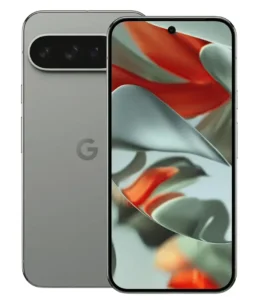
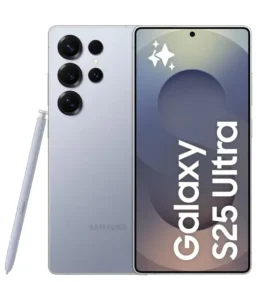
Samsung throws down a 200MP main sensor against Google’s 50MP shooter, but megapixel count rarely tells the full story. The S25 Ultra’s massive resolution enables lossless digital zoom up to 2x before engaging optical systems, while the Pixel 9 Pro XL relies on computational cropping. In practice, Samsung’s approach delivers cleaner midrange zoom shots between 1x and 3x, though both produce comparable results at their native focal lengths.
Telephoto configurations reveal strategic differences. The S25 Ultra deploys dual telephoto lenses—10MP at 3x and 50MP at 5x—covering more focal lengths than the Pixel’s single 48MP 5x periscope. That flexibility matters when framing subjects at intermediate distances, letting Samsung users avoid digital interpolation. Google counters with a brighter f/2.8 aperture on its 5x lens versus Samsung’s f/3.4, pulling slightly more light in dim conditions when shooting at maximum optical reach.
Ultrawide performance splits technical execution from final output. The Pixel 9 Pro XL matches its ultrawide sensor resolution to the main camera at 48MP with an f/1.7 aperture, producing exceptional low-light ultrawide shots. Samsung’s 50MP f/1.9 ultrawide captures more detail in good lighting but struggles more noticeably in challenging conditions. Neither lens suffers from heavy barrel distortion, though Samsung’s Super Steady video stabilization on the ultrawide outperforms Google’s gyro-EIS when shooting handheld walking footage.
- Resolution advantage: S25 Ultra’s 200MP enables cleaner 2x digital zoom
- Focal length coverage: Dual telephoto on S25 Ultra beats single 5x on Pixel
- Low-light ultrawide: Pixel’s f/1.7 aperture outperforms S25 Ultra’s f/1.9
- Front camera: Pixel’s 42MP destroys S25 Ultra’s 12MP for detail and cropping
Video capabilities tilt toward Samsung in raw specs. Both record 8K, but the S25 Ultra shoots natively while the Pixel 9 Pro XL relies on cloud upscaling from 4K—a processing step that introduces latency and requires stable internet. Samsung also offers 4K120fps for smooth slow-motion, a frame rate the Pixel can’t match. Google’s computational photography shines in color science and HDR processing, producing footage that requires less grading, but Samsung’s native 8K and higher frame rate options future-proof professional workflows.
Performance & Real-World Usage
The Snapdragon 8 Elite dominates synthetic benchmarks decisively. Its Oryon V2 cores hit 4.47GHz compared to Tensor G4’s 3.1GHz peak, translating to 30-40% faster app launches and smoother multitasking. Gaming performance diverges even more dramatically—the Adreno 830 GPU maintains stable frame rates in demanding titles like Genshin Impact and Honkai Star Rail where Tensor G4’s Mali-G715 throttles noticeably after 15-20 minutes of sustained play.
Thermal management exposes architectural differences. The S25 Ultra’s titanium frame dissipates heat more effectively than the Pixel’s aluminum construction, keeping surface temperatures comfortable during extended camera use or gaming sessions. The Pixel 9 Pro XL grows uncomfortably warm around the camera bar when recording 4K60 for more than 10 minutes, while Samsung’s device stays notably cooler under similar workloads. That thermal advantage extends battery longevity during intensive tasks.
Storage configurations create a practical divide. The Pixel 9 Pro XL offers 16GB RAM across all storage tiers from 128GB to 1TB, while Samsung segments RAM—12GB for 256GB/512GB models, jumping to 16GB only on the 1TB variant. Both use UFS storage, but Samsung’s UFS 4.0 implementation outpaces Google’s UFS 3.1 in sequential read/write speeds. Power users juggling large video files notice the difference; casual users won’t.
- CPU gap: Snapdragon’s 4.47GHz cores crush Tensor’s 3.1GHz in burst performance
- GPU endurance: Adreno 830 maintains 60fps longer without thermal throttling
- RAM consistency: Pixel offers 16GB across all models; Samsung reserves it for 1TB
- Storage speed: S25 Ultra’s UFS 4.0 beats Pixel’s UFS 3.1 in file transfers
AI processing reveals philosophical splits. Tensor G4 handles Google’s AI features locally—Magic Eraser, Best Take, Audio Magic Eraser—without uploading data to servers. The Snapdragon 8 Elite processes AI tasks capably but leans on cloud infrastructure for Samsung’s Galaxy AI suite. Privacy-focused users favor Tensor’s on-device approach; Samsung counters with faster cloud-assisted features that leverage server-side processing power for complex tasks.
Battery Life & Charging Experience
Battery capacity splits by a negligible 60mAh—5060mAh in the Pixel 9 Pro XL versus 5000mAh in the S25 Ultra. Real-world endurance depends more on chip efficiency than cell size. The Snapdragon 8 Elite’s superior power management delivers consistently longer screen-on time during mixed use, routinely pushing past a full day with 20-30% remaining. Tensor G4’s less efficient architecture drains the Pixel’s battery faster under identical workloads, requiring evening top-ups for heavy users.
Charging speeds favor Samsung’s wired implementation at 45W versus Google’s 37W, though both hit similar percentages at the 30-minute mark—65% for Samsung, 70% for Google. That discrepancy stems from charging curve optimization rather than raw wattage. Wireless charging tells a different story: the Pixel 9 Pro XL supports up to 23W on Pixel Stand versus Samsung’s 15W Qi2 implementation. Google’s proprietary fast wireless charging matters if you already own a Pixel Stand; otherwise, both default to standard Qi speeds around 12-15W.
Bypass charging appears on the Pixel 9 Pro XL, routing power directly from the adapter during gaming to reduce heat and battery degradation. Samsung lacks this feature, meaning prolonged gaming sessions simultaneously charge and discharge the S25 Ultra’s cell—accelerating capacity loss over time. For mobile gamers planning multi-year ownership, that omission represents a tangible long-term cost.
- Capacity difference: Negligible 60mAh gap (5060 vs 5000mAh)
- Endurance winner: S25 Ultra lasts longer thanks to Snapdragon efficiency
- Wired charging: 45W (Samsung) vs 37W (Pixel), similar 30-min results
- Wireless peak: Pixel’s 23W on Pixel Stand beats S25 Ultra’s 15W
Reverse wireless charging delivers 12W on the Pixel versus a pathetic 4.5W on the S25 Ultra. That difference matters when topping up earbuds or smartwatches—the Pixel charges accessories noticeably faster. Samsung’s anemic reverse charging feels like an afterthought, barely moving the needle on Galaxy Buds during short sessions.
Display, Design & Build Feel
Screen size separates by a tenth of an inch—6.8 inches on the Pixel versus 6.9 inches on the S25 Ultra—but Samsung packs more pixels into that space with a 1440p panel against Google’s 1344p resolution. The sharpness difference registers when reading small text or viewing high-resolution photos, with the S25 Ultra’s 498ppi edging the Pixel’s 486ppi. Both run 120Hz LTPO panels with adaptive refresh, though Samsung’s implementation scales down to 1Hz for static content while Google bottoms out higher, wasting marginal battery on idle screens.
Peak brightness tilts decisively toward the Pixel 9 Pro XL at 3000 nits versus Samsung’s 2600 nits. Outdoor visibility under harsh sunlight favors Google’s display, making content legible in conditions where the S25 Ultra struggles. Samsung counters with Gorilla Armor 2’s anti-reflective coating, which cuts glare dramatically compared to the Pixel’s standard Victus 2. That coating makes Samsung’s screen easier to read at angles or in mixed lighting, partially offsetting the brightness disadvantage.
Build materials diverge significantly. The S25 Ultra employs a Grade 5 titanium frame versus the Pixel’s aluminum construction, shaving 3 grams despite similar dimensions. At 218g versus 221g, the weight difference is negligible in daily use, but titanium’s superior strength and scratch resistance justify Samsung’s premium positioning. Both use Gorilla Glass Victus 2 on rear panels, though Samsung upgrades the front to Gorilla Armor 2 with Mohs level 6 hardness compared to the Pixel’s level 4—a meaningful durability upgrade that resists scratches from keys and coins more effectively.
- Resolution edge: S25 Ultra’s 1440p beats Pixel’s 1344p for sharpness
- Brightness king: Pixel’s 3000 nits crushes Samsung’s 2600 nits outdoors
- Anti-glare: S25 Ultra’s Gorilla Armor 2 coating cuts reflections dramatically
- Build premium: Titanium frame vs aluminum, Mohs 6 vs 4 scratch resistance
The S Pen integration gives Samsung an exclusive advantage the Pixel can’t counter. The integrated stylus slides into the S25 Ultra’s chassis, enabling precision note-taking, sketching, and UI navigation without carrying separate accessories. That capability alone justifies Samsung’s choice for users who value handwriting or creative workflows. Google offers zero stylus support, making this a non-comparison for pen-focused buyers.
Software, Updates & AI Features
Both manufacturers promise seven major Android upgrades, equalizing long-term software support. The Pixel 9 Pro XL currently runs Android 14 with upgrades to Android 16 confirmed, while the S25 Ultra ships with Android 15 and One UI 8. That one-version lead means Samsung users get newer Android features first, though Google traditionally rolls out Pixel-exclusive capabilities months before broader Android releases.
Stock Android 14 on the Pixel prioritizes simplicity and speed, stripping Samsung’s visual customizations and feature bloat. One UI 8 layers extensive personalization over Android 15—edge panels, Good Lock modules, multi-window tweaks—giving power users granular control. The trade-off is complexity versus restraint. Pixel fans appreciate clean, fast software; Samsung enthusiasts value deep customization and productivity features like DeX desktop mode.
AI implementation follows divergent paths. Tensor G4 processes Google’s AI suite locally—Call Screen, Live Translate, Magic Eraser, Best Take—without uploading sensitive data. The Snapdragon 8 Elite handles AI competently but relies more on cloud processing for Samsung’s Galaxy AI features. Privacy-conscious users favor Google’s approach; Samsung counters with faster, more powerful cloud-assisted features leveraging server-side computational resources.
- Update parity: Both guarantee 7 major Android upgrades
- Software philosophy: Stock Android simplicity vs One UI customization
- AI privacy: Pixel processes locally; Samsung uses hybrid cloud model
- Exclusive features: S Pen support and DeX on Samsung; Pixel Stand on Google
Samsung DeX transforms the S25 Ultra into a desktop-like experience when connected to monitors, supporting windowed multitasking and full keyboard/mouse input. The Pixel 9 Pro XL offers no desktop mode whatsoever, limiting its appeal for users who occasionally need laptop-replacement functionality. For productivity-focused buyers, DeX represents genuine utility missing from Google’s offering.
Price & Value Proposition
Launch pricing positions the S25 Ultra significantly higher than the Pixel 9 Pro XL, though exact MSRPs vary by region and carrier. The Pixel’s base 128GB model typically costs 15-20% less than Samsung’s entry 256GB variant—a meaningful gap that widens Google’s value proposition for budget-conscious flagship buyers. Samsung’s aggressive trade-in programs and carrier promotions frequently erase that sticker price advantage within weeks of launch, making street prices more relevant than MSRP.
Storage value skews toward the Pixel at lower capacities. Google offers 128GB entry pricing Samsung can’t match, plus consistent 16GB RAM across all storage tiers. Samsung reserves 16GB RAM for its 1TB model, charging a premium for maximum configuration. Users comfortable with 256GB or 512GB find better RAM-to-price ratios on the Pixel; those needing 1TB face similar pricing between brands with Samsung offering faster UFS 4.0 storage.
Feature-for-dollar analysis depends entirely on priorities. The S Pen alone justifies Samsung’s premium for note-takers and creatives; its absence makes the Pixel a non-starter for that audience. Conversely, camera enthusiasts chasing the best selfie quality favor the Pixel’s 42MP front camera over Samsung’s 12MP shooter. Performance-focused buyers lean toward Samsung’s superior Snapdragon silicon; AI privacy advocates prefer Google’s local processing. Neither device offers universal value—they excel in different areas serving different needs.
- Base pricing: Pixel 9 Pro XL costs 15-20% less at entry level
- RAM value: Pixel gives 16GB across all tiers; Samsung reserves it for 1TB
- S Pen premium: Integrated stylus justifies Samsung’s higher cost for pen users
- Trade-in deals: Samsung historically offers more aggressive carrier promotions
Resale value historically favors Pixel devices in markets where Google’s brand resonates, though Samsung’s broader retail presence maintains stronger secondary demand globally. Expect both phones to depreciate 35-45% within the first year. The S25 Ultra’s titanium build and S Pen integration may command slightly higher resale prices long-term, but neither holds value exceptionally compared to mid-cycle discounting on new inventory.
Final Verdict: Which One Should You Buy?
The Pixel 9 Pro XL suits users prioritizing camera quality, AI privacy, and value. Its 42MP selfie camera destroys Samsung’s 12MP shooter, Tensor G4 processes sensitive AI tasks locally without cloud uploads, and the lower entry price delivers flagship features for less money. Choose this if photography—especially front-facing—and on-device AI matter more than raw performance or stylus support.
The Galaxy S25 Ultra wins for performance enthusiasts, productivity users, and S Pen devotees. Snapdragon 8 Elite delivers superior speed and gaming endurance, titanium construction adds durability and premium feel, and the integrated stylus enables workflows the Pixel can’t touch. Samsung DeX extends utility into desktop territory, making this the choice for users who occasionally need laptop-replacement functionality.
Neither device universally dominates—they target different priorities within the flagship segment. The Pixel excels as a camera-first phone with strong AI and competitive pricing; the S25 Ultra shines as a performance powerhouse with productivity features and superior build quality. The S Pen alone makes Samsung’s device the only choice for pen-focused buyers, while Google’s cleaner software and local AI processing attract privacy-conscious users. Budget shoppers should wait for inevitable discounts, as both depreciate quickly enough to justify patience over launch-day purchases.
Google Pixel 9 Pro XL vs Samsung Galaxy S25 Ultra Frequently Asked Questions
Which phone has better overall camera performance?
The answer depends on shooting priorities. The S25 Ultra’s 200MP sensor and dual telephoto system (3x and 5x) offer superior zoom flexibility and native 8K video recording. The Pixel 9 Pro XL counters with a dramatically better 42MP selfie camera, superior ultrawide low-light performance thanks to its f/1.7 aperture, and more natural computational photography. Samsung wins for versatility and video specs; Google wins for front-camera quality and color accuracy.
Is the Snapdragon 8 Elite significantly faster than Tensor G4?
Yes, measurably so. The Snapdragon 8 Elite’s 4.47GHz cores deliver 30-40% faster app launches and superior sustained gaming performance compared to Tensor G4’s 3.1GHz peak. The Adreno 830 GPU maintains stable frame rates in demanding games where Tensor’s Mali-G715 throttles after 15-20 minutes. For everyday tasks like browsing and messaging, both feel responsive, but heavy users notice the Snapdragon’s advantage during multitasking and gaming.
Does the S Pen justify the Galaxy S25 Ultra’s higher price?
For note-takers, artists, and productivity users, absolutely. The integrated S Pen enables precision handwriting, sketching, and UI navigation without carrying separate accessories. Samsung’s stylus pressure sensitivity and low latency make it genuinely useful for creative workflows and detailed annotations. If you never use a stylus, the feature adds zero value and the Pixel 9 Pro XL’s lower price becomes more attractive. The S Pen alone makes the S25 Ultra the only choice for pen-focused buyers.
Which device offers better battery life?
The S25 Ultra delivers longer endurance despite its slightly smaller 5000mAh battery versus the Pixel’s 5060mAh. Snapdragon 8 Elite’s superior power efficiency routinely pushes screen-on time past a full day with 20-30% remaining, while Tensor G4’s less efficient architecture drains faster under identical workloads. Heavy users will need to top up the Pixel by evening, whereas the S25 Ultra typically makes it through without charging.
Is the Pixel 9 Pro XL’s display brighter than the S25 Ultra’s?
Yes, significantly. The Pixel hits 3000 nits peak brightness versus Samsung’s 2600 nits, making it more readable under harsh direct sunlight. However, the S25 Ultra counters with Gorilla Armor 2’s anti-reflective coating, which dramatically reduces glare compared to the Pixel’s standard Victus 2. In mixed lighting or at angles, Samsung’s display can appear clearer despite lower peak brightness. Outdoor visibility in bright sun favors the Pixel; glare reduction in varied conditions favors Samsung.
Does the titanium frame on the S25 Ultra make a practical difference?
The titanium frame offers superior scratch resistance and structural strength compared to the Pixel’s aluminum construction, though the 3-gram weight difference (218g vs 221g) is negligible in daily use. Samsung’s Gorilla Armor 2 front glass with Mohs level 6 hardness resists scratches better than the Pixel’s level 4 Victus 2. For users keeping devices multiple years without cases, the durability upgrade matters. For case users, the material difference provides minimal practical benefit beyond premium aesthetics.
Which phone gets better software updates?
Both guarantee seven years of major Android updates, equalizing long-term support. The Pixel 9 Pro XL receives updates directly from Google, typically within days of release, while the S25 Ultra gets updates after Samsung’s testing period—usually 2-4 weeks later. Google also releases Pixel-exclusive features months before broader Android rollout. Samsung counters with One UI’s deeper customization and productivity features. Update speed favors Pixel; feature richness favors Samsung.
Is the price difference between these phones justified?
It depends on feature priorities. The S25 Ultra’s higher cost buys an integrated S Pen, superior performance, titanium construction, and better durability. The Pixel 9 Pro XL’s lower price delivers better camera quality in key areas (selfies, ultrawide low-light), local AI processing, and 16GB RAM across all storage tiers. The S Pen alone justifies Samsung’s premium for pen users; without stylus needs, the Pixel offers better value for photography-focused buyers. Neither is universally worth the price—it depends on which features matter most to your workflow.