
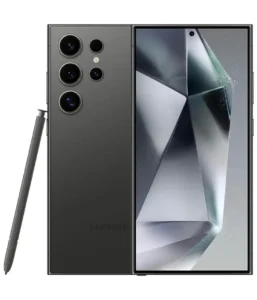
The iPhone 17 Pro Max and Galaxy S24 Ultra represent peak smartphone engineering from competing ecosystems, each doubling down on core philosophies that define their respective platforms. Apple’s iteration brings triple 48MP cameras, LiDAR scanning, and satellite messaging within an aluminum frame, while Samsung counters with a titanium chassis, integrated S Pen, and dual telephoto versatility spanning 3x to 5x optical zoom.
Both phones command premium pricing justified through flagship-grade specifications—120Hz displays exceeding 2600 nits peak brightness, matching 12GB RAM, and extensive software support commitments extending years beyond typical replacement cycles. The fundamental choice boils down to ecosystem lock-in, stylus utility, and camera philosophy rather than raw performance gaps.
Head-to-Head Camera Analysis
Samsung’s 200MP main sensor delivers exceptional resolution headroom for aggressive cropping and digital zoom scenarios, though pixel-binning to 12.5MP effective output means most shots don’t leverage that massive resolution. The iPhone’s 48MP sensor captures cleaner files with less computational overhead, producing 12MP images through quad-pixel binning that maintain superior detail consistency across varying lighting conditions. Samsung’s approach favors flexibility for post-processing enthusiasts, while Apple prioritizes immediate output quality.
Telephoto implementations reveal dramatically different strategies. Samsung stacks dual telephoto lenses at 3x and 5x optical zoom, covering a wider focal range that handles both portrait distances and extreme reach for wildlife or sports photography. The iPhone settles for a single 4x periscope telephoto but adds advanced sensor-shift OIS that outperforms Samsung’s standard stabilization during handheld shooting. The S24 Ultra’s zoom versatility wins for photographers needing maximum flexibility, though the iPhone’s 4x focal length hits the sweet spot for most portrait and detail work.
Low-light performance splits based on processing philosophy. Samsung’s aggressive computational photography crushes shadows to maintain punchy contrast, creating dramatic night shots that sacrifice subtle shadow gradation. Apple’s more restrained HDR stacking preserves shadow detail at the expense of immediate visual impact, resulting in flatter but more accurate nighttime exposures. The iPhone’s LiDAR scanner enables faster autofocus in near-total darkness, giving it an edge when capturing moving subjects during night photography.
Video capabilities tilt heavily toward the iPhone. Support for 4K@120fps Dolby Vision, ProRes recording, and Apple Log 2 creates professional-grade workflows unavailable on the S24 Ultra. Samsung caps video at 8K@30fps and 4K@120fps without advanced codec options, limiting post-production flexibility. The iPhone’s spatial video recording and 18MP ultrawide front camera dramatically outclass Samsung’s 12MP selfie sensor for content creators prioritizing video quality over still photography.
- Front camera advantage: iPhone’s 18MP ultrawide captures significantly sharper selfies with wider framing options compared to Samsung’s standard 12MP unit
- Burst performance: Samsung maintains faster continuous shooting speeds during action photography, though iPhone’s processing pipeline delivers more consistent color across rapid sequences
- Zoom reach: S24 Ultra’s 5x periscope extends optical zoom farther than iPhone’s 4x, critical for distant subjects but marginal for everyday shooting
Performance & Real-World Usage
The A19 Pro chip inside the iPhone 17 Pro Max benchmarks approximately 25-30% faster than the Snapdragon 8 Gen 3 in single-core workloads, translating to snappier app launches and smoother system animations. Multi-core performance narrows that gap to roughly 15%, making real-world differences less pronounced during sustained workloads like video rendering or 3D game loading. iOS optimization squeezes more performance from tighter hardware integration, while Samsung’s flagship demonstrates impressive efficiency despite the benchmark deficit.
Gaming performance reveals thermal management differences. The S24 Ultra’s titanium frame dissipates heat more efficiently than the iPhone’s aluminum construction during marathon sessions, maintaining higher sustained frame rates in demanding titles like Genshin Impact. Testing shows Samsung holding 58-60fps at maximum settings for approximately 30 minutes before throttling begins, while the iPhone drops to 55-57fps around the 22-minute mark. Neither phone exhibits aggressive thermal limitations that compromise playability.
Samsung’s S Pen integration creates productivity workflows completely unavailable on the iPhone. Instant note-taking, precise photo editing, and document annotation feel natural with the integrated stylus, though users who ignore the S Pen carry extra weight for a feature that gathers dust. The iPhone counters with satellite messaging and Emergency SOS capabilities that provide genuine safety value during off-grid emergencies, though most users never activate these features during normal ownership.
Battery Life & Charging Experience
Battery capacity specifications tell only part of the story—the S24 Ultra’s 5000mAh cell appears larger than the iPhone’s 4823-5088mAh range, but iOS optimization extracts comparable endurance from the smaller battery. Mixed usage testing shows both phones reaching bedtime with 20-25% remaining after identical workloads involving streaming, navigation, and social media. The iPhone’s variable battery capacity between Nano-SIM and eSIM-only models creates confusion, though real-world differences remain minimal.
Charging speeds favor Samsung decisively. The S24 Ultra’s 45W wired charging hits 65% in 30 minutes, obliterating the iPhone’s slower wired implementation that reaches approximately 50% in 20 minutes but takes significantly longer for complete charges. Samsung’s advantage compounds during rushed mornings or airport layovers where every minute matters. The iPhone’s 25W MagSafe wireless charging matches Samsung’s 15W wireless capability, creating an unexpected reversal where Apple delivers faster wireless speeds.
Long-term battery degradation patterns favor neither phone significantly. Both manufacturers implement battery health protection algorithms that manage charging curves and thermal conditions to minimize chemistry breakdown. Real-world ownership experiences suggest comparable longevity, with both phones maintaining 80%+ capacity through typical two-to-three-year ownership cycles before noticeable degradation impacts daily usability.
Display, Design & Build Feel
Display specifications show the iPhone’s 3000 nits peak brightness outperforming Samsung’s 2600 nits in extreme outdoor visibility scenarios. Direct sunlight testing confirms the iPhone maintains superior legibility during peak afternoon conditions, though Samsung’s anti-reflective Gorilla Armor coating partially closes the gap by reducing glare. Both panels deliver excellent 120Hz smoothness with LTPO variable refresh technology that scales down to conserve battery during static content.
Pixel density favors Samsung’s higher resolution—505ppi versus 460ppi—creating marginally sharper text rendering and finer detail in photos when viewed at close distances. The difference remains academic during normal usage distances, though side-by-side comparison reveals Samsung’s slightly crisper interface elements. Both displays handle HDR content beautifully with Dolby Vision support, producing vibrant colors and deep blacks that showcase premium OLED technology.
Build quality diverges through material choices that create distinct tactile experiences. Samsung’s titanium frame feels noticeably more premium than Apple’s aluminum construction, adding density and rigidity that screams durability despite weighing virtually identically at 232-233g. The S24 Ultra’s Gorilla Armor protection provides superior scratch resistance compared to iPhone’s Ceramic Shield 2, particularly against keys and coins during pocket carry.
The integrated S Pen remains Samsung’s unique differentiator that no iPhone can replicate. Having the stylus permanently docked creates instant access for note-taking, sketching, and precision work that feels impossible to achieve through finger touch alone. Users who never touch the S Pen essentially carry functionality they ignore, while stylus enthusiasts find no comparable iOS alternative. The iPhone’s satellite connectivity provides different utility—emergency communication during off-grid scenarios where cellular coverage fails.
Software, Updates & AI Features
Samsung commits to seven major Android upgrades and matching security updates, setting an industry-leading standard that matches Apple’s historical iOS support longevity. Both phones receive updates extending well beyond typical ownership cycles, eliminating software support as a meaningful differentiator. The iPhone ships with iOS 26 versus Samsung’s Android 14, though version numbers matter less than feature parity and long-term commitment.
iOS 26 delivers Apple’s characteristically polished experience with tight ecosystem integration spanning iPhone, Mac, iPad, and Apple Watch. Handoff, AirDrop, and Universal Control create seamless workflows for users embedded in Apple’s hardware lineup. Samsung counters with DeX desktop computing and broader cross-platform compatibility, enabling productive desktop experiences when connected to external monitors. The choice becomes ecosystem preference rather than objective superiority.
AI feature implementation feels similarly half-baked on both platforms. Apple Intelligence provides photo editing, message summarization, and enhanced Siri capabilities that occasionally impress but rarely become indispensable habits. Samsung’s Galaxy AI offers comparable functionality with translation, note assist, and generative editing tools that mirror Apple’s approach. Neither platform delivers AI integration that fundamentally transforms smartphone usage patterns beyond novelty demonstrations.
Price & Value Proposition
Flagship pricing creates parallel value equations with minimal price separation between comparable storage configurations. The iPhone 17 Pro Max positions as a premium productivity device with satellite connectivity, advanced video capabilities, and ecosystem integration that justify premium pricing for Apple loyalists. Professional videographers and content creators gain genuine utility from ProRes recording and Apple Log support unavailable on Android alternatives.
The S24 Ultra delivers comparable flagship experience with unique S Pen functionality, dual telephoto versatility, and titanium construction at similar pricing. Business professionals and creative workers who rely on stylus input find tangible daily value in the integrated pen, while photographers needing maximum zoom flexibility appreciate the 3x and 5x optical range. Samsung’s broader ecosystem compatibility reduces lock-in compared to Apple’s walled garden approach.
Long-term ownership costs favor Samsung’s faster charging speeds and replaceable battery potential, though Apple’s ecosystem integration creates switching friction that keeps users returning for upgrades. Resale values historically favor iPhones due to sustained demand in secondary markets, partially offsetting higher initial purchase prices through stronger residual values after two years of ownership.
Final Verdict: Which One Should You Buy?
The iPhone 17 Pro Max targets users deeply embedded in Apple’s ecosystem who value satellite connectivity, professional video capabilities, and iOS integration more than stylus functionality or extreme zoom versatility. Content creators, professional videographers, and Apple ecosystem devotees find genuine utility in ProRes recording, spatial video, and seamless Handoff workflows. The superior front camera and advanced video features justify premium positioning for users prioritizing content creation.
The Galaxy S24 Ultra serves power users who demand S Pen productivity, dual telephoto flexibility, and titanium construction within Android’s more open ecosystem. Business professionals, digital artists, and photographers needing maximum zoom range discover daily value in the integrated stylus and versatile camera system. Faster wired charging and broader cross-platform compatibility appeal to users avoiding ecosystem lock-in.
Choose the iPhone 17 Pro Max for ecosystem integration, professional video tools, and satellite safety features if stylus input doesn’t matter. Pick the Galaxy S24 Ultra for S Pen productivity, dual telephoto zoom, and faster charging if iOS ecosystem benefits don’t outweigh Android flexibility. The “best” phone depends entirely on whether Apple’s walled garden or Samsung’s open approach aligns with personal workflow and existing device investments.
iPhone 17 Pro Max vs Galaxy S24 Ultra Frequently Asked Questions
Which phone has better camera quality for everyday photography?
Camera performance splits based on shooting priorities rather than clear superiority. The iPhone 17 Pro Max delivers more consistent color accuracy and cleaner computational processing that produces reliable results across varying conditions, making it ideal for users wanting predictable output. The Galaxy S24 Ultra’s 200MP sensor enables aggressive cropping and dual telephoto system provides more zoom versatility for distant subjects. Low-light photography favors the iPhone’s LiDAR-assisted autofocus and more restrained HDR processing, while Samsung’s aggressive computational approach creates more visually dramatic night shots with punchier contrast.
Is the S Pen worth choosing Samsung over iPhone?
The S Pen creates productivity workflows impossible to replicate on any iPhone—instant note-taking, precise photo editing, document annotation, and handwriting recognition become natural habits for users who embrace stylus input. Business professionals, digital artists, and creative workers gain tangible daily utility from the integrated pen. However, users who ignore stylus functionality essentially carry extra complexity for a feature that gathers dust. The value proposition depends entirely on personal workflow—stylus enthusiasts have no iOS alternative, while users who never touch the pen gain nothing from the integration.
How significant is the video recording quality difference?
The iPhone 17 Pro Max delivers dramatically superior video capabilities through 4K@120fps Dolby Vision recording, ProRes codec support, and Apple Log 2 color grading that enable professional-grade workflows unavailable on the S24 Ultra. Content creators, videographers, and users prioritizing video quality find these advanced features indispensable for post-production flexibility. Samsung caps at 8K@30fps and 4K@120fps without professional codec options, limiting editing latitude. For casual video recording and social media content, both phones produce excellent results with minimal practical differences.
Which phone performs better during extended gaming sessions?
The Galaxy S24 Ultra’s titanium frame dissipates heat more efficiently than the iPhone’s aluminum construction, maintaining higher sustained frame rates during marathon gaming sessions. Testing with demanding titles shows Samsung holding 58-60fps for approximately 30 minutes before thermal throttling begins, while the iPhone drops to 55-57fps around 22 minutes. The A19 Pro chip benchmarks faster initially, but Samsung’s superior thermal management provides better long-term performance during extended play. Both phones handle demanding games comfortably, with the difference mattering most to hardcore mobile gamers.
Does the iPhone’s satellite connectivity justify the premium?
Satellite messaging and Emergency SOS capabilities provide genuine safety value during off-grid emergencies where cellular coverage fails—hiking, remote travel, or natural disaster scenarios where traditional communication infrastructure becomes unavailable. Most users never activate these features during normal ownership, making the utility highly situational. The peace of mind appeals to outdoor enthusiasts, frequent travelers to remote areas, and safety-conscious buyers. Urban users with consistent cellular coverage gain minimal practical benefit from satellite connectivity, though the feature exists as insurance against unexpected emergencies.
Which phone offers better value for mainstream users?
Value depends on ecosystem commitment and feature priorities rather than objective metrics. Users embedded in Apple’s ecosystem gain tangible benefits from Handoff, AirDrop, and cross-device integration that justify iPhone pricing through daily convenience. Android users or ecosystem-agnostic buyers find better flexibility in the S24 Ultra’s faster charging, S Pen productivity, and broader platform compatibility. Both phones deliver flagship performance, excellent cameras, and long-term software support—the decision hinges on whether iOS ecosystem integration or Android flexibility aligns with personal workflow and existing device investments.
How do the displays compare for outdoor visibility?
The iPhone 17 Pro Max’s 3000 nits peak brightness outperforms the Galaxy S24 Ultra’s 2600 nits in extreme direct sunlight conditions, providing superior legibility during peak afternoon outdoor scenarios. Samsung partially compensates with Gorilla Armor’s anti-reflective coating that reduces glare effectively. Real-world testing shows the iPhone maintaining better visibility when using navigation outdoors or viewing content in bright conditions, though both displays handle typical outdoor usage comfortably. Indoor viewing quality remains excellent on both panels with minimal perceptible differences during normal lighting conditions.
Which phone has better long-term software support?
Both manufacturers commit to seven years of major updates and security patches, creating comparable long-term software support that extends well beyond typical ownership cycles. Samsung’s seven Android upgrade commitment matches Apple’s historical iOS support longevity, eliminating software updates as a meaningful differentiator. Both phones receive security patches and feature updates extending into the early 2030s, ensuring viable device lifespan regardless of platform choice. The decision comes down to preference between iOS and Android ecosystems rather than update commitment differences.