
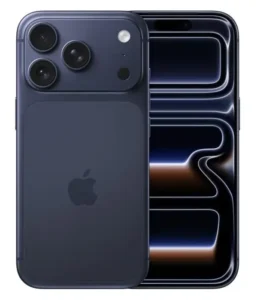
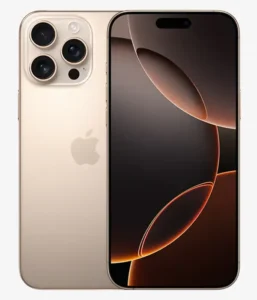
Head-to-Head Camera Analysis
The camera hardware shift defines this generation more than any other upgrade. The iPhone 17 Pro standardizes a triple 48MP system across wide, ultrawide, and telephoto modules, abandoning the 16 Pro’s mixed configuration of 48MP wide, 48MP ultrawide, and 12MP telephoto. That telephoto sensor jump from 12MP to 48MP brings cleaner zoomed shots, though the optical range shrinks from 5x to 4x, sacrificing reach for resolution.
That zoom trade-off matters depending on shooting habits. The 16 Pro’s 5x periscope telephoto reaches farther for sports, wildlife, and concert photography where distance matters more than pixel density. The 17 Pro compensates with better low-light telephoto performance thanks to the larger sensor, reducing noise when shooting indoors or after sunset at 4x magnification. Neither approach dominates universally—it’s reach versus quality.
The front camera upgrade delivers more tangible improvement. The 17 Pro switches to an 18MP ultrawide selfie shooter with phase detection autofocus, replacing the 16 Pro’s 12MP standard-width sensor with optical image stabilization. Field of view expands noticeably for group shots and vlogging, though the ultrawide perspective introduces edge distortion that the narrower 16 Pro lens avoids. PDAF brings faster focus lock during video calls where the 16 Pro’s OIS-equipped sensor already performed well.
Video capabilities diverge in professional codec support. The 17 Pro adds Apple Log 2 recording and extends Dolby Vision HDR capture to 120fps, doubling the 16 Pro’s 60fps ceiling for high frame rate HDR content. ProRes RAW now records at 120fps versus the previous generation’s limitations. These additions primarily serve creators working within color grading workflows—casual video shooters won’t extract much value from the codec expansion.
Performance & Real-World Usage
The A19 Pro chipset inside the 17 Pro edges past the A18 Pro with modestly higher clock speeds—4.26GHz versus 4.05GHz on the performance cores. Synthetic benchmarks reflect this bump, though app launches, interface fluidity, and multitasking responsiveness feel essentially identical during normal use. Gaming performance reveals where thermal management and sustained workloads separate the two chips.
Extended gaming sessions show subtle differences in thermal behavior. The 17 Pro’s aluminum frame dissipates heat more evenly than the 16 Pro’s titanium construction, keeping throttling at bay slightly longer during graphically intensive titles. Neither phone gets uncomfortably warm, but the aluminum back on base 17 Pro models distributes heat across a larger surface area compared to the titanium sandwich design. Performance degradation after 20 minutes of continuous gaming stays minimal on both.
Memory allocation creates the clearer practical distinction. The 17 Pro standardizes 12GB RAM across all storage tiers while the 16 Pro offers 8GB universally. This gap materializes when juggling multiple demanding applications—Safari tabs refresh less frequently, photo editing apps maintain longer undo histories, and background app suspension happens less aggressively on the newer model. Casual users rarely push 8GB to its limits, but power users keeping dozens of tabs and apps active appreciate the breathing room.
Storage configurations now start at 256GB on the 17 Pro, eliminating the 128GB base tier that still exists on the 16 Pro. Both phones top out at 1TB. The entry point shift means buyers avoid the cramped 128GB option, though it also raises the minimum price of admission for the newer generation.
Battery Life & Charging Experience
Battery capacity increases meaningfully on the 17 Pro, though implementation varies by model. The nano-SIM version packs 3998mAh while the eSIM-only variant holds 4252mAh, both outpacing the 16 Pro’s 3582mAh cell. Real-world endurance translates to roughly 90 minutes of additional screen-on time under mixed usage, pushing the 17 Pro comfortably past a full day for moderate users where the 16 Pro sometimes requires evening top-ups.
Charging speeds improve noticeably where it counts most. Wired charging on the 17 Pro hits 50% in 20 minutes using PD3.2 and AVS protocol support, shaving 10 minutes off the 16 Pro’s 30-minute half-charge time. That difference matters during rushed mornings or quick airport stops. MagSafe wireless charging remains capped at 25W on both phones, though the 17 Pro’s larger battery means the same wireless charging rate takes longer to reach full capacity.
Reverse wired charging capability stays at 4.5W across both models. This trickles power slowly enough that it serves best for overnight AirPods charging rather than emergency phone-to-phone transfers. The feature exists more as spec-sheet filler than practical utility given how gradually it delivers power.
Display, Design & Build Feel
Both phones share identical 6.3-inch LTPO Super Retina XDR panels with 120Hz ProMotion, 460 ppi density, and 1206 x 2622 resolution. The viewing experience differs primarily in brightness headroom. The 17 Pro pushes peak brightness to 3000 nits versus the 16 Pro’s 2000-nit HBM ceiling, making direct sunlight readability noticeably better on the newer model. Indoor viewing rarely demands either phone’s peak output, so this advantage surfaces mainly during outdoor photography sessions and navigation.
Ceramic Shield protection evolves between generations. The 17 Pro introduces Ceramic Shield 2 with Mohs level 5 hardness and anti-reflective coating, improving scratch resistance and reducing glare compared to the 16 Pro’s standard Ceramic Shield glass. The coating makes the 17 Pro’s screen appear slightly clearer under overhead lighting, though fingerprint visibility remains similar on both displays.
Frame material represents the most tactile design shift. The 17 Pro returns to aluminum alloy construction after the 16 Pro’s grade 5 titanium experiment. Aluminum feels warmer to the touch and less premium in-hand, though it’s paradoxically heavier—206g versus 199g despite aluminum’s lighter material properties. The extra weight comes from the larger battery rather than frame density. Titanium’s matte finish resists fingerprints better than aluminum’s smoother texture.
Dimensional changes stay minimal. The 17 Pro measures 150 x 71.9 x 8.8mm against the 16 Pro’s 149.6 x 71.5 x 8.3mm footprint. The extra half-millimeter in thickness and width won’t affect most cases or pockets, though the slightly boxier feel registers during extended one-handed use. IP68 rating remains consistent at 6 meters for 30 minutes on both models.
Software, Updates & AI Features
The 17 Pro ships with iOS 26 out of the box, already updated to iOS 26.2, while the 16 Pro launched on iOS 18 but supports the same iOS 26.2 version. Software parity eliminates most feature differentiation—both phones access identical Apple Intelligence capabilities, camera processing algorithms, and system-level optimizations. Long-term update support should extend equally far given Apple’s historical track record with Pro models.
AI-powered features leverage the extra RAM on the 17 Pro more effectively during intensive workloads. On-device language models run with larger context windows, meaning more complex Siri requests and longer document summarization tasks complete without cloud offloading. The 16 Pro handles most AI operations competently but occasionally hands off processing to Apple’s servers when memory pressure builds during multitasking scenarios.
Satellite communication features remain functionally identical. Both phones support Emergency SOS via satellite, Find My tracking, and Messages over satellite in areas without cellular coverage. The underlying hardware implementation and service capabilities don’t change between generations.
Price & Value Proposition
Pricing stratification determines whether the upgrades justify the premium. The 17 Pro enters at a higher launch price than the 16 Pro did at release, primarily because the base storage tier starts at 256GB instead of 128GB. Comparing equivalent 256GB configurations reveals roughly a 15-20% price gap between generations at full retail, though carrier promotions and trade-in values shift constantly.
Value calculation hinges on camera priorities and battery needs. Photographers who rarely zoom beyond 4x optical and want the improved low-light telephoto performance find better hardware alignment on the 17 Pro. Users who prefer longer 5x telephoto reach and don’t stress-test multitasking lose little sticking with the 16 Pro, particularly as software updates maintain feature parity.
The 16 Pro represents stronger value for most mainstream buyers. Discounts and trade-in programs make the previous generation significantly cheaper while delivering 90% of the experience. Titanium build quality, proven battery performance, and the same software support make it a rational choice unless specific camera or RAM requirements demand the latest hardware.
Final Verdict: Which One Should You Buy?
Choose the iPhone 17 Pro if front-facing camera quality matters for content creation, 12GB RAM aligns with professional workflows, or faster wired charging solves daily pain points. The brighter display and improved telephoto sensor add convenience in specific scenarios, though neither drastically changes the fundamental experience. Buyers planning to keep the phone for four-plus years get better future-proofing with the newer hardware.
The iPhone 16 Pro makes more practical sense for budget-conscious shoppers and anyone who values telephoto reach over sensor size. The 5x optical zoom provides more versatility than the 17 Pro’s 4x implementation for distant subjects, and 8GB RAM handles all mainstream tasks without slowdown. Titanium construction feels more refined in-hand, and the lower price combined with ongoing discounts delivers exceptional value.
Neither phone disappoints in core functionality. Battery life, display quality, and camera performance sit at the top of the smartphone market across both models. The decision ultimately boils down to specific feature priorities and whether incremental improvements warrant the price difference during your purchasing window.
iPhone 17 Pro vs iPhone 16 Pro Frequently Asked Questions
Which phone has better battery life?
The iPhone 17 Pro offers superior battery endurance with capacities ranging from 3998mAh to 4252mAh depending on the model, compared to the 16 Pro’s 3582mAh. Expect roughly 90 minutes of additional screen-on time during mixed usage. The 17 Pro also charges faster via wired connection, reaching 50% in 20 minutes versus 30 minutes on the 16 Pro, making quick top-ups significantly more practical.
Is the camera upgrade worth it?
It depends on your shooting style. The 17 Pro’s triple 48MP system excels in low-light telephoto situations and offers the 18MP ultrawide selfie camera for content creators. However, the 16 Pro retains a 5x telephoto advantage versus the 17 Pro’s 4x zoom, providing better reach for sports and wildlife photography. Casual photographers won’t notice dramatic quality differences in everyday shots between the two generations.
How much more RAM does the iPhone 17 Pro have?
The 17 Pro includes 12GB RAM across all storage configurations, while the 16 Pro offers 8GB universally. This translates to fewer app reloads, better multitasking performance when running numerous demanding applications simultaneously, and improved handling of memory-intensive tasks like photo editing and AI processing. Most users won’t max out 8GB during typical daily use, but power users benefit from the extra headroom.
Does the aluminum frame feel cheaper than titanium?
The 17 Pro’s aluminum construction feels less premium in-hand compared to the 16 Pro’s grade 5 titanium frame. Aluminum warms to the touch more quickly and shows fingerprints more readily than titanium’s matte finish. However, aluminum provides better heat dissipation during sustained gaming sessions. Despite using lighter material, the 17 Pro weighs 206g versus the 16 Pro’s 199g due to its larger battery.
Will both phones receive the same software updates?
Yes, both phones currently run iOS 26.2 and will receive identical software updates for the foreseeable future. Apple typically supports Pro iPhones for 5-6 years with major iOS releases, and since these models are only one generation apart, their update timelines should align closely. Feature parity remains strong across both devices thanks to consistent software support.
Which phone has a better display for outdoor use?
The iPhone 17 Pro’s 3000-nit peak brightness outperforms the 16 Pro’s 2000-nit maximum, making it noticeably easier to read in direct sunlight. The anti-reflective coating on Ceramic Shield 2 also reduces glare compared to the previous generation. For indoor viewing and typical lighting conditions, both displays perform identically with the same 120Hz ProMotion, HDR10, and Dolby Vision support.
Is the 5x zoom on the 16 Pro better than the 4x on the 17 Pro?
The 16 Pro’s 5x optical telephoto provides greater reach for distant subjects, making it more versatile for wildlife, concerts, and sports photography. The 17 Pro compensates with a larger 48MP telephoto sensor at 4x, which dramatically improves low-light performance and detail retention when cropping. If you frequently shoot at maximum zoom range, the 16 Pro offers more flexibility. If you prioritize image quality in the telephoto range over absolute reach, the 17 Pro’s sensor size advantage matters more.
Should I buy the iPhone 17 Pro or wait for a discount on the 16 Pro?
Buy the 16 Pro if you find a strong discount or trade-in offer. The price gap between generations often makes the 16 Pro a better value proposition, especially since software features remain identical and the titanium build feels more premium. Wait for the 17 Pro only if you specifically need 12GB RAM, the 18MP selfie camera, faster wired charging, or improved low-light telephoto performance. For most users, the 16 Pro delivers nearly identical real-world performance at lower cost.