

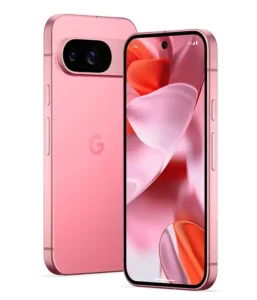
Head-to-Head Camera Analysis
Both phones land at 48MP and 50MP primary shooters respectively, but megapixel counts tell almost none of the story here. The iPhone 17’s 48MP f/1.6 wide with sensor-shift OIS and a 1/1.56″ sensor gives it a meaningful physical advantage in light-gathering, while the Pixel 9’s 50MP f/1.7 wide brings Google’s computational muscle to compensate — and often does so convincingly.
Where the gap shows up is in handling edge cases. The iPhone’s dual-pixel PDAF locks focus faster under pressure — think a toddler mid-sprint in a dim living room. The Pixel 9 leans on single-zone laser AF, which is reliable but can hesitate in chaotic scenes. Google’s Best Take and Ultra-HDR features are genuinely useful party tricks, but they lean heavily on post-processing that occasionally over-smooths skin tones.
On the ultrawide side, the iPhone 17 brings its 48MP f/2.2 unit with PDAF — a clear step up from typical ultrawide sensors. The Pixel 9’s 48MP ultrawide matches the resolution but the f/1.7 aperture is unusually fast for an ultrawide, making low-light wide shots a surprisingly close competition.
- iPhone 17 front camera: 18MP multiaspect with PDAF and Dolby Vision HDR video — significantly more versatile for content creators
- Pixel 9 front camera: 10.5MP ultrawide f/2.2 — wider field of view but lower resolution; group selfies work, but detail is softer at pixel level
- Video edge: iPhone 17 supports Dolby Vision HDR recording up to 4K@60fps; Pixel 9 offers 10-bit HDR but no Dolby Vision pipeline
- Color science: iPhone tends toward punchy, film-like contrast; Pixel 9 processes toward cooler, slightly more clinical accuracy
Neither phone has a telephoto lens at this tier — a real omission that both camps share. For most users the cameras are excellent, but dedicated telephoto shooters should look higher up each respective lineup.
Performance & Real-World Usage
The Apple A19 built on 3nm process is the faster chip on paper and in practice. App launches are instantaneous, heavy gaming runs without frame drops, and thermal management remains composed even during extended workloads. The Tensor G4 on 4nm is no slouch for daily tasks, but under sustained load — long gaming sessions, large video exports — it runs warmer and throttles sooner.
That said, benchmarks don’t capture everything. The Pixel 9’s Tensor G4 is specifically tuned for Google’s AI features: real-time call screening, live translate, and on-device speech recognition all feel faster and more natural than similar features running on the iPhone. The A19 is a brute-force speed machine; the Tensor G4 is an AI-first chip that trades raw throughput for smarter task offloading.
RAM tells another story. The Pixel 9 ships with 12GB RAM across all configurations versus iPhone 17’s 8GB. In practice, the Pixel keeps more browser tabs and background apps alive before forcing reloads. iOS’s memory management is tight enough that the gap matters less than it would on a comparable Android device — but it is real, especially with split-screen or heavy multitasking.
- Gaming: iPhone 17 holds frame rates steadier in GPU-intensive titles; Pixel 9 keeps up in casual gaming but shows thermal limits in marathon sessions
- Multitasking: Pixel 9’s 12GB RAM keeps more apps warm; iOS compensates with tighter memory handling
- Storage: iPhone 17 uses faster NVMe storage; Pixel 9 ships with UFS 3.1, which is fast but measurably slower for large file transfers
Battery Life & Charging Experience
The Pixel 9 carries a 4700mAh cell versus iPhone 17’s 3692mAh — a significant capacity difference that translates directly to real-world longevity. Heavy users consistently squeeze more screen-on time from the Pixel before reaching for a cable. The iPhone’s A19 efficiency is genuinely impressive for its battery size, but it rarely matches the Pixel 9 on a full day of mixed use.
Charging is where Apple makes up ground, though not entirely. The iPhone 17 hits 50% in 20 minutes via wired charging and supports 25W MagSafe wireless. The Pixel 9 tops out at 27W wired, reaching 55% in 30 minutes — slower to recover from empty, but its larger capacity means starting from a lower percentage less often. The Pixel also supports reverse wireless charging; the iPhone 17 counters with 4.5W reverse wired, which is barely enough to top up AirPods in a pinch.
MagSafe at 25W is genuinely convenient for desk charging with compatible accessories. Pixel’s 15W wireless (12W on standard Qi chargers) is functional but feels restrained given the competition.
Display, Design & Build Feel
Both phones share a 6.3-inch form factor, but the screens diverge in meaningful ways. The iPhone 17’s LTPO Super Retina XDR OLED hits 3000 nits peak brightness with Dolby Vision support — readable in almost any outdoor condition. The Pixel 9’s 2700 nits peak is still very bright but noticeably dimmer in direct noon sunlight. At 460 ppi versus 422 ppi, the iPhone also renders text with marginally crisper edges, though both panels are sharp beyond easy perception at normal viewing distances.
The screen-to-body ratio gap is more telling: iPhone 17 at 90.1% versus Pixel 9 at 86.1%. The iPhone feels slightly more expansive in hand despite matching dimensions. Both run 120Hz adaptive refresh, making scrolling equally smooth day-to-day.
Build quality is close. The iPhone 17 pairs Ceramic Shield 2 (Mohs level 5) front glass with an aluminum frame — lighter at 177g versus the Pixel 9’s 198g. The Pixel uses Gorilla Glass Victus 2 on both front and back, which is proven and reliable. The iPhone’s extra IP68 depth rating (6 meters vs 1.5 meters) gives it a practical advantage for pool or beach use — not just a spec box checkbox.
- Portability: iPhone 17 at 177g vs Pixel 9 at 198g — noticeable difference in single-handed use over long periods
- Water resistance: iPhone 17 rated to 6m depth; Pixel 9 rated to 1.5m — both IP68, but meaningfully different thresholds
- Biometrics: iPhone uses Face ID; Pixel 9 uses an under-display ultrasonic fingerprint sensor — the latter works better with masks or in cold weather
Software, Updates & AI Features
The Pixel 9 ships with Android 14 and a commitment to seven major OS upgrades — a genuinely compelling long-term value proposition. iPhone 17 runs iOS 26, and Apple’s update track record speaks for itself: consistent support, fast rollout, minimal fragmentation. Both phones will be relevant software-wise for years.
AI features are a core battleground. Google’s on-device AI integrations — Magic Eraser, Best Take, Call Screening, Live Translate — are deeply embedded in everyday workflows and feel native rather than bolted on. Apple Intelligence on iOS 26 brings generative writing tools, smarter Siri integrations, and notification summaries, but Google’s photo and communication AI still feels more mature and immediately useful for average users.
The privacy approaches diverge sharply. Apple processes most AI tasks on-device, minimizing data exposure. Google offloads more to cloud infrastructure, which enables more capable features but requires greater trust in data handling policies.
Price & Value Proposition
At base configurations, the Pixel 9’s 128GB/12GB model undercuts the iPhone 17’s 256GB/8GB entry point noticeably — and the Pixel ships with more RAM at every tier. The iPhone’s smallest configuration skips 128GB entirely, which pushes the effective comparison price higher.
Long-term value shifts the calculation. iPhone 17 holds resale value significantly better; the Apple ecosystem lock-in is real but also genuinely cohesive for users already invested in AirPods, Apple Watch, or Mac. The Pixel 9 excels for Android-native users who want Google’s AI features, a larger battery, and more RAM without paying flagship-tier pricing.
- Best value for ecosystem users: iPhone 17 integrates deeply with Apple hardware and services
- Best value for standalone buyers: Pixel 9 delivers more RAM, larger battery, and competitive cameras at a lower entry price
- Storage to consider: iPhone 17 tops out at 512GB; Pixel 9 caps at 256GB — heavy media users take note
Final Verdict: Which One Should You Buy?
Neither phone is the wrong choice — which makes the decision genuinely about priorities rather than quality. The iPhone 17 is the pick for users who want the fastest raw chip, the brightest display, superior depth water resistance, and the tightest integration with an existing Apple device lineup. Its camera system is technically excellent, and iOS 26 remains the smoothest mobile operating system available.
The Pixel 9 is the stronger pick for users who prioritize battery endurance, on-device AI features, more RAM for multitasking, and the flexibility of Android 14 with seven years of updates ahead of it. Google’s computational photography is genuinely competitive, and the lower entry price makes the package hard to dismiss.
Heavy content creators and Apple ecosystem users should reach for the iPhone 17 without hesitation. Everyone else — especially those who run their phone hard all day and don’t want to worry about charging — will find the Pixel 9 a more practical daily companion.
iPhone 17 vs Google Pixel 9 Frequently Asked Questions
Which phone has better camera performance in low light?
The iPhone 17 holds a technical edge in low light due to its larger 1/1.56″ sensor and wider f/1.6 aperture, which captures more light physically. The Pixel 9 closes the gap with Google’s computational processing, but the iPhone tends to produce cleaner, less artificially brightened results in genuinely dark environments.
Which phone lasts longer on a single charge?
The Pixel 9’s 4700mAh battery outlasts the iPhone 17’s 3692mAh cell in real-world use. Heavy users typically get more screen-on time from the Pixel 9. The iPhone 17 charges faster wirelessly at 25W MagSafe, but the Pixel 9’s larger capacity means reaching low battery less frequently throughout the day.
Is the iPhone 17 faster than the Pixel 9?
For raw processing tasks — app launches, gaming, video rendering — the iPhone 17’s Apple A19 chip is faster and maintains performance more consistently under sustained load. The Pixel 9’s Tensor G4 chip is optimized for AI tasks and handles Google’s on-device AI features with particular efficiency, but it throttles sooner during heavy workloads.
Which phone has better water resistance?
Both phones carry IP68 ratings, but the iPhone 17 is rated to 6 meters depth for 30 minutes while the Pixel 9 is rated to 1.5 meters. For casual water exposure both are equally protected, but the iPhone 17 provides significantly more headroom in pool, beach, or heavy rain scenarios.
Does the Pixel 9 have a better display than the iPhone 17?
The iPhone 17’s display is objectively stronger on most technical metrics: higher pixel density (460 ppi vs 422 ppi), brighter peak luminance (3000 nits vs 2700 nits), Dolby Vision support, and a higher screen-to-body ratio. Both use 120Hz OLED panels, but the iPhone 17’s screen is visibly sharper and more readable in direct sunlight.
Which phone gets more software updates?
The Pixel 9 is guaranteed seven major Android OS upgrades, making it one of the longest-supported Android phones available. Apple does not commit to a specific update number but has historically supported iPhones for six or more years. Both phones are strong long-term investments from a software support perspective.
Which phone is better for biometric security?
This depends on use case. The iPhone 17’s Face ID is fast, secure, and works at multiple angles, but requires a clear view of the face. The Pixel 9’s under-display ultrasonic fingerprint sensor works regardless of lighting, with masks, or while wearing gloves — a practical advantage in colder climates or post-pandemic daily use.
Is the Pixel 9 a better value than the iPhone 17?
At entry-level configurations, the Pixel 9 offers more RAM and a larger battery at a lower price point. The iPhone 17 justifies its premium through superior chip performance, a brighter display, faster wireless charging, and stronger resale value. For buyers outside the Apple ecosystem, the Pixel 9 delivers more hardware per dollar. For existing Apple device users, the iPhone 17’s ecosystem integration tips the value calculation back in its favor.