

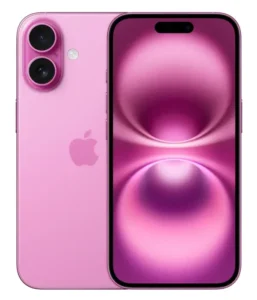
Head-to-Head Camera Analysis
The camera hardware shift centers on the ultrawide module rather than the primary sensor. Both phones deploy a 48MP wide camera with sensor-shift optical image stabilization, but the iPhone 17 upgrades to a 48MP ultrawide versus the iPhone 16’s 12MP ultrawide. That resolution jump translates to cleaner wide-angle shots with better detail retention, particularly when cropping or shooting in lower light where the larger sensor gathers more information.
Practical differences surface most noticeably in landscape and group photography. The 17’s 48MP ultrawide captures finer architectural details and reduces the mushy texture that plagues the 16’s 12MP sensor when pixel-peeping. Both ultrawide modules maintain 120-degree field of view, so composition stays identical—only output quality changes. Distortion correction and edge sharpness improve on the newer sensor, though neither phone completely eliminates the characteristic ultrawide warping.
The front camera upgrade matters more for selfie-focused users. The iPhone 17 switches to an 18MP ultrawide selfie shooter with phase detection autofocus, replacing the 16’s 12MP standard-width sensor. Field of view expands dramatically for group selfies and vlogging scenarios, though the ultrawide perspective introduces edge distortion absent on the narrower 16. PDAF brings faster focus lock during video calls where the 16 occasionally hunts in low light.
Video capabilities remain closely matched between generations. Both phones shoot 4K at up to 60fps with Dolby Vision HDR, though the 17 extends its codec support and processing pipeline slightly. The 16 handles video admirably for social media and casual recording, so upgrading purely for video features doesn’t make practical sense unless specific workflow requirements demand the newer processing.
Performance & Real-World Usage
The A19 chipset inside the iPhone 17 edges past the A18 with modestly higher clock speeds—4.26GHz versus 4.04GHz on the performance cores. Benchmark numbers reflect this bump, though app launches, scrolling fluidity, and everyday responsiveness feel essentially identical during normal use. Both chips pack the same 5-core GPU configuration, so graphics performance stays neck-and-neck in gaming scenarios.
Gaming performance reveals no meaningful separation between the two processors. Extended sessions of graphically intensive titles show similar frame rate consistency and thermal behavior. Neither phone throttles aggressively during 30-minute gaming marathons, and heat distribution feels comparable across the aluminum frames. The extra clock speed on the A19 doesn’t translate to noticeable gameplay advantages—both phones handle current titles without stuttering.
Memory allocation stays identical at 8GB RAM across both models, eliminating any multitasking differential. Safari tabs refresh at similar rates, photo editing apps maintain comparable undo histories, and background app suspension behaves identically. Power users juggling dozens of applications won’t find extra breathing room on either phone since the RAM ceiling matches.
Storage configurations show the clearest practical distinction. The iPhone 17 starts at 256GB, eliminating the cramped 128GB base tier that still exists on the iPhone 16. Both phones top out at 512GB. The entry point shift means buyers avoid storage anxiety with the newer model, though it also raises the minimum price of admission compared to the 16’s budget-friendly 128GB option.
Battery Life & Charging Experience
Battery capacity increases modestly on the iPhone 17 at 3692mAh versus the iPhone 16’s 3561mAh. Real-world endurance translates to roughly 30-45 minutes of additional screen-on time under mixed usage patterns. Both phones comfortably push through a full day for moderate users, though the 17 provides slightly more cushion during heavier sessions involving navigation, camera use, and streaming.
Charging speeds improve where it matters most. Wired charging on the iPhone 17 hits 50% in 20 minutes using PD3.2 and AVS protocol support, shaving 10 minutes off the iPhone 16’s 30-minute half-charge time. That difference materializes during rushed mornings or airport layovers when every minute counts. MagSafe wireless charging caps at 25W on both phones, reaching 50% in 30 minutes with identical real-world performance.
Reverse wired charging capability remains at 4.5W across both models. This trickles power slowly enough that it serves best for overnight AirPods charging rather than emergency phone-to-phone transfers. The feature exists more as a spec-sheet checkbox than practical utility given how gradually it delivers power to accessories.
Display, Design & Build Feel
The display represents the most significant experiential upgrade between generations. The iPhone 17 introduces a 6.3-inch LTPO Super Retina XDR panel with 120Hz ProMotion refresh rate, while the iPhone 16 sticks with a 6.1-inch standard Super Retina XDR display locked at 60Hz. Scrolling fluidity, animation smoothness, and general interface responsiveness feel dramatically different—the 17’s adaptive 120Hz refresh creates a noticeably more premium experience that the 16’s static 60Hz can’t match.
Brightness headroom also separates the two displays meaningfully. The iPhone 17 pushes peak brightness to 3000 nits versus the iPhone 16’s 2000-nit ceiling, making direct sunlight readability substantially better on the newer model. Outdoor photography sessions and navigation benefit most from the extra luminance, though indoor viewing rarely demands either phone’s peak output. Both displays share identical 460 ppi density and HDR10/Dolby Vision support.
Ceramic Shield protection evolves with the iPhone 17’s Ceramic Shield 2 featuring Mohs level 5 hardness and anti-reflective coating. The iPhone 16’s standard Ceramic Shield glass offers solid scratch resistance, but the newer coating reduces glare and improves clarity under overhead lighting. Fingerprint visibility remains similar on both displays despite the coating advancement.
Physical dimensions shift slightly to accommodate the larger screen. The iPhone 17 measures 149.6 x 71.5 x 8mm and weighs 177g, compared to the iPhone 16’s 147.6 x 71.6 x 7.8mm footprint and 170g weight. The extra 7 grams and 0.2mm thickness won’t affect pocketability, though the taller form factor registers during one-handed use. Both phones maintain identical aluminum frame and glass back construction with IP68 water resistance rated to 6 meters for 30 minutes.
Software, Updates & AI Features
The iPhone 17 ships with iOS 26 out of the box, already updated to iOS 26.2, while the iPhone 16 launched on iOS 18 but supports the same iOS 26.2 version. Software parity eliminates most feature differentiation—both phones access identical Apple Intelligence capabilities, camera processing algorithms, and system-level optimizations. Long-term update support should extend equally far given Apple’s historical track record with non-Pro models.
AI-powered features run identically on both phones thanks to the matching 8GB RAM configuration. On-device language models, Siri processing complexity, and document summarization tasks perform similarly without meaningful speed differences. Neither phone shows a tendency to offload AI workloads to cloud processing more frequently than the other during typical usage patterns.
Satellite communication features remain functionally identical. Both phones support Emergency SOS via satellite, Find My tracking, and Messages over satellite in areas without cellular coverage. The underlying hardware implementation and service capabilities don’t change between generations, providing the same peace of mind in remote areas.
Price & Value Proposition
Pricing stratification determines whether the upgrades justify the premium. The iPhone 17 enters at a higher launch price than the iPhone 16 primarily because the base storage tier starts at 256GB instead of 128GB. Comparing equivalent 256GB configurations reveals roughly a 10-15% price gap between generations at full retail, though carrier promotions and seasonal discounts shift constantly.
Value calculation hinges primarily on display priorities. Users who notice and appreciate high refresh rate displays find the iPhone 17’s 120Hz ProMotion worth the premium—the fluidity difference versus 60Hz feels substantial during daily use. Buyers indifferent to refresh rate smoothness or working within tighter budgets lose little sticking with the iPhone 16, particularly since camera quality and software features stay remarkably close.
The iPhone 16 represents stronger baseline value for budget-conscious mainstream buyers. The 128GB entry point costs significantly less than the 17’s 256GB minimum, and the core experience—camera quality, performance, battery life—delivers 85% of what the newer model offers. Discounts and trade-in programs make the previous generation even more attractive financially while maintaining full software support through iOS 26.2 and beyond.
Final Verdict: Which One Should You Buy?
Choose the iPhone 17 if display quality matters enough to justify the price difference. The 120Hz ProMotion refresh rate creates a tangibly smoother experience during scrolling, gaming, and general navigation that the iPhone 16’s 60Hz panel can’t replicate. The brighter 3000-nit peak output, improved ultrawide camera, and faster wired charging add incremental value, though none individually justify upgrading if refresh rate doesn’t matter.
The iPhone 16 makes more practical sense for value-focused shoppers and anyone satisfied with 60Hz displays. The camera system handles everyday photography excellently, performance matches the newer model in real-world tasks thanks to identical RAM, and battery life suffices for full-day usage. The lower entry price combined with the 128GB storage option delivers exceptional value for users who don’t need maximum specs.
Neither phone disappoints in core functionality. Both offer reliable performance, excellent camera quality for casual photography, and strong software support. The decision ultimately boils down to whether 120Hz display smoothness and the larger screen size warrant the price premium during your purchasing window.
iPhone 17 vs iPhone 16 Frequently Asked Questions
Is the 120Hz display worth the upgrade?
The iPhone 17’s 120Hz ProMotion display creates a noticeably smoother experience compared to the iPhone 16’s 60Hz panel. Scrolling through apps, playing games, and navigating the interface feel significantly more fluid on the newer model. If you’ve never used a high refresh rate phone, the difference might take a few days to notice. Once accustomed to 120Hz, returning to 60Hz feels sluggish by comparison.
Which phone has better battery life?
The iPhone 17 offers slightly better battery endurance with its 3692mAh capacity versus the iPhone 16’s 3561mAh. Expect roughly 30-45 minutes of additional screen-on time during mixed usage. Both phones easily last a full day for moderate users. The iPhone 17 also charges faster via wired connection, reaching 50% in 20 minutes versus 30 minutes on the iPhone 16, making quick top-ups more practical.
Is the camera difference noticeable?
The main camera performs nearly identically on both phones since they share the same 48MP wide sensor with sensor-shift OIS. The iPhone 17’s advantage lies in its 48MP ultrawide versus the iPhone 16’s 12MP ultrawide, which produces cleaner wide-angle shots with better detail and improved low-light performance. The 17’s 18MP ultrawide selfie camera also offers a wider field of view compared to the 16’s 12MP standard-width front camera, though this introduces some edge distortion.
Do both phones have the same performance?
Real-world performance feels essentially identical between the A19 in the iPhone 17 and the A18 in the iPhone 16. Both pack 8GB RAM and 5-core GPUs, so app launches, multitasking, and gaming perform similarly. Benchmark scores show the A19 slightly ahead, but these differences don’t translate to noticeable speed advantages during everyday tasks. Either phone handles current apps and games without slowdown.
Will both phones receive the same software updates?
Yes, both phones currently run iOS 26.2 and will receive identical software updates for years to come. Apple typically supports non-Pro iPhones for 5-6 years with major iOS releases. Since these models are only one generation apart, their update timelines should align closely. Feature parity remains strong across both devices thanks to consistent software support and matching 8GB RAM.
Which phone is better for outdoor use?
The iPhone 17’s 3000-nit peak brightness significantly outperforms the iPhone 16’s 2000-nit maximum, making the screen much easier to read in direct sunlight. The anti-reflective coating on Ceramic Shield 2 also reduces glare compared to the previous generation. For indoor viewing and typical lighting conditions, both displays perform well, but the iPhone 17 has a clear advantage outdoors during photography sessions or navigation.
Should I buy the iPhone 16 to save money?
The iPhone 16 represents excellent value if you can find it at a discount or trade-in offer, especially the 128GB model which provides a lower entry price. You sacrifice the 120Hz display and slightly slower charging, but gain nearly identical camera quality, performance, and software features. If you’re budget-conscious and don’t prioritize display smoothness, the iPhone 16 delivers 85% of the iPhone 17 experience at a lower cost.
Is the larger screen on the iPhone 17 worth it?
The iPhone 17’s 6.3-inch display versus the iPhone 16’s 6.1-inch screen provides marginally more viewing area, but the real benefit comes from the 120Hz refresh rate rather than size alone. The extra 0.2 inches makes minimal difference for media consumption or typing. However, the combination of slightly larger screen real estate and smoother scrolling creates a more premium viewing experience overall, particularly for users coming from older 60Hz iPhones.