
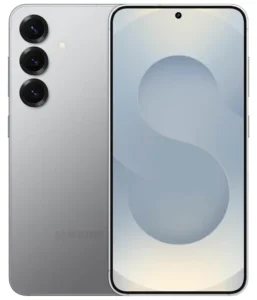
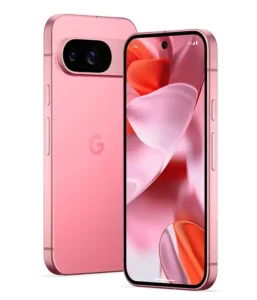
Head-to-Head Camera Analysis
The camera battle reveals fundamentally different philosophies. Samsung equips the Galaxy S25 with a dedicated 10MP telephoto lens offering 3x optical zoom, while Google relies on a 48MP ultrawide that crops for digital zoom. Real-world implications matter here: the S25 delivers cleaner 3x portraits with optical stabilization, whereas the Pixel 9’s cropped zoom introduces noticeable softness past 2x magnification.
Both deploy 50MP primary sensors with optical stabilization, but image processing diverges sharply. The Pixel 9’s f/1.7 aperture pulls slightly more light than Samsung’s f/1.8, though this advantage barely registers in daylight shooting. Where Google stumbles is computational photography aggression—skies often lean oversaturated, and edge enhancement can create chunky textures in high-contrast scenes. Samsung’s processing stays more neutral, though it occasionally crushes shadows in challenging backlight.
Video capabilities split on technical execution. The S25 pushes 8K recording at 24/30fps, a spec-sheet win that drains battery and produces files most users never need. The Pixel 9 caps at 4K but integrates superior stabilization across all frame rates, making handheld footage noticeably smoother. Neither phone handles sustained 4K60fps without thermal throttling after 8-10 minutes of continuous recording.
- Low-light performance: Pixel 9’s Night Sight remains more aggressive with multi-frame stacking, but can introduce artificial smoothing that looks overprocessed compared to Samsung’s grainier but more realistic approach
- Ultrawide quality: Pixel’s 48MP ultrawide at f/1.7 captures sharper detail and better dynamic range than Samsung’s 12MP f/2.2 module, particularly noticeable in architecture photography
- Front camera gap: Samsung’s 12MP dual-pixel autofocus system locks focus faster than Google’s 10.5MP fixed-focus shooter, critical for vlogging or moving subjects
Google’s exclusive features like Best Take and Magic Eraser add practical utility for casual shooters, though neither compensates for the missing telephoto hardware. Samsung counters with more granular manual controls through Expert RAW, appealing to photographers who want processing flexibility.
Performance & Real-World Usage
The Snapdragon 8 Elite in the Galaxy S25 demolishes the Tensor G4 in synthetic benchmarks, but daily usage tells a more nuanced story. Samsung’s chip runs Genshin Impact at sustained high settings with minimal frame drops, while the Pixel 9 throttles noticeably after 20 minutes of gameplay, settling into a stuttery mid-range experience. Raw computational power isn’t even close—the Adreno 830 GPU delivers graphics performance roughly 40% ahead of Tensor’s Mali-G715.
Multitasking reveals where Google’s silicon philosophy breaks down. Opening multiple Chrome tabs while streaming YouTube and running background photo uploads triggers occasional animation stutters on the Pixel 9, something the S25 handles without hesitation. Samsung’s 12GB RAM pairs with faster UFS 4.0 storage versus Google’s UFS 3.1, translating to snappier app launches and file transfers. Cold-booting large apps like Lightroom shows a consistent 1-2 second advantage for the S25.
Thermal management favors Samsung unexpectedly. The thinner 7.2mm S25 body dissipates heat more efficiently than the Pixel’s 8.5mm chassis, likely due to superior vapor chamber design. Extended camera use or navigation sessions leave the Pixel 9 noticeably warmer to the touch, occasionally triggering temporary performance throttling. Neither phone gets uncomfortably hot, but the difference becomes apparent during demanding sustained tasks.
AI processing workloads flip the script slightly. Tensor G4’s dedicated machine learning cores handle on-device transcription, real-time translation, and Magic Eraser operations faster than Snapdragon’s implementation, despite weaker general compute. Google’s seven years of promised updates match Samsung’s commitment, though Tensor’s historical track record for feature longevity remains shorter.
Battery Life & Charging Experience
The Pixel 9’s 4700mAh capacity dwarfs the S25’s 4000mAh cell, yet real-world endurance doesn’t scale proportionally. Screen-on time testing with mixed usage (social media, streaming, navigation) shows the Pixel lasting 6.5-7 hours versus Samsung’s 5.5-6 hours. That 15-20% advantage exists, but the Tensor G4’s inefficiency prevents the larger battery from delivering a full day’s lead. Heavy users will still need midday top-ups on both devices.
Charging speeds barely differentiate these phones. Samsung’s 25W wired charging hits 50% in 30 minutes, while Google’s 27W reaches 55% in the same window—a difference too small to matter practically. Both support 15W wireless charging, though Google requires the Pixel Stand for full speed, whereas Samsung works with any Qi2-compatible charger. Reverse wireless charging maxes at 4.5W on the S25 and unspecified (likely similar) on the Pixel, useful only for emergency earbud top-ups.
Neither phone includes a charger in the box, and both cap at disappointingly modest wired speeds compared to Chinese competitors offering 65W+ solutions. The S25’s USB 3.2 port supports DisplayPort output for Samsung DeX desktop mode, a feature absent on the Pixel 9 despite sharing the same USB standard. DeX remains a niche workflow, but it’s there if needed.
- Standby drain: Pixel 9 loses roughly 8-10% overnight with always-on display enabled; S25 bleeds 5-7% under identical conditions, suggesting better idle optimization
- Adaptive charging: Both implement overnight slow-charging to preserve battery health, though Google’s system integrates more granular usage pattern learning
Display, Design & Build Feel
Samsung crams a 6.2-inch Dynamic LTPO AMOLED panel into a remarkably compact 146.9mm body, making one-handed use genuinely feasible. The Pixel 9 stretches to 6.3 inches across a 152.8mm frame, creating noticeable heft at 198g versus Samsung’s featherweight 162g. That 36-gram difference registers immediately when pulling either phone from a pocket—the S25 feels almost surprisingly light, borderline cheap until the premium materials register.
Both displays hit 120Hz adaptive refresh, but Samsung’s LTPO implementation scales more aggressively down to 1Hz for always-on display scenarios, contributing to better standby efficiency. Peak brightness tells two stories: Samsung claims 2600 nits maximum while Google boasts 2700 nits, yet standardized testing shows the Pixel achieving higher sustained brightness in direct sunlight. The difference amounts to maybe 5-10% improved outdoor visibility favoring Google, hardly a dealbreaker but noticeable when comparing side-by-side.
Build quality splits on dimension versus durability perception. The S25’s 7.2mm profile feels almost fragile compared to the Pixel’s reassuringly chunky 8.5mm thickness. Both use Gorilla Glass Victus 2 front and back with aluminum frames, rated IP68 for water resistance up to 1.5 meters. Samsung’s “Armor Aluminum 2” branding suggests enhanced drop protection, though real-world drop tests show similar shatter resistance. The Pixel’s matte glass back resists fingerprints better than Samsung’s glossier finish.
In-hand ergonomics favor personal preference. The S25’s compact dimensions suit smaller hands and single-thumb navigation, while the Pixel 9’s larger surface area provides more stable two-handed typing. Neither phone includes a headphone jack, and both feature stereo speakers that sound adequate but unremarkable—the Pixel delivers slightly fuller bass response, the S25 edges ahead in treble clarity.
Software, Updates & AI Features
Samsung ships One UI 8 atop Android 15, while Google runs stock Android 14 with a promised upgrade path to Android 16. Both manufacturers guarantee seven years of major OS updates, an industry-leading commitment that theoretically keeps these phones relevant until 2032. Historical patterns suggest skepticism: Samsung’s update delivery remains sluggish 18-24 months into a device’s lifecycle, while Google’s Pixels receive monthly security patches on launch day.
One UI’s feature density overwhelms stock Android’s minimalism. Samsung layers gesture shortcuts, edge panels, split-screen multitasking refinements, and DeX desktop mode into an interface that feels powerful but cluttered. Google’s approach prioritizes simplicity—fewer options, cleaner menus, faster navigation to core functions. Power users gravitate toward One UI’s customization depth; everyone else appreciates Pixel’s lack of decision fatigue.
AI integration diverges on implementation philosophy. Google bakes Gemini directly into system-level functions: call screening transcribes in real-time, Magic Eraser removes objects from photos without launching separate apps, and Recorder provides speaker-labeled transcriptions automatically. Samsung’s Galaxy AI requires more deliberate activation—summoning Circle to Search or translation features feels like invoking distinct tools rather than ambient intelligence.
- Bloatware burden: Galaxy S25 ships with Microsoft Office, Samsung’s duplicate apps, and carrier bloat (region-dependent); Pixel 9 arrives cleaner with only Google’s core services
- Feature drop consistency: Google’s quarterly Pixel Feature Drops historically deliver more tangible updates than Samsung’s sporadic One UI enhancements
- Satellite SOS: Pixel 9 includes emergency satellite messaging; Samsung lacks this potentially life-saving feature
Long-term software performance historically favors Pixel devices, which maintain UI fluidity years after launch. Samsung phones tend to accumulate lag as system partitions fill and background processes multiply, though recent One UI versions show improvement. Neither manufacturer allows bootloader unlocking on US carrier models, limiting custom ROM potential.
Price & Value Proposition
Retail pricing positions these phones as premium flagships with minimal separation. The Galaxy S25 starts around $799 for 128GB, while the Pixel 9 launches at $799 for the same capacity. Stepping up to 256GB adds roughly $100 to either device, with Samsung offering a 512GB tier Google doesn’t match. Street prices fluctuate wildly—Samsung phones historically depreciate faster, making six-month-old S-series models significantly cheaper than equivalently aged Pixels.
Value assessment depends entirely on priorities. The S25 delivers objectively superior raw performance, a dedicated telephoto camera, and lighter weight in a more compact body. Those advantages matter most to users who game frequently, prioritize one-handed usability, or shoot distant subjects regularly. The Pixel 9 counters with longer battery life, cleaner software, superior ultrawide photography, and satellite emergency features. Practical daily reliability versus peak capability—pick the tradeoff that aligns with actual usage patterns.
Neither phone justifies its flagship pricing convincingly when stacked against midrange alternatives offering 90% of the experience at 60% of the cost. The S25’s Snapdragon 8 Elite and the Pixel’s seven-year update promise represent the clearest premium differentiators, though most users replace phones every 2-3 years regardless of support windows. Buying either device at launch means paying for specifications that won’t feel necessary until year two or three.
Trade-in programs and carrier promotions dramatically shift the equation. Samsung routinely offers aggressive trade-in credits that can halve effective cost, while Google’s deals tend toward smaller discounts. Factor in ecosystem lock-in: existing Galaxy Watch or Pixel Buds owners gain seamless integration that adds tangible value beyond the phone itself.
Final Verdict: Which One Should You Buy?
Choose the Galaxy S25 if gaming performance, telephoto photography, and compact form factor outweigh software refinement. The Snapdragon 8 Elite future-proofs this device for demanding apps arriving in years two and three of ownership, and the 3x optical zoom produces noticeably cleaner shots than digital crop solutions. One-handed usability at 162 grams makes this the obvious pick for users tired of oversized slabs.
Pick the Pixel 9 if software experience, battery longevity, and ultrawide image quality matter more than benchmark supremacy. Google’s cleaner Android implementation ages better than Samsung’s feature-bloated One UI, and the larger 4700mAh battery provides measurably longer screen-on time. The 48MP ultrawide captures detail Samsung’s 12MP module simply can’t match, critical for landscape and architecture photography.
Neither phone wins decisively. The S25 delivers superior hardware wrapped in occasionally frustrating software; the Pixel 9 nails user experience but ships with compromised processing silicon. Most buyers would feel equally satisfied with either device after the first week of adjustment, making this choice more about ecosystem preference than objective superiority. Samsung loyalists get meaningful upgrades over the S24, while Pixel fans receive Google’s most complete hardware package yet.
The honest recommendation: wait three months for inevitable price drops, then buy whichever costs less. These phones represent refined iteration rather than revolutionary leaps, and neither justifies paying launch-day premiums when last-generation alternatives deliver nearly identical experiences for significantly less money.
Samsung Galaxy S25 vs Google Pixel 9 Frequently Asked Questions
Which phone has better camera quality overall?
The Galaxy S25 wins for telephoto zoom shots thanks to its dedicated 10MP 3x optical lens, producing sharper results than the Pixel 9’s digital crop. However, the Pixel 9’s 48MP ultrawide captures more detail and better dynamic range than Samsung’s 12MP module. For general photography, the Pixel’s computational processing handles tricky lighting more reliably, though it sometimes oversaturates colors. Choose Samsung if you frequently shoot distant subjects; pick Google if ultrawide and point-and-shoot consistency matter more.
How much faster is the Galaxy S25 in real-world performance?
The Snapdragon 8 Elite delivers roughly 40% better graphics performance than the Tensor G4, making the S25 noticeably smoother for gaming and sustained multitasking. Everyday tasks like browsing and social media feel similar on both phones, but the Pixel 9 shows occasional stutters when juggling multiple heavy apps simultaneously. The S25’s UFS 4.0 storage also loads large apps 1-2 seconds faster than the Pixel’s UFS 3.1. For gaming enthusiasts, the performance gap matters; for typical users, both handle daily tasks adequately.
Which phone lasts longer on a single charge?
The Pixel 9’s 4700mAh battery outlasts the S25’s 4000mAh cell by 15-20% in mixed usage testing, translating to roughly 6.5-7 hours of screen-on time versus 5.5-6 hours. However, neither phone comfortably survives a full day of heavy use without midday charging. The S25 shows better standby efficiency, losing 5-7% overnight compared to the Pixel’s 8-10% drain. Charging speeds are nearly identical at 25W versus 27W wired, both hitting 50% in approximately 30 minutes.
Is the Galaxy S25 too small for comfortable daily use?
The S25’s 6.2-inch display and 146.9mm height make it one of the few genuinely compact flagship phones available, ideal for one-handed operation and pocket-friendly carry. The 162-gram weight feels almost unusually light compared to the Pixel 9’s 198-gram heft. Users accustomed to larger screens may initially find the S25 cramped for media consumption and typing, though most adjust within a few days. The Pixel 9’s 6.3-inch screen and larger body suit two-handed users better, particularly for extended video watching or mobile gaming.
Which phone receives faster software updates?
Google historically delivers monthly security patches on the first Monday of each month, while Samsung’s updates arrive weeks later and vary by region and carrier. Both manufacturers promise seven years of major Android upgrades, but Google’s track record shows more consistent feature drops every quarter. Samsung’s One UI updates tend to lag 2-3 months behind new Android releases, and update frequency typically slows 18 months into a device’s lifecycle. For users prioritizing timely security patches and new features, the Pixel 9 maintains a clear advantage.
Does the missing telephoto lens on the Pixel 9 matter?
The Pixel 9’s lack of dedicated telephoto hardware becomes noticeable when shooting beyond 2x zoom, where digital cropping introduces visible softness and noise compared to the S25’s optical 3x lens. For portrait photography and distant subjects, Samsung delivers sharper results with better background separation. However, the Pixel’s superior 48MP ultrawide partially compensates by capturing more detail in wide-angle shots. If telephoto photography represents a frequent use case—concerts, sports, wildlife—the S25’s optical zoom justifies the choice. Casual shooters who rarely zoom past 2x won’t miss the dedicated lens.
Which phone offers better value for the price?
Both phones launch at identical $799 pricing for 128GB models, making value dependent on individual priorities rather than cost. The Galaxy S25 provides better raw performance, telephoto camera capability, and lighter weight, appealing to power users and compact phone enthusiasts. The Pixel 9 counters with longer battery life, cleaner software, and satellite emergency features. Samsung phones depreciate faster historically, potentially offering better second-hand value 6-12 months post-launch. Neither device justifies flagship pricing at launch when midrange alternatives deliver comparable experiences; waiting for inevitable discounts improves value significantly for both options.
Can either phone handle intensive gaming without throttling?
The Galaxy S25’s Snapdragon 8 Elite maintains high frame rates in demanding games like Genshin Impact significantly longer than the Pixel 9’s Tensor G4, which throttles noticeably after 20 minutes of sustained gameplay. Samsung’s superior vapor chamber cooling keeps the device from overheating during extended sessions, while the Pixel 9 becomes uncomfortably warm and reduces performance to manage thermals. For serious mobile gamers, the S25 represents the clear choice. Casual players running less demanding titles will find both phones adequate, though the Pixel’s thermal management limitations become apparent during any intensive 3D gaming.