
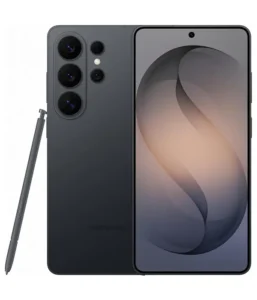
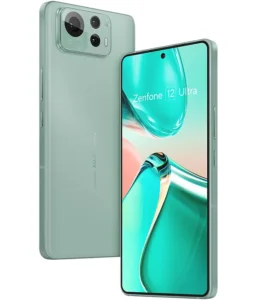
On the surface, the Samsung Galaxy S26 Ultra and ASUS Zenfone 12 Ultra share enough common ground to make a comparison interesting: both are IP68-rated Android flagships, both run Snapdragon 8 Elite silicon on 3nm, and both target buyers who want a premium experience without compromise. But spend any time with each device and the differences dominate. Samsung loads the S26 Ultra with specs that look extraordinary on paper. ASUS quietly builds a phone that punches above its weight in the areas that matter most day-to-day — battery endurance, audio, and a camera system that prioritizes stability over resolution inflation.
Neither phone is wrong for all buyers. But buying the right one requires understanding where each one genuinely excels and where it quietly cuts corners.
Head-to-Head Camera Analysis
The S26 Ultra’s 200MP main sensor at f/1.4 on a 1/1.3″ sensor is one of the most spec-impressive camera setups in the flagship market. Pixel binning reduces that to effective 12.5MP shots under most conditions, but when full-resolution capture kicks in, the detail output in good daylight is exceptional. The ASUS Zenfone 12 Ultra takes a fundamentally different approach: 50MP at f/1.9 with gimbal OIS — not standard optical image stabilization, but a full mechanical gimbal stabilizer. In real-world shooting, that distinction matters enormously for handheld photos and video. Samsung’s OIS handles normal hand tremor; ASUS’s gimbal system absorbs more aggressive movement, including walking shots and quick pans, producing noticeably more stable footage in unpredictable conditions.
The telephoto comparison is lopsided on paper but more nuanced in practice. The S26 Ultra runs two dedicated telephoto lenses — a 10MP 3x and a 50MP 5x, each with OIS — giving it genuine reach and resolution at distance. The Zenfone 12 Ultra counters with a single 32MP 3x telephoto with OIS, which matches Samsung’s shorter focal length but cannot touch its 5x reach. For travel photography, wildlife, or sports shooting where that extra reach matters, the S26 Ultra is the clear winner. For users who rarely shoot beyond 3x zoom, the gap effectively disappears — and the Zenfone’s 32MP sensor at 3x captures more resolution than Samsung’s 10MP unit at the same zoom level.
The Zenfone’s ultrawide is the one area where Samsung’s system clearly dominates in capability. The S26 Ultra’s 50MP ultrawide at f/1.9 with dual-pixel PDAF and Super Steady video mode is among the most capable ultrawide sensors available. The Zenfone’s 13MP ultrawide at f/2.2 is serviceable for landscapes and architecture but trails significantly in low light and detail resolution. That’s a notable gap given how frequently ultrawide lenses get used in everyday shooting.
The front camera story flips the script. The Zenfone 12 Ultra ships with a 32MP front camera — nearly three times the resolution of the S26 Ultra’s 12MP selfie sensor. For creators who shoot a lot of front-facing content, the Zenfone’s selfie camera captures substantially more detail. The S26 Ultra counters with dual-pixel PDAF on the front, enabling faster and more accurate face tracking during video calls, but in static selfies the resolution gap is real.
- Main sensor resolution: S26 Ultra at 200MP vs Zenfone’s 50MP — but Zenfone’s gimbal OIS is the superior stabilization system
- Telephoto reach: S26 Ultra wins with 5x optical; Zenfone tops at 3x
- Telephoto resolution at 3x: Zenfone’s 32MP edges S26 Ultra’s 10MP at the same focal length
- Ultrawide quality: S26 Ultra’s 50MP ultrawide is significantly more capable
- Front camera resolution: Zenfone’s 32MP far exceeds S26 Ultra’s 12MP
- Video ceiling: S26 Ultra shoots 8K; Zenfone caps at 8K@24fps with 4K@60fps as the practical maximum
- Stabilization type: Zenfone’s gimbal OIS handles movement that standard OIS cannot
Performance & Real-World Usage
Both phones run Snapdragon 8 Elite silicon on a 3nm process, but they’re not running the same revision. The S26 Ultra’s Snapdragon 8 Elite Gen 5 features Oryon V3 cores clocked up to 4.74 GHz with an Adreno 840 GPU. The Zenfone 12 Ultra runs the first-generation Snapdragon 8 Elite with Oryon V2 cores peaking at 4.32 GHz and an Adreno 830. In everyday use — launching apps, navigating between tasks, browsing, streaming — neither phone stumbles. The performance difference surfaces under sustained workloads: extended gaming sessions, prolonged 8K capture, or heavy multitasking with multiple large apps in memory.
For gaming, the S26 Ultra’s Adreno 840 GPU delivers higher peak frame rates in graphically intensive titles and maintains those rates longer before thermal constraints arrive. The Zenfone 12 Ultra handles demanding games well — it’s not a slow phone by any measure — but at maximum settings over extended sessions, the Adreno 830 hits its ceiling sooner. The Zenfone’s thicker 8.9mm chassis does help with heat dissipation compared to the S26 Ultra’s slimmer 7.9mm profile, which partially offsets the chip generation gap in sustained thermal performance.
RAM is competitive across most configurations: both phones offer 12GB and 16GB variants. Storage speed gives a slight edge to the S26 Ultra’s UFS 4.X versus the Zenfone’s UFS 4.0, though in practice that difference rarely surfaces outside synthetic benchmarks. Neither phone includes a microSD card slot, so internal storage configuration matters — the S26 Ultra scales to 1TB while the Zenfone tops at 512GB.
- Chip generation: S26 Ultra’s Gen 5 is newer and faster than Zenfone’s Gen 1 Elite
- GPU performance: Adreno 840 outperforms Adreno 830 under sustained gaming loads
- Thermal management: Zenfone’s thicker body may help sustained thermals partially offset the chip gap
- Max storage: S26 Ultra reaches 1TB; Zenfone tops at 512GB
- Storage speed: S26 Ultra (UFS 4.X) slightly faster than Zenfone (UFS 4.0)
Battery Life & Charging Experience
The Zenfone 12 Ultra carries a 5500mAh battery against the S26 Ultra’s 5000mAh — a 10% capacity advantage that, combined with the older chip’s comparable efficiency, translates into meaningfully better real-world endurance. Heavy users who regularly push a phone through a long day of navigation, camera use, and social media will notice the Zenfone lasting longer before reaching for a charger. It’s not a dramatic gap, but it’s consistent and real.
Charging speed is surprisingly close and then decisively split depending on the method. The Zenfone 12 Ultra charges at 65W wired, reaching 100% in just 39 minutes — faster than the S26 Ultra’s 60W wired charging that hits 75% in 30 minutes. The S26 Ultra charges more per minute to the 75% mark but the Zenfone completes a full cycle faster from its larger cell. The wireless story diverges sharply: the S26 Ultra supports 25W Qi2.2 wireless charging — among the fastest wireless standards available — while the Zenfone only supports 15W wireless. The Zenfone adds 10W reverse wired charging, which the S26 Ultra doesn’t offer, though Samsung counters with 4.5W reverse wireless.
- Battery capacity: Zenfone’s 5500mAh beats S26 Ultra’s 5000mAh for endurance
- Wired charging speed: Zenfone at 65W finishes a full charge faster; S26 Ultra at 60W hits 75% in 30 min
- Wireless charging: S26 Ultra’s 25W Qi2.2 far outpaces Zenfone’s 15W
- Reverse charging: Zenfone offers 10W reverse wired; S26 Ultra offers 4.5W reverse wireless
Display, Design & Build Feel
The S26 Ultra’s display is a genuine standout: a 6.9-inch Dynamic LTPO AMOLED 2X panel at 1440 x 3120 resolution hits ~500 ppi density, with 2600-nit peak brightness and Gorilla Armor 2 featuring a Mohs level 6 DX anti-reflective coating. That coating noticeably reduces glare in direct sunlight — the kind of difference that changes how usable the phone is outdoors. The Zenfone 12 Ultra runs a 6.78-inch LTPO AMOLED at 1080 x 2400 resolution, reaching ~388 ppi at 2500-nit peak. The Zenfone’s display is bright and smooth, but it’s visibly less sharp — text and fine detail are noticeably crisper on the S26 Ultra at comparable viewing distances. The Zenfone does push a 144Hz maximum refresh rate against the S26 Ultra’s 120Hz ceiling, which makes scrolling and animations feel marginally smoother on paper, though most users won’t perceive a meaningful difference in real use.
In hand, both phones are large and substantial — unsurprisingly for devices in this class. The Zenfone 12 Ultra is actually heavier at 220g versus the S26 Ultra’s 214g, and thicker at 8.9mm versus 7.9mm. The S26 Ultra’s thinner profile makes it feel more refined; the Zenfone’s extra thickness accommodates its larger battery and may help with heat dissipation. Both use Gorilla Glass Victus 2 on the front, and both carry IP68 ratings for immersion up to 1.5 meters. The S26 Ultra’s front glass is the more premium Gorilla Armor 2 with the DX anti-reflective treatment — a real functional upgrade over standard Victus 2.
The S26 Ultra includes a built-in S Pen stylus — no stylus of any kind is available on the Zenfone 12 Ultra. For note-takers, illustrators, or anyone who uses a stylus regularly, that’s a meaningful productivity differentiator that the Zenfone simply cannot replicate. On the audio hardware side, the Zenfone 12 Ultra includes a 3.5mm headphone jack with 32-bit/384kHz Hi-Res audio support and aptX Lossless Bluetooth — features the S26 Ultra entirely omits. For wired audio enthusiasts and high-fidelity Bluetooth headphone users, the Zenfone’s audio platform is in a different league.
- Display sharpness: S26 Ultra at ~500 ppi noticeably clearer than Zenfone’s ~388 ppi
- Refresh rate: Zenfone reaches 144Hz vs S26 Ultra’s 120Hz
- Anti-reflective coating: S26 Ultra’s Gorilla Armor 2 DX reduces glare significantly
- Weight: Zenfone slightly heavier at 220g vs S26 Ultra’s 214g
- Stylus: S26 Ultra includes built-in S Pen; Zenfone has none
- Headphone jack: Zenfone includes 3.5mm with Hi-Res audio; S26 Ultra does not
- Bluetooth audio codecs: Zenfone supports aptX HD, aptX Adaptive, and aptX Lossless; S26 Ultra does not match this depth
Software, Updates & AI Features
This section is where the gap between these two phones becomes most consequential for long-term buyers. The S26 Ultra ships with Android 16 and commits to seven major Android upgrades — an industry-leading update window that keeps the device relevant and secure well into the next decade. The Zenfone 12 Ultra ships with Android 15 and promises only two major Android upgrades, meaning it will receive Android 16 and Android 17 before Samsung support ends. For buyers who hold onto phones for three or more years, that update gap alone could be the deciding factor.
One UI 8.5 on the S26 Ultra brings Galaxy AI features — Live Translate, Note Assist, Circle to Search, Generative Edit in the camera, and more — all accelerated by the Gen 5 chip’s dedicated NPU. Samsung DeX, both wired and wireless, turns the phone into a desktop computing environment when connected to an external display, a capability that has no equivalent on the Zenfone. Ultra Wideband (UWB) support on the S26 Ultra enables precise spatial awareness for compatible tags and accessories — the Zenfone lacks this entirely.
ASUS’s ZenUI on the Zenfone 12 Ultra runs on a cleaner, less cluttered skin than One UI, which some users actively prefer. It’s fast, minimal, and avoids the bloat that Samsung’s software suite can bring for users who don’t engage with the AI tooling. The Zenfone’s Bluetooth codec support — aptX HD, aptX Adaptive, aptX Lossless — also gives it a software-adjacent audio advantage that One UI’s Bluetooth stack doesn’t match.
Price & Value Proposition
The Samsung Galaxy S26 Ultra is the premium tier device here, priced to reflect its 200MP quad-camera system, S Pen, seven-year update window, Samsung DeX, UWB, and the industry’s best anti-reflective display glass. For buyers who want a device that maximizes every spec and want to keep it for five to seven years without falling behind on software, that premium is defensible.
The ASUS Zenfone 12 Ultra typically lands at a lower price point while offering meaningful advantages in specific areas: a larger battery, faster full-charge wired charging, a 32MP selfie camera, gimbal OIS for video stability, a headphone jack, and aptX Lossless audio support. For buyers who prioritize those features over Samsung’s broader ecosystem advantages, the Zenfone delivers compelling hardware per dollar. The two-upgrade software window is the genuine long-term cost of choosing ASUS — factoring in the device price, it’s a trade-off worth understanding before committing.
Final Verdict: Which One Should You Buy?
The Samsung Galaxy S26 Ultra is the more complete, future-proofed flagship. Its superior display, seven years of updates, S Pen, Samsung DeX, UWB, faster wireless charging, and a more versatile quad-camera system with 5x optical reach make it the safer and smarter long-term investment for most buyers. If the goal is a phone that handles everything at the highest level and remains relevant for years, the S26 Ultra earns its premium.
The ASUS Zenfone 12 Ultra earns a genuine recommendation for a specific type of buyer. Content creators who shoot handheld video will appreciate the gimbal OIS more than an extra telephoto lens. Audiophiles with quality wired headphones or aptX Lossless wireless gear will find the Zenfone’s audio platform irreplaceable. Buyers who want maximum battery endurance and the fastest full-charge speed possible will appreciate the 5500mAh cell and 65W charging. And anyone planning to upgrade in two to three years rather than five won’t feel the software support gap at all.
Buy the S26 Ultra for longevity, ecosystem depth, and camera versatility. Buy the Zenfone 12 Ultra for video stability, audio quality, and endurance — at a lower price.
Samsung Galaxy S26 Ultra vs ASUS Zenfone 12 Ultra Frequently Asked Questions
Which phone has the better camera for everyday photography?
The Samsung Galaxy S26 Ultra wins overall camera versatility: a 200MP main sensor, dual telephoto lenses at 3x and 5x, and a 50MP ultrawide cover more shooting scenarios than the Zenfone’s triple-camera setup. For video and handheld shooting specifically, the Zenfone 12 Ultra’s gimbal OIS produces noticeably more stable footage — a real advantage for creators who shoot while moving. For static photography with long zoom reach, the S26 Ultra is the stronger camera system.
Does the ASUS Zenfone 12 Ultra have a headphone jack?
Yes. The Zenfone 12 Ultra includes a 3.5mm headphone jack with 32-bit/384kHz Hi-Res audio output — a feature the Samsung Galaxy S26 Ultra does not offer. The Zenfone also supports aptX HD, aptX Adaptive, and aptX Lossless for high-fidelity wireless audio, making it the superior choice for serious audio users on both wired and wireless headphones.
Which phone has better battery life?
The ASUS Zenfone 12 Ultra edges out the S26 Ultra in battery endurance. Its 5500mAh cell is 10% larger than the S26 Ultra’s 5000mAh, and the Zenfone charges to 100% in approximately 39 minutes via 65W wired charging. The S26 Ultra charges faster wirelessly at 25W Qi2.2 versus the Zenfone’s 15W, but for raw endurance and wired full-charge speed, the Zenfone leads.
How long will the ASUS Zenfone 12 Ultra receive software updates?
The Zenfone 12 Ultra is confirmed to receive two major Android upgrades, meaning it will be updated from Android 15 through Android 17. The Samsung Galaxy S26 Ultra commits to seven major Android upgrades from Android 16 — a dramatically longer window. For buyers who plan to use their device for more than three years, the S26 Ultra’s update policy is a meaningful long-term advantage.
Which phone is better for gaming?
The Samsung Galaxy S26 Ultra performs better for sustained gaming. Its Snapdragon 8 Elite Gen 5 with Adreno 840 is a newer and more powerful platform than the Zenfone’s Snapdragon 8 Elite (first generation) with Adreno 830. Under extended gaming sessions at maximum settings, the S26 Ultra maintains higher frame rates for longer before throttling. Both phones handle most games well in short sessions — the difference emerges under prolonged intensive workloads.
Does the S26 Ultra include the S Pen stylus?
Yes. The Samsung Galaxy S26 Ultra includes a built-in S Pen stylus with pressure sensitivity, air gestures, and deep integration with Samsung’s productivity apps. The ASUS Zenfone 12 Ultra has no stylus support whatsoever. For note-taking, sketching, and precision input tasks, the S26 Ultra’s S Pen remains one of the most distinctive productivity features in the smartphone market.
Which phone has the sharper display?
The Samsung Galaxy S26 Ultra is substantially sharper. Its 1440 x 3120 resolution at ~500 ppi is noticeably crisper than the Zenfone’s 1080 x 2400 at ~388 ppi — a difference visible in fine text, detailed images, and overall display clarity. The Zenfone counters with a slightly higher 144Hz maximum refresh rate versus the S26 Ultra’s 120Hz, but the sharpness gap is the more impactful difference in everyday use.
Is the ASUS Zenfone 12 Ultra worth buying over the Samsung Galaxy S26 Ultra?
It depends on the use case. The Zenfone 12 Ultra is worth considering for buyers who prioritize gimbal-stabilized video, wired hi-res audio, a larger battery, faster full-charge speed, and a higher-resolution selfie camera — especially if they plan to upgrade within two to three years. For buyers who want the most capable all-around smartphone with the longest software lifespan, the Samsung Galaxy S26 Ultra justifies its premium with meaningfully more to offer across camera versatility, display quality, wireless charging, S Pen support, and update longevity.