
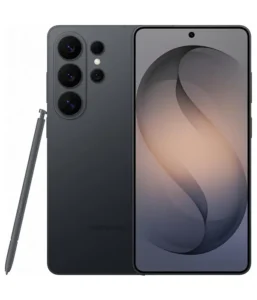
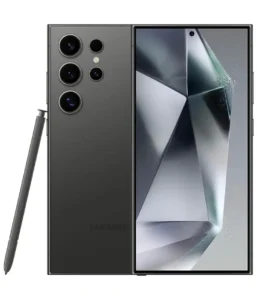
Two years separates these flagships, and on paper, the gap looks substantial. In practice, it depends entirely on what matters most. The S26 Ultra arrives with a faster chip, a larger display, quicker charging, and a refined build — but the S24 Ultra still holds its ground in ways that may surprise anyone expecting a clear knockout.
Both phones sit at the top of Samsung’s lineup, both carry 200MP main sensors, and both are built for users who refuse to compromise. The real question is where the S26 Ultra earns its premium, and where the S24 Ultra quietly outperforms expectations.
Head-to-Head Camera Analysis
The main sensor specs look identical at first glance — 200MP on both — but the execution differs. The S26 Ultra opens up to f/1.4 versus the S24 Ultra’s f/1.7, a meaningful difference in low-light scenarios where that extra light collection translates to cleaner shadow detail and reduced noise at night. Pair that with a larger 1/1.3″ sensor on the S26 Ultra compared to the S24 Ultra’s setup, and low-light portraits and indoor shots favor the newer model noticeably.
The ultrawide camera is where the gap widens more dramatically. The S26 Ultra upgrades to a 50MP ultrawide with dual-pixel PDAF and Super Steady video — a significant step up from the S24 Ultra’s 12MP ultrawide. Landscape shots, architecture, and group photos in tight spaces benefit from sharper edge resolution on the S26 Ultra, while the S24 Ultra’s ultrawide can look comparatively soft when zoomed in post-crop.
Telephoto performance remains closely matched. Both phones carry a 10MP 3x and a 50MP 5x periscope lens, though the S26 Ultra’s 5x lens features a brighter f/2.9 aperture versus the S24 Ultra’s f/3.4 — a subtle but real advantage in fading light at distance. Video shooters get 8K on both, but the S26 Ultra adds HDR10+ recording alongside the format, making it the more complete option for content creators who need broadcast-ready footage.
- Low-light stills: S26 Ultra wins with wider f/1.4 aperture and larger sensor
- Ultrawide: S26 Ultra’s 50MP with PDAF versus S24 Ultra’s 12MP — a significant real-world jump
- Telephoto zoom: Closely matched, S26 Ultra edges ahead in dim conditions
- Video: Both shoot 8K; S26 Ultra adds HDR10+ and Super Steady ultrawide
Performance & Real-World Usage
The Snapdragon 8 Elite Gen 5 inside the S26 Ultra is built on a 3nm process compared to the 4nm Snapdragon 8 Gen 3 in the S24 Ultra. That node difference matters less in everyday tasks and becomes visible under sustained load — long gaming sessions, extended video exports, or running multiple AI-powered features simultaneously. The S26 Ultra handles thermal pressure more gracefully, with less frequency throttling during prolonged use.
Raw benchmark numbers tell part of the story, but multitasking behavior tells the rest. The S26 Ultra’s 16GB RAM configuration on the 1TB model gives it breathing room the S24 Ultra’s flat 12GB across all storage tiers doesn’t match. Running DeX, streaming, and background processing simultaneously feels smoother on the S26 Ultra, while the S24 Ultra can introduce occasional hesitation under heavy concurrent workloads.
Gaming performance on the S26 Ultra is a clear step forward. The Adreno 840 sustains higher frame rates in demanding titles with better consistency than the Adreno 750 in the S24 Ultra, which starts to show frame dips after extended sessions at max settings. For casual and moderate gaming, the S24 Ultra remains entirely capable — the gap only becomes apparent during hour-plus sessions at peak graphical demand.
- Chipset: S26 Ultra’s 3nm Snapdragon 8 Elite Gen 5 vs S24 Ultra’s 4nm Snapdragon 8 Gen 3
- RAM: S26 Ultra offers up to 16GB; S24 Ultra caps at 12GB across all variants
- Storage speed: S26 Ultra uses UFS 4.X; S24 Ultra uses UFS 4.0 — faster read/write on the newer model
- Sustained gaming: S26 Ultra throttles less under extended load
Battery Life & Charging Experience
Both phones carry a 5000mAh cell, but the S26 Ultra converts that capacity more efficiently. The newer chipset’s power management, combined with the LTPO display’s more aggressive refresh rate scaling, pushes real-world screen-on time further. The S24 Ultra averaged around 13 hours and 49 minutes in active use testing — a strong result — yet the S26 Ultra stretches that further under mixed usage patterns.
Charging speed is where the S26 Ultra makes a decisive move. At 60W wired versus the S24 Ultra’s 45W, the S26 Ultra reaches 75% in 30 minutes; the S24 Ultra hits 65% in the same window. Over repeated daily charging cycles, that difference compounds into meaningfully less time tethered to a cable. Wireless charging also leaps from 15W Qi on the S24 Ultra to 25W Qi2.2 on the S26 Ultra — a genuine quality-of-life improvement for pad users.
Reverse wireless charging sits at 4.5W on both phones, adequate for topping up earbuds or a watch in a pinch but not a standout feature on either device. The S24 Ultra’s charging speeds, while slower, are by no means sluggish — users upgrading from anything older than the S23 series will still notice an improvement. Those coming from the S24 Ultra, however, will feel the pace difference immediately.
Display, Design & Build Feel
The S26 Ultra grows to 6.9 inches from the S24 Ultra’s 6.8 inches — a minor spec difference that feels more significant in hand due to a slimmer, lighter chassis. The S26 Ultra weighs 214g against the S24 Ultra’s 232g, an 18-gram reduction that sounds marginal until a full day of single-handed use reveals how much that weight reduction reduces fatigue. The S26 Ultra is also thinner at 7.9mm versus 8.6mm, giving it a sleeker profile when pocketed.
Display quality is essentially matched in brightness — both peak at 2600 nits — but the S26 Ultra adds Gorilla Armor 2 with a higher Mohs scratch resistance and a dedicated Privacy Display mode, useful in public settings. The S24 Ultra uses the original Gorilla Armor, which is still premium protection by any reasonable standard. Resolution stays the same on both at 1440 x 3120 pixels, so pixel-peeping won’t reveal a difference in day-to-day text clarity.
The frame material shift is worth noting for those who care about build feel. The S24 Ultra uses a titanium Grade 2 frame — a distinctive, premium material choice with a matte, weighty feel. The S26 Ultra switches to Armor Aluminum 2, which is lighter and slightly warmer in hand but lacks the same premium tactile impression titanium delivers. The S24 Ultra arguably wins the build prestige argument on material alone, even as the S26 Ultra wins on ergonomics.
One practical trade-off: the S24 Ultra retains a built-in S Pen with Bluetooth, gyroscope, and accelerometer. The S26 Ultra drops Bluetooth S Pen functionality — a real loss for productivity users who relied on Air Actions for remote shutter control, presentation clickers, or annotation workflows. The stylus is still present, but it functions as a passive pen rather than a connected input device.
- Weight: S26 Ultra at 214g vs S24 Ultra at 232g — noticeably lighter over extended use
- Thickness: S26 Ultra at 7.9mm vs S24 Ultra at 8.6mm
- Frame: S24 Ultra’s titanium Grade 2 has a more premium feel; S26 Ultra’s Armor Aluminum 2 is lighter
- Screen protection: S26 Ultra gets Gorilla Armor 2 and Privacy Display; S24 Ultra has Gorilla Armor
- S Pen: S24 Ultra has Bluetooth S Pen with Air Actions; S26 Ultra drops Bluetooth connectivity
Software, Updates & AI Features
Both phones launch with seven major Android upgrades guaranteed — Samsung’s long-term support promise applies equally here. The S26 Ultra ships on Android 16 with One UI 8.5, while the S24 Ultra started on Android 14 with One UI upgradeable to One UI 8.0 at the time of comparison. For day-to-day use, One UI 8.5 brings refinements in taskbar behavior, multitasking gestures, and AI feature integration that One UI 8.0 handles differently, though neither version fundamentally changes how the phone feels to use.
AI processing benefits more from the S26 Ultra’s faster chip and additional RAM headroom. On-device AI tasks — object erasing, generative editing, Live Translate, and real-time transcription — run with less latency on the S26 Ultra. The S24 Ultra handles these tasks competently but introduces slightly longer processing pauses on more complex operations, particularly generative fill on high-resolution images.
Price & Value Proposition
The S24 Ultra has seen significant price drops since launch, making it one of the most capable value propositions in the Android flagship space. Users who don’t shoot ultrawide heavily, don’t push the device through sustained gaming sessions, and can live without faster charging will find the S24 Ultra difficult to fault at its current street price.
The S26 Ultra commands a new-device premium, and it earns that premium in specific areas: faster charging, superior ultrawide camera, lighter build, and better sustained performance. For users who kept their S23 Ultra or older and are looking for a meaningful generational jump, the S26 Ultra makes a strong case. For someone already on the S24 Ultra, the upgrade math is harder to justify unless the ultrawide camera or charging speed are genuine pain points.
The S24 Ultra’s titanium frame and Bluetooth S Pen remain genuine differentiators — features Samsung has stepped back from in the S26 Ultra. Buyers who rely on the S Pen’s Air Actions or simply value the premium material aesthetic should factor those losses into the upgrade decision before assuming newer automatically means better for their use case.
Final Verdict: Which One Should You Buy?
The Samsung Galaxy S26 Ultra is the more complete device in 2024’s current context — faster charging, better ultrawide camera, lighter build, and a more powerful chip. For first-time Ultra buyers or anyone jumping from the S23 Ultra or older, the S26 Ultra is the straightforward recommendation.
The Samsung Galaxy S24 Ultra earns its place for two types of buyers: those who want a premium flagship at a reduced price and can accept the trade-offs in charging speed and ultrawide resolution, and those who rely on the Bluetooth S Pen for productivity workflows. The titanium frame and mature software ecosystem make it a device that punches well above its current asking price.
Neither phone is a bad choice. The S26 Ultra is the better phone; the S24 Ultra is the better value. That distinction, more than any spec sheet comparison, is what should drive the decision.
Samsung Galaxy S26 Ultra vs Samsung Galaxy S24 Ultra Frequently Asked Questions
Is the camera on the S26 Ultra significantly better than the S24 Ultra?
The main 200MP sensor gains a wider f/1.4 aperture and larger sensor size on the S26 Ultra, making a real difference in low-light shooting. The most significant upgrade is the ultrawide — 50MP with PDAF versus the S24 Ultra’s 12MP ultrawide. Telephoto performance is closely matched between the two.
Does the S26 Ultra charge noticeably faster than the S24 Ultra?
Yes. The S26 Ultra’s 60W wired charging reaches 75% in 30 minutes; the S24 Ultra hits 65% in the same period at 45W. Wireless charging also improves from 15W on the S24 Ultra to 25W Qi2.2 on the S26 Ultra. For heavy daily users who charge multiple times per day, the difference is meaningful over time.
Does the S26 Ultra still have an S Pen?
Yes, the S26 Ultra includes an S Pen, but it no longer has Bluetooth connectivity. This means Air Actions — the remote gesture controls for camera shutter, presentations, and app navigation — are gone. Users who relied on those features will find this a genuine step backward compared to the S24 Ultra’s full Bluetooth S Pen.
Which phone has a better build quality — S26 Ultra or S24 Ultra?
This depends on priorities. The S24 Ultra uses a titanium Grade 2 frame with a premium, weighty feel. The S26 Ultra uses Armor Aluminum 2, which is lighter and results in a significantly thinner and lighter device at 214g versus 232g. The S24 Ultra wins on material prestige; the S26 Ultra wins on ergonomics and all-day comfort.
Is the performance difference between S26 Ultra and S24 Ultra noticeable in everyday use?
For typical tasks — browsing, social media, messaging — both phones feel essentially identical. The gap becomes visible during sustained gaming, AI photo processing, or heavy multitasking, where the S26 Ultra’s 3nm chip and up to 16GB RAM handle load without throttling. The S24 Ultra’s Snapdragon 8 Gen 3 is still a capable processor; it simply shows its limits sooner under extended peak demand.
How do the displays compare between S26 Ultra and S24 Ultra?
Both peak at 2600 nits brightness and use 1440 x 3120 resolution on LTPO AMOLED 2X panels with 120Hz refresh. The S26 Ultra is slightly larger at 6.9 inches versus 6.8 inches and gains Gorilla Armor 2 scratch protection and a Privacy Display mode. Day-to-day, the panels look nearly identical in normal viewing conditions.
Should S24 Ultra owners upgrade to the S26 Ultra?
Only if the ultrawide camera quality, faster charging, or lighter weight are active pain points. The performance gap under sustained load is real but not transformative for average users. The loss of Bluetooth S Pen functionality may actually make the upgrade feel like a lateral move for heavy stylus users. Those on an S23 Ultra or older will feel a much clearer generational jump and will benefit more from upgrading.
Which phone is better for gaming?
The S26 Ultra sustains higher performance for longer during demanding gaming sessions. The Adreno 840 handles thermal management better than the Adreno 750 in the S24 Ultra, meaning frame rates stay more consistent during hour-long sessions at max settings. For casual gaming, both phones perform identically.