
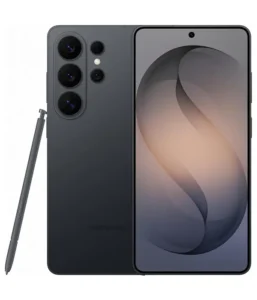
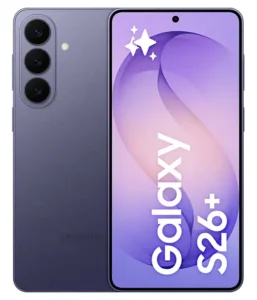
Choosing between the Samsung Galaxy S26 Ultra and the Galaxy S26+ is one of the most practically useful decisions a Samsung buyer can make — and also one of the most misunderstood. Both phones share the same chipset in most markets, the same software platform, the same seven-year update promise, and the same One UI 8.5 experience. They are built by the same company with the same manufacturing standards. What separates them is deliberate and meaningful: the Ultra exists to push camera versatility, display refinement, and stylus productivity further than the Plus is designed to go.
The question isn’t whether the Ultra is better — it is, across nearly every measurable category. The real question is whether those upgrades matter enough to justify a significant price difference. For many buyers, the S26+ is the smarter purchase. For others, the Ultra’s unique features are genuinely irreplaceable. Here’s where the lines actually fall.
Head-to-Head Camera Analysis
The camera difference between these two phones is the most significant gap in the entire comparison. The S26 Ultra leads with a 200MP main sensor at f/1.4 on a 1/1.3″ sensor — a massive imaging platform that captures extraordinary detail in daylight and pulls more light in low-light conditions than most smartphone sensors can match. The S26+ uses a well-specified 50MP f/1.8 main sensor on a 1/1.56″ sensor, which is still a strong performer but operates in a fundamentally smaller sensor tier. Both use dual-pixel PDAF and OIS, but the Ultra’s wider aperture and larger sensor give it a structural advantage that shows up clearly in challenging lighting and high-detail captures.
The telephoto gap is where the Ultra justifies much of its premium alone. The S26+ carries a single 10MP 3x telephoto — solid and reliable for portrait distances and moderate zoom needs. The S26 Ultra runs two telephoto lenses: that same 10MP 3x unit plus a 50MP 5x optical telephoto on a 1/2.52″ sensor. That second telephoto is transformative for travel, wildlife, sports, and any scenario where 3x simply isn’t enough reach. The Ultra also gains Laser AF on top of its multi-directional PDAF — faster and more precise focus acquisition in difficult conditions. The S26+ has no laser AF. For a user who rarely shoots beyond 3x, the Plus’s single telephoto is more than adequate. For anyone who pushes zoom regularly, the Ultra’s second lens is the reason to upgrade.
The ultrawide comparison reveals another meaningful gap. The S26 Ultra’s 50MP ultrawide at f/1.9 with dual-pixel PDAF and a 1/2.5″ sensor is a class-leading ultrawide with real detail and low-light capability. The S26+ uses a 12MP ultrawide at f/2.2 on a 1/2.55″ sensor — competent and capable, but shooting at roughly one-quarter the resolution of the Ultra’s ultrawide. In tight interior spaces, architecture, and landscape photography where the full ultrawide field matters, that resolution difference shows up in large prints and cropped edits. Both support Super Steady video on the ultrawide. Front cameras are identical: 12MP f/2.2 with dual-pixel PDAF, 4K@30/60fps front video.
- Main sensor resolution: Ultra at 200MP dwarfs the S26+’s 50MP
- Main aperture: Ultra’s f/1.4 is meaningfully wider than S26+’s f/1.8
- Telephoto lenses: Ultra has two (3x and 5x); S26+ has one (3x only)
- Ultrawide resolution: Ultra’s 50MP ultrawide vs S26+’s 12MP ultrawide
- Laser AF: Ultra only — faster focus lock in difficult conditions
- Video ceiling: Both shoot 8K and 10-bit HDR — identical video capability
- Front cameras: Identical across both phones
Performance & Real-World Usage
Performance is where these phones converge almost completely — and that convergence is genuinely good news for S26+ buyers. In US and Chinese markets, both phones run the Snapdragon 8 Elite Gen 5 with identical Oryon V3 CPU cores and the Adreno 840 GPU. In rest-of-world markets, the S26+ may ship with the Exynos 2600, while the Ultra ships exclusively with the Snapdragon 8 Elite Gen 5. For US buyers, the performance platform is the same on both devices — no compromise on the Plus.
RAM configurations differ slightly at the top end. Both phones offer 12GB RAM across 256GB and 512GB storage variants. The Ultra adds a 1TB configuration with 16GB RAM — a ceiling the S26+ doesn’t reach. For the vast majority of users, 12GB handles multitasking, background app retention, and demanding workflows without issue. The 16GB option exists for power users running persistent workloads or managing very large media libraries directly on-device. Storage speed is UFS 4.X on both phones, so no difference there.
Gaming on both devices is effectively identical in the US. The Adreno 840 GPU delivers the same high frame rates at maximum settings, the same thermal management under sustained gaming sessions, and the same overall responsiveness. The S26 Ultra’s larger chassis may offer marginally better sustained thermal performance due to more internal surface area for heat dissipation — a theoretical advantage that rarely surfaces in practical gaming sessions.
- Chip (US market): Identical Snapdragon 8 Elite Gen 5 on both
- GPU: Adreno 840 on both — gaming performance is matched
- Max RAM: Ultra reaches 16GB (1TB variant); S26+ tops at 12GB
- Max storage: Ultra offers 1TB; S26+ tops at 512GB
Battery Life & Charging Experience
The battery gap between these phones is real but narrower than the spec sheet implies. The S26 Ultra carries a 5000mAh cell against the S26+’s 4900mAh — a 2% difference that produces no measurable real-world endurance distinction. Both phones will last a full day for most users, and heavy users will reach for a charger by early evening on either device. The Ultra’s larger display draws slightly more power; the S26+’s smaller 6.7-inch panel is marginally more efficient. In practice, endurance is essentially equivalent.
Charging is where the Ultra pulls ahead more meaningfully. The S26 Ultra charges at 60W wired, hitting 75% in 30 minutes. The S26+ charges at 45W wired, reaching 69% in 30 minutes. That 15W difference adds up during partial top-ups — the Ultra recovers more charge per minute of cable time. Wireless charging tells a similar story: the Ultra supports 25W Qi2.2 wireless versus the S26+’s 20W Qi2.2. Both support 4.5W reverse wireless charging for accessories. For users who charge primarily wirelessly at a pad on a desk or nightstand, the 5W wireless gap is minor. For cable-charging users in a hurry, the Ultra’s faster 60W ceiling is a practical advantage.
- Battery capacity: Ultra at 5000mAh vs S26+’s 4900mAh — effectively the same endurance
- Wired charging: Ultra at 60W (75% in 30 min) vs S26+ at 45W (69% in 30 min)
- Wireless charging: Ultra at 25W Qi2.2 vs S26+ at 20W Qi2.2
- Reverse wireless: Both support 4.5W reverse wireless charging
Display, Design & Build Feel
Both phones run 1440 x 3120 QHD+ Dynamic LTPO AMOLED 2X panels at 120Hz with HDR10+ and 2600-nit peak brightness — a shared resolution spec that puts them both well above most Android competition. The surprise is that the S26+ actually achieves a higher pixel density: its 6.7-inch panel at QHD+ hits ~516 ppi versus the Ultra’s 6.9-inch panel at ~500 ppi. The smaller screen size at the same resolution means the Plus renders text and fine detail marginally sharper. That said, neither phone looks anything less than exceptional — the ppi gap is essentially imperceptible in normal use.
Where the display experience diverges is in the front glass. The S26 Ultra uses Corning Gorilla Armor 2 with a Mohs level 6 DX anti-reflective coating — a genuine functional upgrade that noticeably reduces glare and reflections in direct sunlight. The S26+ uses Gorilla Glass Victus 2, which is strong but lacks the anti-reflective treatment. Outdoors in bright conditions, the Ultra’s display is more usable — the DX coating visibly cuts down on mirror-like surface reflections that Victus 2 allows. The Ultra also includes a Privacy Display mode that limits viewing angles for shoulder-surf protection. Neither feature exists on the S26+.
In hand, the S26+ is the more pocketable device. At 158.4 x 75.8 x 7.3mm and 190g, it’s meaningfully slimmer and lighter than the Ultra’s 163.6 x 78.1 x 7.9mm and 214g. For users who carry their phone in a front jeans pocket or prefer one-handed operation, that 24g weight difference and narrower width make a real ergonomic impact over long days. The Ultra’s size is necessary to accommodate the larger battery, S Pen silo, and expanded camera module — trade-offs that come with the territory. Both use the same Armor Aluminum 2 frame and Gorilla Glass Victus 2 on the back, and both are IP68 rated. The Ultra adds S Pen stylus support — built-in, included in the box — a feature the S26+ entirely omits.
- Display size: Ultra at 6.9″ vs S26+ at 6.7″
- Pixel density: S26+ at ~516 ppi is marginally sharper than Ultra’s ~500 ppi
- Anti-reflective glass: Ultra’s Gorilla Armor 2 DX reduces glare; S26+ uses standard Victus 2
- Privacy Display: Ultra only — limits screen visibility from side angles
- Weight: S26+ lighter at 190g vs Ultra’s 214g
- S Pen: Ultra includes built-in stylus; S26+ has no stylus support
Software, Updates & AI Features
Software is one of the cleanest ties in this comparison. Both phones ship with Android 16, run One UI 8.5, and commit to seven major Android upgrades — Samsung’s industry-leading update window. The Galaxy AI feature set is identical: Live Translate, Note Assist, Circle to Search, Generative Edit in the camera app, and the full suite of Snapdragon 8 Elite Gen 5-accelerated on-device AI tools available on both devices equally. Samsung DeX wired and wireless desktop mode works identically on both. Ultra Wideband support is present on both phones.
The one software-adjacent difference is the S Pen. The Ultra’s stylus unlocks Air Actions for gesture-based remote control, pressure-sensitive note-taking, and sketch-level drawing tools that Samsung’s One UI integrates deeply. None of that is available on the S26+. For users who actively use a stylus for productivity — marking up documents, sketching ideas, taking handwritten notes — the Ultra’s S Pen integration is a software and hardware advantage that no amount of firmware updates can bring to the Plus.
Price & Value Proposition
The Samsung Galaxy S26 Ultra commands a substantial premium over the S26+. For that premium, buyers get the 200MP quad-camera system with 5x optical zoom, Gorilla Armor 2 with DX anti-reflective coating, the built-in S Pen, a larger display, 60W wired and 25W wireless charging, and the option to spec up to 1TB storage with 16GB RAM. Every one of those upgrades is real and measurable. The question is which of them matter enough to justify the price gap for a specific buyer.
The S26+ delivers the same chip, the same software experience, the same update longevity, Samsung DeX, UWB, ultrasonic fingerprint, barometer, and stereo speakers — all the platform-level features that define the Galaxy S experience — at a meaningfully lower price. For buyers who don’t use a stylus, don’t regularly zoom beyond 3x, and charge wirelessly most of the time, the S26+ is harder to argue against. It’s a complete flagship with almost none of the S26 Ultra’s compromises except the camera system and S Pen.
Final Verdict: Which One Should You Buy?
If the S Pen matters, the Ultra is the only option. There’s no workaround, no accessory that replicates the built-in stylus experience, and no firmware update that brings it to the Plus. If zoom photography beyond 3x is a regular part of a shooting workflow — travel, events, sports — the Ultra’s 5x telephoto and 200MP main sensor are genuinely transformative upgrades. And if glare-free outdoor viewing is a daily priority, the Gorilla Armor 2 DX coating earns its place on the Ultra’s feature list.
For everyone else, the S26+ is an exceptionally complete phone at a lower price. The shared chipset, shared software, shared update commitment, shared Samsung DeX and UWB support, and the QHD+ display that’s actually marginally sharper per inch make the Plus a device that punches at the Ultra’s level in the categories most buyers use most of the time. The 4900mAh battery is close enough to the Ultra’s 5000mAh to be irrelevant in daily use.
Buy the Ultra for the camera system, the S Pen, and the anti-reflective display glass. Buy the S26+ for the same platform experience at a price that leaves room for accessories, cases, and everything else a new phone requires.
Samsung Galaxy S26 Ultra vs Samsung Galaxy S26+ Frequently Asked Questions
What are the main differences between the Galaxy S26 Ultra and S26+?
The key differences are the camera system, S Pen stylus, front glass, and charging speed. The S26 Ultra features a 200MP main sensor, a 5x optical telephoto lens in addition to 3x, a 50MP ultrawide, Gorilla Armor 2 with anti-reflective coating, a built-in S Pen, 60W wired charging, and 25W wireless charging. The S26+ uses a 50MP main sensor, a single 3x telephoto, a 12MP ultrawide, standard Gorilla Glass Victus 2, no stylus, 45W wired charging, and 20W wireless charging. Software, chipset (in the US), and update policy are identical on both.
Is the camera on the S26+ good enough compared to the Ultra?
For most everyday photography — social media, family photos, travel snapshots at normal distances — the S26+’s 50MP main sensor with dual-pixel PDAF and OIS is excellent. The gap becomes meaningful in low light (where the Ultra’s larger sensor and wider f/1.4 aperture collect more light), at zoom distances beyond 3x (where the Ultra’s dedicated 5x telephoto takes over), and in ultrawide shots where the Ultra’s 50MP ultrawide captures far more resolution than the Plus’s 12MP unit. Casual photographers will be happy with the S26+; dedicated photographers who push the camera regularly will feel the Ultra’s advantages.
Does the S26+ have an S Pen?
No. The Samsung Galaxy S26+ does not support an S Pen of any kind. The S Pen is exclusive to the Galaxy S26 Ultra, where it is built into the phone’s chassis and included in the box. Stylus support — including Air Actions, pressure-sensitive drawing, and handwriting recognition — is not available on the S26+.
How much better is the S26 Ultra’s display compared to the S26+?
Both phones share the same QHD+ 1440 x 3120 resolution on Dynamic LTPO AMOLED 2X panels with 120Hz and 2600-nit peak brightness. The S26+ is actually marginally sharper at ~516 ppi versus the Ultra’s ~500 ppi due to its smaller 6.7-inch size. The Ultra’s meaningful display advantage is its Gorilla Armor 2 with DX anti-reflective coating — a real functional upgrade that cuts glare in sunlight — and its Privacy Display mode. In terms of color, resolution, and brightness, the panels are matched.
Which phone has better battery life — the Ultra or S26+?
Real-world battery life is effectively identical. The Ultra carries 5000mAh and the S26+ carries 4900mAh — a 100mAh difference that produces no measurable endurance gap in daily use. Both phones should last a full day for moderate users. The Ultra charges faster at 60W wired versus the S26+’s 45W, and at 25W wireless versus the S26+’s 20W, making top-ups quicker on the Ultra when needed.
Do both phones have Samsung DeX?
Yes. Both the Samsung Galaxy S26 Ultra and the Galaxy S26+ support Samsung DeX in both wired and wireless modes. When connected to an external display, both phones enable the full desktop computing interface with a taskbar, windowed apps, and keyboard and mouse support. This feature is not exclusive to the Ultra.
Which phone is easier to hold and use one-handed?
The Samsung Galaxy S26+ is noticeably more comfortable for one-handed use. At 158.4 x 75.8 x 7.3mm and 190g, it is smaller, slimmer, and lighter than the Ultra’s 163.6 x 78.1 x 7.9mm frame and 214g. The Ultra’s larger footprint and extra weight are a real ergonomic trade-off for its bigger display and expanded feature set. Users with smaller hands or those who carry their phone in a front pocket will prefer the S26+’s form factor.
Is the S26 Ultra worth the extra cost over the S26+?
It depends entirely on how a buyer uses their phone. The Ultra is worth the premium for users who regularly zoom beyond 3x for photos, who use a stylus for productivity or creative work, who need outdoor readability improvements from the anti-reflective display coating, or who want the maximum camera flexibility Samsung offers. For buyers who don’t use a stylus, shoot mostly at standard zoom ranges, and value the same software experience at a lower price, the S26+ delivers almost everything the Ultra offers at a meaningfully lower cost. Both are exceptional phones — the Ultra just charges a premium for specific features that not every buyer needs.