
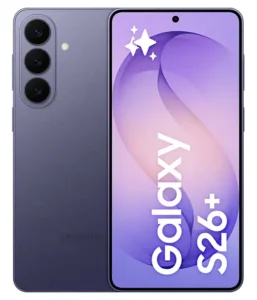
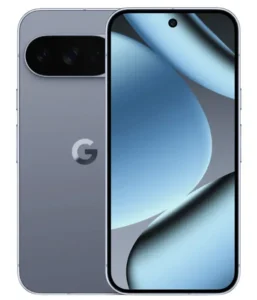
Head-to-Head Camera Analysis
Camera hardware tells two very different stories at different price tiers within the same Android ecosystem. The Galaxy S26+ fields a 50MP main at f/1.8, a 10MP 3x optical telephoto at f/2.4, and a 12MP ultrawide at f/2.2. The Pixel 10 Pro answers with a 50MP main at f/1.7, a 48MP 5x periscope telephoto at f/2.8, and a 48MP ultrawide also at f/1.7. On resolution, reach, and aperture, the Pixel 10 Pro wins across every rear lens — the ultrawide comparison alone is stark, with Google’s f/1.7 gathering significantly more light than Samsung’s f/2.2 in dim environments.
The telephoto gap is the most consequential real-world difference. Samsung’s 3x optical zoom on a 10MP sensor produces acceptable results for casual portrait compression and moderate reach, but it tops out quickly and relies on digital interpolation for anything beyond 3x. The Pixel 10 Pro’s 48MP periscope telephoto at 5x optical is in a different category — higher resolution sensor, longer reach, and sharper results when cropping in post. For event photography, wildlife, and candid street work at distance, the Pixel pulls noticeably further ahead the longer the zoom.
The Galaxy S26+ fights back with processing tricks. Horizon Lock keeps video level during motion — useful for travel and action recording. Best Face mode selects the sharpest expression from multiple frames in group shots. Samsung’s 8K@30fps native video recording also beats the Pixel 10 Pro’s cloud-upscaled 8K, which is a genuine distinction: the S26+ captures 8K on-device without needing an internet connection to produce the file. For pure video resolution captured locally, Samsung holds a meaningful edge.
Both phones share an 8K video capability on paper, but Samsung’s implementation is native while Google’s relies on cloud processing — a distinction that matters for anyone shooting offline or unwilling to upload footage. For 4K content, both record up to 60fps with 10-bit HDR and gyro-EIS, and both produce polished results. Samsung’s video tends toward punchy, saturated rendering; Pixel’s is more natural and restrained, which grades better in post but looks less immediately impressive straight out of camera.
The front camera gap is enormous. The Pixel 10 Pro packs a 42MP ultrawide selfie unit versus the Galaxy S26+’s 12MP standard front camera. That’s not a marginal difference — the Pixel captures more than three times the detail, handles low-light selfies more cleanly, and delivers sharper results at every zoom level when cropping portrait shots. Group selfies, video calls, and content creation that depends on front camera quality break decisively in Google’s favor.
- Main camera aperture: Pixel 10 Pro’s f/1.7 gathers more light than S26+’s f/1.8 in dim scenes
- Telephoto reach: Pixel 10 Pro wins at 5x optical with 48MP sensor vs S26+’s 3x on 10MP
- Ultrawide low light: Pixel 10 Pro’s f/1.7 ultrawide dramatically outperforms S26+’s f/2.2
- Native 8K video: Galaxy S26+ records 8K on-device; Pixel 10 Pro requires cloud upscaling
- Front camera: Pixel 10 Pro’s 42MP ultrawide selfie unit far outresolves S26+’s 12MP standard cam
Performance & Real-World Usage
The Galaxy S26+ ships with Snapdragon 8 Elite Gen 5 in US and China markets — Qualcomm’s latest Oryon V3 architecture with two performance cores at 4.74 GHz and six efficiency cores at 3.62 GHz, paired with an Adreno 840 GPU. Rest-of-world variants use the Exynos 2600 on a 2nm process with a 10-core layout. Both configurations represent Samsung’s strongest silicon to date, and the Snapdragon variant in particular pushes GPU performance to a new ceiling for Android gaming. The Pixel 10 Pro runs Google’s Tensor G5 on 3nm, featuring a Cortex-X4 prime core at 3.78 GHz with five A725 mid-cores and two efficiency cores. Tensor G5’s GPU is a PowerVR DXT-48-1536 — a capable chip for daily tasks and computational photography, but it doesn’t compete with Adreno 840 in raw GPU throughput.
For mobile gaming, the Galaxy S26+ is the stronger device. The Adreno 840 handles graphically demanding titles at maximum settings with sustained frame rates, and Samsung’s thermal architecture in the S26+’s slightly thicker profile manages heat better than smaller-bodied alternatives. Tensor G5 runs demanding games competently, but thermal throttling sets in sooner under prolonged GPU load. The Pixel 10 Pro is built for intelligent workloads, not peak GPU stress.
RAM comparison shakes out clearly: the Pixel 10 Pro ships with 16GB across every storage tier, while the Galaxy S26+ offers 12GB. In Android’s memory model, 16GB keeps substantially more background apps resident, reduces reload events during multitasking, and gives the operating system more room to manage large AI inference tasks without paging. For power users running multiple demanding apps simultaneously, the Pixel’s 16GB ceiling is the more comfortable configuration. Storage tiers also diverge — the Pixel 10 Pro offers a 1TB option, while the S26+ tops out at 512GB.
Both phones support Samsung DeX on the S26+ side for desktop-mode productivity, while the Pixel 10 Pro lacks an equivalent. The S26+ also supports DisplayPort 1.2 output over USB-C 3.2, enabling 4K external display connections. The Pixel 10 Pro uses USB-C 3.2 without the DisplayPort 1.2 designation in provided specs, though both handle data transfer at the same rated speed.
- Gaming GPU: Galaxy S26+’s Adreno 840 outperforms Tensor G5’s PowerVR in sustained GPU workloads
- AI performance: Tensor G5 executes on-device AI inference more efficiently for computational tasks
- RAM: Pixel 10 Pro at 16GB vs S26+’s 12GB — more headroom for multitasking and background apps
- Storage ceiling: Pixel 10 Pro reaches 1TB; Galaxy S26+ tops out at 512GB
- Desktop mode: Galaxy S26+ supports Samsung DeX and Wireless DeX; Pixel 10 Pro does not
Battery Life & Charging Experience
Battery capacity sits almost identical: 4900mAh on the Galaxy S26+ versus 4870mAh on the Pixel 10 Pro. In practice, both phones comfortably handle a full day of mixed use. The real difference emerges in charging behavior. The Galaxy S26+ charges at 45W wired, reaching 69% in just 30 minutes — a legitimately fast result that makes short top-ups highly effective. The Pixel 10 Pro charges at 30W wired, hitting 55% in 30 minutes. Samsung gets to 69% while Google is still climbing from 55% — a significant charging speed gap that’s felt on rushed mornings.
Wireless charging also breaks Samsung’s way: the S26+ supports 20W wireless via Qi2.2, while the Pixel 10 Pro charges at 15W wirelessly via Qi2 magnetic. The S26+’s Qi2.2 implementation pushes wireless charging into genuinely practical territory for regular use rather than overnight-only charging. Reverse charging differs in type: the S26+ supports 4.5W reverse wireless, while the Pixel 10 Pro uses reverse wired charging. Both allow topping up accessories, but Samsung’s wireless approach is more convenient for compatible earbuds and smartwatches.
The Pixel 10 Pro includes bypass charging, routing power directly through the device during sustained stationary use without cycling the battery. This protects long-term battery health during extended desktop-style use — a feature the Galaxy S26+ doesn’t offer. For users who frequently keep their phone plugged in while working, bypass charging is a meaningful longevity advantage.
- Wired charging speed: Galaxy S26+ reaches 69% in 30 min vs Pixel 10 Pro’s 55% at 30W
- Wireless charging: S26+ at 20W Qi2.2 vs Pixel 10 Pro’s 15W Qi2 — Samsung is meaningfully faster
- Reverse charging: S26+ uses 4.5W reverse wireless; Pixel 10 Pro uses reverse wired
- Bypass charging: Pixel 10 Pro only — better for battery longevity during stationary use
Display, Design & Build Feel
Screen size splits these phones clearly: the Galaxy S26+ carries a 6.7-inch QHD+ Dynamic LTPO AMOLED 2X panel at 516 ppi, while the Pixel 10 Pro uses a 6.3-inch LTPO OLED at 495 ppi. Samsung’s larger screen with higher resolution makes it the more immersive option for media consumption, reading, and multitasking. The Pixel 10 Pro’s smaller panel is sharper enough per-inch for comfortable daily use, and its compact footprint is easier to manage one-handed over extended sessions. Both run 120Hz adaptive refresh, and neither feels laggy in navigation.
Peak brightness favors the Pixel 10 Pro at 3300 nits versus the S26+’s 2600 nits. That 700-nit gap is most visible in harsh direct sunlight — the Pixel stays readable under conditions where the S26+ starts to wash out. In typical indoor use, both panels look excellent. Samsung’s HDR10+ certification on the S26+ matches the Pixel’s HDR10+ support, putting color accuracy and HDR content rendering on equal footing for streaming.
The Pixel 10 Pro is both heavier at 207g and thicker at 8.5mm compared to the Galaxy S26+’s 190g and 7.3mm. The S26+ feels impressively slim and light for a 6.7-inch device — comfortable in a pocket and easy to hold single-handed despite the larger screen. The Pixel’s denser build comes from fitting a larger camera module and additional sensors into a smaller chassis. Both use Gorilla Glass Victus 2 front and back with aluminum frames, and both carry identical IP68 ratings to 1.5 meters — water resistance is an even draw here.
- Screen size and resolution: Galaxy S26+ at 6.7″ QHD+ 516 ppi vs Pixel 10 Pro’s 6.3″ at 495 ppi
- Peak brightness: Pixel 10 Pro at 3300 nits significantly outshines S26+’s 2600 nits outdoors
- Weight and thickness: S26+ wins at 190g and 7.3mm vs Pixel 10 Pro’s 207g and 8.5mm
- Water resistance: Both IP68 to 1.5m — equal protection
Software, Updates & AI Features
Both phones launch on Android 16 with seven major update guarantees — a long-term software commitment that puts them on equal footing for longevity. The practical difference is update delivery speed. Google’s Pixel 10 Pro receives Android security patches and feature updates on launch day, simultaneously worldwide. Samsung’s One UI 8.5 on the S26+ delivers polished, feature-rich Android with a heavier interface — more preloaded apps, deeper settings menus, and more customization options than stock Android. For users who want Android as Google intends it, the Pixel wins. For users who want feature density and control, One UI 8.5 is the more capable surface.
Samsung’s Galaxy AI in One UI 8.5 covers live translation, Note Assist, Circle to Search, Generative Edit, and the full DeX ecosystem for desktop productivity. Google’s Tensor G5 powers Gemini integration, Best Take, Zoom Enhance, on-device call features, and live translation through the Pixel AI stack. Both offer strong on-device AI processing; Google’s features tend to be more tightly integrated into the camera workflow, while Samsung’s AI tools spread more broadly across productivity and communication.
The Pixel 10 Pro includes a skin temperature thermometer sensor — a health monitoring capability the Galaxy S26+ doesn’t offer. Samsung counters with satellite SOS through its own service; the Pixel 10 Pro also includes satellite SOS support. Both support UWB for spatial awareness and precision device location. Navigation coverage gives the Pixel 10 Pro a modest edge with NavIC support in addition to the standard constellation suite — relevant for users in South Asia where NavIC provides regional precision benefits.
Price & Value Proposition
The Galaxy S26+ enters at 256GB with 12GB RAM, targeting the large-screen market with QHD+ resolution and the S-series ecosystem. The Pixel 10 Pro starts at 128GB with 16GB RAM, offering a lower entry price but half the base storage. The Pixel’s 1TB option extends to a tier Samsung doesn’t reach in the S26+, which matters for heavy shooters and media collectors. Samsung’s faster charging, native 8K video, Samsung DeX support, and larger display justify its premium positioning for users who value those features.
The Pixel 10 Pro’s value case is built on camera versatility, selfie resolution, brighter outdoor display, more RAM, longer telephoto reach, and Google’s AI-first software experience. For Android users who prioritize computational photography and raw camera hardware quality over screen size and charging speed, the Pixel 10 Pro delivers more per spec at a competitive price point.
Final Verdict: Which One Should You Buy?
The Samsung Galaxy S26+ is the right choice for users who want a large immersive QHD+ display, the fastest wired and wireless charging in this comparison, native 8K video recording, Samsung DeX desktop productivity, and the most powerful GPU for gaming. It’s a well-rounded flagship that handles everything without compromise, particularly for media-heavy and gaming-intensive users.
The Google Pixel 10 Pro wins on camera versatility — that 5x periscope telephoto, f/1.7 ultrawide, and 42MP front camera create a stills photography package that Samsung can’t match at any zoom length. Its brighter outdoor display, 16GB RAM, 1TB storage ceiling, and clean Android 16 software with day-one updates make it the sharper daily driver for photography-first users.
Platform preference matters less here than use-case fit. Heavy gamers and media consumers should lean toward the S26+. Photographers, selfie-focused users, and anyone who wants the best computational camera on Android should go with the Pixel 10 Pro.
Samsung Galaxy S26+ vs Google Pixel 10 Pro Frequently Asked Questions
Which phone has better camera zoom — the Galaxy S26+ or the Pixel 10 Pro?
The Pixel 10 Pro wins decisively. Its 48MP periscope telephoto reaches 5x optical zoom versus the Galaxy S26+’s 10MP 3x optical telephoto. At any zoom distance beyond 3x, the Pixel produces significantly sharper, more detailed images — and even at 3x, the higher sensor resolution gives Google more flexibility for cropping in post.
Does the Galaxy S26+ charge faster than the Pixel 10 Pro?
Yes, significantly. The Galaxy S26+ reaches 69% in 30 minutes via 45W wired charging. The Pixel 10 Pro hits 55% in 30 minutes at 30W. Samsung also supports 20W wireless charging via Qi2.2 versus the Pixel’s 15W Qi2. For users who rely on fast top-ups, the S26+ is the clear winner in charging speed.
Which phone has a better selfie camera?
The Pixel 10 Pro is in a completely different league. Its 42MP ultrawide front camera captures more than three times the resolution of the Galaxy S26+’s 12MP standard front unit. In daylight portraits, group selfies, and video calls, the Pixel 10 Pro’s front camera delivers noticeably sharper, more detailed results.
Which phone has a brighter display?
The Pixel 10 Pro peaks at 3300 nits, meaningfully brighter than the Galaxy S26+’s 2600 nits. In direct sunlight, the Pixel 10 Pro stays readable under conditions where the S26+ begins to wash out. The Galaxy S26+ wins on screen size and resolution at QHD+ 516 ppi across a 6.7-inch panel versus the Pixel’s 6.3-inch 495 ppi display.
Does the Galaxy S26+ support Samsung DeX?
Yes. The Galaxy S26+ supports both Samsung DeX and Samsung Wireless DeX, enabling a desktop-style experience with an external monitor and keyboard. The Pixel 10 Pro does not offer an equivalent desktop mode. For users who want to use their phone as a productivity workstation, the S26+ is the only option here.
Which phone is better for mobile gaming?
The Galaxy S26+ holds a clear gaming advantage. The Snapdragon 8 Elite Gen 5 with Adreno 840 GPU delivers higher sustained frame rates in demanding titles and handles thermal stress better over long sessions. The Pixel 10 Pro’s Tensor G5 with PowerVR GPU handles gaming competently but falls short of the Adreno 840’s raw throughput under sustained load.
Does the Pixel 10 Pro record native 8K video?
No. The Pixel 10 Pro uses cloud-based upscaling to produce 8K output, which requires an internet connection and processing time after capture. The Galaxy S26+ records 8K at 24 and 30fps natively on-device, with no cloud dependency. For videographers who shoot in locations without connectivity, the S26+’s native 8K is a genuine practical advantage.
Which phone has more RAM and storage options?
The Pixel 10 Pro ships with 16GB RAM across all configurations and offers storage tiers up to 1TB. The Galaxy S26+ provides 12GB RAM across 256GB and 512GB storage options. For power users who need the most multitasking headroom and the highest storage capacity, the Pixel 10 Pro is the stronger configuration.