
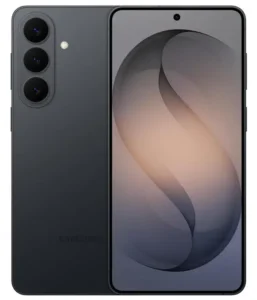
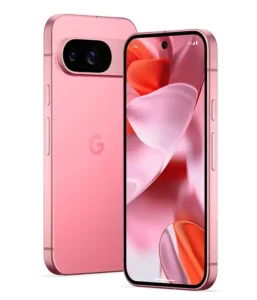
The Samsung Galaxy S26 and the Google Pixel 9 occupy the same physical footprint — both carry 6.3-inch screens, IP68 protection, and Gorilla Glass Victus 2 — yet they represent fundamentally different philosophies. Samsung brings a newer chipset, thinner chassis, and a feature-loaded software suite. The Pixel 9 answers with a larger battery, a unique dual-wide camera system, and Google’s on-device AI tightly baked into the experience. Neither phone is a straightforward win.
Head-to-Head Camera Analysis
On the rear, the comparison gets unusual fast. The S26 runs a traditional triple-camera setup: 50MP f/1.8 wide, 10MP 3x telephoto, and 12MP ultrawide. The Pixel 9 skips the telephoto entirely, instead pairing a 50MP f/1.7 wide with a 48MP f/1.7 ultrawide — making it the higher-resolution dual-wide setup on the market. For users who zoom frequently, the S26’s 3x optical reach is a clear practical advantage. For users who shoot architecture, landscapes, or group shots, the Pixel 9’s 48MP ultrawide at f/1.7 captures detail that most competing ultrawides can’t touch.
Color science splits sharply between the two. Samsung’s processing stack favors punchy contrast and vibrant saturation — shots look finished straight out of the camera but can tip into oversharpened territory in complex scenes with fine texture. The Pixel 9 leans toward tonal accuracy, preserving highlight detail in bright outdoor conditions where the S26 occasionally clips. In a direct comparison of the same midday scene, the Pixel’s output tends to look more like what the eye actually registered.
Low-light performance is where Google’s computational advantage still holds. The Pixel 9’s Night Sight processing extracts usable images in near-dark environments with less noise smoothing than Samsung applies. The S26’s Night Mode is capable, but fine textures — fabric, foliage, skin — lose definition faster as light drops. The Pixel 9 is the more reliable low-light camera of the two, even with an older chip powering it.
- Main sensor aperture: Pixel 9 wins with f/1.7 vs S26’s f/1.8 — a slight but real advantage for indoor and low-light shots.
- Telephoto: S26 is the only option here — 10MP 3x optical zoom; Pixel 9 has no telephoto lens.
- Ultrawide resolution: Pixel 9’s 48MP ultrawide at f/1.7 dramatically outresolves S26’s 12MP f/2.2 unit.
- Video ceiling: S26 shoots 8K at 24/30fps; Pixel 9 caps at 4K.
- Special features: S26 offers Best Face, Horizon Lock; Pixel 9 brings Best Take, Pixel Shift, Ultra-HDR.
- Front camera: S26 uses a 12MP standard wide; Pixel 9 shoots with a 10.5MP ultrawide — better field of view, slightly lower resolution.
The S26’s 8K video mode is the headline spec, but for most users who watch content on phones and laptops, 4K is the practical ceiling. The Pixel 9’s 10-bit HDR footage holds wider color volume in editing — a better pick for anyone who color grades clips before sharing. Both offer OIS and gyro-EIS, though the Pixel’s stabilization on the ultrawide is the stronger selling point given how wide that lens shoots.
Performance & Real-World Usage
The generational gap in silicon is real. The S26’s Snapdragon 8 Elite Gen 5 is a 3nm chip with high-performance Oryon V3 cores running at up to 4.74GHz. The Pixel 9’s Tensor G4 is built on a 4nm process with a Cortex-X4 prime core topping out at 3.1GHz. In benchmarks, the gap is significant. In daily use — switching apps, loading pages, streaming — both phones feel fluid thanks to 12GB of RAM across all configurations.
Gaming separates them more clearly. The S26’s Adreno 840 GPU handles demanding titles with stable frame rates and better sustained performance before thermal throttling kicks in. The Tensor G4 manages most mobile games without issue, but extended sessions in graphically intense titles trigger noticeable warmth on the Pixel 9 and occasional frame dips that don’t appear on the S26 under the same conditions.
The Pixel 9 trades raw compute for AI task efficiency. On-device speech recognition, real-time call screening, and live transcription run with a responsiveness that Samsung’s equivalent features don’t consistently match, even with newer hardware. For users who rely heavily on Google Assistant features or accessibility tools, the Pixel’s AI pipeline advantage is tangible and daily.
- Chipset generation: S26’s Snapdragon 8 Elite Gen 5 (3nm) is a full generation ahead of Pixel 9’s Tensor G4 (4nm).
- Storage speed: S26 uses UFS 4.X throughout; Pixel 9 uses UFS 3.1 — slower file transfers and app installs on the Pixel.
- Desktop mode: S26 supports Samsung DeX and Wireless DeX; Pixel 9 has no equivalent.
- Connectivity: S26 supports Wi-Fi 7 and Bluetooth 5.4; Pixel 9 reaches Wi-Fi 7 but uses Bluetooth 5.3.
- USB output: S26 includes DisplayPort 1.2 over USB-C; Pixel 9 uses standard USB-C 3.2 without DisplayPort.
Samsung DeX remains a meaningful differentiator for the S26. Connecting to an external monitor turns the phone into a functional desktop environment — useful for travel and light productivity work. The Pixel 9 offers no comparable feature, keeping it squarely in the mobile-only paradigm.
Battery Life & Charging Experience
The Pixel 9 carries a 4700mAh battery against the S26’s 4300mAh — a 400mAh gap that, combined with the Tensor G4’s power management, translates to a real-world endurance advantage. On moderate use, the Pixel 9 pushes comfortably into a second day; the S26 typically hits end-of-day needing a charge under similar loads.
Charging speed is close but favors the Pixel 9 slightly: 27W wired versus the S26’s 25W, with both claiming 55% in 30 minutes — a reminder that wattage numbers and real-world charging curves don’t always align linearly. Wireless charging is matched at 15W on both, though the Pixel 9 drops to 12W on standard Qi chargers while the S26 supports Qi2 at 15W across compatible pads.
The Pixel 9 includes bypass charging — a practical feature that routes power directly to the device during demanding sessions like gaming or video calls, reducing heat buildup and battery wear over time. The S26 offers reverse wireless charging at 4.5W, enough to top up earbuds but not genuinely useful for charging another device at any practical speed.
- Battery capacity: Pixel 9 at 4700mAh vs S26’s 4300mAh — Pixel wins endurance.
- Wired charging: Pixel 9 at 27W edges the S26’s 25W.
- Wireless charging: Both reach 15W; S26 is Qi2 Ready, Pixel 9 needs a Pixel Stand for full 15W.
- Bypass charging: Pixel 9 only — reduces battery degradation during heavy use sessions.
- Reverse wireless: S26 only at 4.5W — limited to accessories like earbuds.
Display, Design & Build Feel
Both phones share the same 6.3-inch screen size, yet the panel technology diverges in ways that matter. The S26 uses a Dynamic LTPO AMOLED 2X display with adaptive refresh rate, peaking at 2600 nits. The Pixel 9 runs a fixed 120Hz OLED panel peaking at 2700 nits. The Pixel’s slightly higher brightness ceiling gives it a marginal edge in direct sunlight readability; the S26’s LTPO technology manages power draw more intelligently by dropping refresh rate during static content.
Pixel density tips to the Pixel 9 at 422ppi versus the S26’s 411ppi — close enough that most users won’t notice, but text edges look fractionally crisper on the Pixel at standard viewing distances. Both panels cover HDR10+ and carry Gorilla Glass Victus 2. The S26 achieves a ~90% screen-to-body ratio versus the Pixel 9’s ~86.1%, meaning noticeably thinner bezels on the Samsung.
The physical size difference is where the decision often gets made in hand. The S26 at 7.2mm thick and 167g is one of the slimmest and lightest flagships at this screen size. The Pixel 9 at 8.5mm and 198g is noticeably chunkier and heavier — 31g more mass adds up during extended reading or single-hand use. That extra bulk partly explains the larger battery, but the S26’s build feels more refined and pocketable as a daily carry.
- Peak brightness: Pixel 9 reaches 2700 nits; S26 hits 2600 nits — marginal outdoor advantage to Pixel.
- Refresh rate tech: S26 uses LTPO adaptive refresh; Pixel 9 runs fixed 120Hz.
- Screen-to-body ratio: S26 at ~90% vs Pixel 9’s ~86.1% — thinner bezels on the Samsung.
- Weight: S26 at 167g vs Pixel 9 at 198g — significant comfort difference in daily carry.
- Thickness: S26 at 7.2mm vs Pixel 9’s 8.5mm — the Samsung is meaningfully slimmer.
Software, Updates & AI Features
The S26 ships with Android 16 and One UI 8.5 out of the box. The Pixel 9 launched on Android 14 but is upgradable to Android 16, with both phones sharing the same seven major OS upgrade commitment. That guarantee means either phone remains supported and current for the same duration — a genuine long-term value equalizer.
The software experience diverges sharply once the OS layer is opened. One UI 8.5 is Samsung’s most refined version yet, but it remains feature-dense in a way that rewards patience. Deep customization options are present and genuinely useful, but menus are buried and the learning curve is real. The Pixel 9’s clean Android implementation stays closer to stock — settings surface logically, animations feel lighter, and the overall experience is more immediately accessible to new users.
AI feature quality splits in interesting ways. The Pixel 9’s on-device Tensor processing handles real-time call screening, live transcription, and satellite SOS more fluidly than Samsung’s Galaxy AI suite, which routes some tasks through cloud pipelines and introduces noticeable latency on complex requests. Samsung compensates with Galaxy AI breadth — more features spread across more apps — but the Pixel 9’s AI tools run faster and more reliably for the features both phones share.
- OS at launch: S26 ships with Android 16; Pixel 9 launched on Android 14, upgradable to Android 16.
- Software skin: S26 runs One UI 8.5 with deep customization; Pixel 9 runs near-stock Android.
- Satellite SOS: Pixel 9 includes satellite SOS; S26 does not list this feature.
- Desktop experience: S26 supports Samsung DeX; Pixel 9 has no equivalent.
- Bloatware: Pixel 9 ships significantly leaner; S26 pre-loads Samsung’s full app ecosystem.
Price & Value Proposition
The Pixel 9 enters the comparison at a lower price point, with its 128GB base configuration undercutting the S26’s 256GB minimum. For users who don’t need large local storage, the Pixel 9 delivers competitive flagship performance, a stronger ultrawide camera, and a bigger battery at a lower cost of entry.
The S26 justifies its premium through the Snapdragon 8 Elite Gen 5’s raw performance ceiling, faster UFS 4.X storage, Samsung DeX, Wi-Fi 7, a thinner and lighter chassis, and 8K video capability. These are meaningful advantages for users who push their hardware — the S26 is the more capable device in absolute terms. The question is whether those capabilities match the buyer’s actual usage.
Long-term software support is identical, so neither phone loses ground there. The Pixel 9 offers better value for camera-first buyers who prioritize ultrawide quality, battery endurance, and clean software over raw speed. The S26 earns its price for power users, gamers, and anyone who wants DeX functionality or the slimmest possible form factor.
Final Verdict: Which One Should You Buy?
The Samsung Galaxy S26 is the right pick for users who want the most powerful hardware at this screen size, Samsung DeX productivity, 8K video, faster storage, and a noticeably slimmer and lighter form factor. It’s the performance choice with no real ceiling for daily use.
The Google Pixel 9 earns the recommendation for buyers who prioritize battery endurance, ultrawide camera quality, clean and fast Android software, and better on-device AI performance for Google’s core features. The lack of a telephoto lens is a genuine trade-off — but the 48MP ultrawide is one of the best on any phone, and the larger battery is a practical advantage that shows up every single day.
For most everyday users who shoot more group photos than zoomed subjects and care more about making it to bedtime than benchmarks, the Pixel 9 is the smarter buy. For power users, gamers, and multitaskers who want the fastest chip in the smallest package, the S26 is worth every dollar of its premium.
Samsung Galaxy S26 vs Google Pixel 9 Frequently Asked Questions
Which phone takes better photos overall?
It depends on what you shoot. The S26 wins for telephoto range with its 3x optical zoom — the Pixel 9 has no telephoto lens at all. The Pixel 9 wins for ultrawide quality by a large margin, with a 48MP f/1.7 ultrawide that no competing phone at this size matches. For low-light shooting, the Pixel 9’s computational processing holds an edge in detail retention. For color pop and versatility across focal lengths, the S26 is the more rounded camera system.
Is the Snapdragon 8 Elite Gen 5 in the S26 noticeably faster than the Pixel 9’s Tensor G4?
Yes, in demanding tasks. The S26’s Snapdragon 8 Elite Gen 5 is a full chipset generation ahead on a smaller 3nm process versus the Tensor G4’s 4nm. In gaming, video export, and sustained workloads, the S26 is measurably faster with better thermal management. In everyday app use and multitasking, the 12GB of RAM in both phones keeps the experience feeling comparable — the gap shows under pressure, not in casual use.
Which phone lasts longer on a single charge?
The Pixel 9 has the battery advantage. Its 4700mAh cell is 400mAh larger than the S26’s 4300mAh, and the Tensor G4’s efficiency compounds that capacity advantage in daily use. The Pixel 9 consistently reaches the end of a heavy day with reserve; the S26 often needs a charge before or around bedtime under similar conditions. The gap isn’t dramatic, but it’s reliable and repeatable.
Does the Pixel 9 have a telephoto camera?
No. The Pixel 9 uses a dual-camera setup: a 50MP wide and a 48MP ultrawide. There is no dedicated telephoto lens. Digital zoom is available but quality degrades past 2x on most subjects. If telephoto reach matters for wildlife, concerts, or sports photography, the S26’s 3x optical zoom is a decisive advantage.
Which phone has better software and AI features?
The Pixel 9 runs cleaner, faster AI for Google’s core features — call screening, live transcription, real-time translation, and satellite SOS all work with lower latency on the Pixel’s on-device Tensor processing. The S26 runs One UI 8.5 with a broader Galaxy AI feature set, but some tasks route through cloud pipelines. For pure Android simplicity and fast AI responsiveness, the Pixel 9 wins. For customization depth and the full Samsung ecosystem, the S26 leads.
Is the Samsung Galaxy S26 more comfortable to hold than the Pixel 9?
For most users, yes. The S26 at 7.2mm and 167g is significantly slimmer and lighter than the Pixel 9’s 8.5mm profile and 198g weight. The 31g difference is noticeable during extended single-hand use, long reading sessions, or carrying the phone in a shirt pocket. The Pixel 9’s extra bulk is partly explained by its larger battery — it’s a deliberate trade-off, not a design flaw — but the S26 is the more comfortable daily carry.
Which phone has a better display?
The S26 holds the technical advantage with its Dynamic LTPO AMOLED 2X panel — adaptive refresh rate, ~90% screen-to-body ratio, and slightly deeper shadow handling in HDR content. The Pixel 9 edges ahead in peak brightness at 2700 nits versus 2600 nits, making text marginally more readable in harsh direct sunlight. Pixel density is fractionally higher on the Pixel 9 at 422ppi versus 411ppi. Both panels are flagship-quality; the practical differences are minor for most users.
Do both phones receive the same software support duration?
Yes. Both the S26 and Pixel 9 are committed to seven major Android OS upgrades. That long-term parity means either phone will receive current Android features and security patches for the same number of years, making software longevity a non-factor in the buying decision. The S26 simply starts further ahead since it launched on Android 16 while the Pixel 9 began on Android 14.