
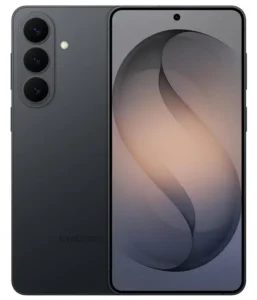

Both phones arrived chasing the same idea — a compact, premium flagship that doesn’t punish the user for wanting something pocketable. The Samsung Galaxy S26 at 7.2mm and 167g is slim by Android standards. The iPhone Air at 5.6mm and 165g rewrites what slim means entirely. These aren’t just different operating systems competing. They represent genuinely different philosophies about what a flagship phone should sacrifice — and what it absolutely shouldn’t — to reach that razor-thin profile.
Head-to-Head Camera Analysis
The Galaxy S26 runs a triple rear camera system — 50MP main, 10MP 3x telephoto, and 12MP ultrawide — while the iPhone Air ships with a single 48MP rear camera. That’s the sharpest structural difference in this comparison, and it deserves direct acknowledgment: the S26 simply covers more optical ground. A 3x telephoto changes how portrait photography, architecture, and event shooting work in practice. The iPhone Air compensates through software zoom and Apple’s computational photography pipeline, but optical reach and software simulation are not equivalent tools, and photographers who rely on telephoto regularly will feel that gap daily.
Where Apple narrows the distance is on the main camera itself. The iPhone Air’s 48MP sensor sits in the same 1/1.56″ class as the S26’s 50MP main, but opens to f/1.6 versus the Samsung’s f/1.8 — letting in more light before processing begins. Apple’s sensor-shift OIS is also mechanically different from Samsung’s lens-shift OIS, typically delivering more consistent stabilization during video capture. In low-light video, the iPhone Air’s Dolby Vision HDR recording produces color-accurate, broadly compatible footage that travels better through professional workflows. The S26 counters with 8K video recording and 10-bit HDR at up to 60fps — resolution headroom the iPhone Air doesn’t match, topping out at 4K60fps on the rear camera.
The front camera comparison flips hard in Apple’s favor. The iPhone Air’s 18MP ultrawide front camera with PDAF and a 3D depth sensor delivers consistently sharp autofocus and genuine depth mapping for portrait mode selfies. The Galaxy S26’s 12MP front camera with dual-pixel PDAF is capable but loses on resolution and the spatial depth data that Apple’s front sensor provides. For Face ID authentication, video calls, and portrait selfies, the iPhone Air’s front system is structurally superior.
- Rear camera count: S26 carries three rear cameras including a 3x telephoto; iPhone Air uses a single 48MP rear camera — a meaningful versatility gap.
- Main aperture: iPhone Air opens to f/1.6 vs S26’s f/1.8 — slightly more light gathered per frame.
- Video format: iPhone Air records in Dolby Vision HDR for broad professional compatibility; S26 captures 10-bit HDR and HDR10+ with 8K capability.
- Front camera: iPhone Air’s 18MP ultrawide with 3D depth sensor and PDAF outpaces S26’s 12MP front unit for selfies and Face ID.
- Telephoto: S26 includes a 10MP 3x optical telephoto; iPhone Air has no optical telephoto lens.
Performance & Real-World Usage
This comparison puts two very different chip architectures against each other. The Galaxy S26 runs Snapdragon 8 Elite Gen 5 on 3nm — a powerful platform with Oryon V3 cores clocking at 4.74 GHz. The iPhone Air uses Apple’s A19 Pro on 3nm with a hexa-core CPU design. Apple’s silicon consistently defies clock speed comparisons: the A19 Pro’s architecture delivers single-core performance that benchmarks ahead of nearly every Android chip, and its GPU efficiency with the 5-core graphics engine maintains consistent frame rates in GPU-intensive games without thermal throttling in typical usage sessions.
At 5.6mm thin, thermal management on the iPhone Air is a real engineering question. Apple’s A19 Pro is designed with efficiency as a core priority, and the phone’s day-to-day performance holds up well. Under sustained extreme load — extended gaming at maximum settings, continuous 4K video encoding — the ultra-thin chassis has less thermal mass to dissipate heat, which can cause light throttling earlier than the S26’s 7.2mm frame allows. For gaming in particular, the S26’s additional thickness provides more breathing room. For everyday multitasking, app launching, and computational photography, both chips perform at a level where the human perception of speed is virtually identical.
RAM is matched at 12GB across equivalent configurations on both phones, and both use fast NVMe or UFS 4.X storage. The S26 maxes at 512GB; the iPhone Air extends to 1TB. For users who keep large media libraries, downloaded video content, or extensive app collections on-device, the iPhone Air’s 1TB tier gives it meaningful storage scalability that the S26 doesn’t offer.
- Chipset: S26 runs Snapdragon 8 Elite Gen 5 (Oryon V3); iPhone Air uses Apple A19 Pro — both on 3nm, different architectures with different efficiency profiles.
- Single-core speed: Apple A19 Pro leads in single-core benchmarks; real-world app and UI performance is equivalent for everyday tasks.
- Thermal headroom: S26’s 7.2mm chassis dissipates sustained heat better than the iPhone Air’s 5.6mm frame under prolonged load.
- Max storage: iPhone Air scales to 1TB; S26 tops at 512GB.
Battery Life & Charging Experience
This section exposes the most significant trade-off in the iPhone Air’s design. A 5.6mm titanium frame leaves almost no room for battery capacity, and the 3149mAh cell reflects that constraint directly. The Galaxy S26’s 4300mAh battery holds more than a third more energy. Despite Apple’s A19 Pro being highly power efficient, raw capacity limits what efficiency can compensate for — and heavy users pushing navigation, streaming, gaming, or continuous photography will reach for a charger earlier on the iPhone Air. For moderate users, the A19 Pro’s efficiency keeps the Air viable through a full day, but it’s a tighter margin than the S26 provides.
Wired charging on the S26 runs at 25W, reaching 55% in 30 minutes. The iPhone Air charges at a similar real-world pace, hitting 50% in 30 minutes — comparable in speed but serving a smaller battery, meaning full charge arrives proportionally faster. MagSafe wireless on the iPhone Air delivers 20W for compatible accessories, while the S26 provides 15W Qi2 Ready wireless. The iPhone Air adds 4.5W reverse wired charging for accessories; the S26 counters with 4.5W reverse wireless. The iPhone Air’s USB-C port operates at USB 2.0 speeds — a genuine bottleneck for large file transfers and wired video output compared to the S26’s USB 3.2 with DisplayPort 1.2.
- Battery capacity: S26 holds 4300mAh vs iPhone Air’s 3149mAh — a significant endurance advantage for Samsung under heavy use.
- Wired charging speed: Both reach 50-55% in 30 minutes; iPhone Air’s smaller battery fills proportionally faster.
- Wireless charging: iPhone Air reaches 20W via MagSafe; S26 delivers 15W Qi2 Ready.
- USB-C speed: S26 uses USB 3.2 with DisplayPort 1.2; iPhone Air uses USB 2.0 — a major data transfer disadvantage for the iPhone Air.
Display, Design & Build Feel
The iPhone Air’s display is larger at 6.5 inches against the S26’s 6.3 inches, and it runs at a higher resolution of 1260×2736 for approximately 460ppi versus the S26’s 411ppi. Both panels use LTPO for adaptive 120Hz refresh. Peak brightness reaches 3000 nits on the iPhone Air versus the S26’s 2600 nits, giving Apple a visibility edge in direct sunlight. Dolby Vision support on the iPhone Air also means streaming HDR content from compatible platforms renders at the highest possible quality level — a real advantage for premium video consumers.
The build materials tell very different stories. The iPhone Air’s grade 5 titanium frame is stronger per gram than the S26’s Armor Aluminum 2 construction, and that titanium delivers the structural rigidity necessary to maintain the 5.6mm profile without flex. The S26 uses Gorilla Glass Victus 2 front and back; the iPhone Air uses Ceramic Shield 2 on the front with an anti-reflective coating, claiming comparable hardness to Victus 2 but with Apple’s proprietary crystalline structure. Both phones carry IP68 water resistance, but the iPhone Air’s rating covers immersion up to 6 meters for 30 minutes — the S26’s IP68 covers 1.5 meters. For pool-side, beach, or water-sport use, the iPhone Air’s deeper water resistance is a meaningful practical advantage.
The weight difference is almost imperceptible — 167g for the S26 versus 165g for the iPhone Air — but the 1.6mm thickness difference is not. The iPhone Air disappears into a pocket in a way that even the slim S26 doesn’t fully replicate. Authentication diverges substantially: the S26 uses an ultrasonic under-display fingerprint sensor, while the iPhone Air uses Face ID with a 3D depth sensor for biometric unlock. Face ID is faster and more reliable in most lighting conditions; the S26’s ultrasonic fingerprint remains the better choice for mask-wearing scenarios or any situation where holding the phone at face level isn’t convenient.
Software, Updates & AI Features
iOS 26 and Android 16 with One UI 8.5 are both mature, capable platforms — and both ship on these phones with long support commitments. Apple has historically supported iPhones for six or more years, and while Samsung commits to seven major Android upgrades formally, Apple’s track record makes iOS device longevity practically comparable. The functional software divide is about ecosystem rather than duration.
One UI 8.5 on the S26 runs Samsung DeX and Samsung Wireless DeX — turning the phone into a functional desktop interface when connected to an external display. This is a genuinely unique productivity feature with no iOS equivalent. Apple counters with iMessage, FaceTime, Handoff, AirDrop, and the deeply integrated Apple Pay experience — features that function seamlessly for users already in the Apple ecosystem but offer nothing to Android users. The iPhone Air also supports emergency satellite communication and Ultra Wideband gen2 for precision spatial awareness and device finding, capabilities the S26 does not include.
On-device AI features are a genuine differentiator in both directions. Apple’s A19 Pro Neural Engine handles Apple Intelligence processing locally with privacy as the foundational design principle. Samsung’s Galaxy AI runs on the Snapdragon 8 Elite Gen 5’s NPU with deep One UI integration for generative photo editing, live translation, and intelligent scene processing. Both platforms deliver capable on-device AI — the edge depends on which software ecosystem’s implementation aligns with the user’s habits.
Price & Value Proposition
The iPhone Air positions itself as Apple’s entry into the ultra-thin flagship category, typically landing at a price point between the standard iPhone and iPhone Pro. The Galaxy S26 sits at Samsung’s standard flagship price. In most markets these phones compete closely on price, making the comparison genuinely about preference rather than budget. The iPhone Air offers 1TB storage as a tier the S26 doesn’t reach — valuable for heavy media users at the premium end.
Value framing depends entirely on ecosystem investment. For users already in the Apple ecosystem — MacBook, iPad, AirPods, Apple Watch — the iPhone Air’s integration value compounds significantly beyond its standalone hardware specs. The S26 makes the stronger case for buyers who value Android’s openness, Samsung DeX’s desktop productivity, or need the deeper telephoto versatility of a triple rear camera system that the iPhone Air simply doesn’t carry.
Final Verdict: Which One Should You Buy?
Choose the Samsung Galaxy S26 if: a triple rear camera system with optical telephoto zoom is essential, Samsung DeX desktop functionality is part of the workflow, battery endurance under heavy use is a priority, USB 3.2 with DisplayPort output is needed for wired connections, or Android’s flexibility and One UI’s feature depth align with daily habits.
Choose the Apple iPhone Air if: the thinnest possible flagship form factor is the primary goal, deep Apple ecosystem integration is already in place, the 18MP 3D front camera and Face ID are preferred for authentication and selfies, Dolby Vision video recording matters, deeper water resistance at 6 meters is relevant, or 1TB storage is needed at the top tier.
Neither phone is a wrong choice for the right person. The Galaxy S26 is the more versatile camera system and the more practical workhorse under sustained load. The iPhone Air is the more remarkable physical object — and for users already living in Apple’s world, that combination of thinness and ecosystem depth is hard to argue against.
Samsung Galaxy S26 vs Apple iPhone Air Frequently Asked Questions
Does the Apple iPhone Air have a telephoto camera like the Samsung Galaxy S26?
No. The iPhone Air carries a single 48MP rear camera with no optical telephoto lens. The Galaxy S26 includes a 10MP 3x optical telephoto in addition to its main and ultrawide cameras. For users who regularly shoot at zoom distances for portraits, events, or architecture, the S26’s three-camera setup provides optical versatility the iPhone Air cannot match through software zoom alone.
Which phone has better battery life, the Samsung Galaxy S26 or Apple iPhone Air?
The Galaxy S26 holds more capacity at 4300mAh versus the iPhone Air’s 3149mAh. For heavy users who push navigation, gaming, and continuous media playback, the S26 provides a more comfortable all-day buffer. The iPhone Air’s A19 Pro is highly efficient and keeps moderate users through a full day, but the capacity gap means heavy users will reach a charger earlier on the iPhone Air.
Is the Apple iPhone Air really thinner than the Samsung Galaxy S26?
Significantly. The iPhone Air measures 5.6mm thick versus the S26’s 7.2mm — a 1.6mm difference that is clearly perceptible in hand and in pocket. The iPhone Air uses a grade 5 titanium frame to achieve structural rigidity at that profile, while the S26 uses Armor Aluminum 2. Both weigh nearly the same at 165g and 167g respectively.
Which phone has a better front camera, the Galaxy S26 or iPhone Air?
The iPhone Air leads on front camera capability. Its 18MP ultrawide front camera includes PDAF and a 3D depth sensor that enables accurate Face ID authentication and genuine depth mapping for portrait selfies. The Galaxy S26’s 12MP front camera with dual-pixel PDAF performs well for video calls and selfies but lacks the resolution advantage and spatial depth data that Apple’s front system provides.
Does the Samsung Galaxy S26 support MagSafe like the iPhone Air?
No. The Galaxy S26 supports Qi2 Ready wireless charging at 15W, which uses a similar magnetic alignment standard but is not compatible with Apple’s MagSafe accessory ecosystem. The iPhone Air charges wirelessly at 20W via MagSafe and works with the full range of MagSafe-certified cases, wallets, and chargers. Both phones support standard Qi wireless charging for universal pad compatibility.
Which phone is better for video recording, the Samsung Galaxy S26 or iPhone Air?
They suit different video workflows. The Galaxy S26 records up to 8K video with 10-bit HDR and HDR10+, with gyro-EIS stabilization and stereo sound recording — a strong choice for resolution-first creators. The iPhone Air records up to 4K60fps in Dolby Vision HDR with 10-bit LOG format on the front camera, and its footage integrates seamlessly with Final Cut Pro and Apple’s creative tools. For professional post-production workflows in Apple’s ecosystem, the iPhone Air’s Dolby Vision LOG output is a practical advantage despite its lower maximum resolution.
Is the Galaxy S26 or iPhone Air better for water resistance?
The iPhone Air carries IP68 rated to 6 meters for 30 minutes, while the Galaxy S26’s IP68 covers 1.5 meters for the same duration. Both are rated IP68, but Apple’s more stringent depth threshold gives the iPhone Air a meaningful practical edge for pool, beach, and water-sport use. For rain, splashes, and accidental drops in shallow water, both phones offer equivalent protection.
Can the Samsung Galaxy S26 connect to an external monitor like a computer?
Yes. The S26 supports Samsung DeX and Samsung Wireless DeX, allowing it to function as a desktop interface when connected to an external monitor via USB-C with DisplayPort 1.2 or wirelessly. The iPhone Air’s USB-C port runs at USB 2.0 speeds only and does not support a comparable desktop mode — external display mirroring is available but without the full desktop interface that Samsung DeX provides.