
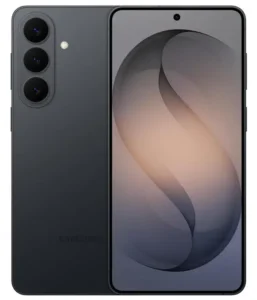

The Samsung Galaxy S26 and Motorola ThinkPhone 25 occupy different corners of the Android market, yet they land close enough in price and size to invite a real comparison. Samsung’s compact flagship packs a Snapdragon 8 Elite Gen 5, a versatile triple-camera system, and one of the best software support promises in the Android ecosystem. The ThinkPhone 25 takes a different route: MIL-STD-810H durability, blazing fast wired charging, a sharper display, and enterprise-focused features built for business environments. One phone is a polished everyday flagship. The other is built to survive the working day — literally.
For most buyers, the chip gap alone would settle this comparison. But the ThinkPhone 25 plays a longer game with specific advantages that the S26 doesn’t address. Understanding those trade-offs is the only way to make the right call.
Head-to-Head Camera Analysis
Both phones open with a 50MP f/1.8 main sensor — an identical aperture and resolution on paper — but the S26 carries the larger 1/1.56″ sensor with 1.0µm pixels and dual-pixel PDAF, giving it a structural light-gathering advantage in dimmer conditions. The ThinkPhone 25 matches the pixel pitch but its sensor dimensions aren’t specified in the same detail, making a direct side-by-side sensor comparison impossible. What is clear is that the S26’s dual-pixel PDAF provides fast, reliable phase detection across the entire sensor surface, while the ThinkPhone’s PDAF implementation is more conventional. In fast-moving scenes or low-light environments where autofocus accuracy matters, the S26 is the safer bet.
The telephoto comparison reveals a meaningful gap in aperture. Both phones run a 10MP 3x optical telephoto with OIS, but the ThinkPhone’s telephoto sits at f/2.0 versus the S26’s f/2.4. A wider aperture at the telephoto focal length is a genuine advantage — it admits more light and can separate subjects from backgrounds more effectively at that zoom level. In daylight conditions, the practical difference is minor. Under mixed or artificial lighting, the ThinkPhone’s telephoto aperture gives it a modest edge.
The ultrawide story favors Samsung. The S26’s 12MP ultrawide at f/2.2 with a 1/2.55″ sensor and 1.4µm pixels is a well-specified ultrawide unit — larger pixel size aids low-light performance, and Super Steady video mode adds a software stabilization layer on top. The ThinkPhone 25’s 13MP ultrawide adds one more megapixel and includes PDAF — useful for close-focus shots across the ultrawide — but its sensor is smaller per the pixel pitch. The S26’s ultrawide is the stronger low-light performer overall.
The biggest camera gap between these phones comes at the front. The ThinkPhone 25 ships with a 32MP front camera — nearly three times the 12MP unit on the S26. For selfies, video calls, and front-facing content creation, the ThinkPhone captures substantially more detail. The S26 counters with dual-pixel PDAF on its front camera and supports 4K front video at 30 and 60fps; the ThinkPhone tops at 4K@30fps on the front. One phone wins on resolution; the other wins on autofocus reliability and video flexibility.
- Main sensor size: S26’s 1/1.56″ sensor is larger, benefiting low-light capture
- Telephoto aperture: ThinkPhone’s f/2.0 tele is wider than S26’s f/2.4 at 3x
- Ultrawide: S26’s larger pixel size and Super Steady mode give it the low-light edge
- Front camera resolution: ThinkPhone’s 32MP far exceeds S26’s 12MP
- Front camera AF: S26’s dual-pixel PDAF provides faster and more accurate face tracking
- Video ceiling: S26 shoots 8K and 10-bit HDR; ThinkPhone caps at 4K
Performance & Real-World Usage
The chip gap here is significant and shouldn’t be understated. The Samsung Galaxy S26 runs on the Snapdragon 8 Elite Gen 5 — one of the most powerful mobile processors available — with Oryon V3 cores pushing up to 4.74 GHz and an Adreno 840 GPU. The Motorola ThinkPhone 25 runs the MediaTek Dimensity 7300 on 4nm, an upper-mid-range chip with Cortex-A78 and Cortex-A55 cores. These are not comparable platforms. In everyday tasks — browsing, messaging, email, light productivity — both phones handle things smoothly. Push either into heavier workloads — sustained gaming, 4K video editing, large file transfers, or running multiple demanding apps simultaneously — and the S26 operates in a different tier entirely.
For gaming, the Adreno 840 in the S26 delivers flagship-grade frame rates in demanding titles at maximum settings. The Mali-G615 MC2 GPU in the ThinkPhone 25 handles casual gaming and less demanding titles adequately but hits its ceiling quickly in graphically intensive games. Thermal throttling under sustained load arrives sooner on the ThinkPhone, and the performance drop is more pronounced. This isn’t a phone built for extended mobile gaming — its strength lies elsewhere.
RAM configurations differ across variants: the S26 ships with 12GB across all storage options, while the ThinkPhone 25’s base 256GB model comes with only 8GB. The 512GB ThinkPhone variant steps up to 12GB, matching the S26. For heavy multitaskers — keeping browser tabs, communication apps, and productivity tools all in memory simultaneously — the ThinkPhone’s base 8GB configuration is a real constraint that the S26 avoids entirely.
- Processor class: S26’s Snapdragon 8 Elite Gen 5 is a flagship chip; ThinkPhone’s Dimensity 7300 is upper-mid-range
- Gaming performance: S26’s Adreno 840 GPU is dramatically more capable under sustained load
- Base RAM: S26 starts at 12GB; ThinkPhone base variant starts at 8GB
- Storage speed: S26’s UFS 4.X outpaces ThinkPhone’s uMCP in raw read/write throughput
Battery Life & Charging Experience
Battery capacity is essentially identical — 4300mAh on the S26 versus 4310mAh on the ThinkPhone 25 — but their charging experiences diverge dramatically. The ThinkPhone 25 charges at 68W wired and hits 50% in just 11 minutes, making it one of the fastest-charging phones at this size. The S26 charges at 25W wired, reaching 55% in 30 minutes. In practical terms, a 10-minute top-up on the ThinkPhone delivers meaningful battery recovery during a busy workday, while the same interval on the S26 adds a far smaller buffer. For users who are frequently on the move without reliable access to a charger for hours at a time, that charging speed difference has a real impact on daily workflow.
Wireless charging is where Samsung recovers some ground. The S26 supports 15W wireless with Qi2 readiness and 4.5W reverse wireless charging. The ThinkPhone matches 15W wireless but doesn’t include reverse wireless charging — a minor difference but worth noting for users who wirelessly charge accessories like earbuds from their phone. Real-world battery endurance on a matched capacity with the ThinkPhone’s less power-hungry Dimensity 7300 chip could mean marginally longer screen-on time in light use scenarios, though the S26’s newer Gen 5 process node is highly efficient in its own right.
- Battery capacity: Effectively identical — 4300mAh vs 4310mAh
- Wired charging speed: ThinkPhone’s 68W reaches 50% in 11 min vs S26’s 25W reaching 55% in 30 min
- Wireless charging: Both support 15W; S26 is Qi2-ready
- Reverse wireless: S26 supports 4.5W reverse wireless; ThinkPhone does not
Display, Design & Build Feel
The ThinkPhone 25’s display is a quiet surprise. Its 6.36-inch P-OLED panel at 1220 x 2670 resolution hits ~462 ppi density and peaks at 3000 nits brightness — sharper and brighter than the S26’s 1080 x 2340 panel at ~411 ppi and 2600-nit peak. In direct sunlight, the ThinkPhone’s display is marginally easier to read. Text rendering at fine sizes is noticeably crisper. The S26 uses Samsung’s Dynamic LTPO AMOLED 2X technology with HDR10+ and an arguably more refined panel calibration pipeline, but on raw display numbers the ThinkPhone edges ahead. Both run at 120Hz, so smoothness is matched.
Where the phones diverge completely is build material and durability philosophy. The S26 is a glass-and-aluminum sandwich: Gorilla Glass Victus 2 on front and back with an Armor Aluminum 2 frame. It’s refined, premium in feel, and IP68 rated. The ThinkPhone 25 wraps an aramid fiber back with a plastic frame behind Gorilla Glass 7i on the front — a less premium material pairing on the surface, but a purposeful choice. Aramid fiber is lighter, more impact-absorbing, and less prone to shattering than glass. Combined with MIL-STD-810H compliance and drop resistance up to 1.3 meters, the ThinkPhone 25 is the more physically durable device. Both are IP68 rated for submersion, but the ThinkPhone’s military-grade drop protection is a category the S26 doesn’t address.
The S26 is the more pocketable phone. At 149.6 x 71.7 x 7.2mm and 167g, it’s one of the lightest compact flagships available. The ThinkPhone 25 at 154.1 x 71.2 x 8.1mm and 171g is only slightly larger and heavier — close enough that most users wouldn’t notice in a pocket, but the S26’s thinner profile gives it a more refined feel in-hand. The ThinkPhone includes FM radio — a niche but valued feature the S26 omits.
- Display sharpness: ThinkPhone at ~462 ppi is sharper than S26’s ~411 ppi
- Peak brightness: ThinkPhone at 3000 nits edges S26’s 2600 nits
- Drop resistance: ThinkPhone is MIL-STD-810H certified and drop-resistant to 1.3m; S26 is not rated for drops
- Back material: ThinkPhone uses aramid fiber; S26 uses glass — glass feels more premium, aramid absorbs impact better
- Weight: S26 lighter at 167g vs ThinkPhone’s 171g
- FM radio: ThinkPhone includes it; S26 does not
Software, Updates & AI Features
Samsung’s seven major Android upgrades from Android 16 is one of the most generous software commitments in the Android market — and it significantly outpaces the ThinkPhone 25’s five major upgrades from Android 14. Both policies are respectable, but the S26 will remain current for longer, making it the smarter choice for buyers who hold phones beyond the three-year mark. One UI 8.5 brings Galaxy AI features — Live Translate, Note Assist, Circle to Search, Generative Edit — all supported by the Gen 5’s dedicated AI processing hardware. Samsung DeX, both wired and wireless, extends the phone into a desktop computing environment when connected to a display. The ThinkPhone 25 doesn’t offer an equivalent desktop mode.
The ThinkPhone 25’s software story centers on its enterprise identity. Smart Connect — Motorola’s cross-device ecosystem tool — enables seamless file sharing and clipboard sync between the phone and connected PCs, a workflow feature that business users find genuinely useful. Motorola’s near-stock Android interface is clean and fast, with minimal bloat, which some users will actively prefer over Samsung’s feature-dense One UI. The ThinkPhone ships on Android 14, two major versions behind the S26’s Android 16 starting point — meaning the ThinkPhone’s five-upgrade promise effectively ends at Android 19, while the S26’s seven-upgrade window reaches Android 23.
Price & Value Proposition
The Samsung Galaxy S26 is Samsung’s mainstream flagship — priced accordingly for a device that covers nearly every use case with best-in-class silicon, a versatile camera system, wireless charging, Samsung DeX, and a seven-year software window. For buyers who want a refined everyday flagship that ages gracefully, the S26’s price reflects real long-term value.
The Motorola ThinkPhone 25 targets a narrower audience: enterprise users, field workers, and buyers who value ruggedness, fast charging, and a sharper display over raw processing power. It typically sells at a lower price than the S26, which makes its hardware-per-dollar argument interesting for the right buyer. The 68W charging speed is extraordinary for this price tier, the display is genuinely sharp, and MIL-STD-810H certification addresses durability concerns that the S26 doesn’t even attempt to solve. The chip is the genuine compromise — buyers who need sustained performance should account for that gap before committing.
Final Verdict: Which One Should You Buy?
The Samsung Galaxy S26 is the better all-around smartphone. Its Snapdragon 8 Elite Gen 5, superior camera system, Samsung DeX, wireless charging ecosystem, and seven-year software commitment make it the stronger long-term purchase for most buyers. Its compact form factor — at 167g and 7.2mm thin — is genuinely pleasant to carry, and the camera system handles everything from wide landscapes to zoomed portraits without compromise.
The Motorola ThinkPhone 25 earns a firm recommendation for a specific profile: business users who need MIL-STD-810H durability, construction workers or field staff who drop their devices regularly, and commuters who need a fast charge in minutes rather than half an hour. The sharper display and brighter peak brightness are genuine advantages. The 32MP front camera is hard to match at this price. And 68W charging at 50% in 11 minutes is a compelling real-world differentiator. Just go in clear-eyed about the chip ceiling — this is not a gaming phone, and it’s not a sustained-performance powerhouse.
Buy the S26 for long-term performance, camera versatility, and ecosystem depth. Buy the ThinkPhone 25 for durability, fast charging, and enterprise features — at a lower price.
Samsung Galaxy S26 vs Motorola ThinkPhone 25 Frequently Asked Questions
Which phone is more durable — the Galaxy S26 or ThinkPhone 25?
The Motorola ThinkPhone 25 is the more durable device. It holds MIL-STD-810H military-grade certification, is rated for drop resistance up to 1.3 meters, and uses an aramid fiber back that absorbs impact better than glass. Both phones carry IP68 ratings for water and dust resistance up to 1.5 meters. The Samsung Galaxy S26 uses Gorilla Glass Victus 2 front and back with an Armor Aluminum 2 frame — premium materials, but without the drop certification the ThinkPhone carries.
Which phone charges faster?
The Motorola ThinkPhone 25 charges significantly faster via cable. At 68W wired, it reaches 50% charge in just 11 minutes — a speed that covers most top-up scenarios during a short break. The Samsung Galaxy S26 charges at 25W wired, reaching 55% in 30 minutes. For wireless charging, both support 15W, and the S26 adds Qi2 readiness and 4.5W reverse wireless charging that the ThinkPhone does not offer.
Is the Galaxy S26 much faster than the ThinkPhone 25?
Yes, significantly. The S26’s Snapdragon 8 Elite Gen 5 is a top-tier flagship processor, while the ThinkPhone 25 runs the MediaTek Dimensity 7300, an upper-mid-range chip. In everyday tasks like browsing, messaging, and streaming, both phones perform smoothly. Under sustained gaming, 4K video processing, or heavy multitasking, the S26 is dramatically faster and maintains performance longer without thermal throttling.
Which phone has the better display?
The Motorola ThinkPhone 25 edges out the S26 on display specs. Its P-OLED panel hits ~462 ppi resolution versus the S26’s ~411 ppi, and its 3000-nit peak brightness exceeds the S26’s 2600 nits. Both run at 120Hz. The S26’s Dynamic LTPO AMOLED 2X panel benefits from Samsung’s calibration expertise and HDR10+ support, but the ThinkPhone’s raw sharpness and brightness numbers are the stronger on-paper showing.
Which phone will receive software updates for longer?
The Samsung Galaxy S26 wins on software longevity. It commits to seven major Android upgrades from Android 16, reaching Android 23 before the update window closes. The Motorola ThinkPhone 25 promises five major upgrades from Android 14, bringing it to Android 19. For buyers who keep phones for four or more years, the S26’s extended support window is a meaningful advantage.
Does the ThinkPhone 25 support Samsung DeX or a desktop mode?
No. The Motorola ThinkPhone 25 does not support any desktop mode equivalent. The Samsung Galaxy S26 supports Samsung DeX both wired and wirelessly, enabling a full desktop interface when connected to an external display. For users who occasionally need a desktop computing environment from their phone — traveling workers or remote professionals — the S26’s DeX support is a practical differentiator the ThinkPhone cannot replicate.
Which phone is better for business users?
This depends on what “business use” means in practice. The ThinkPhone 25 is explicitly built for enterprise: MIL-STD-810H durability for demanding environments, Smart Connect for cross-device workflows, clean near-stock Android that IT departments can manage easily, and fast 68W charging for users on tight schedules. The S26 suits business users who need a premium all-around device with Samsung DeX, strong AI productivity tools in One UI 8.5, and a longer software lifecycle for IT planning purposes. Field workers and rugged-environment users should lean ThinkPhone; desk-based professionals and Samsung ecosystem users should lean S26.
Does the Motorola ThinkPhone 25 have wireless charging?
Yes, the ThinkPhone 25 supports 15W wireless charging — the same wireless charging speed as the Samsung Galaxy S26. The S26 holds a wireless charging advantage through Qi2 readiness, which enables future compatibility with next-generation wireless charging standards, and 4.5W reverse wireless charging for accessories. The ThinkPhone does not support reverse wireless charging.