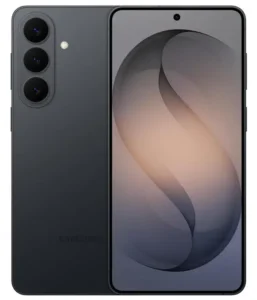
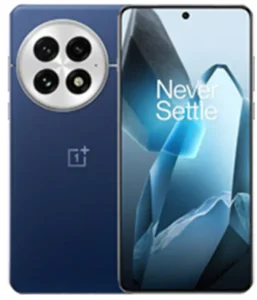
On paper, this matchup looks clean: a compact Samsung flagship against a large-battery OnePlus powerhouse. In practice, the differences run much deeper than screen size and charging speeds. Both phones represent distinct philosophies — Samsung’s refined, restrained approach versus OnePlus’s more-is-more ethos — and how those philosophies play out in daily use is what this comparison is really about.
Head-to-Head Camera Analysis
Samsung’s triple-camera setup on the Galaxy S26 uses a 50MP main, a 10MP 3x telephoto, and a 12MP ultrawide. OnePlus answered with an all-50MP triple system — main, 3x periscope telephoto, and ultrawide — co-tuned with Hasselblad and backed by a color spectrum sensor. The megapixel headline is deceptive, though. Raw resolution only tells part of the story.
The Galaxy S26’s main camera carries a 1/1.56″ sensor with f/1.8 aperture, letting in substantial light with dual-pixel PDAF delivering fast, reliable locks. The OnePlus 13’s main shooter uses an f/1.6 aperture — slightly wider — but what changes the real-world output most is Hasselblad’s color calibration. Skin tones land more naturally on the OnePlus in mixed and indoor lighting, while the S26 tends toward Samsung’s characteristic contrast-boosted processing that looks punchy on the phone’s screen but can feel oversharpened when viewed on a monitor.
At the telephoto tier, the OnePlus 13’s 50MP periscope lens is genuinely impressive — retaining detail and color fidelity at 3x that the S26’s 10MP telephoto unit struggles to match pixel-for-pixel. For portrait distances and architectural shots, the advantage lands clearly with OnePlus. However, Samsung’s video recording capabilities — particularly 8K at 24/30fps and 10-bit HDR with gyro-EIS — remain robust for hybrid photo-video shooters.
The selfie story flips hard: the OnePlus 13 packs a 32MP front camera against the S26’s 12MP unit. Video selfies on OnePlus top out at 4K60fps with gyro-EIS, keeping up squarely with the Galaxy’s front-facing video specs. For content creators who lean heavily on front-facing footage, OnePlus holds the better position here.
- Low-light main camera: OnePlus 13’s wider aperture and Hasselblad tuning produce more natural exposures; S26 processes more aggressively with punchier but sometimes plasticky results.
- Telephoto detail: OnePlus 13’s 50MP periscope telephoto outresolves the S26’s 10MP unit at 3x zoom.
- Ultrawide: OnePlus offers a 50MP ultrawide; Samsung counters with Super Steady video mode, which is genuinely useful for action footage.
- Selfie camera: OnePlus 13’s 32MP front camera leads Samsung’s 12MP unit by a significant margin for still shots.
- Video: Both shoot 8K, but Samsung’s 10-bit HDR10+ and stereo sound recording give it a slight edge for professional video workflows.
Performance & Real-World Usage
The Galaxy S26 (US/China variant) runs the Snapdragon 8 Elite Gen 5 — a newer generation chip built on 3nm — while international versions swap in Samsung’s own Exynos 2600, built on a 2nm process. The OnePlus 13 uses the previous-generation Snapdragon 8 Elite on the same 3nm node. In benchmark scenarios this creates a clear hierarchy, but in the real world — gaming, multitasking, browsing — the difference shrinks considerably.
Heavy gaming sessions reveal the gap most clearly. The S26’s Adreno 840 GPU handles demanding titles with higher sustained frame rates and less perceptible thermal throttling compared to the Adreno 830 in the OnePlus 13. Extended gaming — thirty minutes or more of GPU-intensive titles — will push the OnePlus 13 to throttle slightly earlier. It’s not dramatic, but it’s measurable. The S26’s slim 7.2mm frame and 167g weight also make long gaming sessions physically more comfortable than holding the OnePlus 13’s chunkier 8.5mm, 210g body.
Where OnePlus fights back is storage bandwidth. Both phones use UFS 4.0 on lower-spec models, but the OnePlus 13 scales up to 1TB with 24GB of RAM — a configuration Samsung simply doesn’t offer on the S26. For power users who push large file transfers, run multiple demanding apps simultaneously, or keep dozens of browser tabs open, that extra headroom is tangible. The S26 tops out at 12GB RAM across all storage tiers, which remains sufficient for most users but feels slightly conservative at this price level.
- Chipset generation: S26 runs a newer Snapdragon 8 Elite Gen 5 (US/CN) or Exynos 2600 (ROW); OnePlus 13 uses the original Snapdragon 8 Elite.
- Sustained gaming: S26 maintains frame rates longer under thermal load.
- RAM ceiling: OnePlus 13 goes up to 24GB RAM and 1TB storage; S26 maxes at 12GB RAM.
- Everyday multitasking: Both phones handle day-to-day use without perceptible lag.
Battery Life & Charging Experience
This is where the comparison becomes almost unfair. The OnePlus 13 packs a 6000mAh silicon-carbon cell — significantly larger than the Galaxy S26’s 4300mAh lithium-ion battery. Combined with the S26’s more power-hungry larger-resolution display on a smaller chassis, heavy users will consistently find the OnePlus 13 lasting noticeably longer between charges. A full day of navigation, streaming, and social media will leave the S26 hunting for a charger earlier.
The charging gap is equally stark. OnePlus’s 100W wired charging system hits 50% in around 13 minutes and full charge in roughly 36 minutes — genuinely fast enough to stop thinking about charging as a routine. The Galaxy S26 charges at 25W wired, which means a meaningfully longer tether to the wall. For frequent travelers or anyone who forgets to charge overnight, this difference matters daily.
Wireless charging at least partially redeems the S26: 15W with Qi2 Ready support is functional, and the 4.5W reverse wireless charging covers true wireless earbuds and other accessories. OnePlus counters with 50W wireless — a substantial jump — plus 10W reverse wireless and even 5W reverse wired charging. The OnePlus 13 simply covers more bases at higher speeds across every charging scenario.
- Battery size: OnePlus 13 carries 6000mAh vs the S26’s 4300mAh — a major capacity gap.
- Wired charging speed: OnePlus 13 at 100W charges fully in ~36 minutes; S26 at 25W takes significantly longer.
- Wireless charging: OnePlus offers 50W wireless; S26 provides 15W.
- Reverse charging: Both support it; OnePlus offers higher reverse wireless and wired speeds.
Display, Design & Build Feel
Size defines this comparison before anything else. The OnePlus 13 runs a 6.82-inch LTPO 4.1 AMOLED with a 1440×3168 resolution hitting around 510ppi — a visually dense, sharp panel with Dolby Vision and a 4500-nit peak brightness that handles direct sunlight aggressively. The Galaxy S26’s 6.3-inch Dynamic LTPO AMOLED 2X hits 411ppi with 2600-nit peak brightness. Both panels use 120Hz adaptive refresh, but the OnePlus 13’s higher resolution and peak brightness specs give it a measurable edge for outdoor readability and detail-critical work.
The PWM dimming on the OnePlus 13 operates at 2160Hz, which reduces flicker-induced eye strain at low brightness settings — meaningful for anyone who uses their phone extensively in dark rooms. The S26 doesn’t publish equivalent PWM specs but Samsung’s AMOLED panels have historically used DC dimming or high-frequency PWM at lower brightness.
In hand, these phones feel like different tools. The S26’s 149.6×71.7×7.2mm frame and 167g weight make it one-hand friendly and genuinely pocketable — a legitimate differentiator in a market full of oversized slabs. The OnePlus 13’s 162.9×76.5×8.5mm frame and 210g weight land it firmly in two-hand territory. Neither design is flawed, but they serve different users. The S26 protects with Gorilla Glass Victus 2 front and back with IP68. The OnePlus 13 uses Ceramic Guard glass up front — harder than standard glass but rated slightly lower on the Mohs scale than Victus 2 — and earns IP68 and IP69 ratings, the latter covering high-pressure water jet resistance that Samsung’s IP68-only rating doesn’t address.
Software, Updates & AI Features
Samsung’s update commitment on the Galaxy S26 is among the strongest in Android: seven major OS upgrades and the same number of security patch years. The phone ships with Android 16 and One UI 8.5, putting it at the leading edge of the Android software timeline. OnePlus commits to four major OS upgrades with the OnePlus 13, shipping on Android 15 with OxygenOS 16 internationally. That’s a meaningful three-year difference in guaranteed software longevity — relevant for anyone who keeps phones for four or five years.
Samsung DeX and Samsung Wireless DeX remain unique capabilities in the Android ecosystem, allowing the S26 to function as a desktop interface when connected to an external display. The OnePlus 13 offers no comparable feature. For professionals who want a single device covering both mobile and desktop workflows, the S26’s software ecosystem is simply more mature and feature-rich.
One practical note: the OnePlus 13 includes an infrared blaster, which the S26 omits. It’s a small thing until you’re trying to control a hotel TV or AV equipment without a remote — at which point it’s the most useful feature on the phone.
Price & Value Proposition
The OnePlus 13 enters the market at a considerably lower price than the Galaxy S26, particularly when comparing equivalent storage configurations. That gap widens further on higher-spec variants: the OnePlus 13 offers a 1TB/24GB RAM configuration that doesn’t exist at all on the S26 lineup. For buyers who prioritize raw hardware per dollar — bigger battery, faster charging, more storage, higher-resolution cameras — the OnePlus 13 makes a compelling value case.
The Galaxy S26 justifies its premium through long-term software support, Samsung’s tighter hardware-software integration, the compactness of its design, Samsung DeX functionality, and the newer-generation chipset (in US and China models). These are real advantages, but they’re software and ecosystem advantages rather than hardware spec wins. Buyers who lean on the Samsung ecosystem — Galaxy Watch, Galaxy Buds, SmartThings — will find the S26 integrates more seamlessly than any third-party alternative.
Final Verdict: Which One Should You Buy?
Choose the Samsung Galaxy S26 if: one-handed usability matters, long-term software support is a priority, Samsung DeX is part of the workflow, or the latest-generation chipset performance is non-negotiable. Its compact size and seven-year update promise make it the smarter long-term ownership choice for most mainstream users.
Choose the OnePlus 13 if: battery life is the top concern, charging speed is critical, the camera system’s Hasselblad tuning and higher-resolution selfie camera align with shooting priorities, or the budget needs to stretch to cover a 1TB storage configuration. For heavy users who drain phones fast and need rapid top-ups, the OnePlus 13 is practically a different class of device.
Neither phone is a wrong choice at this level. But they’re right for very different people — and understanding which tradeoffs fit daily habits is exactly what separates a satisfying purchase from a regrettable one.
Samsung Galaxy S26 vs OnePlus 13 Frequently Asked Questions
Which phone has better camera quality overall, the Samsung Galaxy S26 or the OnePlus 13?
The OnePlus 13 edges ahead for still photography, particularly due to its Hasselblad color calibration, 50MP triple camera system, and much stronger 32MP selfie camera. The Samsung Galaxy S26 competes well on video, especially with 10-bit HDR recording and Super Steady video mode for action footage. For pure photo quality and selfies, the OnePlus 13 wins. For video-focused users, the S26 remains competitive.
Is the Samsung Galaxy S26 battery life good enough for a full day?
For moderate users — a few hours of calls, social media, and streaming — the Galaxy S26’s 4300mAh battery typically covers a full day. Heavy users who game, navigate, or stream extensively may find it falling short by evening. The OnePlus 13’s 6000mAh battery provides a considerably larger buffer for power-heavy usage patterns.
How much faster does the OnePlus 13 charge compared to the Samsung Galaxy S26?
Substantially faster. OnePlus 13 reaches full charge in approximately 36 minutes via its 100W wired charging. The Galaxy S26 charges at 25W wired, which takes significantly longer to reach the same result. On the wireless side, OnePlus 13 also leads with 50W wireless versus the S26’s 15W.
Which phone is better for gaming — the Samsung Galaxy S26 or OnePlus 13?
The Galaxy S26 (Snapdragon 8 Elite Gen 5 variant) holds a performance advantage for sustained, thermally demanding gaming sessions. Its newer chipset and lighter body reduce thermal buildup over long sessions. The OnePlus 13’s Snapdragon 8 Elite is still a powerful gaming chip and handles casual to moderate gaming without issues, but throttles under prolonged load earlier than the S26.
Does the OnePlus 13 have better software support than the Samsung Galaxy S26?
No. Samsung commits to seven major Android OS upgrades on the Galaxy S26, while OnePlus guarantees four. For buyers who plan to keep their phone for four or more years, the Galaxy S26’s software longevity is a significant practical advantage.
Which phone is easier to use with one hand?
The Samsung Galaxy S26 is clearly better for one-handed use. Its 6.3-inch display, 7.2mm thin profile, and 167g weight make it comfortable to operate single-handed. The OnePlus 13’s 6.82-inch display and 210g weight push it firmly into two-hand territory for most users.
Does the OnePlus 13 have any features the Samsung Galaxy S26 lacks?
Yes — notably an infrared blaster, which lets it control TVs, air conditioners, and other IR-compatible devices. The OnePlus 13 also offers IP69 protection (high-pressure water jet resistance) alongside IP68, while the S26 carries only IP68. Storage configurations go up to 1TB with 24GB RAM on the OnePlus 13, a tier the S26 doesn’t offer.
Which phone offers better value for the price?
The OnePlus 13 generally offers more hardware per dollar — larger battery, faster charging, higher-resolution cameras, and more storage options at lower prices. The Galaxy S26 justifies its premium through longer software support, Samsung’s broader ecosystem integration, Samsung DeX desktop functionality, and a newer chipset. Which represents better value depends entirely on which of those priorities matter most to the buyer.