
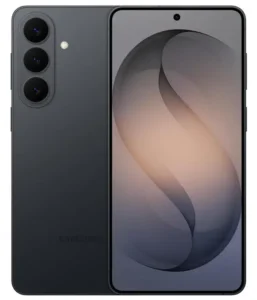
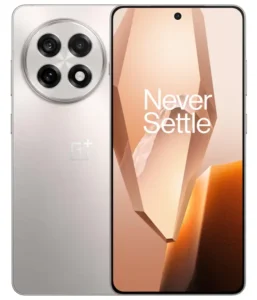
On paper, the Samsung Galaxy S26 and OnePlus 13R seem to occupy entirely different price brackets — and they do. But that’s exactly what makes this comparison interesting. One phone packs cutting-edge silicon and a premium pedigree. The other brings a massive battery, a sharper display, and fast charging that embarrasses its rival. Neither is a perfect device, and that’s precisely the point.
What follows is a thorough, side-by-side breakdown of both phones across every category that matters — camera, performance, battery, display, software, and value. The trade-offs here are real, and they should directly inform which phone ends up in a buyer’s pocket.
Head-to-Head Camera Analysis
Both phones lead their rear setups with a 50MP f/1.8 wide sensor on a 1/1.56″ sensor — a coincidence that makes the differences elsewhere even more instructive. The S26 pairs it with a 10MP 3x optical telephoto and a 12MP ultrawide, while the 13R goes with a 50MP 2x telephoto and an 8MP ultrawide. That’s a meaningful trade-off: the S26 reaches farther with genuine 3x zoom and captures a wider field with its 120° ultrawide, while the 13R compensates with higher megapixels at a shorter zoom range.
In practice, the S26’s telephoto is the stronger portrait and zoom tool — 3x gives noticeably more reach for subjects at a distance, and the 10MP sensor at that focal length is well-suited to daylight detail. The 13R’s 50MP telephoto at 2x sounds impressive but the smaller 1/2.75″ sensor and 0.64µm pixel size mean it’s chasing resolution over light sensitivity. Under mixed or dimmer conditions, the S26’s telephoto sensor is likely to handle noise better.
Where the 13R earns points is the front camera: a 16MP selfie shooter versus the S26’s 12MP unit. Both are fixed at 26mm equivalent, but the 13R’s larger sensor surface gives it a structural edge for self-portraits. The S26 counters with dual-pixel PDAF on the front — something the 13R lacks — which translates to faster and more reliable face tracking during video calls and video recording.
- Telephoto reach: S26 wins with 3x optical zoom vs 13R’s 2x
- Ultrawide coverage: S26 at 120° outpaces 13R’s 112°
- Front camera resolution: 13R leads with 16MP vs S26’s 12MP
- Video ceiling: S26 shoots 8K; 13R caps at 4K
- Front AF: S26’s dual-pixel PDAF gives it an autofocus edge
The S26 also supports 8K video recording at up to 30fps and HDR10+ capture — capabilities the 13R doesn’t match, stopping at 4K. For creators who shoot and edit on-device, that gap is consequential. The 13R handles 4K at 30 or 60fps with gyro-EIS and OIS, which is plenty capable, but the ceiling is lower.
Performance & Real-World Usage
The Snapdragon 8 Elite Gen 5 in the US Galaxy S26 is in a different generation from the Snapdragon 8 Gen 3 powering the OnePlus 13R — and that chip gap shows up in benchmarks and real-world thermal behavior alike. The Gen 5’s Oryon V3 cores, built on a 3nm process, are faster and more efficient than the Gen 3’s Cortex-X4 architecture at 4nm. For gaming, sustained performance under load, and AI-accelerated tasks, the S26 holds a meaningful lead.
That said, the Snapdragon 8 Gen 3 is far from a slouch. It powered a generation of flagship phones and handles daily multitasking, 4K video playback, and demanding games without breaking a sweat. The 13R doesn’t stumble in everyday use — it’s snappy, responsive, and quick to switch between apps with 12GB or 16GB of RAM. The performance deficit only becomes tangible under sustained workloads, extended gaming sessions, or heavy AI processing, where the Gen 5’s efficiency holds temperatures lower and maintains clock speeds longer.
RAM configuration is worth noting: the S26 comes with 12GB across both storage variants, while the 13R’s 512GB version bumps up to 16GB. For users who push multitasking hard — running navigation, music, and background downloads simultaneously — that 16GB configuration on the 13R is a practical edge, even if the underlying chip is older. Storage speeds are close: UFS 4.X on the S26 versus UFS 4.0 on the 13R, with real-world read/write differences unlikely to surface outside synthetic tests.
- Chip generation: S26’s Gen 5 is meaningfully faster than 13R’s Gen 3
- Sustained performance: S26 handles thermal load better under extended gaming
- Peak RAM: 13R’s 16GB variant edges out S26’s 12GB ceiling
- Storage speed: S26 (UFS 4.X) slightly faster; unlikely to matter in daily use
Battery Life & Charging Experience
This is where the OnePlus 13R makes the Samsung Galaxy S26 look almost embarrassing. A 6000mAh battery against 4300mAh is a 40% capacity advantage — and it translates directly into endurance. Heavy users who are routinely reaching for a charger by late afternoon with a compact flagship will find the 13R’s reserves genuinely liberating. Two-day battery life is realistic for moderate users.
The charging gap is even starker. The 13R’s 80W wired charging refills 50% in about 20 minutes and hits 100% in just over 50 minutes. The S26 charges at 25W wired, reaching 55% in 30 minutes — but that smaller battery means it still finishes a full charge faster in absolute time. Still, the 13R charges faster by any metric that matters: it starts from more capacity and finishes in less time.
What the S26 offers that the 13R simply cannot match is wireless charging — 15W Qi2-ready wireless and 4.5W reverse wireless charging. For users embedded in a wireless charging ecosystem (pads on desks, nightstands, in cars), that’s a lifestyle advantage the 13R entirely lacks. The 13R has no wireless charging at all. That omission stings at this price point, even if the wired speed makes up for it pragmatically.
- Battery capacity: 13R’s 6000mAh dwarfs S26’s 4300mAh
- Wired charging speed: 13R at 80W is more than triple the S26’s 25W
- Wireless charging: S26 only — 13R has no wireless charging support
- Reverse wireless: S26 supports 4.5W reverse; 13R does not
Display, Design & Build Feel
The OnePlus 13R sports a noticeably larger 6.78-inch panel against the S26’s 6.3 inches — a difference that’s immediately apparent when both are held side by side. The 13R’s display also carries a sharper resolution of 1264 x 2780 pixels (~450 ppi) versus the S26’s 1080 x 2340 (~411 ppi), plus a staggering 4500-nit peak brightness versus the S26’s already-solid 2600 nits. In direct sunlight, the 13R is simply easier to read. It also supports Dolby Vision, HDR Vivid, and 2160Hz PWM dimming — a feature relevant for users sensitive to screen flicker at low brightness.
The S26 punches back with Gorilla Glass Victus 2 on both front and back — a meaningfully stronger glass than the 13R’s Gorilla Glass 7i. More critically, the S26 is IP68 rated, meaning it can survive submersion up to 1.5 meters for 30 minutes. The 13R is only IP65 — splash and low-pressure jet resistant, but not submersion-proof. For anyone near water regularly, that distinction matters.
In terms of physicality, the S26 is the more pocketable device: 149.6 x 71.7 x 7.2mm and just 167g makes it one of the lighter compact flagships available. The 13R at 161.7 x 75.8 x 8mm and 206g is a noticeably chunkier, heavier phone — some users prefer that heft, but it’s a real ergonomic difference over long usage. The S26’s aluminum frame is labeled “Armor Aluminum 2,” which Samsung rates above standard aluminum alloys.
- Screen size: 13R larger at 6.78″ vs S26’s 6.3″
- Sharpness: 13R at ~450 ppi beats S26’s ~411 ppi
- Peak brightness: 13R’s 4500 nits far exceeds S26’s 2600 nits
- Water resistance: S26 is IP68 (submersion-proof); 13R is IP65 (splash-only)
- Weight: S26 is substantially lighter at 167g vs 13R’s 206g
- Glass strength: S26’s Gorilla Glass Victus 2 outlasts 13R’s Gorilla Glass 7i
Software, Updates & AI Features
Samsung’s commitment to longevity is one of the S26’s strongest cards: seven major Android upgrades running from Android 16, paired with One UI 8.5. That means this phone will receive platform-level updates well into the next decade. OnePlus promises four major upgrades starting from Android 15 — respectable for a mid-range device, but less than half of Samsung’s commitment. For buyers who hold phones for four or more years, that gap is consequential.
One UI 8.5 brings Samsung’s Galaxy AI suite, which is tightly integrated with Snapdragon’s on-device AI acceleration in the Gen 5 chip. Live Translate, Note Assist, and Circle to Search are baked into the experience in ways that feel genuinely useful rather than bolted on. OxygenOS 15 on the 13R is clean, fast, and less bloated than many Android skins — OnePlus’s reputation for a near-stock experience holds here — but it doesn’t offer the same depth of AI tooling.
The S26 also supports Samsung DeX — both wired and wireless — turning the phone into a desktop computing experience when connected to a monitor. It’s a niche feature, but for users who occasionally need a desktop environment without carrying a laptop, it’s a real differentiator. The 13R has no equivalent desktop mode functionality.
Price & Value Proposition
The OnePlus 13R is a mid-range phone priced to undercut flagship competition, while the Galaxy S26 sits firmly in premium territory. For buyers working with a tighter budget, the 13R delivers genuinely impressive specs — a sharper, brighter display, a larger battery, faster wired charging, an infrared blaster, and 16GB RAM on the top variant — at a fraction of the S26’s price. That’s a compelling hardware-per-dollar argument.
The S26, meanwhile, charges a premium for things that aren’t always visible in spec sheets: the newer, more powerful chip, IP68 waterproofing, wireless charging, stronger glass, seven years of updates, Samsung DeX, and the tighter camera integration of Samsung’s ProVisual Engine. For buyers who see a smartphone as a long-term investment rather than a two-year device, the S26’s total package justifies the premium. For buyers who prioritize raw hardware specs at the lowest price, the 13R is genuinely hard to argue against.
Final Verdict: Which One Should You Buy?
The Samsung Galaxy S26 is the better phone — but only for certain buyers. Its newer chip, superior waterproofing, wireless charging, longer software support, and tighter camera system make it the smarter long-term purchase for users who keep phones for four or more years or live within Samsung’s ecosystem. The compact form factor also makes it one of the most pocketable powerful phones available.
The OnePlus 13R wins on value, endurance, and display quality. For heavy users who need all-day battery and fast top-ups, the 13R’s 6000mAh cell and 80W charging are practically unmatched at its price point. The larger, sharper, brighter display is genuinely better for media consumption. And for buyers who don’t need wireless charging, IP68, or a six-year update window, the 13R’s savings are real money that could go elsewhere.
Put simply: choose the S26 for longevity, ecosystem depth, and a premium all-around experience. Choose the 13R for endurance, display quality, and maximum hardware per dollar.
Samsung Galaxy S26 vs OnePlus 13R Frequently Asked Questions
Which phone has better battery life — the Galaxy S26 or OnePlus 13R?
The OnePlus 13R has significantly better battery life. Its 6000mAh cell offers roughly 40% more capacity than the S26’s 4300mAh, and real-world endurance reflects that gap. Heavy users can expect the 13R to last well into a second day, while the S26’s smaller battery is more appropriate for moderate daily use. The 13R also charges much faster at 80W versus the S26’s 25W wired charging.
Is the Galaxy S26 camera better than the OnePlus 13R?
The S26 holds an overall camera advantage, particularly in zoom and video. Its 3x optical telephoto captures more detail at distance compared to the 13R’s 2x zoom, and its 8K video capability far exceeds the 13R’s 4K ceiling. The S26’s dual-pixel PDAF on both front and rear cameras also gives it faster, more reliable autofocus. The 13R counters with a higher-resolution 16MP front camera, which may produce better selfies in good lighting.
Which phone has a better display?
The OnePlus 13R wins on display specs. It’s larger at 6.78 inches, sharper at ~450 ppi versus ~411 ppi, and significantly brighter with 4500-nit peak versus the S26’s 2600 nits. The 13R also supports Dolby Vision and 2160Hz PWM dimming. That said, both panels are LTPO AMOLED with 120Hz refresh rates, so the core viewing experience is excellent on both — the 13R just goes further.
Which phone is more water resistant?
The Samsung Galaxy S26 is meaningfully more water resistant. It carries an IP68 rating, meaning it can be submerged up to 1.5 meters for 30 minutes. The OnePlus 13R is rated IP65, which covers dust protection and resistance to low-pressure water jets but is not rated for submersion. For anyone who might drop their phone in water — near pools, beaches, or bathrooms — the S26’s IP68 rating is a practical advantage.
Does the OnePlus 13R support wireless charging?
No. The OnePlus 13R does not support wireless charging of any kind. The Galaxy S26 supports 15W Qi2-ready wireless charging and 4.5W reverse wireless charging. For users who rely on wireless charging pads at home or work, the 13R’s omission of this feature is a genuine limitation worth factoring into a purchase decision.
Which phone will receive software updates longer?
The Samsung Galaxy S26 commits to seven major Android upgrades starting from Android 16, which is one of the most generous update policies in the Android ecosystem. The OnePlus 13R promises four major Android upgrades from Android 15. For buyers planning to hold their device for four or more years, the S26’s update longevity offers measurably more future-proofing.
Which phone performs better for gaming?
The Galaxy S26 outperforms the OnePlus 13R for gaming, particularly in sustained or graphically demanding sessions. The Snapdragon 8 Elite Gen 5 on the S26 is a newer and more powerful chip than the Snapdragon 8 Gen 3 in the 13R, with better thermal efficiency meaning it maintains higher clock speeds under load without thermal throttling. The 13R’s Gen 3 chip handles most games well but shows more pronounced performance dips during extended play.
Is the OnePlus 13R worth buying over the Samsung Galaxy S26?
It depends on priorities. If budget, battery life, display brightness, and fast wired charging are the primary concerns, the OnePlus 13R offers extraordinary value and outperforms the S26 in those specific categories. If long-term software support, IP68 water resistance, wireless charging, a newer chip, and camera versatility matter more, the Galaxy S26 is worth the premium. Neither choice is wrong — they serve meaningfully different user needs.