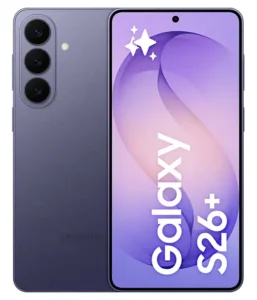
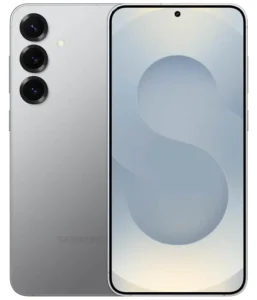
On paper, the Galaxy S26+ and S25+ look nearly identical. Same size, same weight, same camera hardware lineup — even the same battery capacity. But spend time with both, and the generational gaps become real, if measured. The S26+ earns its keep in specific, meaningful ways. The question is whether those improvements justify the price difference, or whether the S25+ remains the smarter buy for most people.
Head-to-Head Camera Analysis
Both phones share the same optical layout: a 50MP f/1.8 wide, 10MP f/2.4 telephoto with 3x optical zoom, and a 12MP f/2.2 ultrawide. On a spec sheet, they’re twins. In execution, the S26+ applies more refined computational photography, largely thanks to its newer chipset pushing faster scene analysis and tighter noise management.
Low-light shots on both phones are competent, but the S26+ tends to recover shadow detail with slightly less artificial smoothing. The S25+ can oversharpen in mixed lighting — that classic Samsung crispness that reads well on social media but looks processed under scrutiny. Neither phone escapes Samsung’s aggressive HDR tendencies, though the S26+ handles highlight rolloff more gracefully.
Video is where the shared specs matter less. The S26+ benefits from improved gyro-EIS stabilization tuning and the headroom of a more powerful GPU for 8K processing. Both shoot 8K@30fps, but real-world 4K footage from the S26+ holds finer detail during fast motion. The front 12MP camera is identical across both phones — and frankly, both deliver solid selfie output in decent light.
- Main sensor: 50MP f/1.8 on both — S26+ has better noise processing at the software level
- Zoom: 3x optical on both, consistent reach for mid-range portrait work
- Ultrawide: 12MP 120° on both, no meaningful difference in quality
- Video stabilization: S26+ edges ahead with improved gyro-EIS tuning
- Low light: S26+ manages shadow recovery with less artificial smoothing
Performance & Real-World Usage
The S25+ runs on Qualcomm’s Snapdragon 8 Elite, and it is not slow — not even close. Daily tasks, app switching, gaming, and video editing all feel immediate. The S26+ raises that ceiling with the Snapdragon 8 Elite Gen 5 (or Exynos 2600 in select markets), pushing CPU clock speeds from 4.47GHz to 4.74GHz on the performance cores, and GPU compute jumps from the Adreno 830 to the Adreno 840.
In sustained workloads — extended gaming sessions, continuous 4K capture, or heavy multitasking — the S26+ shows less thermal throttling behavior. The S25+ is no pushover, but under prolonged stress it scales back performance more noticeably. For Genshin Impact, PUBG, or similar GPU-heavy titles, the S26+ sustains higher frame rates longer.
The RAM and storage story is nearly identical: 12GB RAM on both, 256GB or 512GB configs, with the S26+ jumping to UFS 4.X over the S25+’s UFS 4.0. That means marginally faster app installs and file transfers on the newer model — not something you’ll feel daily, but it shows up in benchmarks and large file operations.
- S26+ chipset: Snapdragon 8 Elite Gen 5 (3nm) / Exynos 2600 (2nm) in some markets
- S25+ chipset: Snapdragon 8 Elite (3nm) — still a top-tier performer
- Gaming: S26+ holds peak frame rates longer under thermal load
- Storage: S26+ uses UFS 4.X vs S25+’s UFS 4.0 — faster in transfers
- Bluetooth: S26+ upgrades to Bluetooth 6.0 vs 5.4 on the S25+
Battery Life & Charging Experience
Both phones carry a 4900mAh battery, and both support 45W wired charging. That baseline is identical. Where they diverge is wireless charging: the S25+ maxes out at 15W wireless, while the S26+ bumps that to 20W with Qi2.2 support. For anyone relying on a wireless pad overnight or at a desk, the S26+ charges meaningfully faster without a cable.
Wired charging speed differences are minor but real. The S26+ reaches 69% in 30 minutes against the S25+’s 65% — a small edge, but consistent. Reverse wireless charging sits at 4.5W on both phones, useful for topping up earbuds or a smartwatch rather than another phone.
Day-to-day battery endurance on both phones is strong. The S26+’s more efficient chipset (especially the Exynos 2600 variant at 2nm) can push slightly longer screen-on time under moderate use. Heavy users — streaming, navigation, or gaming all day — will appreciate the incremental efficiency gain, though neither phone will make it through a punishing second day.
- Capacity: 4900mAh on both — identical raw tank
- Wired charging: 45W on both; S26+ hits 69% in 30 min vs S25+’s 65%
- Wireless charging: 20W (Qi2.2) on S26+ vs 15W (Qi2 Ready) on S25+
- Reverse wireless: 4.5W on both
- Efficiency: S26+’s newer node delivers modest gains in daily endurance
Display, Design & Build Feel
Pick up both phones blind-folded and the experience is identical. Dimensions are exactly 158.4 x 75.8 x 7.3mm, and both weigh 190g. Samsung made no changes to the chassis. The display is a 6.7-inch Dynamic LTPO AMOLED 2X panel on both, running at 120Hz with QHD+ resolution and 2600 nits peak brightness. They look the same, feel the same, and share Gorilla Glass Victus 2 front and back.
There are minor display spec differences worth noting: the S25+ reports 110.2cm² of screen area against the S26+’s 108.9cm², suggesting a fractionally smaller active area on the newer model — likely down to bezel rounding differences. Both panels resolve at 1440 x 3120 pixels, and ppi sits at roughly 516 versus 513. The practical difference is invisible to the naked eye.
Both phones carry the Armor Aluminum 2 frame and IP68 water resistance. The S26+ adds UWB (Ultra Wideband) support for precise spatial awareness and improved file sharing with compatible devices. The S25+ also has UWB, so that’s not a differentiator — but the S26+ brings Bluetooth 6.0, which improves connection stability and audio precision for wireless earbuds.
- Display: 6.7-inch LTPO AMOLED 2X, 120Hz, 2600 nits on both — visually identical
- Build: Same dimensions, same weight, same glass sandwich construction
- Protection: IP68, Gorilla Glass Victus 2, Armor Aluminum 2 on both
- Bluetooth: 6.0 on S26+ vs 5.4 on S25+ — better audio device handling
- UWB: Present on both phones
Software, Updates & AI Features
The S26+ launches with Android 16 and One UI 8.5, while the S25+ ships on Android 15 and One UI 8. Both phones are promised seven major Android upgrades. The long-term software commitment is identical — the S25+ will eventually reach the same Android versions the S26+ ships with.
One UI 8.5 brings refinements to Samsung’s Galaxy AI features, including tighter integration with on-device processing for tasks like real-time transcription, photo editing AI tools, and live translation. The S26+’s faster chipset handles these AI workloads with more headroom, which shows up in response times for complex Galaxy AI prompts. On the S25+, the same features work well but can take a beat longer on heavier tasks.
Samsung DeX support is present on both phones, enabling desktop-mode use via USB-C or wirelessly. Both also support DisplayPort 1.2 output and USB 3.2 transfer speeds. The software ecosystem is effectively equivalent for daily and productivity use.
Price & Value Proposition
The S26+ commands a premium over the S25+, which has become more accessible as it ages in the market. The core question is whether the differences — a faster chip, 20W wireless charging, Bluetooth 6.0, and marginally better computational photography — justify the gap.
For most buyers upgrading from a phone two or more generations old, the S26+ is the cleaner long-term choice. Its chipset headroom, faster wireless charging, and newest software foundation mean it stays relevant longer. For someone already on the S25+, the upgrade math does not favor moving — the gains are real but incremental, not transformative.
The S25+ remains a genuinely excellent phone. It loses nothing critical by comparison — just the latest spec bumps. Anyone on a tight budget or finding the S25+ on sale gets a top-tier experience without meaningful compromise.
Final Verdict: Which One Should You Buy?
The S26+ is the better phone. That statement comes with a qualifier: it’s better in ways that matter mainly to power users, wireless charger regulars, and those buying for a three-plus year horizon. The Snapdragon 8 Elite Gen 5, improved wireless charging, Bluetooth 6.0, and refined AI processing all add up to a more future-proof package.
The S25+ is the smarter buy if the price gap is significant, if upgrading from a recent Samsung flagship, or if core camera and display performance is the only priority. Nothing about the S25+ feels second-rate — it is a premium phone in every measurable way.
Buy the S26+ for longevity, faster wireless charging, and top-shelf performance. Buy the S25+ for value and the knowledge that it trades almost nothing meaningful to get there.
Samsung Galaxy S26+ vs Samsung Galaxy S25+ Frequently Asked Questions
Is the Samsung Galaxy S26+ noticeably faster than the S25+ in daily use?
For typical daily tasks — social media, messaging, streaming — both phones feel equally fast. The S26+ difference shows up in sustained workloads like extended gaming, continuous video recording, and heavy AI processing, where its newer chipset handles thermal throttling better and maintains peak performance longer.
Does the S26+ have a better camera than the S25+?
The hardware is identical: same 50MP main, 10MP telephoto, and 12MP ultrawide on both. The S26+ advantage comes from improved computational photography backed by a faster chip — better noise handling in low light and more natural shadow recovery. For casual photography, the difference is subtle. For demanding shooting conditions, the S26+ produces cleaner results.
Is the wireless charging difference between the S26+ and S25+ worth caring about?
If wireless charging is used regularly, yes. The S26+ charges wirelessly at 20W (Qi2.2) versus 15W on the S25+. Over a typical overnight charge that difference is irrelevant, but for mid-day top-ups on a wireless pad, the S26+ finishes noticeably faster. It also supports the newer Qi2.2 standard for better compatibility with future accessories.
Do both phones get the same software support?
Yes. Both the S26+ and S25+ are committed to seven major Android upgrades. The S26+ ships ahead of the S25+ in OS version, but the S25+ will receive the same updates over time. Long-term software support is not a differentiating factor between these two phones.
Are the displays on the S26+ and S25+ the same?
Effectively yes. Both use a 6.7-inch Dynamic LTPO AMOLED 2X panel, run at 120Hz, hit 2600 nits peak brightness, and resolve at 1440 x 3120 pixels. There is a fractional difference in reported screen area, but in real-world use the panels look and behave identically.
Which phone is better for gaming?
The S26+ is the better gaming phone. The Snapdragon 8 Elite Gen 5 and Adreno 840 GPU sustain higher frame rates under thermal load compared to the S25+’s Adreno 830. For GPU-intensive titles played in long sessions, the S26+ holds performance more consistently. Casual mobile gaming shows no meaningful difference between the two.
Is the build quality different between the S26+ and S25+?
No. Both phones are dimensionally identical at 158.4 x 75.8 x 7.3mm and weigh the same 190g. Both use Gorilla Glass Victus 2 front and back, an Armor Aluminum 2 frame, and carry IP68 water and dust resistance. There is no physical difference between them.
Should S25+ owners upgrade to the S26+?
Generally no. The improvements — faster chip, improved wireless charging speed, Bluetooth 6.0, and incremental camera processing gains — are real but evolutionary. The experience gap does not justify the cost of upgrading from a recently purchased device. The S26+ is best suited for those coming from older Galaxy models or switching from a different platform entirely.