

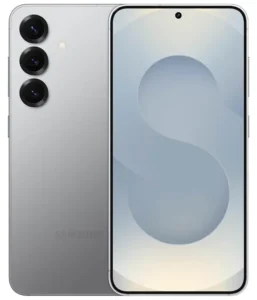
Compact flagships are rare, and good ones are rarer still. The Xiaomi 15 and Samsung Galaxy S25 both occupy that shrinking category — premium phones built for users who want top-tier performance without the bulk of a Pro Max or Ultra. They share the same Snapdragon 8 Elite chip, both shoot at 50MP on the main sensor, and both fit comfortably in one hand. Past that point, the differences stack up quickly.
The Xiaomi 15 arrives with Leica optics, a triple 50MP camera system, a larger battery, dramatically faster charging, and a brighter display — all at a smaller physical footprint than the Galaxy S25. Samsung counters with seven years of software updates, Samsung DeX desktop mode, and a track record of consistent software polish that Xiaomi’s HyperOS is still working to match internationally. Neither phone is a compromise. They just make very different decisions about what matters most.
Head-to-Head Camera Analysis
Both phones open with 50MP main sensors, but the hardware diverges immediately. The Xiaomi 15’s main camera shoots through a Leica-tuned f/1.6 lens with a 1/1.31-inch sensor — one of the larger sensor formats available in a compact body — against the Galaxy S25’s f/1.8 main lens. That aperture and sensor size combination gives the Xiaomi 15 a genuine low-light advantage, pulling in more light per frame before computational processing has to compensate. The Galaxy S25 produces clean, well-processed output in daylight, but in dim environments the Xiaomi 15’s physical light-gathering capacity shows.
The telephoto gap is where the comparison gets interesting. The Xiaomi 15 offers a 50MP 2.6x telephoto; the Galaxy S25 counters with a 10MP 3x telephoto. On paper, the Galaxy S25’s longer reach seems like the win — but the Xiaomi 15’s higher-resolution telephoto sensor extracts more detail in its native range and handles digital extension more gracefully. The Galaxy S25’s 10MP telephoto is sharp and reliable, especially for 3x portrait work, but it runs out of resolution headroom faster when pushing beyond its optical range. For users who zoom frequently and crop aggressively, the Xiaomi 15’s 50MP telephoto is the more flexible tool.
The ultrawide comparison exposes another gap. The Xiaomi 15’s 50MP f/2.2 ultrawide covers 115 degrees with a 14mm equivalent focal length — wider and higher resolution than the Galaxy S25’s 12MP f/2.2 ultrawide at 120 degrees. In good light, the Xiaomi 15 resolves significantly more detail across the ultrawide frame. The Galaxy S25 maintains consistent color science between its cameras, which the Xiaomi 15 occasionally struggles to match under artificial lighting where Leica’s tuning can produce a cooler, more clinical output compared to Samsung’s warmer, more immediately pleasing processing.
Video capabilities tilt toward the Xiaomi 15. It shoots 8K at both 24 and 30fps with HDR support, adds 10-bit Dolby Vision HDR recording, 10-bit LOG for color grading, and extends slow motion to 720p at 1920fps. The Galaxy S25 shoots 8K at 24 and 30fps with 10-bit HDR and HDR10+ but doesn’t match the Xiaomi 15’s LOG format support or extreme slow-motion ceiling. For serious video work, the Xiaomi 15’s recording options are more complete. The Galaxy S25’s video is polished and ready for social content without any additional processing — a different kind of usefulness.
- Low-light stills: Xiaomi 15 wins with f/1.6 aperture and 1/1.31-inch sensor — larger and brighter than the Galaxy S25’s main camera
- Telephoto: Xiaomi 15’s 50MP 2.6x vs Galaxy S25’s 10MP 3x — Xiaomi leads on resolution; Samsung leads on reach
- Ultrawide resolution: Xiaomi 15’s 50MP ultrawide outresolves Galaxy S25’s 12MP unit significantly in daylight
- Color science: Leica tuning on Xiaomi 15 favors accuracy; Samsung’s processing favors immediate appeal
- Video: Xiaomi 15 adds 10-bit LOG, Dolby Vision, and 1920fps slow motion — a wider professional toolkit than the Galaxy S25
- Front camera: Xiaomi 15 at 32MP f/2.0 vs Galaxy S25’s 12MP with dual-pixel PDAF — Xiaomi leads on resolution; Samsung counters with autofocus
Performance & Real-World Usage
Both phones run the Snapdragon 8 Elite on a 3nm process — but Samsung’s variant clocks its prime cores slightly higher at 4.47 GHz versus Xiaomi’s 4.32 GHz on the same Oryon V2 architecture. In practice, that difference is marginal in daily use and only surfaces in sustained benchmark scenarios where Samsung’s tuning extracts a small additional throughput. Both phones pair with the same Adreno 830 GPU, so graphical performance in gaming is effectively identical between them.
What separates the two in real-world performance is memory configuration and thermal management. The Xiaomi 15 offers up to 16GB of RAM across multiple storage tiers; the Galaxy S25 is fixed at 12GB. In heavy multitasking — keeping multiple large apps active simultaneously, running AI processing in the background while gaming — the Xiaomi 15’s additional RAM overhead keeps more content resident in memory without reloading. The Galaxy S25’s 12GB handles everyday multitasking cleanly, but under stacked workloads the difference surfaces occasionally as a brief app reload rather than a seamless resume.
Thermal management behaves differently between the two compact bodies. The Xiaomi 15 at 8.1–8.5mm thickness gives it slightly more internal volume for heat dissipation; the Galaxy S25 at just 7.2mm is one of the thinnest flagships available, which constrains its thermal headroom during extended gaming sessions. Neither phone throttles aggressively in short bursts, but sustained 30-minute gaming sessions at maximum settings push the Galaxy S25 to dial back performance sooner. The Xiaomi 15 holds peak performance longer in those scenarios.
- Chipset tuning: Galaxy S25’s Snapdragon 8 Elite clocks prime cores at 4.47 GHz vs Xiaomi 15’s 4.32 GHz — marginal real-world difference
- RAM: Xiaomi 15 reaches 16GB; Galaxy S25 caps at 12GB across all models
- Sustained gaming: Xiaomi 15’s additional body thickness gives it more thermal headroom under extended load
- Storage: Both use UFS 4.0 — matched on read/write speed
Battery Life & Charging Experience
The battery gap between these phones is substantial and affects daily use in a direct, unavoidable way. The Xiaomi 15 carries a 5240mAh silicon-carbon battery (5400mAh in the China model) against the Galaxy S25’s 4000mAh conventional cell. That 1240mAh difference, combined with silicon-carbon chemistry’s better energy density and cycle longevity, gives the Xiaomi 15 a clear endurance lead. Under a heavy day — navigation, camera use, streaming — the Galaxy S25 is a one-charge phone that requires discipline; the Xiaomi 15 extends comfortably into a second day under moderate use.
Charging speed amplifies the gap further. The Xiaomi 15 charges at 90W wired, capable of filling its larger battery considerably faster than the Galaxy S25’s 25W wired charging can fill its smaller cell. The numbers are telling: the Galaxy S25 reaches 50% in 30 minutes at 25W; the Xiaomi 15 at 90W charges its 5240mAh battery from flat to full in a fraction of the time. Wireless charging follows the same pattern — 50W on the Xiaomi 15 versus 15W Qi2 Ready on the Galaxy S25. For users who rely on wireless pads throughout the day, the Xiaomi 15’s wireless charging speed is a different category of convenience.
The Galaxy S25’s 4.5W reverse wireless charging and the Xiaomi 15’s 10W reverse wireless both allow topping up earbuds or a smartwatch, but neither is a primary use case. The Galaxy S25’s slimmer build and lighter 162g weight do make it easier to carry all day, which partially offsets the battery anxiety for lighter users — but anyone with screen-on time exceeding four to five hours will feel the capacity difference before the day ends.
- Capacity: Xiaomi 15 at 5240/5400mAh (Si/C) vs Galaxy S25 at 4000mAh — a major endurance advantage for Xiaomi
- Wired charging: Xiaomi 15 at 90W vs Galaxy S25 at 25W — Xiaomi charges a larger battery faster
- Wireless charging: Xiaomi 15 at 50W vs Galaxy S25 at 15W Qi2 Ready — no contest
- Reverse wireless: Xiaomi 15 at 10W; Galaxy S25 at 4.5W
Display, Design & Build Feel
The Xiaomi 15 wins the display specification comparison on nearly every measured point. Its 6.36-inch LTPO AMOLED panel peaks at 3200 nits — 600 nits ahead of the Galaxy S25’s 2600 nits — and adds Dolby Vision, HDR10+, and 1920Hz PWM dimming to reduce flicker at low brightness settings. Resolution favors the Xiaomi 15 at 460 ppi versus the Galaxy S25’s 416 ppi — the difference is visible when reading fine text or examining detailed images. The Xiaomi 15 also supports 68 billion colors versus a standard panel, producing smoother gradient rendering in HDR content.
Despite having a larger display, the Xiaomi 15 manages to stay physically smaller than the Galaxy S25 in some dimensions. At 152.3 x 71.2mm it’s shorter and narrower than the Galaxy S25’s 146.9 x 70.5mm footprint — though the Galaxy S25 wins dramatically on thickness at 7.2mm versus the Xiaomi 15’s 8.1–8.5mm. The Galaxy S25 is also lighter at 162g compared to the Xiaomi 15’s 189–192g. In hand, the Galaxy S25 feels remarkably svelte — almost surprisingly thin — while the Xiaomi 15 feels more substantial and grippable. Neither feels cheap; they simply communicate different build philosophies.
Glass protection differs in character. The Xiaomi 15 uses Xiaomi Shield Glass rated at Mohs level 6, offering stronger scratch resistance than the Galaxy S25’s Gorilla Glass Victus 2 at Mohs level 5. In day-to-day contact with keys and coins, the Xiaomi 15’s front glass holds up marginally better. The Galaxy S25’s Armor Aluminum 2 frame is a known durable material; the Xiaomi 15’s 6M42 aluminum alloy is comparably rigid. Both hold IP68 water resistance ratings. One practical difference: the Xiaomi 15 includes an infrared blaster for controlling home electronics; the Galaxy S25 does not.
- Peak brightness: Xiaomi 15 at 3200 nits vs Galaxy S25 at 2600 nits — clearer outdoor advantage for Xiaomi
- Resolution: Xiaomi 15 at 460 ppi vs Galaxy S25 at 416 ppi — noticeably crisper on fine detail
- Thickness: Galaxy S25 at 7.2mm is dramatically thinner than Xiaomi 15 at 8.1–8.5mm
- Weight: Galaxy S25 at 162g vs Xiaomi 15 at 189–192g — Galaxy is substantially lighter
- Glass protection: Xiaomi Shield Glass at Mohs 6 vs Gorilla Glass Victus 2 at Mohs 5 — Xiaomi scratches less easily
- Infrared blaster: Xiaomi 15 includes one; Galaxy S25 does not
- PWM dimming: Xiaomi 15 at 1920Hz — significantly easier on eyes at low brightness than typical panels
Software, Updates & AI Features
The software update gap is the Galaxy S25’s most decisive long-term advantage. Samsung commits to seven major Android upgrades under One UI 8 — the longest guarantee available on any Android phone. The Xiaomi 15 commits to four major upgrades under HyperOS 2. For buyers planning to hold their phone for five or six years, that three-upgrade difference translates to years of additional security patches, feature access, and OS compatibility. The Galaxy S25 ships on Android 15 and will remain current through Android 22; the Xiaomi 15 tops out significantly earlier in the upgrade cycle.
HyperOS 2 on the Xiaomi 15 is a polished, feature-dense experience — a significant improvement over earlier MIUI builds in terms of stability and bloatware reduction. It lacks the broad international optimization and seamless Google ecosystem integration that One UI 8 provides, and in some regions HyperOS ships with pre-installed apps that feel unnecessary. One UI 8 on the Galaxy S25 is mature, well-optimized, and includes Samsung DeX — a full desktop mode that turns the phone into a PC replacement when connected to an external display. For productivity users who use the phone as a primary computing device, DeX is a genuine differentiator the Xiaomi 15 simply doesn’t offer.
AI features are evolving rapidly on both platforms. Samsung’s Galaxy AI suite integrates directly with One UI and benefits from long-standing partnerships with Google for on-device processing. Xiaomi’s AI features in HyperOS 2 are improving but remain less deeply embedded in the core OS experience. For users who rely on AI-powered tools daily — note summarization, real-time translation, photo editing — the Galaxy S25’s AI integration is currently more consistent and polished across international markets.
Price & Value Proposition
The Xiaomi 15 typically undercuts the Galaxy S25 at comparable storage configurations while delivering a larger battery, faster charging, a triple 50MP camera system, a brighter display, and higher RAM ceiling. On raw hardware value, the Xiaomi 15 is difficult to beat at its price point.
The Galaxy S25 earns its price through software longevity, build refinement, and ecosystem integration. Seven years of updates changes the cost-per-year calculation significantly — spread across a six-year ownership period, the Galaxy S25’s update commitment alone justifies a price premium for long-term buyers. Samsung DeX adds a use case the Xiaomi 15 cannot match, and One UI 8’s international optimization makes the Galaxy S25 a more reliable daily driver across different regions and carrier configurations.
The Xiaomi 15 makes the most sense for camera enthusiasts who want Leica optics, fast charging, and premium display quality at a competitive price — and who don’t plan to hold the phone for more than four years. The Galaxy S25 makes more sense for buyers who want a lighter, thinner form factor, maximum software longevity, and Samsung’s polished ecosystem integration, and who can accept the battery and charging trade-offs.
Final Verdict: Which One Should You Buy?
The Xiaomi 15 wins on hardware value, camera resolution, battery capacity, charging speed, and display brightness. For buyers who prioritize camera versatility, long endurance, and premium specs at a competitive price, it delivers more for less in almost every measurable category. The Leica triple 50MP system is genuinely impressive, and 90W charging on a silicon-carbon battery makes the Xiaomi 15 a practical, anxiety-free daily device.
The Samsung Galaxy S25 wins on software longevity, build thinness, ecosystem polish, and long-term reliability. Seven major Android updates, Samsung DeX, and One UI 8’s mature international optimization make it the smarter long-term investment for buyers who hold phones for five or more years. The 7.2mm body and 162g weight also make it the most pocketable flagship in either company’s recent lineup — a meaningful quality-of-life factor for daily carry.
Both phones share the same chip and neither is a bad choice. The Xiaomi 15 outspecs the Galaxy S25 on paper; the Galaxy S25 outlasts it in software. That single trade-off defines the entire decision.
Xiaomi 15 vs Samsung Galaxy S25 Frequently Asked Questions
Which phone has the better camera — Xiaomi 15 or Samsung Galaxy S25?
For overall camera hardware, the Xiaomi 15 leads. Its triple 50MP system with Leica optics delivers higher resolution across all three cameras, a brighter f/1.6 main aperture, and a larger 1/1.31-inch main sensor that performs better in low light. The Galaxy S25’s camera system produces consistent, well-processed output and benefits from Samsung’s mature color science — particularly for daylight portraits — but it can’t match the Xiaomi 15’s resolution depth or Leica-tuned rendering on the main and ultrawide lenses.
Is the Samsung Galaxy S25 really that much thinner and lighter than the Xiaomi 15?
Yes, noticeably so. The Galaxy S25 measures 7.2mm thick and weighs 162g — making it one of the slimmest and lightest flagship phones available. The Xiaomi 15 comes in at 8.1–8.5mm thickness and 189–192g. In daily pocket carry and one-handed use, that weight and thickness difference is perceptible. Users who prioritize a slim, featherlight phone will genuinely prefer the Galaxy S25 in hand, even if the Xiaomi 15 wins on display and battery specs.
How does charging speed compare between the Xiaomi 15 and Galaxy S25?
The Xiaomi 15 charges considerably faster. At 90W wired, it fills its 5240mAh silicon-carbon battery quickly — and its wireless charging runs at 50W. The Galaxy S25 charges at 25W wired, reaching 50% in 30 minutes, with 15W Qi2 Ready wireless. The Xiaomi 15 both charges faster and has more capacity to fill — making the Galaxy S25’s battery situation doubly challenging for heavy users.
Which phone offers more software updates?
The Samsung Galaxy S25 offers seven major Android upgrades under One UI 8 — the longest update commitment in Android. The Xiaomi 15 commits to four major upgrades under HyperOS 2. For buyers planning to keep their phone beyond four years, the Galaxy S25’s update runway is a concrete and significant advantage. Security patches, new Android features, and app compatibility all benefit from Samsung’s longer support commitment.
Which phone is better for gaming?
Both phones use the Snapdragon 8 Elite and Adreno 830 GPU, so graphical performance is closely matched in short sessions. Under sustained 30-minute gaming at maximum settings, the Xiaomi 15’s additional body thickness provides more thermal headroom, resulting in more consistent frame rates over time. The Galaxy S25’s ultra-slim 7.2mm chassis constrains heat dissipation, leading to earlier performance dialing under extended load. The Xiaomi 15 also offers up to 16GB of RAM versus the Galaxy S25’s fixed 12GB, which helps in memory-intensive games.
Does the Xiaomi 15 have Samsung DeX or a desktop mode?
No. Samsung DeX — which turns the Galaxy S25 into a full desktop computing environment when connected to an external display — is exclusive to Samsung’s ecosystem. The Xiaomi 15 supports USB DisplayPort output, so it can mirror or extend the display, but it lacks a true desktop mode experience comparable to DeX. For users who want to use their phone as a PC replacement, this is a meaningful Galaxy S25 advantage.
Which phone is better for users who care about long-term value?
The Galaxy S25 offers better long-term value through software. Seven years of major Android upgrades means the phone remains secure and feature-current significantly longer than the Xiaomi 15’s four-year commitment. Spread across a six-year ownership period, that update advantage changes the cost-per-year equation. The Xiaomi 15 delivers better hardware value upfront — more camera resolution, more battery, faster charging, brighter display — but ages out of software support faster.
Which phone is more suitable for photography enthusiasts?
The Xiaomi 15, for users who prioritize hardware-driven image quality. Its Leica-tuned triple 50MP system with a large main sensor, 10-bit LOG video recording, Dolby Vision capture, and 1920fps extreme slow motion gives serious photographers and videographers more creative tools than the Galaxy S25 provides. The Galaxy S25’s camera is capable and consistent — ideal for everyday shooting without post-processing — but the Xiaomi 15’s RAW output, wider slow-motion range, and professional video formats make it the more complete creative instrument.