
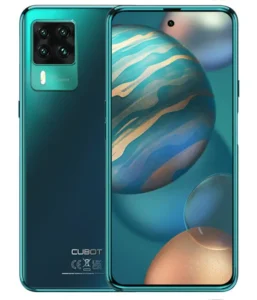
What Makes the Cubot X50 Worth Buying?
The Cubot X50 launched in 2021 targeting users who want mid-range features without premium pricing. The 6.67-inch Full HD+ display immediately stands out with its sharp 1080 x 2400 resolution delivering 395 ppi density. Text appears crisp, photos show fine details, and video playback looks genuinely enjoyable. The large screen size combined with the 83% screen-to-body ratio creates an immersive viewing experience for content consumption.
Camera versatility ranks among the phone’s strongest selling points. The 64 MP main sensor with phase detection autofocus captures detailed shots in favorable lighting conditions. The 16 MP ultrawide camera with a generous 125-degree field of view opens creative possibilities for landscape photography, architecture shots, and fitting large groups into frame. The 5 MP macro lens lets users explore close-up photography of flowers, insects, and small objects. The 32 MP front-facing camera delivers sharp selfies and clear video calls.
Memory configuration impresses for the price point. The 8GB RAM provides genuine multitasking capability, allowing users to keep multiple apps running without constant reloading. The 128GB internal storage offers ample space for apps, photos, videos, and offline media. This combination exceeds the typical 4GB/64GB configuration found in many budget devices, reducing storage anxiety and performance compromises.
NFC support sweetens the package considerably. Many budget phones omit this feature to cut costs, but the X50 includes it for contactless payments through Google Pay. The convenience of tapping to pay at checkout counters adds practical value to daily life. Dual-band WiFi supporting both 2.4GHz and 5GHz networks ensures faster connections when available, while the comprehensive positioning system including GPS, GLONASS, GALILEO, and BDS provides accurate navigation worldwide.
The side-mounted fingerprint sensor offers convenient unlocking without reaching for the back of the phone or relying solely on face recognition. The sensor placement feels natural during handling, and the responsive unlocking maintains security without frustration. The dual SIM capability helps users managing multiple phone numbers or international connections.
Things to Know Before Choosing the Cubot X50
The microUSB port represents the most glaring dated element. When USB Type-C has become standard even on budget devices, the microUSB connector feels like a step backward. Users deal with slower data transfer speeds, orientation-specific charging that requires checking which way the plug goes, and incompatibility with modern accessories. This choice particularly disappoints given the phone’s otherwise competitive specifications.
The shared SIM slot design forces an unwelcome compromise. Users must choose between dual SIM functionality or storage expansion—they cannot have both simultaneously. With 128GB internal storage, this limitation affects fewer users than it would on a 32GB device, but those needing both dual SIM operation and massive media storage face frustration. International travelers wanting local and home SIMs plus expanded storage find themselves choosing between connectivity and capacity.
Bluetooth 4.2 lags behind current standards. While functional for headphones, speakers, and car connections, the older version lacks the improved range, speed, and efficiency of Bluetooth 5.0 or newer. Users accustomed to better Bluetooth performance notice the difference in connection stability and audio quality, particularly with high-end wireless headphones.
The Mediatek Helio P60, while capable, dates from 2018 and shows its age in demanding scenarios. Heavy gaming pushes the Mali-G72 MP3 GPU to its limits, requiring graphics settings adjustments in intensive titles. The processor handles everyday tasks competently but won’t deliver flagship-level performance. Users considering this phone should set expectations appropriately for mid-range capabilities rather than cutting-edge power.
Weight becomes noticeable during extended use. At 213 grams, the X50 feels substantial in hand and pocket. The heft comes from the large 6.67-inch display and 4500 mAh battery, but users with smaller hands or those accustomed to lighter devices may find the weight tiring during long usage sessions. The 8.8mm thickness adds to the bulky feel.
Battery capacity at 4500 mAh provides decent endurance but falls short of the 5000+ mAh capacities increasingly common in this segment. The efficient Helio P60 helps stretch battery life, delivering full-day usage for most users, though heavy users may need an afternoon top-up. The specifications omit fast charging details, suggesting standard charging speeds that require patience compared to modern quick-charge technologies.
Is the Cubot X50 Right for You?
Photography enthusiasts seeking camera variety without breaking the bank discover strong value here. The combination of 64 MP main sensor, ultrawide lens, and macro camera enables creative experimentation across different shooting scenarios. Social media content creators benefit from the versatile camera system and sharp 32 MP selfie camera for vlogs and stories. The Full HD+ display ensures photos and videos look their best when reviewing shots.
Media consumers prioritizing screen quality find the 6.67-inch Full HD+ display delivers excellent viewing experiences for Netflix, YouTube, and streaming services. The sharp 395 ppi density makes text reading comfortable for ebooks and articles. The large screen size enhances mobile gaming, though users should temper expectations regarding performance on the most demanding titles.
Budget-conscious buyers seeking solid specifications at reasonable prices get a well-rounded package. The 8GB RAM and 128GB storage combination provides breathing room that cheaper alternatives lack. Users tired of constantly managing storage or experiencing app reloads due to insufficient RAM appreciate the more generous configuration. The inclusion of NFC adds convenience many competitors omit.
Students and casual users needing reliable performance for schoolwork, social media, browsing, and moderate multitasking find the X50 handles their needs smoothly. The hardware proves capable for productivity apps, video calls, and entertainment without the frustrations of truly budget-tier devices. The dual SIM capability benefits students studying abroad or maintaining multiple connections.
However, several user groups should look elsewhere. Tech enthusiasts wanting the latest connectivity standards feel disappointed by microUSB and Bluetooth 4.2. Users requiring both dual SIM and SD card expansion simultaneously face an impossible choice with the shared slot. Mobile gaming enthusiasts demanding high frame rates on maximum settings need more powerful processors and GPUs. Those prioritizing fast charging find the specifications underwhelming.
Photography purists seeking flagship-quality computational photography, exceptional low-light performance, or advanced video features exceed what the X50 delivers. The cameras handle everyday photography well but lack the sophisticated processing algorithms and sensor capabilities of premium devices.
Best Alternatives to the Cubot X50
Several alternatives offer different trade-offs in the mid-range segment. The Xiaomi Redmi Note 10 Pro provides superior camera hardware with a 108 MP main sensor, faster 120Hz display refresh rate, and USB Type-C connectivity. The Redmi series consistently delivers strong specifications at competitive pricing, though software includes more pre-installed apps.
Realme’s offerings in this price range, such as the Realme 8 Pro, bring 65W fast charging that dramatically reduces charging time, along with USB-C connectivity and refined software experiences. The camera systems emphasize computational photography that compensates for hardware limitations through software processing.
Samsung’s Galaxy A32 provides the Samsung ecosystem, longer software support promises, and broader carrier compatibility. The brand recognition and extensive service network offer peace of mind, though specifications may not match competitors spec-for-spec at the same price point. The One UI interface adds features but also bloat compared to cleaner Android implementations.
The Motorola Moto G series, particularly the Moto G60 or G71, delivers near-stock Android experiences with practical features and reliable performance. Motorola’s reputation for durability and reasonable software support appeals to users prioritizing longevity over maximum specifications.
For users specifically valuing the camera system, the Google Pixel 4a (if available in the regional market) offers superior computational photography that produces better real-world results despite lower megapixel counts. Google’s camera software magic extracts quality from modest hardware through intelligent processing.
Those willing to explore less mainstream brands might find similar Cubot models or devices from Ulefone, Blackview, or Doogee offering rugged builds, larger batteries, or specialized features at comparable prices. These brands cater to niche users but sacrifice the support networks and software refinement of major manufacturers.
Cubot X50 Frequently Asked Questions
How good is the Cubot X50 camera?
The Cubot X50 features a versatile quad camera system headlined by a 64 MP main sensor with phase detection autofocus. The 16 MP ultrawide camera with 125-degree field of view captures expansive landscapes and group shots, while the 5 MP macro lens enables close-up photography. In good lighting, the main camera produces detailed photos suitable for social media and everyday use. The 32 MP front camera delivers sharp selfies and handles video calls well. However, low-light performance shows limitations typical of budget sensors, and computational photography features remain basic compared to flagship devices.
Is 8GB RAM enough on the Cubot X50?
The 8GB RAM on the Cubot X50 provides comfortable multitasking capability for most users. This capacity handles multiple apps running simultaneously without excessive reloading, makes app switching smoother, and supports moderate gaming sessions. Combined with 128GB storage, the memory configuration exceeds many budget phones that typically offer 4GB or 6GB RAM. Users can keep numerous apps in memory and switch between them without the constant reloading that plagues lower-RAM devices.
Does the Cubot X50 support dual SIM and SD card simultaneously?
No, the Cubot X50 uses a shared SIM slot design, meaning users must choose between using two SIM cards or one SIM card plus a microSD card for storage expansion. This hybrid slot configuration forces a compromise that may frustrate users wanting both dual SIM functionality and expanded storage. With 128GB internal storage, most users can operate comfortably without a memory card, making the dual SIM configuration more practical for everyday use.
What processor does the Cubot X50 use and how does it perform?
The Cubot X50 runs on the Mediatek Helio P60 chipset built on 12nm process technology. This octa-core processor combines four Cortex-A73 cores at 2.0 GHz and four Cortex-A53 cores at 2.0 GHz, paired with a Mali-G72 MP3 GPU. The processor handles everyday tasks like browsing, social media, video streaming, and light multitasking smoothly. Casual gaming works well, though demanding titles may require reduced graphics settings. The Helio P60 represents solid mid-range performance from its generation, balancing capability with power efficiency.
Does the Cubot X50 have NFC for contactless payments?
Yes, the Cubot X50 includes NFC support, enabling contactless payment services like Google Pay. This feature remains uncommon in budget-friendly phones, giving the X50 an advantage over competitors that omit NFC to reduce costs. Users can tap their phone at payment terminals, use NFC for quick device pairing, and access other NFC-enabled services. The inclusion of this technology adds practical convenience to daily life without requiring flagship pricing.