
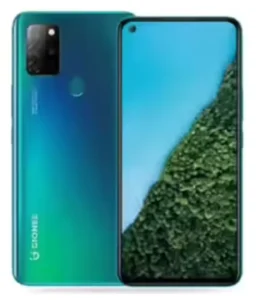
The Gionee M12 launched in November 2020 as an entry-level smartphone targeting extremely budget-conscious buyers in emerging markets. This device prioritized basic functionality and battery endurance over cutting-edge features, positioning itself at the absolute bottom of the pricing spectrum. With its massive 5100mAh battery and simple dual-camera system, the M12 aimed to deliver essential smartphone capabilities without premium pretensions.
However, potential buyers must understand that this device has been discontinued and represents outdated technology even by budget standards. The phone ships with Android 10, features a low-resolution display, and relies on entry-level processors that struggled with demanding tasks even at launch. The M12 exists primarily as a historical reference point for ultra-budget devices rather than a viable purchase option for most users today.
What Makes the Gionee M12 Worth Buying?
The 5100mAh battery represents the phone’s primary selling point, delivering exceptional endurance for basic tasks. Users who prioritize battery life above all other considerations find the M12 capable of lasting up to two full days on a single charge with light usage patterns. The substantial battery capacity ensures the phone reliably powers through extended periods away from charging outlets, making it suitable for users with limited access to electricity or those who travel frequently without power sources.
The 6.55-inch display provides adequate screen real estate for reading messages, browsing social media, and watching videos. While the 720 x 1600 resolution falls short of Full HD standards, the lower pixel density keeps processing demands minimal and extends battery life. The IPS LCD panel delivers acceptable viewing angles and color reproduction for basic content consumption, though it lacks the vibrant colors and deep blacks of AMOLED technology.
Storage flexibility comes through the microSDXC card slot, allowing unlimited expansion beyond the base 64GB or 128GB internal storage options. The two configuration variants offer either 4GB or 6GB of RAM paired with their respective storage capacities. Users can choose based on their multitasking needs and budget constraints, though both configurations utilize slower eMMC 5.1 storage technology rather than the faster UFS standard.
The camera system includes a 48MP primary sensor with PDAF autofocus and a 5MP ultrawide lens for capturing broader scenes. In well-lit conditions, the main camera produces usable photos suitable for social media sharing, though image quality deteriorates rapidly in challenging lighting. The 16MP front-facing camera handles video calls and selfies adequately for basic needs. Both front and rear cameras support 1080p video recording at 30fps.
The phone retains the 3.5mm headphone jack, appealing to users who prefer wired audio connections or still own traditional headphones. FM radio functionality provides entertainment without consuming mobile data. The rear-mounted fingerprint sensor offers biometric security positioned naturally for comfortable unlocking. Dual-SIM support allows users to maintain separate personal and work numbers or take advantage of different carrier plans.
USB Type-C connectivity brings modern charging port standards to this budget device, though the port operates at USB 2.0 speeds. OTG support enables connecting USB accessories like flash drives and keyboards. The phone supports dual-band WiFi (802.11 a/b/g/n) and Bluetooth 5.0 for wireless connectivity needs.
Things to Know Before Choosing the Gionee M12
The discontinued status creates immediate concerns about availability, warranty support, and software updates. Finding new units requires searching through old stock at select retailers, with no guarantee of manufacturer warranty coverage. Gionee’s troubled financial history and minimal market presence in most regions mean users cannot rely on official support channels or service centers. This lack of support infrastructure makes the M12 a risky purchase even at heavily discounted prices.
The 720p display resolution disappoints compared to competitors offering Full HD screens at similar price points. At 268 pixels per inch, text appears noticeably less sharp than on higher-resolution displays, and images lack the crisp detail found on Full HD+ panels. The lower resolution impacts the overall user experience, particularly when viewing photos, reading small text, or consuming high-definition video content.
Two different chipset variants exist depending on regional models, adding confusion to the purchasing decision. Model 1 uses the MediaTek Helio A25 processor with a unique core configuration featuring four 1.8GHz cores and four 1.5GHz cores. Model 2 employs the slightly more capable Helio P22 with eight 2.0GHz cores. Both processors represent entry-level silicon that struggles with multitasking, demanding applications, and modern games. The PowerVR GE8320 GPU provides minimal graphics performance suitable only for casual gaming at low settings.
Android 10 feels severely outdated by current standards, lacking the security patches, privacy features, and interface improvements introduced in subsequent Android versions. The phone launched with Android 10 when Android 11 was already available, and Gionee’s poor update track record means the device never received major OS upgrades. Users miss out on years of Android evolution, leaving the phone vulnerable to security exploits and incompatible with newer apps requiring recent Android versions.
Performance limitations surface immediately during everyday use. The 4GB RAM configuration struggles to keep multiple apps running simultaneously, forcing frequent app reloads and interface lag. Even the 6GB variant shows its limitations when attempting to run resource-intensive applications or maintain numerous browser tabs. The entry-level processors bottleneck the system during tasks that modern budget devices handle smoothly, creating a frustrating user experience.
Build quality reflects extreme cost-cutting with plastic construction throughout. The glass front, plastic frame, and plastic back feel cheap compared to devices using better materials. At 9.3mm thickness and 196 grams weight, the phone feels bulky and dated. The construction lacks any water resistance rating, requiring careful handling around moisture.
The absence of NFC eliminates contactless payment options, forcing users to carry physical cards. GPS positioning lacks support for GLONASS, GALILEO, and other satellite systems beyond basic GPS, potentially affecting location accuracy. The camera system’s auxiliary lenses provide minimal practical benefit, serving primarily as marketing specifications rather than meaningful photography tools. The lack of optical image stabilization and advanced computational photography features limits photo quality compared to more modern budget devices.
Is the Gionee M12 Right for You?
Extreme budget buyers with absolutely minimal requirements might consider the M12 if found at rock-bottom prices, though better alternatives exist at every price point. The phone handles basic calling, texting, and light social media browsing without completely falling apart. Users who prioritize battery life above all other features appreciate the 5100mAh capacity, particularly in regions with unreliable electricity access.
Elderly users or technologically inexperienced individuals seeking the simplest possible smartphone might find the basic interface and limited features less overwhelming than more capable devices. The large display aids visibility for users with vision challenges, though the low resolution partially counteracts this benefit. The straightforward feature set reduces confusion for users making their first transition from feature phones to smartphones.
Students in developing regions with extremely limited budgets could use the M12 for accessing online educational content, though the poor performance hampers the learning experience. The expandable storage accommodates downloaded course materials, and the long battery life ensures the phone lasts through school days without charging. However, students would benefit significantly from investing slightly more in devices with better processors and higher-resolution displays that improve the overall educational experience.
Backup phone purposes represent perhaps the most sensible use case for the M12. Users seeking an emergency device to keep charged and ready for power outages or as a spare phone during device repairs find the excellent battery life appealing. The basic functionality suffices for emergency communication needs, and the low cost minimizes financial risk if the backup phone suffers damage or theft.
Mobile gamers should avoid this device entirely. The entry-level processor and GPU cannot handle modern games at acceptable performance levels. Even older, less demanding titles struggle to maintain smooth frame rates. Users interested in mobile gaming should invest in devices with significantly better processors regardless of budget constraints.
Photography enthusiasts will find the camera system inadequate for serious photography. While the 48MP sensor produces acceptable daylight photos, the lack of OIS, limited dynamic range, and poor low-light performance disappoint compared to competitors. The minimal computational photography features mean users cannot rely on software to compensate for hardware limitations.
Most users should skip the Gionee M12 entirely and purchase current budget devices from active manufacturers. The discontinued status, outdated software, poor performance, and low-resolution display create too many compromises. Current budget alternatives from brands like Realme, Redmi, Samsung, and Motorola offer dramatically better value with superior specifications, active software support, and reliable warranty coverage at competitive prices.
Best Alternatives to the Gionee M12
Realme C-series phones provide superior value with updated processors, higher-resolution displays, and active software support. Models like the Realme C35 or C55 offer better performance, improved cameras, and modern Android versions while maintaining ultra-competitive pricing. Realme’s presence in multiple markets ensures easier availability and better after-sales service compared to the discontinued Gionee brand.
Redmi A-series and Note-series devices from Xiaomi deliver exceptional specifications at budget prices. These phones feature better displays, faster processors, and MIUI software with regular updates. Xiaomi’s extensive distribution network and service centers provide peace of mind regarding support and repairs. Devices like the Redmi 12C or Redmi Note 12 significantly outperform the M12 across all metrics.
Samsung Galaxy A-series and M-series phones bring brand reliability and guaranteed software updates to the budget segment. Samsung’s One UI interface receives consistent updates, and the company commits to longer software support periods than most budget manufacturers. Models like the Galaxy A04 or M13 offer better build quality, superior displays, and more reliable long-term performance despite slightly higher initial costs.
Motorola Moto E-series and G-series devices emphasize clean Android experiences with minimal bloatware. These phones appeal to users who prefer stock Android interfaces and appreciate Motorola’s reputation for straightforward functionality. The Moto E series competes directly with ultra-budget devices while offering better specifications and support than the M12.
Gionee M12 Frequently Asked Questions
Is the Gionee M12 still available to buy?
The Gionee M12 has been officially discontinued and is no longer in active production. Finding new units requires searching for remaining old stock at select retailers, which becomes increasingly difficult as time passes. The discontinued status raises concerns about warranty validity, as Gionee’s limited market presence means support channels may no longer function properly. Additionally, the phone’s 2020 launch date means any remaining stock represents aging inventory with potentially degraded battery capacity from extended storage periods. Most technology experts strongly recommend avoiding discontinued devices in favor of current models from active manufacturers who provide proper warranty coverage, software updates, and customer support infrastructure.
How long does the battery last on the Gionee M12?
The 5100mAh battery delivers exceptional endurance for light to moderate usage patterns, easily lasting one and a half to two full days on a single charge. Light users who primarily make calls, send messages, and browse social media occasionally can extend battery life beyond two days. The combination of the large battery capacity, low-resolution display, and power-efficient entry-level processor contributes to the impressive longevity. Moderate users engaging in regular social media browsing, video watching, and photography consistently achieve full-day battery life with significant charge remaining by bedtime. Heavy users running demanding applications or playing games extensively still obtain reliable all-day endurance, though they may need to recharge before the second day. The phone lacks fast charging technology, so recharging the large 5100mAh battery takes considerable time using standard charging speeds.
Does the Gionee M12 support 5G networks?
No, the Gionee M12 does not support 5G connectivity. The device supports only GSM, HSPA, and LTE network technologies, reflecting its 2020 launch date when 5G infrastructure was just beginning deployment in most markets. The absence of 5G represents a significant limitation for users planning to keep their device for several years as networks continue transitioning to newer standards. Users can still access 4G LTE networks for reasonably fast data speeds sufficient for browsing, streaming, and downloading content. However, the lack of 5G future-proofing means the phone cannot take advantage of faster network speeds and lower latency as 5G coverage expands. For buyers prioritizing long-term usability and network compatibility, this limitation makes the M12 a poor choice compared to newer budget devices that include 5G support at competitive prices.
What processor does the Gionee M12 use?
The Gionee M12 exists in two variants with different processors depending on the regional model. Model 1 uses the MediaTek Helio A25 (MT6762D) chipset featuring an octa-core configuration with four Cortex-A53 cores running at 1.8GHz and four Cortex-A53 cores at 1.5GHz. Model 2 employs the MediaTek Helio P22 (MT6762) chipset with eight Cortex-A53 cores all running at 2.0GHz. Both processors use 12nm manufacturing process technology and pair with the PowerVR GE8320 GPU for graphics processing. These entry-level chipsets handle basic smartphone tasks like calling, messaging, and web browsing adequately but struggle with multitasking, demanding applications, and modern games. The processors represent older, budget-focused silicon that lacks the performance capabilities of even mid-range chips from the same era, resulting in noticeable lag during intensive usage scenarios.
Can you expand the storage on the Gionee M12?
Yes, the Gionee M12 includes a microSDXC card slot that allows unlimited storage expansion beyond the base internal storage capacity. The device comes in two internal storage configurations: 64GB paired with 4GB RAM and 128GB paired with 6GB RAM, both utilizing eMMC 5.1 storage technology. The dedicated microSD card slot enables users to add external storage without sacrificing the dual-SIM functionality, preserving the ability to use two nano-SIM cards simultaneously. This expandable storage proves particularly valuable for users who store large media libraries, download extensive offline content, or need extra space for apps and games. Users should note that while apps can be moved to SD cards on some Android versions, not all apps support this feature, and the slower speed of microSD cards compared to internal storage may impact performance when running apps from external storage.