
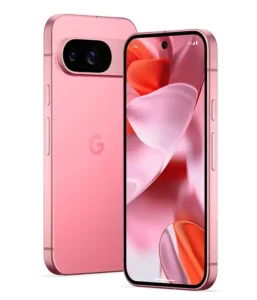
What Makes the Google Pixel 9 Worth Buying?
The Google Pixel 9 arrives as a refined flagship that addresses many shortcomings of previous generations while maintaining the Pixel line’s signature strengths. Launched in August 2024, this device showcases meaningful improvements across photography, performance, and display technology. The new Tensor G4 processor delivers better efficiency and performance, while the upgraded 48MP ultrawide camera represents a massive leap from the 12MP sensor in previous models.
Display quality reaches new heights with the Pixel 9’s OLED panel. Peak brightness hits an impressive 2700 nits, ensuring perfect visibility even in harsh sunlight. The 120Hz refresh rate creates buttery-smooth scrolling and animations that make every interaction feel responsive. Gorilla Glass Victus 2 protects both front and back surfaces, offering superior scratch and drop resistance compared to older glass generations. The screen’s 6.3-inch size strikes an ideal balance between usability and portability.
Camera improvements extend beyond the ultrawide lens. The 50MP main sensor with optical image stabilization continues the Pixel tradition of exceptional photography. Google’s computational magic transforms ordinary shots into stunning images through features like Night Sight, Real Tone for accurate skin representation across all complexions, and Best Take that ensures everyone looks perfect in group photos. The 48MP ultrawide captures significantly more detail than previous generations, making it genuinely useful for landscape and architectural photography rather than just a checkbox feature.
The bump to 12GB of RAM represents a substantial upgrade that future-proofs the device. This additional memory ensures smooth multitasking, faster app switching, and better performance when running multiple demanding applications simultaneously. Combined with Google’s 7-year software update commitment, the Pixel 9 becomes a long-term investment that will remain capable and current through 2031. The satellite SOS service adds a critical safety feature for emergency situations when cellular networks are unavailable.
Things to Know Before Choosing the Google Pixel 9
The absence of a telephoto lens remains the Pixel 9’s most significant camera limitation. While digital zoom produces usable results thanks to the 50MP main sensor, it can’t match the quality of optical zoom found on the Pixel 9 Pro or competing flagships. Wildlife photographers, sports enthusiasts, or anyone who frequently shoots distant subjects will miss this capability. The phone relies on Google’s Super Res Zoom technology, which works well but has clear physical limitations.
Battery capacity sits at 4700mAh, a modest increase over the Pixel 8’s 4575mAh. While this provides adequate all-day performance for typical users, heavy users who stream videos extensively, play demanding games, or use GPS navigation for hours might find themselves needing a midday top-up. The 27W wired charging delivers 55% battery in 30 minutes, which is respectable but falls short of competitors offering 65W, 80W, or even faster charging speeds.
Storage options remain limited to 128GB and 256GB, with no microSD card expansion. The 128GB model might feel restrictive for users who take lots of photos and videos in high resolution, download large games, or store extensive offline content. Given the phone’s 7-year lifespan, the 256GB model represents a safer choice for most buyers. Cloud storage solutions can help, but they require reliable internet access and may involve ongoing subscription costs.
The 27W charging speed, while improved from some earlier Pixels, still lags behind industry leaders. Competitors routinely offer 45W, 65W, or even 100W+ charging that can fully charge phones in 30-40 minutes. The Pixel 9 takes well over an hour for a complete charge. Users accustomed to ultra-fast charging or those who frequently forget to charge overnight will need to adjust their habits. Wireless charging at 15W (with Pixel Stand) or 12W (standard Qi) provides convenient overnight charging but won’t save users in a rush.
Is the Google Pixel 9 Right for You?
Photography enthusiasts seeking the best computational photography available will find the Pixel 9 exceptional. The upgraded 48MP ultrawide camera captures stunning landscapes and architectural shots with remarkable detail. Google’s image processing consistently produces photos that look better than shots from phones with more impressive hardware specifications. Magic Eraser removes unwanted objects from photos effortlessly, while Photo Unblur rescues old blurry images from your library. The camera excels in challenging lighting conditions where other phones struggle.
Long-term planners who want a phone that stays current for many years should seriously consider the Pixel 9. The 7-year update guarantee means this device purchased in 2024 will receive Android 21 in 2031, an unprecedented commitment that transforms the phone from a gadget into a long-term companion. This extended support makes financial sense for budget-conscious users and appeals to environmentally aware buyers who want to reduce electronic waste by keeping devices longer.
Outdoor adventurers and safety-conscious users will appreciate the satellite SOS service. This feature provides critical emergency connectivity when hiking in remote areas, traveling through regions with poor cellular coverage, or facing natural disasters that disable traditional networks. While hopefully never needed, this capability offers invaluable peace of mind for users who venture beyond reliable cellular coverage. The IP68 water resistance adds another layer of protection against the elements.
Casual users who prioritize reliability and ease of use over bleeding-edge specs will love the Pixel 9’s clean Android experience. The interface remains free from bloatware, manufacturer skins, and unnecessary pre-installed apps that clutter other devices. Features like call screening filter spam calls automatically, while Live Translate breaks down language barriers in real-time. The phone handles everyday tasks like browsing, social media, messaging, and streaming effortlessly without lag or stuttering.
Mobile gamers seeking maximum performance might want to explore alternatives with more powerful processors. The Tensor G4 handles most games competently at medium to high settings, but it doesn’t match the raw power of Snapdragon 8 Gen 3 or Apple’s A17 Pro chips. The Mali-G715 GPU performs adequately for casual gaming and popular titles, though the most demanding games may require graphics adjustments. The 12GB of RAM helps maintain smooth performance, but serious gamers prioritizing frame rates might prefer dedicated gaming phones.
Best Alternatives to the Google Pixel 9
The Samsung Galaxy S24 competes directly with more versatile camera hardware, including a telephoto lens with 3x optical zoom. Samsung’s Snapdragon 8 Gen 3 processor delivers superior gaming performance, and the device offers faster 45W charging. The Galaxy S24 matches Google’s 7-year update promise while adding features like Samsung DeX for desktop-like productivity. The trade-off involves accepting Samsung’s One UI interface, which some find less elegant than stock Android, and camera processing that leans toward saturated colors rather than natural tones.
The iPhone 15 appeals to users invested in Apple’s ecosystem or preferring iOS over Android. Apple’s A16 Bionic chip outperforms the Tensor G4 in benchmarks and gaming scenarios, while the integration with other Apple devices remains unmatched. The iPhone 15’s camera produces excellent results with more natural color reproduction, though it lacks the Pixel 9’s computational photography tricks. iOS users benefit from Apple’s strong privacy features and typically longer software support, though Android offers more customization flexibility.
The Google Pixel 9 Pro provides an upgrade path within the Pixel ecosystem for users wanting telephoto capabilities. The Pro model adds a 48MP telephoto camera with 5x optical zoom, a larger 6.8-inch display, and slightly faster charging. Both phones share the Tensor G4 processor and 7-year update commitment. The decision hinges on whether the telephoto lens, larger screen, and additional camera features justify the higher price tag for individual users’ needs.
OnePlus 12 delivers flagship performance at a more competitive price point, featuring the powerful Snapdragon 8 Gen 3 processor, a massive 5400mAh battery, and blazing-fast 100W charging that fully charges the phone in under 30 minutes. The camera system produces solid results, though it doesn’t quite match Google’s computational photography prowess. Users prioritizing battery life, charging speed, and raw performance will appreciate these advantages, accepting shorter software support (4 years versus Google’s 7) in exchange.
Google Pixel 9 Frequently Asked Questions
What is new in the Pixel 9 compared to Pixel 8?
The Pixel 9 brings several upgrades over the Pixel 8, including the new Tensor G4 chipset for improved performance and efficiency, a significantly upgraded 48MP ultrawide camera (versus 12MP on Pixel 8), increased RAM to 12GB (from 8GB), a brighter display with 2700 nits peak brightness (versus 2000 nits), an ultrasonic fingerprint sensor for faster unlocking, and satellite SOS service for emergency connectivity. The battery capacity also increased slightly to 4700mAh from 4575mAh.
Does the Pixel 9 have satellite connectivity?
Yes, the Google Pixel 9 includes satellite SOS service, allowing users to send emergency messages and share their location even when outside cellular coverage. This feature provides critical safety capabilities for hikers, travelers, and anyone venturing into remote areas. The satellite connectivity works specifically for emergency situations when traditional cellular networks are unavailable.
How long will the Pixel 9 receive software updates?
The Google Pixel 9 receives 7 major Android upgrades, starting from Android 14. This means the device will be supported through Android 21, with security patches and feature updates extending well into 2031. This industry-leading software support ensures the phone remains secure, up-to-date, and functional for many years, making it an excellent long-term investment.
Is the Pixel 9 camera better than iPhone 15?
The Pixel 9 and iPhone 15 excel in different areas. The Pixel 9’s 48MP ultrawide camera captures more detail than the iPhone’s 12MP ultrawide, and Google’s computational photography produces exceptional results in low light and challenging conditions. Features like Best Take and Magic Eraser offer unique editing capabilities. The iPhone 15 delivers more natural color reproduction and better video stabilization. Both cameras are excellent, with the choice depending on whether users prefer Google’s computational approach or Apple’s natural processing.
What is the difference between ultrasonic and optical fingerprint sensors?
The Pixel 9’s ultrasonic fingerprint sensor uses sound waves to create a 3D map of your fingerprint, making it more secure and reliable than optical sensors. Ultrasonic sensors work better with wet or dirty fingers, unlock faster, and function in bright sunlight where optical sensors can struggle. This represents an upgrade from the optical sensor found in the Pixel 8, providing improved security and a better user experience.