
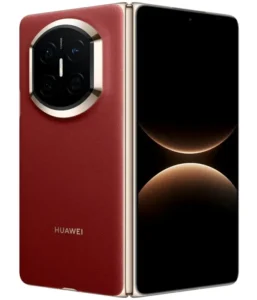
The Huawei Mate X7 represents a bold entry into the foldable phone market, launching in November 2025 with an impressive 8-inch internal display that transforms how users interact with mobile technology. This device unfolds to reveal a massive 2210 x 2416 pixel LTPO OLED screen, while the 6.49-inch cover display handles quick tasks without opening the device. Huawei combines cutting-edge foldable technology with premium materials including aerospace-grade aluminum framing and a choice between nylon fiber or eco-leather backs.
The form factor makes a statement—unfolded, it measures 156.8 x 144.2 x 4.5 mm, creating a tablet-like experience. Folded, it becomes a manageable 156.8 x 73.8 x 9.5 mm device that fits in pockets despite its 236-gram weight. Both displays support 120Hz refresh rates with 1440Hz PWM dimming to reduce eye strain. The internal screen reaches 2500 nits peak brightness, while the cover display pushes even higher to 3000 nits. Kunlun Glass 2 protects the cover screen, offering enhanced scratch and drop resistance.
Camera capabilities shine through a versatile triple-lens system. The 50MP main sensor features variable aperture from f/1.5 to f/4.0 with optical image stabilization, adapting to different lighting conditions. The 50MP periscope telephoto lens provides 3.5x optical zoom with its own OIS, while the 40MP ultrawide captures expansive 120-degree scenes. Laser autofocus and a color spectrum sensor enhance focusing speed and color accuracy. Video recording includes 4K capabilities plus an impressive 1080p at 960fps for dramatic slow-motion effects, all stabilized through both gyro-EIS and optical stabilization.
Performance comes from Huawei’s Kirin 9030 Pro chipset built on a 6nm process. The unique 9-core CPU configuration includes one high-performance core at 2.75 GHz, four cores at 2.27 GHz, and four efficiency cores at 1.72 GHz. The Maleoon 935 GPU handles graphics duties. Storage options span from 256GB with 12GB RAM up to a massive 1TB with 20GB RAM, all using fast UFS 4.x technology. Battery capacity varies slightly by model—5600mAh standard or 5525mAh for the 12GB RAM China variant. Charging reaches 66W wired, 50W wireless, with reverse charging capabilities for accessories.
What Makes the Huawei Mate X7 Worth Buying?
The foldable design transforms productivity and entertainment in ways traditional phones cannot match. That 8-inch internal display provides genuine tablet-scale screen real estate for multitasking, document editing, and media consumption. Users can run multiple apps side-by-side, view full-size spreadsheets, and enjoy immersive gaming or video watching. The cover display eliminates the need to unfold for quick tasks—checking messages, taking photos, or making calls happens instantly. This dual-display approach offers flexibility that slab phones simply cannot provide.
Display quality reaches exceptional levels on both screens. The LTPO OLED technology delivers one billion colors with deep blacks and vibrant hues. The 120Hz refresh rate keeps animations and scrolling buttery smooth whether using the cover or main display. Peak brightness levels of 2500 nits internally and 3000 nits on the cover ensure readability in direct sunlight. The 1440Hz PWM dimming reduces flicker at low brightness levels, minimizing eye strain during extended use or late-night sessions.
Camera versatility stands out with three high-resolution sensors working together. The 50MP main camera’s variable aperture adjusts automatically—opening wide to f/1.5 for low-light shots or stopping down to f/4.0 in bright conditions for optimal sharpness. The large sensor size captures exceptional detail. The periscope telephoto with 3.5x optical zoom and OIS brings distant subjects closer without quality loss, perfect for events, wildlife, or architecture. The 40MP ultrawide handles landscapes, group shots, and creative perspectives with autofocus enabling close-up macro photography too.
Build quality reflects premium positioning through aerospace-grade aluminum framing and IP58/IP59 water and dust resistance. The phone survives submersion up to 2 meters for 30 minutes and withstands high-pressure water jets—exceptional for a foldable device where hinges typically create vulnerability. The choice between nylon fiber and eco-leather backs provides different aesthetics and grip characteristics. Kunlun Glass 2 on the cover display offers superior protection compared to standard glass, reducing worries about scratches and drops.
Connectivity covers all bases with Wi-Fi 7, Bluetooth 6.0, and comprehensive satellite navigation including GPS, GLONASS, BDS, GALILEO, QZSS, and NavIC. The USB Type-C 3.1 port supports DisplayPort 1.2 for external monitor connections, OTG for peripherals, and fast data transfers. International models support dual nano-SIM plus eSIM with two connections active simultaneously. NFC handles contactless payments, while an infrared port controls TVs and appliances. The China variant includes BDS satellite messaging for emergency communication beyond cellular coverage.
Software experience differs by market—international buyers receive EMUI 15 while Chinese users get HarmonyOS 6.0. Both interfaces optimize for foldable displays with split-screen multitasking, app continuity when folding/unfolding, and desktop-like modes when connected to external displays. The large screen enables genuine productivity workflows impossible on standard phones. The side-mounted fingerprint sensor provides quick authentication without reaching for on-screen sensors.
Things to Know Before Choosing the Huawei Mate X7
Google services remain unavailable on this device due to ongoing restrictions affecting Huawei. International users cannot access the Google Play Store, Gmail, Google Maps, YouTube, or other Google apps through official channels. Huawei’s AppGallery provides alternatives, and sideloading works for some apps, but the ecosystem feels incomplete compared to devices with full Google integration. Users heavily invested in Google services will face significant adaptation challenges or should consider alternative devices entirely.
The weight and thickness demand consideration. At 236 grams, this phone weighs substantially more than typical smartphones. Extended one-handed use causes fatigue quickly. Folded at 9.5mm thick, it creates noticeable pocket bulk—double the thickness of many slab phones. Unfolded at 4.5mm, the device feels fragile and requires careful handling. Users must adjust expectations around portability and durability compared to traditional phones. Cases add even more bulk and weight.
Foldable displays inherently introduce durability concerns. While Huawei has improved hinge mechanisms and screen technology, the internal display remains more fragile than traditional glass screens. The crease running down the middle is visible and tactile, though users typically adapt within days. Screen protectors cannot be applied or removed by users—only authorized service centers should handle this. Replacement screens cost significantly more than standard phone repairs, and availability outside major markets may prove challenging.
Battery capacity seems generous at 5600mAh but must power two large, high-refresh-rate displays plus demanding hardware. Heavy users running both screens frequently will find battery life decent but not exceptional. The charging speed of 66W wired and 50W wireless lags behind some competitors offering 100W+ charging. Reaching full charge takes longer than ultra-fast-charging alternatives, though the wireless charging option adds convenience many foldables lack.
The Kirin 9030 Pro processor performs well for daily tasks but can’t match the raw power of competing Snapdragon 8 Elite or Apple A-series chips. Gaming performance handles most titles at high settings but struggles with the most demanding games at maximum graphics. The 6nm manufacturing process trails the efficiency of 3nm chips found in latest flagships. Users prioritizing absolute peak performance for gaming or intensive applications should note these limitations.
Storage expansion remains impossible without a microSD slot. Buyers must choose their storage tier carefully at purchase since there’s no way to add more later. While options extend up to 1TB, the base 256GB fills quickly when shooting high-resolution photos and 4K video, especially with multiple user profiles taking advantage of the large screen. Cloud storage requires reliable internet and often subscription fees.
The front cameras use modest 8MP sensors compared to 16MP or higher resolution selfie cameras on competing flagships. Video calls and selfies lack the detail and quality of dedicated high-resolution front cameras. The presence of two front cameras (one on each screen) adds convenience but neither matches flagship selfie camera quality. Content creators prioritizing front-facing photography might feel limited.
Is the Huawei Mate X7 Right for You?
Productivity-focused professionals will appreciate the Mate X7’s tablet-scale capabilities. The 8-inch display enables genuine multitasking—editing documents while referencing emails, attending video calls while taking notes, or managing spreadsheets with comfortable visibility. The DisplayPort support allows connecting to external monitors for desktop-like experiences. Business travelers can pack lighter since the device replaces both phone and tablet. The side-mounted fingerprint sensor provides quick access to work apps and sensitive data. The large screen makes mobile office work practical rather than merely possible.
Content consumers seeking immersive experiences will love the expansive internal display. Movies, TV shows, and YouTube videos feel cinematic on the 8-inch screen. Reading ebooks, comics, and magazines approaches actual book and magazine dimensions. Web browsing shows full desktop layouts without constant zooming. Gaming benefits from the large display for strategy games, RPGs, and visual showcases, though action games requiring quick reflexes might prove unwieldy on such a large screen. The stereo speakers enhance media consumption with spatial audio.
Photography enthusiasts wanting versatile shooting options will find the camera system compelling. The variable aperture main sensor adapts to lighting conditions automatically while OIS ensures sharp handheld shots. The periscope telephoto brings distant subjects closer without quality loss—perfect for events, wildlife, or travel photography. The ultrawide captures expansive landscapes and creative perspectives. The slow-motion capability at 960fps opens creative possibilities. The large unfolded screen provides an excellent viewfinder for composition. Color accuracy from the spectrum sensor enhances post-processing.
Tech enthusiasts wanting cutting-edge foldable technology should seriously consider this device. The engineering behind fitting this hardware into a foldable form factor impresses. The dual-display implementation offers practical benefits beyond novelty. The IP58/IP59 rating provides peace of mind rare in foldables. Users who enjoy being early adopters and accept the compromises inherent in emerging technology will find the Mate X7 fascinating. The conversation-starter factor remains high—foldables still turn heads.
This phone doesn’t suit users relying heavily on Google services. The absence of Google Play Store, Gmail, Maps, YouTube, and other Google apps creates daily friction. While workarounds exist through sideloading and third-party app stores, the experience feels compromised. Users embedded in Google’s ecosystem should look elsewhere unless willing to completely adapt their app usage and workflows. The learning curve and limitations prove frustrating for those expecting standard Android experiences.
Budget-conscious buyers should look elsewhere. Foldable phones command premium pricing, and the Mate X7 positions in the high-end segment. The cost significantly exceeds standard flagships, let alone mid-range devices. Users seeking maximum value per dollar will find better options among conventional smartphones. The premium pays for foldable technology, but buyers must genuinely value that capability to justify the expense.
Mobile gamers demanding peak performance should consider alternatives. While the Kirin 9030 Pro handles most games competently, it can’t match the raw power of Snapdragon 8 Elite or equivalent chips. Competitive gamers playing demanding titles at maximum settings will notice performance gaps. The large unfolded screen creates ergonomic challenges for action games requiring quick reflexes. Dedicated gaming phones with better cooling, higher refresh rates, and superior processors deliver better gaming experiences at lower prices.
Users wanting compact, lightweight devices won’t appreciate the Mate X7. Even folded, it weighs 236 grams and measures 9.5mm thick—substantial pocket presence. Unfolded, it requires two-handed operation and careful handling. One-handed use proves impractical except for basic cover screen tasks. Those prioritizing portability and pocketability should stick with traditional slab phones under 200 grams and 8mm thick.
Best Alternatives to the Huawei Mate X7
The Samsung Galaxy Z Fold6 competes directly in the foldable segment with similar 7.6-inch internal and 6.3-inch cover displays. Samsung provides full Google services integration, four years of OS updates, and five years of security patches. The Snapdragon 8 Gen 3 processor delivers superior gaming performance compared to the Kirin 9030 Pro. Samsung’s refined hinge mechanism and ultra-thin glass technology offer proven durability. The camera system emphasizes versatility with telephoto and ultrawide options. S Pen support adds productivity capabilities. Samsung commands higher pricing but delivers a more polished ecosystem with broader app support and established service networks globally.
The Google Pixel Fold brings Google’s computational photography expertise to the foldable format. The 7.6-inch internal display matches competitors while the 5.8-inch cover screen feels more usable. Google’s Tensor G3 processor can’t match Snapdragon or Kirin raw performance but delivers excellent AI-powered features. The camera system produces consistently stunning photos through advanced processing. Seven years of guaranteed updates provides unmatched software support. The pure Android experience with exclusive Google features appeals to users preferring minimal interface customization. Pricing aligns with premium foldables while Google services integration works flawlessly.
The OnePlus Open (Oppo Find N3 globally) offers competitive foldable specs at slightly lower pricing. The 7.82-inch internal display and 6.31-inch cover screen size similarly to the Mate X7. The Snapdragon 8 Gen 2 provides flagship performance with better app optimization than Huawei’s Kirin chip. OxygenOS delivers a clean interface close to stock Android with full Google services. The Hasselblad-tuned cameras emphasize natural colors and professional photography modes. The thinner folded profile and lighter weight improve daily portability. OnePlus targets value-conscious buyers wanting foldable experiences without absolute premium pricing.
The Xiaomi Mix Fold 4 combines foldable innovation with competitive pricing. The 8.02-inch internal display matches the Mate X7’s size while the Snapdragon 8 Gen 3 delivers superior performance. Xiaomi includes wireless charging, extensive camera capabilities with Leica partnership tuning, and HyperOS interface. The thinner design and lighter weight improve handling. Xiaomi prices aggressively to gain market share, offering strong value for foldable specifications. However, software support duration trails Samsung and Google, and availability varies significantly by region.
The iPhone 15 Pro Max represents the traditional flagship alternative for users wanting maximum screen size without foldable complexity. The 6.7-inch display can’t match foldable tablets’ scale but delivers exceptional quality with ProMotion 120Hz. The A17 Pro chip outperforms all Android competitors in efficiency and raw power. Apple’s camera system produces consistently excellent results with professional video capabilities. iOS provides seven-plus years of software support with timely updates. The titanium build offers premium aesthetics and durability. Pricing aligns with foldables while delivering polished ecosystem integration and proven longevity, though without the transformative foldable form factor.
Huawei Mate X7 Frequently Asked Questions
Can the Huawei Mate X7 use Google apps and services?
No, the Huawei Mate X7 does not include Google Mobile Services due to ongoing restrictions. This means users cannot access the Google Play Store, Gmail, Google Maps, YouTube, Google Photos, or other Google apps through official channels. Huawei provides its AppGallery as an alternative app marketplace, and many popular apps are available there or through third-party stores. Users can sideload some apps using APK files, though this requires technical knowledge and doesn’t guarantee full functionality. Services requiring Google Play Services integration may not work properly. Users heavily reliant on Google’s ecosystem should carefully consider whether they can adapt to alternative solutions before purchasing this device.
How durable is the foldable screen on the Mate X7?
The Huawei Mate X7 features improved durability compared to earlier foldable generations, but the internal foldable display remains more fragile than traditional glass screens. The screen includes a protective layer that should never be removed by users—only authorized service centers should handle screen protector replacement. A visible and tactile crease exists where the screen folds, though most users adapt quickly. The hinge mechanism is rated for hundreds of thousands of folds, but real-world durability depends on usage patterns and care. The device carries IP58/IP59 rating for water and dust resistance, exceptional for a foldable. Users should avoid pressing hard on the internal screen, keep sharp objects away, and handle the device carefully when unfolded. Screen replacements cost significantly more than traditional phone screen repairs.
What’s the difference between the internal and cover displays?
The Huawei Mate X7 features two distinct displays with different purposes. The internal foldable display measures 8.0 inches with 2210 x 2416 resolution, providing tablet-scale screen real estate when unfolded for multitasking, media consumption, and productivity. It reaches 2500 nits peak brightness. The cover display measures 6.49 inches with 1080 x 2444 resolution, functioning as a traditional smartphone screen when the device is folded for quick tasks like checking messages, taking photos, or making calls. The cover display reaches even higher 3000 nits peak brightness and includes Kunlun Glass 2 protection for enhanced durability. Both displays support 120Hz refresh rates and 1440Hz PWM dimming. Users can seamlessly transition between displays—apps continue when folding or unfolding the device.
Does the battery capacity vary between different models?
Yes, the Huawei Mate X7 battery capacity varies slightly depending on the specific model. The standard version across most configurations features a 5600mAh battery. However, the China-market 12GB RAM variant uses a slightly smaller 5525mAh battery—a 75mAh difference. This minor capacity variation likely relates to internal component layout differences in that specific configuration. Both versions support the same charging capabilities: 66W wired charging, 50W wireless charging, 7.5W reverse wireless charging for accessories, and 5W reverse wired charging. The battery must power two high-resolution, high-refresh-rate displays plus demanding hardware, so real-world endurance depends significantly on usage patterns—specifically how often users utilize the power-hungry internal display versus the more efficient cover screen.
What’s the difference between EMUI and HarmonyOS versions?
The Huawei Mate X7 ships with different operating systems depending on the market. International versions run EMUI 15, Huawei’s Android-based interface customized without Google services. Chinese versions run HarmonyOS 6.0, Huawei’s proprietary operating system developed independently of Android. Both interfaces provide similar user experiences with comparable features, optimizations for foldable displays, and app ecosystems through AppGallery. HarmonyOS offers deeper integration with Huawei’s ecosystem of devices and services, while EMUI maintains more Android compatibility for sideloaded apps. Neither version includes Google services. Users cannot easily switch between operating systems after purchase. The choice depends on purchase region rather than user preference, though import models allow access to HarmonyOS internationally if desired and available.