Flagship Power in a Form Factor the Industry Forgot How to Make
Compact smartphones have become an endangered species. Most flagship releases now push past 6.1 inches without apology, and the few “mini” options that remain tend to arrive with compromised specs as penance for their size. The iPhone 12 Mini defies that convention — cramming Apple’s most advanced chip of its generation, a capable dual-camera array, and full 5G connectivity into a chassis that weighs less than a deck of cards. That’s the pitch. Whether it holds up under daily stress is a more complicated story.
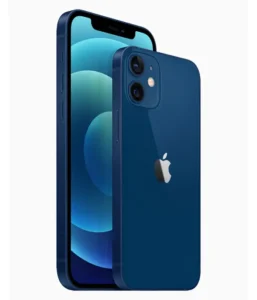
The 135-gram body and 131.5 x 64.2 x 7.4mm footprint are immediately disarming. One-handed reach covers the entire display without awkward shuffling, something most modern smartphones make feel like a party trick. The aluminum frame sits flush with the ceramic shield glass on both faces, and the build carries no flex, no creaks. It feels expensive because it is.
5.4 Inches of Super Retina XDR: Gorgeous Until You Need Screen Real Estate
The OLED panel here punches well above its physical size. OLED panels at this density — 476 ppi — reward pixel-peeping, especially on still photography and text rendering. HDR10 and Dolby Vision support means streaming content from compatible platforms arrives with the color depth and contrast that the format promises. Peak brightness of 1200 nits ensures outdoor readability holds up in direct sunlight, a genuine differentiator versus competing panels at similar price points.
The tradeoff is spatial. Multitasking, document editing, and extended video consumption feel compressed. Split-view tasks that work comfortably on a 6.1-inch display become a patience test here. Users migrating from a larger phone will notice the adjustment period within the first hour. Pixel density compensates for physical size to a point — but not entirely.
A14 Bionic: The Performance Ceiling Nobody Will Hit
Apple’s 5nm A14 Bionic arrived as the first commercially available 5nm mobile chip, and its presence in the 12 Mini creates a curious dynamic: the processing hardware almost certainly outlasts real-world software demands for several years. The hexa-core configuration — two high-performance Firestorm cores at 3.1 GHz paired with four efficiency Icestorm cores at 1.8 GHz — handles multitasking, 4K rendering, and gaming without thermal throttling becoming a concern during typical usage windows.
Running demanding titles for extended sessions doesn’t produce the hand-warmer effect that afflicts some Android competitors when sustained load stresses poorly optimized thermal management. The compact chassis creates less surface area for heat dissipation compared to larger devices, but Apple’s chip efficiency compensates adequately. The four-core GPU handles graphics-intensive applications without frame drops under normal conditions. Where the phone will slow down is in memory pressure — 4GB of RAM means aggressive app backgrounding under heavy multitasking, a limitation that becomes more noticeable when jumping between several active applications.
Dual Cameras: Competent, Not Exceptional
The 12MP wide camera carries a fast f/1.6 aperture with optical image stabilization — a meaningful spec in a sensor this size. Low-light performance benefits from the aperture advantage, and OIS reduces motion blur in handheld shots under challenging conditions. The ultrawide at f/2.4 with 120-degree field of view handles environmental and landscape framing without significant barrel distortion at the edges, which has historically plagued ultrawide lenses on competing hardware.
The system captures 4K at up to 60fps with Dolby Vision HDR across both rear lenses. For a device of this generation and price range, that video capability remains genuinely impressive. Action sequences and fast-movement footage benefit from the higher frame rate option. Shutter lag is negligible in well-lit conditions but introduces a fractional delay in low light as computational processing compensates for the smaller sensor surface area.
What’s absent here is a telephoto lens. The iPhone 12 Mini maxes out at 2x optical zoom via digital crop, which means portrait-style shots and distant subjects rely entirely on software processing rather than optical reach. Results hold up on-screen and for social media export. When printing large or examining at 100%, the digital zoom artifacts surface in a way that dedicated telephoto glass would eliminate.
Front camera specs — 12MP, f/2.2 with Face ID sensor array — produce consistent selfie quality, and 4K front-facing video at 60fps is a capability that many Android competitors at this price point still don’t match.
The Battery: Honest About Its Limitations
There’s no elegant way to frame the 2227 mAh capacity. It is the primary engineering concession of this design, and it will matter for some buyers more than any other specification on the sheet. Approximately 69 hours of mixed usage in endurance testing represents a usable day for light to moderate users — messaging, social browsing, occasional photography, podcast playback. Heavy users who combine GPS navigation, video recording, sustained gaming, or extended hotspot use will be hunting for a cable before the evening.
Fast charging reaches 50% in 30 minutes with a compatible 20W PD adapter — sold separately, a persistent Apple irritation. MagSafe delivers 15W wireless, and standard Qi wireless charging also hits 15W on iOS 17.4 or later. The charging speeds are adequate; the capacity they’re replenishing is the actual variable to weigh against personal usage patterns.
For users who consistently have access to charging across the day — office environments, commuters with charging options, lighter smartphone users — the battery limitation becomes largely theoretical. For anyone who travels extensively without reliable charging access, the arithmetic doesn’t resolve favorably.
5G, Connectivity, and the Lightning Port That Refuses to Leave
Full 5G support covers both sub-6GHz and mmWave bands depending on regional configuration, ensuring the hardware can leverage current network infrastructure without restriction. Wi-Fi 6 (802.11ax) support delivers tangible throughput improvements on compatible routers, particularly in congested environments. Bluetooth 5.0 handles audio peripherals and accessories without connection instability. Ultra Wideband support enables spatial awareness features including Precision Finding for compatible AirTags and directional AirDrop.
The Lightning port is the connectivity choice that continues to age poorly. USB 2.0 transfer speeds make large file transfers between the phone and computer a slow process. The industry’s shift toward USB-C has made Lightning increasingly inconvenient for users who maintain mixed-device ecosystems. It is a functional port — wired CarPlay works, audio adapters connect — but the spec represents genuine dated infrastructure rather than a minor inconvenience.
Build, IP Rating, and What IP68 Actually Means in Practice
IP68 certification covers dust-tight protection and water submersion up to 6 meters for 30 minutes. Rain, accidental pool drops, and sink splashes fall comfortably within the rating’s parameters. The caveat that warranty coverage excludes water damage is a universal manufacturer position that applies regardless of IP rating, and is worth keeping in mind. Physical resistance doesn’t extend indefinitely — port seals degrade with age and oxidation, making the stated rating accurate for a new device but progressively conservative for units with significant mileage.
The aluminum frame resists bending and torsion credibly. Ceramic Shield front glass tests well against incidental surface drops compared to standard Gorilla Glass alternatives. The back glass remains vulnerable to cracking on hard-surface drops, as no mobile glass fully solves impact physics at this thickness.
Who This Phone Actually Suits
The iPhone 12 Mini earns genuine recommendation for a specific buyer profile rather than as a universal flagship alternative. Users with smaller hands, strong preferences for one-handed operation, or active lifestyles where bulk and weight create practical friction will find the ergonomic proposition compelling and largely unmatched in the current market. The same A14 Bionic performance, identical camera hardware, and equivalent iOS ecosystem access as the standard iPhone 12 in a chassis that disappears into any pocket — that combination doesn’t exist elsewhere at a comparable price.
Light to moderate smartphone users who charge daily without relying on all-day untethered endurance face no meaningful penalty from the battery capacity. Budget-conscious iOS buyers entering the ecosystem or upgrading from significantly older hardware receive current-generation performance at a price point that reflects the model’s age rather than its capability. The device’s software support ceiling — iOS 26.2 confirmed — provides years of continued security and feature updates.
Heavy users, media consumption-first buyers, and anyone who treats their phone as a primary camera system for professional work will find the battery capacity and absent telephoto lens create friction that the compact design doesn’t offset.
iPhone 12 Mini Frequently Asked Questions
Will the iPhone 12 Mini actually fit comfortably in a jeans pocket?
Yes, without meaningful bulk. The 131.5 x 64.2 x 7.4mm dimensions and 135-gram weight mean the device disappears into both front and back jeans pockets, including slimmer cut styles that make larger phones uncomfortable to carry. It is one of the few modern smartphones where the pocket test produces a genuinely positive result rather than a compromise.
Is 64GB enough storage, or is the upgrade worth it?
The honest answer depends entirely on iCloud habits. Users who shoot 4K video regularly, store music locally, or maintain large app libraries will exhaust 64GB within months. 128GB represents the practical minimum for most users who plan to keep the device for two or more years without constant storage management. The 256GB option suits heavy photographers and users who travel without reliable cloud access. Since storage cannot be expanded after purchase, the decision at checkout carries long-term consequences.
Does the small size mean the battery will die before the day ends?
For light to moderate usage — messaging, social media, calls, occasional photography, and music streaming — the 2227 mAh capacity supports a full day. Heavy users combining GPS navigation, extended video streaming, gaming, or mobile hotspot activity will typically need midday charging. The 20W fast charging system reaches 50% in 30 minutes, which reduces the penalty of low battery situations if a cable is accessible during the day.
How does the camera compare to current flagship phones?
The dual 12MP system remains capable for everyday photography and social media export. The wide camera’s f/1.6 aperture and OIS produce strong low-light results relative to the sensor size. The main gap versus current flagship hardware is telephoto reach — there is no dedicated zoom lens, meaning 2x and beyond relies on digital crop rather than optical glass. Current flagship phones also benefit from improved computational photography processing and larger sensor surfaces. For general shooting the 12 Mini holds up; for professional or print-quality work at distance, the limitation becomes noticeable.
Is the Lightning port a real problem, or is this overblown?
It is a practical inconvenience rather than a dealbreaker for most users. USB 2.0 transfer speeds mean large file transfers to a computer take longer than USB-C alternatives. Accessory compatibility requires Lightning-specific cables, which are less universal than USB-C in mixed-device households. For users already invested in the Lightning accessory ecosystem, the friction is minimal. For users maintaining both Apple and non-Apple devices, the separate cable management becomes genuinely annoying over time.
Will the iPhone 12 Mini continue receiving software updates?
The device supports iOS through version 26.2, confirming Apple’s extended software support commitment. This translates to continued security patches, feature access, and app compatibility for several years beyond the original release date. The A14 Bionic’s processing capability ensures that software updates don’t produce the performance degradation that affects older hardware running current iOS versions.
Does MagSafe wireless charging require special accessories?
MagSafe charging at 15W requires a MagSafe-compatible charger and, ideally, a MagSafe-compatible case to maintain proper magnetic alignment. However, standard Qi wireless charging also operates at 15W on iOS 17.4 or later, meaning existing Qi charging pads remain functional without additional accessory investment. MagSafe’s primary advantage beyond charging speed is the magnetic alignment ecosystem — cases, wallets, and mounts — which represents optional rather than mandatory additional cost.