
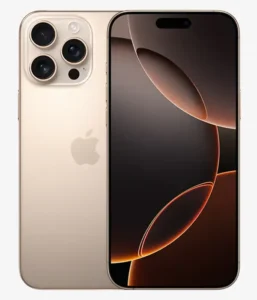
Why Buy the iPhone 16 Pro?
The iPhone 16 Pro represents Apple’s commitment to premium smartphone engineering with meaningful upgrades across photography, processing power, and display technology. Built around the cutting-edge A18 Pro chip manufactured on a 3nm process, this device delivers exceptional performance for demanding tasks from professional video editing to immersive gaming experiences.
Photography enthusiasts will appreciate the versatile camera system headlined by a 48MP main sensor with advanced sensor-shift stabilization. The standout feature is the 48MP periscope telephoto lens offering true 5x optical zoom—perfect for capturing distant subjects without sacrificing image quality. LiDAR scanning enables precise depth mapping for augmented reality applications and improved low-light autofocus. Video capabilities extend to 4K recording at up to 120fps with ProRes support and spatial audio recording, making this a genuine tool for content creators.
The 6.3-inch LTPO Super Retina XDR display pushes boundaries with adaptive 120Hz refresh rates that balance smoothness with battery efficiency. Peak brightness reaches 2000 nits in high brightness mode, ensuring excellent outdoor visibility even in direct sunlight. The 2024-generation Ceramic Shield provides enhanced drop protection compared to previous iterations.
Apple’s choice of Grade 5 titanium for the frame significantly reduces weight while maintaining structural integrity. At 199g, the iPhone 16 Pro feels noticeably lighter than its steel-framed predecessors. The IP68 rating guarantees dust resistance and water submersion protection up to 6 meters for 30 minutes—reassuring for everyday accidents.
Storage configurations span from 128GB to 1TB, all paired with 8GB RAM and NVMe technology for rapid app launches and file transfers. The USB-C port finally replaces Lightning, supporting USB 3.2 Gen 2 speeds and DisplayPort output for external monitors.
Key Considerations Before Buying the iPhone 16 Pro
Battery capacity stands at 3582 mAh, which is modest compared to Android competitors offering 5000+ mAh cells. Real-world testing shows an active use score of 14 hours and 17 minutes—sufficient for most users but potentially limiting for power users who rely heavily on video streaming or gaming throughout the day. Charging speeds max out at 25W wired using MagSafe (50% in 30 minutes), which lags behind competitors offering 80W or faster charging solutions.
The absence of a physical SIM card slot in the US market forces complete reliance on eSIM technology. Travelers visiting regions with limited eSIM support or those who prefer switching carriers via physical SIM swaps should verify compatibility beforehand. International models retain nano-SIM slots alongside eSIM support.
Storage choices matter significantly since there’s no expandable memory option. The base 128GB model fills quickly when shooting ProRes video or maintaining large photo libraries. Creative professionals should seriously consider the 256GB or higher variants despite the premium pricing.
Camera hardware is exceptional, but maximizing its potential requires familiarity with iOS camera controls and editing workflows. The 5x optical zoom provides incredible reach, though there’s no intermediate telephoto option between the main 1x lens and the 5x periscope, creating a gap for certain shooting scenarios.
Apple’s ecosystem integration works beautifully if you already own other Apple devices—seamless handoff, AirDrop, and Universal Control enhance productivity. However, switching from Android means adapting to iOS limitations like restricted file system access and tighter app restrictions.
The titanium frame, while lighter and more premium than stainless steel, still shows fingerprints and minor scratches over time. Color options are limited to four titanium finishes that may feel conservative compared to the vibrant hues offered by competitors.
Who Should Consider the iPhone 16 Pro?
Professional photographers and videographers operating primarily on mobile devices will find the advanced camera system invaluable. The combination of 48MP resolution, sensor-shift stabilization, and ProRes recording delivers results that rival dedicated cameras in many scenarios. Spatial video recording opens creative possibilities for immersive content that’s viewable on Apple Vision Pro.
Content creators who edit videos and photos directly on their phones benefit tremendously from the A18 Pro chip’s processing muscle. Rendering 4K footage with complex effects remains smooth, and the 8GB RAM handles multiple demanding apps simultaneously without slowdowns. The 120Hz display makes timeline scrubbing and precise editing more accurate.
Apple ecosystem users upgrading from older iPhones (iPhone 12 or earlier) will notice substantial improvements across every category. The jump in display quality, camera versatility, and processing speed justifies the investment for those deeply integrated into Apple’s hardware and software ecosystem.
Business professionals who prioritize security and long-term software support appreciate iOS’s reputation for timely updates and comprehensive privacy controls. Face ID authentication provides quick yet secure access, while features like satellite emergency messaging add safety for remote work situations.
Mobile gamers seeking console-quality experiences benefit from the 6-core GPU and 120Hz refresh rate, which deliver fluid gameplay in graphically intensive titles. The larger 6.3-inch display compared to standard iPhone 16 provides more immersive visuals without crossing into unwieldy territory.
This device suits anyone who values build quality and durability. The titanium construction and IP68 rating mean the phone withstands accidental drops and water exposure better than many alternatives, potentially extending its usable lifespan.
Alternatives to the iPhone 16 Pro
The Samsung Galaxy S24 Ultra offers a larger 6.8-inch display with S Pen stylus support, a 200MP main camera, and significantly longer battery life with faster 45W charging. Android enthusiasts seeking maximum customization and productivity features should evaluate Samsung’s flagship.
Google Pixel 9 Pro provides computational photography that rivals or exceeds the iPhone in certain scenarios, particularly with Night Sight and Magic Eraser capabilities. Its integration with Google’s AI services and cleaner Android experience appeals to users prioritizing software intelligence over raw hardware specifications.
For those considering staying within Apple’s lineup, the standard iPhone 16 delivers the same A18 Pro chip and similar camera capabilities in a slightly smaller, less expensive package. The primary trade-offs are a 60Hz display refresh rate, aluminum instead of titanium construction, and the absence of the 5x telephoto lens.
The iPhone 16 Pro Max presents itself as the natural upgrade for users who want everything the Pro offers but with a larger 6.9-inch display and improved battery capacity. The size increase makes it better suited for media consumption and extended work sessions, though portability suffers accordingly.
iPhone 16 Pro Frequently Asked Questions
Does the iPhone 16 Pro support expandable storage?
No, the iPhone 16 Pro does not include a microSD card slot for expandable storage. You’re limited to the internal storage capacity selected at purchase—either 128GB, 256GB, 512GB, or 1TB. Apple uses fast NVMe storage technology across all configurations, ensuring quick app loading and file access, but carefully consider your storage needs before buying since you cannot upgrade later. Users who shoot extensive ProRes video or maintain large photo libraries should opt for 256GB or higher to avoid running out of space.
How long does the iPhone 16 Pro battery last on a single charge?
The 3582 mAh battery delivers approximately 14 hours and 17 minutes of active use based on standardized testing. Real-world longevity varies significantly depending on usage patterns—streaming video, gaming, and 5G connectivity drain the battery faster than basic tasks like messaging and web browsing. Most users can expect a full day of moderate use before needing to recharge. The 25W MagSafe charging reaches 50% capacity in about 30 minutes, while full charges take roughly 80-90 minutes. Wireless charging via Qi2 provides 15W speeds as a convenient alternative.
Is the iPhone 16 Pro camera better than previous iPhone models?
The iPhone 16 Pro introduces several meaningful camera improvements over earlier models. The new 48MP periscope telephoto lens with 5x optical zoom represents a significant upgrade from the 3x telephoto on iPhone 15 Pro, enabling clearer distant shots without digital cropping. The upgraded 48MP ultrawide sensor (up from 12MP) captures more detail in landscape and architectural photography. Enhanced sensor-shift stabilization works across all lenses for steadier handheld video. ProRes recording at 4K 120fps and spatial video capabilities are exclusive to the iPhone 16 Pro, making it substantially more capable for professional video work compared to any previous iPhone.
Can I use physical SIM cards with the iPhone 16 Pro?
This depends on your region. In the United States, iPhone 16 Pro models only support eSIM technology with no physical nano-SIM slot—you can activate up to eight eSIMs with two active simultaneously. International versions sold outside the US include a nano-SIM tray plus dual eSIM support, allowing for three total connections (one physical, two digital). China receives a special dual nano-SIM variant without eSIM capability. Check your carrier’s eSIM compatibility before purchasing if you’re buying the US model, especially if you travel internationally to regions where eSIM infrastructure remains limited.
What makes the titanium frame better than aluminum or stainless steel?
Grade 5 titanium offers superior strength-to-weight ratio compared to the aluminum used in standard iPhones or the stainless steel from previous Pro models. The iPhone 16 Pro weighs just 199g despite its 6.3-inch display, making it noticeably lighter and more comfortable for extended use than the steel-framed iPhone 15 Pro. Titanium naturally resists corrosion and provides better structural rigidity, meaning the frame is less prone to bending from impacts. The material also feels more premium with a distinctive brushed texture. However, titanium does show fingerprints and can develop minor surface scratches over time, though these are generally less noticeable than on polished stainless steel.