
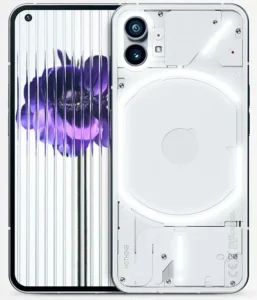
Nothing Phone (1) Overview, Features, and Buying Guide
The Nothing Phone (1) breaks away from conventional smartphone design with its distinctive transparent back panel and innovative Glyph Interface. Launched in July 2022, this device combines mid-range performance with flagship-level aesthetics, featuring a Snapdragon 778G+ processor and dual 50MP cameras. The phone’s transparent design showcases internal components while housing LED light strips that serve as customizable notification indicators. Protected by Gorilla Glass 5 on both sides and an aluminum frame, it delivers IP53 water resistance alongside practical features like dual SIM support and wireless charging capabilities.
Running on Nothing OS based on Android, the phone promises three major Android upgrades with currently available Android 15 support. Its 6.55-inch OLED screen refreshes at 120Hz with HDR10+ certification, while the 4500mAh battery supports 33W wired and 15W wireless charging. The camera system pairs a 50MP main sensor with optical image stabilization alongside a 50MP ultrawide lens, both capturing detailed photos in various lighting conditions.
What Makes the Nothing Phone (1) Worth Buying?
The standout Glyph Interface sets this phone apart from everything else on the market. Five LED light strips arranged across the transparent back create 12 addressable zones that flash for notifications, calls, and even serve as a camera fill light. You can assign specific patterns to different contacts, knowing who’s calling without checking the screen. This functional design element transforms mundane notifications into visual experiences while maintaining practical utility.
Performance holds up well for daily tasks and moderate gaming. The Snapdragon 778G+ chipset handles multitasking smoothly, whether you’re switching between apps or running split-screen mode. With up to 12GB RAM and UFS 3.1 storage, apps launch quickly and data transfers happen at respectable speeds. The 120Hz OLED display makes scrolling feel fluid, complemented by a peak brightness of 1200 nits that ensures visibility even under direct sunlight.
Camera versatility comes from the dual 50MP setup. The main sensor captures sharp photos with good color reproduction, while optical image stabilization helps reduce blur in low light. The ultrawide camera matches the main sensor’s resolution, a rarity at this price point when many phones use lower-quality secondary cameras. Video recording reaches 4K at 30fps with gyro-EIS stabilization, producing steady footage for social media or personal archives.
Build quality feels premium despite the mid-range positioning. Glass panels front and back give the phone a substantial feel, while the aluminum frame adds structural rigidity. IP53 certification protects against splashes and light rain, though it’s not fully waterproof like higher-rated devices. Stereo speakers deliver balanced audio for media consumption, compensating for the absence of a headphone jack.
The software experience stays close to stock Android with Nothing OS additions that enhance rather than bloat. The interface keeps things clean and responsive, with promised updates ensuring security patches and feature additions for years. Customization options let you tweak the Glyph patterns, wallpapers, and system behaviors without overwhelming complexity.
Things to Know Before Choosing the Nothing Phone (1)
Battery life might disappoint heavy users. The 4500mAh capacity gets you through a full day with moderate use, but intensive tasks like gaming or continuous video streaming will require an afternoon top-up. The 120Hz display and 5G connectivity drain power faster than expected, especially if you keep brightness high. While 33W charging reaches 50% in 30 minutes, competitors offer faster charging speeds that feel more convenient.
Gaming performance has clear limits. The Adreno 642L GPU handles casual games and older titles smoothly but struggles with demanding games at high graphics settings. Extended gaming sessions cause noticeable warmth around the frame, and you’ll need to lower settings in graphics-intensive titles for consistent frame rates. This phone serves gamers better as a casual device rather than a dedicated gaming machine.
Camera performance drops significantly in challenging conditions. Night shots show more noise than flagship phones, and the absence of a dedicated telephoto lens means digital zoom produces softer images beyond 2x magnification. Video recording lacks 4K 60fps support, limiting options for content creators who need higher frame rates. The 16MP front camera takes decent selfies in good light but lacks the autofocus found on premium devices.
Storage options exclude expandable memory. Without a microSD card slot, you’re locked into either 128GB or 256GB configurations. Heavy media consumers or those who record lots of video should opt for the higher storage variant from the start, as the difference in price often proves worthwhile over the phone’s lifespan.
The transparent back requires careful handling. While the Gorilla Glass 5 offers scratch resistance, the see-through design shows fingerprints and smudges more prominently than solid-colored phones. You’ll either need to clean it frequently or use a case that somewhat defeats the purpose of the unique design. The IP53 rating provides basic protection but won’t save the phone from submersion or heavy water exposure.
Software updates, while promised, follow a slower rollout schedule compared to major brands. Nothing delivers updates eventually, but early adopters of new Android versions might wait longer than users of Pixel or Samsung devices. The company’s relative newness in the smartphone market also means less established service networks in some regions.
Is the Nothing Phone (1) Right for You?
Design-conscious buyers who value aesthetics will appreciate this phone’s unique approach. If you’re tired of identical-looking smartphones and want something that sparks conversation, the transparent back and Glyph Interface deliver exactly that. The phone works best for users who prioritize style alongside solid performance rather than absolute specifications.
Students and young professionals find good value here. The balance between performance, features, and price suits users who need reliable communication, social media access, and occasional content creation without breaking the bank. The clean software experience appeals to those who prefer simplicity over feature-packed interfaces, while the dual SIM support helps manage personal and work numbers.
Photography enthusiasts on a budget get capable cameras that punch above their weight in good lighting. The dual 50MP system captures detailed landscapes and portraits, making it suitable for Instagram creators or casual photography hobbyists. However, serious photographers who shoot in varied conditions should look at phones with more advanced camera systems and better low-light performance.
Content consumers benefit from the excellent display. The OLED panel with 120Hz refresh rate makes videos, gaming, and browsing feel smooth and vibrant. HDR10+ support enhances compatible content, while stereo speakers provide decent audio for media playback. The screen size hits a sweet spot for comfortable one-handed use while still offering enough real estate for movies and reading.
This phone disappoints power users and mobile gamers. Those who demand maximum performance, extensive gaming sessions, or professional-grade cameras should invest in flagship devices with more powerful processors and larger batteries. The limitations in sustained performance and battery capacity become apparent under heavy workloads.
Budget-conscious shoppers might find better pure specifications elsewhere. Competing brands offer phones with larger batteries, faster charging, or more powerful processors at similar prices. The Nothing Phone (1) asks buyers to value design and user experience alongside raw numbers, which doesn’t suit everyone’s priorities.
Best Alternatives to the Nothing Phone (1)
The Samsung Galaxy A54 offers stronger camera performance and better low-light photography with its advanced processing. It includes a higher IP67 water resistance rating and a slightly larger battery, though it lacks the unique design elements that make the Nothing Phone (1) stand out. Samsung’s One UI provides more features but feels heavier than Nothing OS.
Google Pixel 6a delivers superior computational photography despite similar hardware on paper. The Tensor chip provides unique AI features and guaranteed software updates directly from Google, appealing to users who prioritize camera quality and timely Android versions. However, it misses wireless charging and offers a smaller display with a 90Hz refresh rate.
OnePlus Nord 2T provides faster 80W charging and comparable performance with a MediaTek Dimensity processor. The camera system performs similarly in most conditions, and the OxygenOS interface offers extensive customization options. It lacks the transparent design and innovative notification system but delivers practical advantages in charging speed.
Motorola Edge 30 features a lighter build and faster 144Hz display refresh rate, creating an even smoother visual experience. The camera setup includes a 50MP main sensor with similar capabilities, though the overall photography experience remains comparable. Motorola’s near-stock Android approach appeals to purists, but the phone lacks the Nothing’s unique personality.
Nothing Phone (1) Frequently Asked Questions
Does the Nothing Phone (1) support 5G connectivity?
Yes, the Nothing Phone (1) fully supports 5G networks along with GSM, HSPA, and LTE technologies. The device connects to 5G networks where available, providing faster download and upload speeds for streaming, gaming, and large file transfers. The phone automatically switches between network types based on availability and signal strength, ensuring consistent connectivity across different regions.
How does the Glyph Interface actually work on the Nothing Phone (1)?
The Glyph Interface consists of five LED light strips on the transparent back panel, divided into 12 addressable zones. These lights flash in customizable patterns for incoming calls, notifications, and app alerts. You can assign specific Glyph patterns to individual contacts, allowing you to identify callers without looking at the screen. The system also functions as a camera fill light for photography and includes a blinking red indicator during video recording. Users control all these behaviors through the Nothing OS settings.
Can the Nothing Phone (1) battery last a full day with heavy use?
The 4500mAh battery handles moderate daily use comfortably, including social media browsing, messaging, and occasional photography. Heavy users who stream video continuously, play games extensively, or use 5G data throughout the day will likely need to recharge before evening. The 33W fast charging helps mitigate this by reaching 50% capacity in 30 minutes and full charge in 70 minutes. Wireless charging at 15W provides convenient overnight charging, while the 5W reverse wireless capability can charge accessories in emergencies.
Is the Nothing Phone (1) waterproof?
The Nothing Phone (1) carries an IP53 rating, meaning it’s dust protected and resistant to vertical water sprays. This protects the phone from light rain, splashes, and accidental spills but does not make it waterproof. You shouldn’t submerge the device in water or expose it to heavy water pressure like shower streams or pool submersion. The rating provides basic protection for everyday scenarios but requires more caution than phones with IP67 or IP68 ratings.
What Android version does the Nothing Phone (1) currently run?
The Nothing Phone (1) launched with Android 12 and currently runs Android 15 through Nothing OS 3.0. The company promises up to three major Android upgrades from the original version, meaning the phone should receive Android 15 support. This update commitment ensures the device stays current with security patches and feature additions for several years after purchase, though update rollouts may occur later than on Pixel devices.