
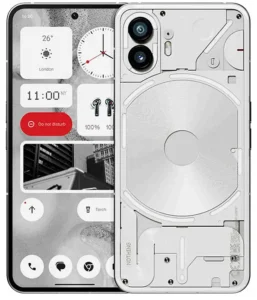
Nothing Phone (2) Overview, Features, and Buying Guide
The Nothing Phone (2) elevates the brand’s transparent design language with flagship-grade hardware wrapped in a distinctive aesthetic. Released in July 2023, this device packs a Snapdragon 8+ Gen 1 processor alongside an expanded Glyph Interface featuring 11 LED light strips with 33 addressable zones. The 6.7-inch LTPO OLED display adapts its refresh rate intelligently while reaching peak brightness levels of 1600 nits, ensuring excellent outdoor visibility.
Camera capabilities center around dual 50MP sensors—a main wide lens with optical image stabilization paired with an ultrawide shooter. Both lenses capture detailed photos across various scenarios, while the 32MP front camera handles selfies and video calls with clarity. The 4700mAh battery supports 45W wired charging that fills the tank in 55 minutes, complemented by 15W wireless charging and reverse wireless capabilities for accessories.
Running Nothing OS based on Android 13 with upgradability to Android 15, the phone promises three major Android updates alongside consistent security patches. The glass and aluminum construction carries IP54 water resistance, protecting against splashes while maintaining the signature transparent aesthetic that sets Nothing devices apart from conventional smartphones.
What Makes the Nothing Phone (2) Worth Buying?
Flagship performance arrives at a competitive price point. The Snapdragon 8+ Gen 1 chipset handles demanding tasks with ease, from intensive gaming sessions to complex photo editing. This processor, built on a 4nm process, delivers efficiency alongside raw power. Games run smoothly at high settings, multitasking feels seamless even with dozens of apps open, and the Adreno 730 GPU renders graphics without breaking a sweat.
The upgraded Glyph Interface pushes notification customization to new heights. Eleven LED strips create 33 addressable zones across the transparent back, offering far more granular control than the previous generation. Each contact can receive unique light patterns, specific apps trigger distinct animations, and the system doubles as practical camera lighting. The blinking red indicator during video recording adds a professional touch while alerting others nearby.
Display quality competes with phones costing significantly more. The LTPO OLED panel adjusts refresh rates dynamically between 1Hz and 120Hz, conserving battery when viewing static content while delivering buttery-smooth scrolling when needed. That 1600 nits peak brightness makes content visible even under harsh sunlight, and HDR10+ support brings movies and videos to life with vibrant colors and deep blacks.
Camera versatility comes from thoughtful sensor choices. The 50MP main camera with optical stabilization captures sharp photos in varied lighting conditions, while the matching ultrawide lens maintains consistent image quality across both sensors. Video recording supports 4K at both 30fps and 60fps with gyro-EIS and optical stabilization working together, producing professional-looking footage for content creators and casual users alike.
Build quality feels premium despite the transparent design. Gorilla Glass 5 protection covers both front and back panels, while the aluminum frame adds structural integrity. The phone feels substantial at 201.2 grams without becoming uncomfortably heavy, and the IP54 rating provides adequate protection for daily use scenarios like unexpected rain or accidental spills.
Software stays clean and purposeful. Nothing OS strips away unnecessary bloatware while adding thoughtful customization options that enhance rather than complicate the user experience. The interface responds instantly to touches, animations feel natural, and the promised three major Android updates ensure the phone remains current for years.
Stereo speakers with Snapdragon Sound deliver impressive audio for a smartphone. Music sounds balanced with decent bass response, dialogue stays clear in movies and podcasts, and gaming benefits from spatial audio cues. While not replacing dedicated speakers, the sound quality exceeds expectations for media consumption on the go.
Things to Know Before Choosing the Nothing Phone (2)
Battery life falls short of expectations for a flagship device. The 4700mAh capacity struggles to match competitors offering 5000mAh or larger batteries. Heavy users pushing the Snapdragon 8+ Gen 1 with gaming, constant 5G connectivity, and maximum brightness will need afternoon charging. Moderate use gets through a full day, but barely, leaving little reserve for unexpected heavy use.
The 45W charging speed, while decent, lags behind rivals offering 65W, 80W, or even faster options. Getting to 100% takes 55 minutes, which feels long when other phones charge fully in 30-40 minutes. The 15W wireless charging reaches full capacity in over two hours, making it practical only for overnight charging rather than quick top-ups.
No telephoto lens limits zoom photography capabilities. The dual 50MP setup lacks a dedicated zoom camera, forcing the phone to rely on digital zoom that produces softer results beyond 2x magnification. Photographers who frequently shoot distant subjects or enjoy portrait shots with natural compression will miss this feature found on many flagship competitors.
Storage configurations exclude microSD expansion. Choosing between 128GB, 256GB, or 512GB becomes a permanent decision, as there’s no way to add more storage later. Heavy media consumers, mobile photographers shooting in RAW, or users who download extensive game libraries should invest in higher storage variants upfront.
The IP54 rating provides basic splash resistance but won’t protect against submersion. Pools, showers, and heavy rain pose risks that higher IP67 or IP68 ratings would handle comfortably. Users need to exercise more caution around water compared to fully waterproof flagships, limiting the phone’s durability in certain environments.
Screen resolution sits at 1080p rather than 1440p found on premium competitors. While the 394 ppi density looks sharp for most content, pixel-peepers viewing high-resolution photos or videos might notice the difference compared to QHD displays. This compromise likely helps battery life but sacrifices some visual clarity.
Software update timing trails behind major manufacturers. Nothing delivers promised updates eventually, but early adopters waiting for new Android features or security patches might experience delays compared to Google Pixel or Samsung Galaxy users who receive updates faster and more consistently.
Is the Nothing Phone (2) Right for You?
Mobile gamers benefit tremendously from the Snapdragon 8+ Gen 1’s capabilities. The processor handles graphically demanding titles smoothly, the Adreno 730 GPU renders complex scenes without frame drops, and the 120Hz display makes gameplay feel responsive. Heat management stays reasonable during extended sessions, though the phone does warm up during intensive gaming marathons.
Content creators get solid tools for mobile production. The dual 50MP camera system captures high-quality photos and 4K 60fps video with stabilization, perfect for Instagram, YouTube, or TikTok content. The 32MP selfie camera produces detailed shots for vlogs, and the bright display allows accurate content review even outdoors. The Glyph Interface adds creative lighting possibilities for product shots and artistic photography.
Design enthusiasts who crave uniqueness will appreciate the transparent aesthetic. The phone stands out in a sea of identical glass slabs, sparking conversations and turning heads. The expanded Glyph Interface offers personalization that goes beyond wallpapers and ringtones, creating a truly distinctive user experience that reflects individual style preferences.
Students and young professionals find good value in the flagship performance at mid-flagship pricing. The processing power handles productivity apps, research, video calls, and entertainment without slowdowns. Dual SIM support helps manage personal and school or work numbers, while the clean Nothing OS interface stays out of the way during busy days.
This phone disappoints photography specialists seeking versatile camera systems. The absence of a telephoto lens limits creative options, and while the main sensors perform well, competitors offer more comprehensive camera arrays with periscope zoom, macro lenses, or advanced computational photography. Serious photographers need phones with more complete imaging capabilities.
Battery-conscious users should look elsewhere. Those who frequently travel, spend long days away from chargers, or simply prefer phones that easily survive heavy use will find the 4700mAh capacity frustrating. Competing devices with larger batteries and faster charging eliminate anxiety about running out of power during critical moments.
Budget shoppers won’t find the best value here. While competitively priced against traditional flagships, other brands offer similar specifications at lower prices when you’re willing to sacrifice the unique design and Glyph Interface. Pure specification-focused buyers can find better raw numbers elsewhere.
Best Alternatives to the Nothing Phone (2)
The OnePlus 11 delivers similar flagship performance with the Snapdragon 8 Gen 2 processor, a generation newer than the Nothing Phone (2). It includes a larger 5000mAh battery with blazing 100W charging that reaches full capacity in under 30 minutes. The camera system adds a telephoto lens for versatile zoom capabilities, though it trades the unique transparent design for a more conventional look.
Samsung Galaxy S23 offers the same Snapdragon 8 Gen 2 in global markets with superior camera processing and guaranteed four years of Android updates plus five years of security patches. The refined One UI interface provides extensive customization, and the IP68 rating offers better water protection. The compact size appeals to users who find the Nothing Phone (2) too large, though it lacks the distinctive aesthetic.
Google Pixel 7 Pro brings exceptional computational photography despite using the Tensor G2 processor that falls behind in raw performance. The camera system excels in low light and portrait modes, and users receive Android updates immediately upon release. The larger battery and better IP68 rating improve daily practicality, but the phone costs more and lacks the Nothing’s unique personality.
Xiaomi 13T Pro matches flagship specifications with the MediaTek Dimensity 9200+ and adds incredibly fast 120W charging that fills the 5000mAh battery in just 19 minutes. The camera includes a 50MP telephoto lens for genuine optical zoom, and the AMOLED display reaches similar brightness levels. The MIUI interface offers extensive features but feels heavier than Nothing OS.
Nothing Phone (2) Frequently Asked Questions
How much better is the Nothing Phone (2) performance compared to the Phone (1)?
The Nothing Phone (2) represents a substantial performance leap over its predecessor. The Snapdragon 8+ Gen 1 processor delivers approximately 50-60% better CPU performance and nearly 70% improved GPU capabilities compared to the Phone (1)’s Snapdragon 778G+. This translates to smoother gaming at higher settings, faster app launches, improved multitasking, and better sustained performance during demanding tasks. The upgraded Adreno 730 GPU handles graphics-intensive games and 4K video editing that would challenge the previous model.
What improvements does the Glyph Interface 2.0 offer?
The Glyph Interface expands from five LED strips with 12 zones to eleven strips with 33 addressable zones on the Nothing Phone (2). This increased granularity allows for more complex and personalized light patterns for notifications, calls, and app alerts. The additional zones create smoother animations and more distinctive patterns for different contacts and apps. The system continues to function as camera fill light and video recording indicator while offering enhanced customization through Nothing OS settings, giving users far greater creative control over their notification experience.
Does the Nothing Phone (2) support fast charging?
Yes, the Nothing Phone (2) supports 45W wired fast charging that reaches 100% battery capacity in approximately 55 minutes. The charging supports Power Delivery 3.0, Programmable Power Supply, and Quick Charge 4 standards for broad charger compatibility. The phone also includes 15W wireless charging capability that fully charges in around 130 minutes, making it convenient for overnight charging. The 5W reverse wireless charging feature allows the phone to charge compatible accessories like wireless earbuds in emergencies.
Is the Nothing Phone (2) truly waterproof?
The Nothing Phone (2) carries an IP54 rating, which means it’s dust protected and resistant to water splashes from any direction. This protection handles light rain, accidental spills, and everyday splashes but does not make the phone waterproof. Users should avoid submerging the device in water, exposing it to pressurized water like showers, or taking it swimming. The rating provides basic protection for typical daily scenarios but requires more caution than phones with IP67 or IP68 ratings that survive submersion.
What Android version will the Nothing Phone (2) receive as its final update?
The Nothing Phone (2) launched with Android 13 and currently supports Android 15 through Nothing OS updates. Nothing promises three major Android upgrades from the original shipping version, meaning the phone should receive Android 16 as its final major platform update. Beyond that, the device will continue receiving security patches for a period, though Nothing hasn’t specified the exact duration. This update commitment ensures the phone stays secure and receives new features for at least three to four years from the launch date.