
What Makes the Samsung Galaxy F13 Worth Buying?
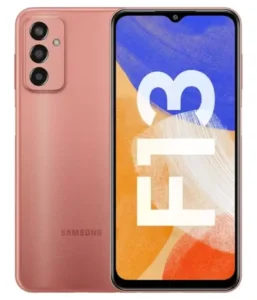
The Samsung Galaxy F13 occupies a smart position in the budget smartphone market — it is priced accessibly while offering a handful of features that genuinely justify the spend. Released in late June 2022, it brings Samsung’s brand reliability, a sizable battery, a respectable camera system, and Gorilla Glass protection to buyers who might otherwise assume those features are out of reach at this price level.
Start with the battery: 6000mAh is a substantial capacity that most users simply won’t drain in a single day. Whether it’s a long commute with podcasts and navigation running, an afternoon of video streaming, or a weekend trip without easy access to a charger — the F13 handles extended use with a confidence that cheaper competitors often can’t match. The 15W wired charging is not the fastest available, but it gets the job done overnight or during a longer work-from-home session.
The camera setup is genuinely one of the stronger offerings in this tier:
- 50MP Main Camera: An f/1.8 aperture with PDAF produces sharp, detailed stills in daylight. The wide aperture also helps pull in more light for indoor and evening shots compared to slower lenses commonly found at this price.
- 5MP 123° Ultrawide Lens: Landscape photography, group photos, and tight spaces all benefit from the wide field of view — a feature that many budget phones skip entirely.
- 8MP Front Camera: Covers selfies and video calls with adequate clarity and HDR processing for balanced exposures.
The 6.6-inch PLS LCD display at 1080 x 2408 pixels delivers a crisp 400 ppi pixel density — sharp enough that individual pixels aren’t visible at normal viewing distances. Gorilla Glass 5 on the front adds genuine drop and scratch resistance, which is a meaningful inclusion on a budget device. Rounding things out, NFC support enables contactless payments, USB Type-C is used for charging and data transfer, and an FM radio is available for users who still tune in the traditional way. The side-mounted fingerprint sensor is fast and accurately placed for natural grip.
Things to Know Before Choosing the Samsung Galaxy F13
The Galaxy F13 has a clear ceiling, and buyers should understand it before purchasing. The Exynos 850 chipset — built on an 8nm process — is a modest performer. It handles day-to-day tasks like messaging, browsing, and light social media without complaints, but it starts to feel stretched when running multiple demanding apps simultaneously or playing graphically intensive games. Users accustomed to faster mid-range processors will notice the difference.
The display panel is PLS LCD rather than AMOLED. Samsung’s PLS LCD technology is generally above average for the category — colors are reasonably accurate and viewing angles are decent — but it won’t deliver the inky blacks, vivid saturation, or power efficiency that AMOLED panels provide. For media consumption in a well-lit room it works fine, but dark-themed interfaces and nighttime viewing won’t pop the way they would on an OLED screen.
A few more limitations worth noting before committing:
- No 5G Support: The F13 is a 4G LTE-only device. In markets where 5G is rapidly expanding, this could limit the phone’s relevance over a longer ownership period.
- No Gyroscope Sensor: The confirmed sensors are accelerometer, compass, and virtual proximity sensing. The absence of a physical gyroscope affects certain AR apps, some games, and 360-degree video viewing.
- Video Cap at 1080p@30fps: Neither the rear nor front camera records at 4K. For most users this is perfectly adequate, but content creators who need higher resolution video should look elsewhere.
- eMMC 5.1 Storage: App loading and file transfers are slower compared to UFS storage found in pricier devices. The difference is rarely dramatic in daily use but becomes more noticeable with large file operations.
- Software Update Ceiling: The F13 launched on Android 12 and reached Android 13 with One UI Core 5. No further major OS updates are expected, which matters for buyers planning a multi-year ownership cycle.
- No Infrared Port: Remote control functionality is absent — a feature present on some competing brands at similar price points.
The plastic back and frame feel fine to hold but do attract fingerprints and flex slightly under pressure. The 207g weight is on the heavier side for one-handed use, largely owing to that 6000mAh cell sitting inside.
Is the Samsung Galaxy F13 Right for You?
Despite its limitations, the Galaxy F13 is a well-considered device for the audience it targets. Samsung has built something genuinely dependable here — not cutting-edge, but reliable in all the ways that matter most for everyday life.
The F13 fits especially well for:
- Students and young adults: The large screen, solid battery, capable camera, and Samsung’s trusted software ecosystem make it a practical daily device for campus life, video calls, and social media without a steep price tag.
- Heavy media consumers: Streaming video for hours on that 6.6-inch Full HD screen without battery anxiety is a genuine use case the F13 supports comfortably.
- Casual photographers: The 50MP main sensor and ultrawide lens handle family gatherings, travel snapshots, and social uploads with ease. Results in good lighting are noticeably better than what older budget phones produced.
- Users who rely on contactless payments: NFC support makes the F13 one of the few budget Samsung phones where Google Pay and Samsung Pay work out of the box.
- First-time smartphone owners: One UI Core is clean, intuitive, and well-supported, making the learning curve gentle for those transitioning from basic phones or older devices.
Power users who need fast app switching, demanding gamers who want smooth frame rates in graphically rich titles, and anyone prioritizing 5G connectivity will find the F13 falls short of their expectations. Those buyers should consider stepping up to the Galaxy A-series or a competitor with a more powerful chipset.
Best Alternatives to the Samsung Galaxy F13
If the F13’s spec sheet leaves some gaps that matter to a specific use case, these alternatives are worth putting side by side.
- Samsung Galaxy A14: A natural step up within Samsung’s own lineup — brings a larger 5000mAh battery (though smaller than F13’s), a more capable chipset, and 5G availability in some variants, with a similar price positioning.
- Redmi Note 11: Offers a 90Hz AMOLED display and 33W fast charging in a similar budget range — better for users who want a smoother display and faster top-ups over raw battery capacity.
- Realme Narzo 50: A gaming-focused alternative with Helio G96 and a 90Hz display — a meaningful performance upgrade for users who prioritize gaming and app speed.
- Motorola Moto G22: Clean Android software experience with a 5000mAh battery and 50MP camera at a competitive price — appealing for users who prefer a stock-adjacent interface over One UI.
Samsung Galaxy F13 Frequently Asked Questions
Does the Samsung Galaxy F13 have NFC for contactless payments?
Yes, the Samsung Galaxy F13 includes NFC support, enabling contactless payments through services like Google Pay and Samsung Pay. This is a standout inclusion for a budget-tier Samsung device, as NFC is often reserved for higher price points in the brand’s lineup. Users can also use NFC for quick pairing with compatible accessories.
How long does the Galaxy F13 battery last on a single charge?
The Galaxy F13 houses a 6000mAh Li-Po battery, which is large enough to carry most users through a full day of heavy use and well into a second day with moderate usage patterns. Video streaming, navigation, and social media browsing over several hours will comfortably fit within a single charge cycle. Charging is handled at 15W wired, which takes longer than fast-charging alternatives but is sufficient when charging overnight or during extended work sessions.
What Android version does the Samsung Galaxy F13 run?
The Galaxy F13 launched with Android 12 and has received an update to Android 13 running One UI Core 5. Samsung’s One UI Core is a simplified version of the full One UI experience, offering a clean and user-friendly interface. No further major Android OS updates beyond Android 13 are expected for this device.
Is the Samsung Galaxy F13 camera good enough for social media photography?
The F13’s 50MP main camera with an f/1.8 aperture and PDAF produces detailed, well-exposed images in good lighting conditions — more than sufficient for social media uploads, casual portraits, and travel photography. The 5MP ultrawide lens adds versatility for landscapes and group shots. Video is capped at 1080p@30fps, which is standard quality for social platforms. Low-light performance is acceptable but not exceptional, so very dark environments will produce noisier results.
Does the Samsung Galaxy F13 have a gyroscope sensor?
Based on the confirmed specifications, the Galaxy F13 includes an accelerometer, compass, and virtual proximity sensing. A dedicated physical gyroscope is not listed among its sensors. This means certain gyroscope-dependent features — such as augmented reality apps, some gaming titles that use tilt controls, and 360-degree video playback — may not function as expected on this device.