
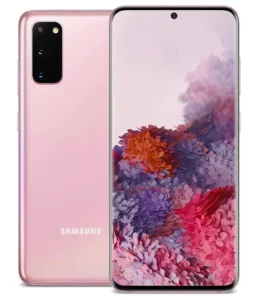
Why Buy the Samsung Galaxy S20?
The Samsung Galaxy S20 delivers a premium smartphone experience that balances performance, display quality, and camera versatility. Its standout feature is the stunning 6.2-inch Dynamic AMOLED 2X display with a smooth 120Hz refresh rate, making everything from scrolling through social media to gaming feel incredibly fluid. The screen reaches peak brightness of 1200 nits, ensuring excellent visibility even in direct sunlight.
Photography enthusiasts will appreciate the versatile triple camera system. The 64MP telephoto lens offers genuine optical zoom capabilities, while the 12MP main sensor features large 1.8µm pixels for impressive low-light performance. What truly sets this phone apart is its 8K video recording capability—a feature that was groundbreaking when the device launched and remains impressive today.
Performance is handled by either the Exynos 990 or Snapdragon 865 chipset depending on your region, both paired with 8GB of RAM. This combination ensures smooth multitasking and handles demanding applications with ease. The 4000mAh battery supports 25W fast charging and wireless charging options, including reverse wireless charging to power up your accessories.
Build quality reflects Samsung’s flagship standards. The phone features Gorilla Glass 6 protection on both front and back, wrapped in an aluminum frame. IP68 water and dust resistance provides peace of mind for everyday use, protecting against accidental spills and splashes.
Key Considerations Before Buying the Samsung Galaxy S20
While the Galaxy S20 offers numerous strengths, potential buyers should weigh a few factors. The device lacks a 3.5mm headphone jack, which might disappoint audiophiles who prefer wired headphones. Samsung does tune the stereo speakers with AKG, and the phone supports high-bitrate audio for wireless listening.
The 120Hz display refresh rate comes with a trade-off. Users can enjoy the smooth 120Hz experience at Full HD resolution or switch to Quad HD resolution at 60Hz—but not both simultaneously. Most will find the 120Hz at Full HD to be the better choice for everyday smoothness, though photography professionals might prefer the sharper QHD resolution.
Battery capacity sits at 4000mAh, which is adequate but not class-leading. Heavy users who frequently shoot 8K video or game extensively may need to recharge before the day ends. The 25W charging speed is respectable though not the fastest available in the premium smartphone market.
Storage options start at 128GB with 8GB RAM. While the phone includes a microSDXC card slot, it shares the same tray as the second SIM card. Users who need dual SIM functionality will have to choose between expandable storage and the second SIM—something to consider if you travel internationally or require separate work and personal numbers.
Regional chipset variations mean performance can differ slightly depending on your market. The Snapdragon 865 variant (USA) generally delivers better graphics performance and efficiency compared to the Exynos 990 version available globally.
Who Should Consider the Samsung Galaxy S20?
The Galaxy S20 fits several user profiles perfectly. Content creators who want to capture high-resolution video will value the 8K recording capability at 24fps, along with excellent stabilization through both optical and electronic image systems. The 64MP telephoto camera provides creative zoom options without significant quality loss.
Mobile photographers looking for versatility will appreciate the three distinct focal lengths. The 120-degree ultrawide lens captures expansive landscapes, the standard 26mm wide lens handles everyday shots, and the telephoto delivers 3x hybrid zoom for distant subjects. The large pixel sizes on the main sensor mean low-light photography produces clean, detailed images.
Tech enthusiasts who prioritize display quality should strongly consider this device. The combination of Dynamic AMOLED 2X technology, 120Hz refresh rate, and HDR10+ support creates a viewing experience that makes streaming content and gaming genuinely enjoyable. The high 563 ppi density ensures text and images appear razor-sharp.
Business professionals will benefit from Samsung DeX functionality, which transforms the phone into a desktop-like experience when connected to a monitor. This feature, combined with solid performance and professional build quality, makes the S20 suitable for productivity on the go.
The device also appeals to users who value ecosystem integration. Samsung’s One UI interface (upgradable to version 5) provides seamless connectivity with other Samsung devices, from Galaxy Buds to smartwatches and tablets.
Alternatives to the Samsung Galaxy S20
Shoppers considering the Galaxy S20 might also evaluate the Galaxy S20 Plus for its larger 6.7-inch display and 4500mAh battery. The Plus model provides a bigger canvas for media consumption while maintaining the same camera system and performance capabilities.
The iPhone 11 Pro represents a strong alternative for users open to iOS. Apple’s device offers excellent video recording capabilities, longer software support, and a more compact form factor, though it lacks the high refresh rate display and expandable storage.
Google Pixel 5 deserves consideration for photography purists. While its specifications appear modest on paper, Google’s computational photography delivers stunning results, particularly in challenging lighting conditions. The Pixel also guarantees timely Android updates directly from Google.
OnePlus 8 Pro provides similar flagship specifications with a larger 6.78-inch 120Hz display and faster 30W wireless charging. The device offers excellent value for users who prioritize display size and charging speed over camera versatility.
For those seeking maximum battery life, the Galaxy M51 features a massive 7000mAh battery while sacrificing some premium features like wireless charging and water resistance. It’s ideal for users who prioritize endurance above all else.
Samsung Galaxy S20 Frequently Asked Questions
Does the Samsung Galaxy S20 support 5G connectivity?
Yes, the Samsung Galaxy S20 supports 5G connectivity through the Snapdragon 865 5G chipset in US models. The device is compatible with both sub-6GHz and mmWave 5G networks depending on the specific variant. This ensures future-proof connectivity as 5G networks continue to expand globally. The phone also maintains full backward compatibility with 4G LTE, 3G, and 2G networks.
Can the Galaxy S20 record 8K video and what are the limitations?
The Samsung Galaxy S20 can record 8K video at 24 frames per second, making it one of the first mainstream smartphones with this capability. However, 8K recording comes with some limitations: it’s only available at 24fps (not 30 or 60fps), it consumes significant storage space (approximately 600MB per minute), and it can generate heat during extended recording sessions. The phone also records 4K at 30fps and 60fps with excellent stabilization for more practical everyday video capture.
How does the 120Hz display affect battery life?
The 120Hz display refresh rate does impact battery life more than a standard 60Hz screen. Samsung allows users to choose between 120Hz at Full HD resolution or 60Hz at Quad HD resolution to balance smoothness and battery efficiency. Most users find that enabling 120Hz at FHD provides the best experience with acceptable battery drain. The 4000mAh battery typically provides a full day of moderate use with 120Hz enabled, though heavy users may need to recharge earlier or switch to 60Hz mode.
Is the Galaxy S20 waterproof and what does IP68 mean?
The Samsung Galaxy S20 carries an IP68 rating, which means it’s dust-tight and water-resistant. The device can be submerged in up to 1.5 meters of fresh water for up to 30 minutes without damage. This protection covers accidental spills, rain, and brief submersion. However, IP68 doesn’t mean the phone is completely waterproof—it shouldn’t be used for swimming or subjected to high-pressure water. Salt water, chlorinated water, and other liquids can still cause damage and aren’t covered by the warranty.
What’s the difference between the Exynos and Snapdragon versions?
The Samsung Galaxy S20 comes with different chipsets depending on region: Snapdragon 865 in the USA and Exynos 990 in most other markets. The Snapdragon version generally offers better GPU performance with the Adreno 650, superior power efficiency, and slightly better thermal management. The Exynos 990 with Mali-G77 MP11 GPU performs well but may run warmer during intensive tasks. Both versions deliver excellent day-to-day performance, though benchmark scores and battery life can favor the Snapdragon variant.