
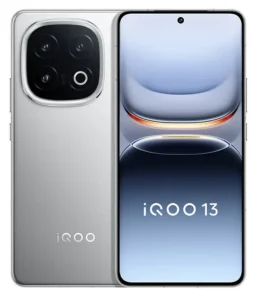
The Vivo iQOO 13 launches as a gaming-focused flagship that refuses to compromise on performance. Released in November 2024, this device brings the latest Snapdragon 8 Elite processor to the table alongside a stunning 144Hz display and a triple 50MP camera system. Vivo positions this phone squarely at mobile gaming enthusiasts and power users who demand top-tier specifications without the ultra-premium price tag of mainstream flagships.
The display immediately grabs attention with its 6.82-inch LTPO AMOLED panel pushing 1440 x 3168 resolution at an incredible 510 ppi density. That 144Hz refresh rate targets serious gamers, while the 4500 nits peak brightness ensures visibility in any environment. Schott Xensation Alpha protection guards the screen, and the 2592Hz PWM dimming reduces eye strain during marathon gaming sessions. The near 90% screen-to-body ratio maximizes viewing area without excessive bezels.
Build quality reflects flagship ambitions with IP68 and IP69 ratings providing exceptional water and dust resistance. The aluminum alloy frame holds together either a glass or fiber-reinforced plastic back depending on the variant chosen. At 8mm thin and weighing between 207-213 grams, it maintains a sleek profile despite housing a substantial battery. An RGB LED light on the back adds gaming flair, while the ultrasonic fingerprint sensor promises faster and more reliable authentication than optical alternatives.
Software support stands out with Vivo promising four major Android upgrades—reaching Android 19 from the shipped Android 15. International markets receive Funtouch 15, while Chinese users get OriginOS 5. The battery capacity varies by region, with the global version packing 6150mAh and India receiving 6000mAh. Both versions support blazing 120W charging that reaches full capacity in just 30 minutes. Storage configurations span from 256GB to a massive 1TB, all utilizing fast UFS 4.0 or 4.1 technology paired with up to 16GB of RAM.
What Makes the Vivo iQOO 13 Worth Buying?
The Snapdragon 8 Elite processor represents the absolute peak of mobile performance in late 2024. Built on a 3nm process, this chipset features two Oryon V2 Phoenix L cores clocked at 4.32 GHz and six Phoenix M cores running at 3.53 GHz. The octa-core configuration handles everything from demanding games to heavy multitasking without breaking a sweat. The Adreno 830 GPU pushes graphics performance to new heights, rendering complex scenes in games like Genshin Impact at maximum settings while maintaining smooth frame rates.
That 144Hz LTPO display transforms gaming and daily use. The higher refresh rate compared to standard 120Hz panels delivers even smoother motion, particularly noticeable in fast-paced shooters and racing games. LTPO technology intelligently adjusts the refresh rate based on content, conserving battery when displaying static images while ramping up for gaming and scrolling. The 1440 x 3168 resolution provides exceptional clarity—text appears razor-sharp and images showcase fine details. HDR10+ support enriches streaming content from Netflix and YouTube with enhanced contrast and colors.
The triple 50MP camera setup offers surprising versatility for a gaming-focused device. The main 50MP sensor features a 1/1.56-inch size with optical image stabilization, capturing detailed photos in various lighting conditions. The 50MP telephoto lens provides 2x optical zoom with its own OIS, useful for portraits and distant subjects. The 50MP ultrawide camera covers a 15mm equivalent focal length with autofocus, enabling both expansive landscapes and close-up macro shots. A color spectrum sensor enhances color accuracy across all cameras. Video recording reaches 8K at 30fps, though 4K at 60fps provides a more practical balance of quality and file size.
Charging speed eliminates battery anxiety with 120W wired charging filling the battery completely in 30 minutes. Quick top-ups during breaks provide hours of additional use. The silicon-carbon battery technology in the global version enables the larger 6150mAh capacity while maintaining charging speeds. Even the India version’s 6000mAh battery charges incredibly fast. This transforms how users interact with charging—brief sessions throughout the day replace overnight charging rituals.
Audio quality exceeds expectations through stereo speakers supporting 24-bit/192kHz Hi-Res audio, Snapdragon Sound, and multiple aptX codecs including aptX Lossless and LHDC 5 for Bluetooth audio. Gaming and media consumption benefit from rich, spatial sound. The lack of a headphone jack stings less when wireless audio performs this well. The speakers deliver clear dialogue, impactful bass, and immersive soundscapes for mobile gaming.
The IP68/IP69 protection provides genuine peace of mind. Surviving submersion up to 1.5 meters for 30 minutes handles accidental drops in water, while the IP69 rating protects against high-pressure water jets. Dust protection reaches the highest level, keeping internal components safe from fine particles. This durability suits active lifestyles without requiring special cases or careful handling. Rain, splashes, and dusty environments pose no threat.
Connectivity leaves no stone unturned. Wi-Fi 7 support future-proofs wireless networking, while Bluetooth 5.4 with advanced codecs ensures quality wireless audio. The positioning system combines GPS, GLONASS, BDS, GALILEO, and QZSS satellites for accurate location tracking. NFC with 360-degree coverage simplifies contactless payments. An infrared port controls TVs and appliances. USB Type-C 3.2 with OTG enables fast file transfers and peripheral connections.
Things to Know Before Choosing the Vivo iQOO 13
Storage expansion remains impossible without a microSD card slot. Buyers must carefully select their storage tier at purchase since there’s no way to add more later. While 256GB suits many users, mobile gamers installing multiple large titles or content creators storing extensive media should seriously consider the 512GB or 1TB variants. Cloud storage helps but doesn’t replace local storage for offline access and avoiding monthly subscription fees.
The battery capacity difference between markets creates confusion and potential disappointment. Global buyers receive 6150mAh while India gets 6000mAh—a 150mAh gap that slightly impacts endurance. Both charge at the same 120W speed, but the smaller battery naturally depletes faster under heavy use. This market segmentation forces location-based consideration when evaluating battery life claims and comparisons.
Weight varies between 207g and 213g depending on the back material chosen. The glass back version pushes 213g, while the fiber-reinforced plastic variant saves 6g. Either way, this phone feels substantial in hand and pocket. Extended gaming sessions or one-handed use over long periods can cause hand fatigue. Users accustomed to lighter devices under 200g will notice the difference. Adding a protective case increases bulk and weight further.
Software experience differs dramatically by region. International markets run Funtouch 15, which includes customization options but also pre-installed apps that some consider bloatware. Chinese units ship with OriginOS 5, a distinctly different interface optimized for that market. The Funtouch experience has improved over the years but still trails behind cleaner Android implementations like stock Android or OxygenOS in terms of simplicity and bloatware-free experience.
The front camera maxes out at 32MP, which handles selfies and video calls adequately but lacks advanced features like autofocus. The absence of 4K front video at high frame rates limits vlogging potential compared to phones with more capable selfie cameras. Users who prioritize front-facing photography or frequently record videos of themselves might find this limiting, especially given the premium positioning and price of the device.
That beautiful 144Hz display comes with compromises. Running at the full 1440p resolution and 144Hz refresh rate drains the battery noticeably faster than lower settings. Users concerned about battery life can dial down the refresh rate or resolution, but doing so defeats part of the phone’s appeal. Gaming at maximum graphics settings while pushing 144Hz challenges even the powerful Snapdragon 8 Elite, requiring compromises in some titles.
The telephoto camera offers only 2x optical zoom, less than the 3x or higher zoom found on many flagship competitors. While the 50MP sensor allows for digital zoom with decent results, it can’t match true optical zoom beyond 2x. Wildlife photographers, sports event attendees, or anyone wanting significant reach will find this limiting. The ultrawide camera, despite its 50MP resolution, can’t match the main sensor’s image quality in challenging lighting.
Is the Vivo iQOO 13 Right for You?
Mobile gaming enthusiasts will find this phone designed specifically for their needs. The Snapdragon 8 Elite and Adreno 830 GPU combination crushes every current mobile game at maximum settings. That 144Hz display delivers buttery-smooth gameplay in supported titles, providing a competitive edge in fast-paced shooters and MOBAs. The large 6.82-inch screen offers an immersive gaming canvas without sacrificing portability. Stereo speakers with advanced audio codecs create spatial awareness in competitive gaming. The substantial battery endures marathon gaming sessions, while 120W charging eliminates lengthy breaks. The ultrasonic fingerprint sensor responds instantly, never interrupting gameplay flow.
Content creators shooting video will appreciate the comprehensive recording capabilities. 8K video at 30fps captures stunning detail for YouTube uploads or client work. The gyro-EIS stabilization keeps footage smooth without gimbals. Multiple frame rate options at 1080p, including 240fps for dramatic slow-motion, expand creative possibilities. The triple 50MP camera system provides flexibility for different shooting scenarios. The large storage options accommodate extensive video files without constant offloading. The bright display aids in previewing footage outdoors.
Photography enthusiasts seeking a versatile camera phone will find the triple 50MP setup compelling. The main sensor with OIS captures sharp, detailed images in various lighting conditions. The telephoto lens with 2x optical zoom and OIS handles portraits with natural background blur and brings distant subjects closer. The ultrawide camera with autofocus tackles landscapes and macro photography. The color spectrum sensor enhances accuracy. While not matching dedicated camera phones, the system delivers excellent results for social media and personal photography.
Power users demanding flagship performance for productivity, multitasking, and media consumption will appreciate the specifications. The Snapdragon 8 Elite handles anything thrown at it without lag. Up to 16GB RAM keeps dozens of apps active simultaneously. UFS 4.0/4.1 storage ensures instant app launches and file access. The large, bright display makes document editing and video streaming enjoyable. The 120W charging accommodates busy schedules with quick top-ups. Wi-Fi 7 and USB-C 3.2 provide fast connectivity for transfers and networking.
Users prioritizing compact, lightweight devices should look elsewhere. The 6.82-inch display and 207-213g weight make this phone substantial. One-handed operation proves challenging for smaller hands. Pocket presence is noticeable, especially with a case. Those wanting easily pocketable phones that disappear during carry will find this phone’s footprint considerable.
Battery life purists who refuse to charge during the day might struggle despite the large capacity. Running the display at full 1440p resolution and 144Hz refresh rate, combined with gaming or heavy usage, drains the battery faster than lower-spec phones. Conservative users can reduce refresh rate and resolution, but that defeats part of the phone’s appeal. Those wanting 2-3 days per charge should consider phones with larger batteries and lower refresh rates.
Photography specialists demanding the absolute best camera performance should consider camera-focused flagships. While the iQOO 13’s triple 50MP setup performs well, it prioritizes gaming performance over camera prowess. Dedicated camera phones offer better computational photography, more advanced zoom capabilities, superior low-light performance, and professional-grade video features. The 2x optical zoom falls short of 3x-5x alternatives for distant subjects.
Best Alternatives to the Vivo iQOO 13
The Realme GT 7 Pro shares the Snapdragon 8 Elite processor and targets the same gaming-focused audience. Realme offers similar 120W charging speeds and a comparable 6500mAh battery in global markets. The camera system features a 50MP main sensor with OIS and an 8MP ultrawide, trading the iQOO 13’s triple 50MP setup for a different configuration. The display reaches an incredible 6500 nits peak brightness but settles for 120Hz instead of 144Hz. Realme typically prices aggressively, potentially offering better value depending on market and timing.
The OnePlus 12 brings the Snapdragon 8 Gen 3 processor—slightly less powerful than the iQOO 13’s 8 Elite but still flagship-grade. OnePlus provides a cleaner OxygenOS experience with less bloatware than Funtouch. The Hasselblad partnership tunes the camera system for distinct color science. Charging matches at 100W, fast but trailing the iQOO’s 120W. Build quality excels with premium materials and IP65 water resistance. OnePlus offers a more established brand reputation in many markets with better customer service networks.
The ASUS ROG Phone 8 Pro doubles down on gaming with dedicated AirTrigger controls, a cooling system, and gaming accessories. The Snapdragon 8 Gen 3 delivers excellent gaming performance, though the iQOO 13’s 8 Elite edges ahead. The display offers 165Hz refresh rate, surpassing the iQOO 13’s already impressive 144Hz. Gaming-centric features like trigger buttons and companion accessories justify higher pricing for serious mobile gamers. The ROG Phone aesthetic clearly targets gamers, while the iQOO 13 maintains broader appeal.
The Samsung Galaxy S24 Plus provides four years of OS updates and five years of security patches, significantly exceeding the iQOO 13’s four-year commitment. Samsung’s One UI offers polish and refinement backed by years of development. The Exynos 2400 or Snapdragon 8 Gen 3 (depending on region) delivers flagship performance, though trailing the 8 Elite. Samsung includes wireless charging and reverse wireless charging absent from the iQOO 13. The camera system emphasizes computational photography with extensive features. Premium pricing reflects Samsung’s brand positioning.
The Xiaomi 14 Pro competes with Leica-tuned cameras offering professional photography modes and distinctive image processing. The Snapdragon 8 Gen 3 provides excellent performance close to the iQOO 13. Xiaomi includes wireless charging at 50W alongside 120W wired charging. The HyperOS interface (evolved from MIUI) offers extensive customization but includes bloatware in some markets. Build quality meets flagship standards with IP68 rating. The camera system prioritizes photography over gaming, serving different primary use cases.
Vivo iQOO 13 Frequently Asked Questions
Does the Vivo iQOO 13 support wireless charging?
No, the Vivo iQOO 13 does not include wireless charging capabilities. The device focuses exclusively on 120W wired charging, which delivers exceptional speed—reaching full battery capacity in just 30 minutes. While wireless charging offers convenience, the blazing-fast wired charging largely compensates by making brief charging sessions practical throughout the day. Users who prioritize wireless charging should consider alternative flagship devices that include this feature, though they’ll likely sacrifice some charging speed.
What’s the difference between the global and India battery versions?
The global version of the Vivo iQOO 13 features a 6150mAh silicon-carbon battery, while the India-specific version uses a 6000mAh battery—a 150mAh difference. Both versions support the same 120W charging speed and reach full capacity in approximately 30 minutes. The smaller battery in the India version slightly reduces overall endurance, potentially requiring more frequent charging during heavy use. The silicon-carbon technology in the global version enables higher capacity while maintaining fast charging speeds and longevity. The difference translates to roughly 2-3% less battery life for the India variant depending on usage patterns.
Can the display run at both 1440p resolution and 144Hz simultaneously?
Yes, the Vivo iQOO 13 can run at full 1440p resolution and 144Hz refresh rate simultaneously thanks to its LTPO AMOLED technology. However, running both at maximum settings significantly impacts battery life compared to using 1080p resolution or a lower refresh rate like 60Hz or 90Hz. The LTPO technology helps by intelligently adjusting the refresh rate based on content—dropping to lower rates for static images and ramping up for gaming and scrolling. Users concerned about battery endurance can adjust these settings through the display menu, though doing so reduces the visual benefits that make this phone special. Most users find the balance acceptable given the fast charging capability.
How many years of software updates will the iQOO 13 receive?
The Vivo iQOO 13 is guaranteed to receive four major Android upgrades beyond the shipped Android 15, meaning it will receive updates through Android 19. This commitment matches or exceeds many competitors in the flagship segment and demonstrates Vivo’s confidence in the device’s longevity. International markets receive these updates through Funtouch OS, while Chinese units use OriginOS. Security patch frequency and duration beyond the four major updates haven’t been specified, but typically extend several years for flagship devices. This extended support makes the iQOO 13 a solid long-term investment, ensuring the device remains secure and feature-rich for years after purchase.
What does the RGB LED light on the back do?
The RGB LED light on the back of the Vivo iQOO 13 serves as a notification indicator and customizable gaming accent. Users can configure the light to illuminate in different colors and patterns for incoming calls, messages, notifications, and gaming events. During gameplay, the light can react to in-game events or sync with music for visual effects. The feature adds gaming aesthetic appeal and provides at-a-glance notification awareness when the phone sits face-down. Users who prefer a subtle appearance can disable the RGB lighting entirely through settings. The light consumes minimal power, so leaving it enabled doesn’t significantly impact battery life.