
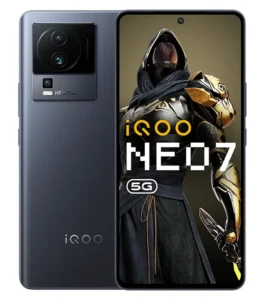
What Makes the Vivo IQOO Neo 7 Worth Buying?
The Vivo IQOO Neo 7 redefines expectations for charging speed with its remarkable 120W wired charging capability. This blazing-fast technology fills the 5000mAh battery to 50% in just 10 minutes and reaches full capacity in only 25 minutes. This transformative charging experience eliminates range anxiety—a quick break during work or a brief stop at a cafe provides enough power for the rest of the day. Few phones in the mid-range segment offered this level of charging performance when the device launched in 2023.
Performance arrives through the Mediatek Dimensity 8200 chipset built on cutting-edge 4nm process technology. This processor delivers flagship-level capabilities while maintaining excellent energy efficiency. The octa-core configuration featuring Cortex-A78 cores clocked up to 3.1GHz handles demanding games, heavy multitasking, and intensive applications smoothly. The Mali-G610 MC6 GPU pushes graphics performance beyond typical mid-range expectations, making mobile gaming genuinely enjoyable at high settings.
Display quality impresses with a large 6.78-inch AMOLED panel supporting 120Hz refresh rate and HDR10+ content. Peak brightness reaches 1300 nits, ensuring exceptional outdoor visibility even under direct sunlight. The screen delivers vibrant colors, deep blacks characteristic of AMOLED technology, and smooth scrolling that enhances every interaction. The 87.6% screen-to-body ratio maximizes viewing area while keeping overall dimensions manageable.
Battery capacity hits the sweet spot at 5000mAh—large enough for all-day endurance during mixed usage while remaining rechargeable incredibly quickly through the 120W system. Heavy users running the 120Hz display, gaming, streaming video, and using GPS navigation can comfortably reach evening without charging anxiety. The combination of substantial capacity and ultra-fast charging creates flexibility that larger batteries with slower charging can’t match.
Camera hardware includes optical image stabilization on the 64MP main sensor, providing steadier photos and videos than non-stabilized alternatives. The OIS system compensates for hand shake during capture, resulting in sharper images particularly in lower light or when shooting moving subjects. Video recording reaches 4K at 30fps with stable footage suitable for content creation. The 16MP selfie camera captures clear self-portraits and handles video calls at 1080p resolution.
Audio receives proper attention with stereo speakers delivering spatial sound for media consumption and gaming. Hi-Res audio support at 24-bit/192kHz ensures excellent sound quality through wired USB-C headphones or compatible wireless devices. Bluetooth 5.3 with LE provides improved wireless audio performance with lower latency and better stability compared to earlier versions.
Connectivity features comprehensive positioning support including GPS, GLONASS, GALILEO, BDS, QZSS, and NavIC for accurate navigation worldwide. NFC enables contactless payments and quick pairing in supported markets. The infrared port provides universal remote control functionality for TVs, air conditioners, and home electronics. Dual SIM capability maintains separate numbers for work and personal use or allows inserting local SIM cards when traveling.
The device ships with Android 13 and Funtouch 13, providing relatively current software at launch. UFS 3.1 storage ensures rapid app loading and file transfers. Configuration options reach 12GB RAM paired with 256GB storage, delivering smooth multitasking and ample space for apps, games, and media.
Things to Know Before Choosing the Vivo IQOO Neo 7
Build materials represent a cost-saving measure that affects premium feel. The plastic frame and plastic back reduce manufacturing costs and weight but feel less luxurious than metal or glass alternatives. The construction lacks any official IP rating for water or dust resistance, meaning the device offers no certified protection against spills, rain, or dusty environments. Users must exercise greater caution around moisture and particulates compared to IP67/IP68 rated devices.
Camera system limitations become apparent in the spec sheet. The device includes only a 64MP main camera with OIS, a 2MP macro camera, and an auxiliary lens without clear specifications. The absence of a dedicated ultrawide or telephoto lens restricts compositional flexibility—no wide-angle landscape shots or optical zoom capabilities exist. The 2MP macro camera typically delivers gimmicky results rarely worth using in real-world photography. Users expecting versatile camera systems with multiple useful lenses will find the setup disappointing.
Software support from Vivo typically trails major manufacturers like Samsung or Google. While the device launches with Android 13, the timeline for receiving Android 14, 15, or future versions remains uncertain. Security patch frequency likely won’t match monthly schedules from top-tier brands. Users planning to keep devices for 3+ years should temper expectations regarding long-term software updates and security maintenance.
Storage lacks expandability through microSD cards. The maximum 256GB configuration must accommodate all apps, games, photos, and media permanently. Modern mobile games easily consume 5-10GB each, and users who download extensive content or shoot 4K video may find storage filling faster than anticipated. Cloud storage provides alternatives but requires internet connectivity and may incur subscription costs.
The absence of a 3.5mm headphone jack forces users toward wireless audio or USB-C adapters. While the device supports excellent Hi-Res audio through the USB-C port and includes quality Bluetooth 5.3, audiophiles preferring wired connections must carry adapters. This design choice, though increasingly common, eliminates convenient compatibility with existing wired headphones.
Video recording capabilities remain limited to 4K at 30fps and 1080p at 30fps. The absence of 60fps 4K video or high frame rate slow-motion options at 1080p limits content creation possibilities. Creators producing action content, sports footage, or cinematic videos requiring higher frame rates must look elsewhere.
NFC availability varies by market and region. Buyers in certain areas may receive units without NFC functionality, eliminating contactless payment capabilities, quick device pairing, and other NFC-dependent features. Potential purchasers should verify NFC availability in their specific market before committing to purchase.
Weight distribution at 193 grams feels comfortable for the screen size, though users coming from lighter devices may notice the heft during extended one-handed use. The 8.6mm thickness remains reasonable but prevents the device from sliding into extremely tight pockets easily.
Is the Vivo IQOO Neo 7 Right for You?
Power Users with Charging Anxiety: Users frustrated by slow charging speeds discover game-changing convenience. The 120W system transforms charging from a lengthy commitment into a brief pause—10 minutes provides half battery capacity. Professionals with unpredictable schedules, frequent travelers, or anyone who forgets to charge overnight benefit enormously. The 5000mAh capacity handles full days of heavy use, and quick top-ups during breaks eliminate battery concerns entirely. This combination suits users prioritizing charging flexibility over all else.
Mobile Gamers (Budget to Mid-Range): Players who enjoy popular mobile games without demanding absolute maximum performance find excellent value. The Dimensity 8200 and Mali-G610 MC6 GPU run titles like PUBG Mobile, Call of Duty Mobile, Genshin Impact, and Mobile Legends at high settings with solid frame rates. The 120Hz display enhances visual smoothness for compatible games. The 5000mAh battery supports extended gaming sessions, and the rapid charging means brief breaks restore power quickly. Competitive esports players needing every possible advantage should consider dedicated gaming phones, but serious casual gamers get tremendous capabilities.
Students and Young Professionals: Budget-conscious buyers wanting strong performance and modern features without flagship pricing discover compelling value. The device handles productivity apps, video streaming, social media, and gaming smoothly. The large display works well for reading documents or watching lectures. The fast charging proves invaluable for busy schedules with classes, work, and social activities. Dual SIM capability suits students studying abroad or maintaining separate school and personal numbers. The lack of water resistance requires careful handling around libraries, cafeterias, or outdoor study spaces.
Media Consumers and Content Viewers: Users who stream videos, browse social media, and consume content extensively benefit from the large, vibrant AMOLED display with HDR10+ support. The 1300-nit peak brightness ensures visibility outdoors. Stereo speakers provide decent audio for casual viewing. The 120Hz refresh rate makes scrolling through feeds feel responsive. The 5000mAh battery combined with ultra-fast charging supports binge-watching patterns—quick charge-ups between episodes rather than waiting hours for full charges.
Budget-Conscious Performance Seekers: Shoppers wanting flagship-adjacent processing power at mid-range prices maximize value. The Dimensity 8200 delivers performance comparable to previous-generation flagship chips while costing considerably less. The 120Hz AMOLED display and 120W charging add premium features often missing from similarly priced alternatives. Users willing to sacrifice camera versatility, build materials, and water resistance for raw performance and charging speed extract excellent value.
Casual Photographers: Users capturing everyday moments, social media content, and basic photography get adequate results. The OIS-stabilized 64MP sensor produces shareable photos in good lighting. However, the limited camera system with no ultrawide or telephoto lens restricts creative options. Photography enthusiasts prioritizing versatile camera capabilities, low-light performance, or advanced features should invest in camera-focused devices despite higher costs.
Users Requiring Versatile Cameras: Anyone wanting ultrawide landscape shots, optical zoom for distant subjects, or sophisticated multi-lens systems should avoid this device. The minimal camera setup with just a main sensor and essentially useless macro camera creates frustration for photography enthusiasts. The absence of ultrawide perspectives particularly limits architectural photography, group shots, and landscape capture.
Users Needing Water Resistance: Anyone in rainy climates, those who frequently use phones near water, or accident-prone individuals need IP-rated protection this device doesn’t provide. The lack of certification means accidental spills, rain exposure, or splashes pose significant risk. Users requiring weather-resistant devices should prioritize IP67/IP68 certified alternatives despite potentially higher costs.
Long-Term Android Update Seekers: Buyers expecting timely Android version updates and monthly security patches beyond 1-2 years should explore Samsung, Google, or other manufacturers with guaranteed long-term support commitments. Vivo’s uncertain update timeline creates risk for users planning to keep devices for 3+ years who depend on current security patches and OS features.
Premium Build Quality Seekers: Users prioritizing metal frames, glass backs, or premium materials should look elsewhere. The plastic construction feels functional but lacks the tactile satisfaction of more expensive materials. Brand-conscious users who value device aesthetics and build quality as much as specifications will find better options, though at higher prices.
Best Alternatives to the Vivo IQOO Neo 7
The Realme GT Neo 5 competes directly with nearly identical 120W charging capability and a similar Snapdragon 8+ Gen 1 processor in some configurations. It offers comparable display quality with 144Hz refresh rate on certain models, slightly exceeding the IQOO Neo 7’s 120Hz. The Realme includes superior camera hardware with ultrawide and macro lenses providing more versatility. Build quality and software experience differ between brands, with some users preferring Realme’s approach. Regional availability and specific configuration pricing should guide decisions between these closely matched alternatives.
Poco F5 delivers similar performance through the Snapdragon 7+ Gen 2 processor that trades blows with the Dimensity 8200 depending on workload. It features a 6.67-inch AMOLED display with 120Hz refresh rate and includes 67W charging that’s fast though not matching the IQOO’s 120W speeds. The Poco includes a more versatile triple-camera system with ultrawide lens. Build quality uses premium materials including Gorilla Glass Victus protection. The device costs similarly but prioritizes camera versatility over charging speed.
OnePlus Nord 3 offers refined software through OxygenOS with better long-term update commitments compared to Vivo’s uncertain support. The Mediatek Dimensity 9000 processor delivers flagship performance exceeding the Dimensity 8200. It includes 80W charging that’s very fast though trailing the IQOO’s 120W capability. The camera system provides better versatility with ultrawide and macro lenses. OnePlus brand recognition and software polish appeal to users valuing user experience refinement over absolute charging speed records.
Samsung Galaxy A54 5G represents the mainstream alternative with guaranteed multi-year Android updates and monthly security patches. The Exynos 1380 processor delivers adequate but noticeably lower performance than the Dimensity 8200. Samsung’s camera processing algorithms often produce more pleasing photos despite comparable hardware. The device includes IP67 water resistance and superior AMOLED display calibration. It costs similarly but delivers better long-term value through extended support and water protection, though sacrificing raw performance and charging speed.
Nothing Phone (2) targets design-conscious buyers with unique Glyph interface LED lighting and distinctive transparent design. The Snapdragon 8+ Gen 1 processor delivers flagship performance exceeding the Dimensity 8200. Nothing commits to superior software support with guaranteed updates. Build quality feels more premium with better materials and IP54 water resistance. The device costs more but appeals to users valuing distinctive design, brand differentiation, and guaranteed longevity over maximum charging speed or value pricing.
Xiaomi Redmi Note 12 Pro+ brings 120W charging matching the IQOO Neo 7’s speed while including a larger 5000mAh battery and more versatile camera system with 200MP main sensor, ultrawide, and macro lenses. The Mediatek Dimensity 1080 processor delivers capable but slightly lower performance. The device undercuts the IQOO on price while providing comparable charging and better camera hardware, though sacrificing some processing power and display quality.
Vivo IQOO Neo 7 Frequently Asked Questions
How does 120W charging affect long-term battery health and safety?
Modern 120W charging systems incorporate sophisticated thermal management, voltage regulation, and battery protection technologies designed to preserve battery longevity. The charging system intelligently adjusts power delivery based on battery temperature, charge level, and cell conditions to minimize stress during the charging cycle. However, all lithium batteries degrade over time regardless of charging method. Using 120W charging daily may accelerate degradation slightly compared to slower charging methods, though the difference typically becomes noticeable only after 2-3 years of intensive use. The 5000mAh battery should maintain approximately 80% capacity after 800-1000 charge cycles under normal conditions. Users can extend battery lifespan by avoiding constant charging to 100% or letting the battery fully deplete repeatedly. The ultra-fast charging includes multiple safety certifications and thermal monitoring to prevent overheating or battery damage. The convenience of 120W charging generally outweighs concerns about marginally faster long-term degradation for most users.
Can the Dimensity 8200 handle current games as well as Snapdragon flagship chips?
The Mediatek Dimensity 8200 delivers impressive gaming performance that competes closely with previous-generation Snapdragon flagship processors like the Snapdragon 888. Popular mobile games including PUBG Mobile, Call of Duty Mobile, Genshin Impact, Mobile Legends, and similar titles run smoothly at high-to-maximum settings with solid frame rates. The Mali-G610 MC6 GPU provides strong graphics performance, and the 4nm process technology ensures good thermal efficiency during extended gaming sessions. However, the absolute latest flagship Snapdragon chips like the 8 Gen 2 or 8 Gen 3 deliver noticeably higher sustained performance and better thermal management. Competitive esports players demanding every possible performance advantage should consider true flagship processors. For casual-to-serious gamers playing regularly but not professionally, the Dimensity 8200 provides excellent capabilities that won’t feel limiting in current games. The processor handles demanding titles capably and should remain relevant for mobile gaming through several years of use.
Is the limited camera system a major drawback for everyday photography?
The camera system’s limitations depend entirely on individual photography needs and expectations. For casual social media posting, documenting daily life, and basic photography, the OIS-stabilized 64MP main sensor produces perfectly acceptable results in good lighting. The optical stabilization helps capture sharper images than non-stabilized alternatives, particularly when shooting moving subjects or in slightly dim conditions. However, the absence of an ultrawide lens significantly restricts compositional options—landscape photography, architectural shots, and large group photos become challenging without stepping back considerably. The missing telephoto lens means zooming relies entirely on digital cropping that degrades image quality. The 2MP macro camera delivers essentially unusable results in real-world scenarios. Photography enthusiasts who regularly shoot in varied conditions, desire creative flexibility, or prioritize image quality should absolutely invest in devices with more sophisticated camera systems. Average users posting to Instagram, capturing family moments, or documenting experiences will find the camera adequate though limiting compared to more versatile alternatives.
How does the plastic build affect durability and daily use?
The plastic frame and back construction provides reasonable durability for normal daily use while reducing weight and manufacturing costs. Plastic resists shattering better than glass when dropped, potentially preventing catastrophic damage from falls that would shatter all-glass devices. The material maintains structural integrity through typical drops, bumps, and rough handling. However, plastic scratches more easily than glass or metal, showing wear from keys, coins, or abrasive surfaces more quickly. The material feels noticeably less premium to the touch compared to metal frames or glass backs—the tactile experience clearly communicates cost-cutting. Plastic doesn’t dissipate heat as effectively as metal frames, which may result in slightly warmer surface temperatures during intensive tasks like gaming or fast charging. The lack of IP rating means the plastic construction offers no certified protection against water or dust ingress—the unsealed design poses greater risk from spills or environmental exposure. Users should apply protective cases to maintain appearance and add drop protection. The plastic build suits budget-conscious buyers accepting aesthetic and premium feel compromises for functional durability and lower pricing.
Does the lack of water resistance pose significant practical risks?
The absence of IP water resistance certification creates genuine practical concerns that vary based on individual usage patterns and environments. Users in rainy climates face greater risk from unexpected weather exposure—getting caught in rain without protection could damage the device. People who frequently use phones near water sources like kitchens, bathrooms, or pools accept increased risk from accidental spills or splashes. The lack of certification doesn’t necessarily mean the device immediately fails upon moisture contact, as manufacturers often include basic sealing and protective measures. However, without official ratings, users have no guaranteed protection level and no warranty coverage for moisture damage. Careful users who keep devices away from water sources and use protective cases in risky situations may never encounter issues. Accident-prone individuals, those in humid environments, or users who frequently expose phones to challenging conditions should prioritize IP67/IP68 certified devices for peace of mind. The lack of certification represents a calculated cost-saving measure that creates acceptable risk for careful users but poses genuine concern for those less cautious with device handling.