
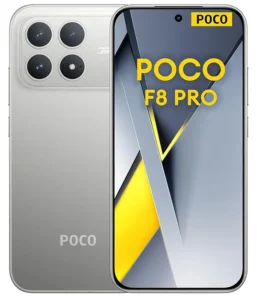
Xiaomi Poco F8 Pro Overview, Features, and Buying Guide
Xiaomi’s Poco F8 Pro arrived in November 2025 as a performance-focused flagship that refuses to compromise. The phone features Qualcomm’s cutting-edge Snapdragon 8 Elite chipset built on 3nm architecture, delivering desktop-class performance in a mobile form factor. This powerhouse processor pairs with 12GB RAM and either 256GB or 512GB of blazing-fast UFS 4.1 storage, creating a system that handles everything from intensive gaming sessions to professional video editing without breaking a sweat.
The display technology impresses with a 6.59-inch AMOLED panel supporting 68 billion colors and a smooth 120Hz refresh rate. Peak brightness reaches an astonishing 3500 nits, making this one of the brightest smartphone screens available. Dolby Vision and HDR10+ support enhance video playback, while Corning Gorilla Glass 7i protects the screen from scratches and drops. The 2560Hz PWM dimming reduces eye strain during extended use, particularly helpful for late-night scrolling.
Camera capabilities center around a versatile triple-lens system. The 50MP main sensor features optical image stabilization and a large 1/1.55″ sensor size for excellent low-light performance. A 50MP telephoto camera provides 2.5x optical zoom for detailed distant shots, while an 8MP ultrawide lens captures expansive landscapes. Video recording reaches 8K at 30fps, though most users will appreciate the stabilized 4K footage at 60fps with HDR10+ support.
Battery life gets a massive boost from the 6210mAh cell, easily lasting through intensive use. The real game-changer comes with 100W wired charging that reaches full capacity in just 37 minutes. Need a quick boost before heading out? Ten minutes of charging provides hours of use. The phone even supports 22.5W reverse wired charging, turning it into a power bank for other devices.
What Makes the Xiaomi Poco F8 Pro Worth Buying?
The Snapdragon 8 Elite processor represents the pinnacle of mobile performance in late 2025. This chip demolishes benchmark scores and translates that power into real-world benefits. Games run at maximum graphics settings with stable frame rates, demanding apps launch instantly, and multitasking between dozens of apps feels effortless. The Oryon V2 CPU cores clock up to 4.32 GHz, while the Adreno 830 GPU handles even the most graphically intensive mobile games without thermal throttling issues.
Charging speed eliminates range anxiety entirely. Plugging in the Poco F8 Pro for less than 40 minutes provides a completely full battery that lasts through heavy daily use. This convenience proves invaluable for people constantly on the move who can’t afford to wait hours for their phone to charge. The 100W charging system uses advanced power delivery protocols including PD3.0, QC3+, and 100W PPS for maximum compatibility.
Display quality reaches professional standards with support for 68 billion colors. This massive color gamut displays subtle gradations that cheaper panels simply cannot reproduce. Content creators who edit photos and videos on their phones get accurate color representation, while everyone else enjoys incredibly vibrant and lifelike visuals. The 3500-nit peak brightness ensures perfect visibility even under harsh direct sunlight, something many flagship phones struggle to achieve.
The camera system punches above its weight class. The telephoto lens sets this phone apart from competitors that often sacrifice zoom capabilities. Getting 2.5x closer to subjects without digital zoom maintains image quality and opens creative possibilities for portrait and wildlife photography. The color spectrum sensor helps the camera accurately reproduce colors in various lighting conditions, producing more natural-looking photos.
Build quality matches flagship expectations with IP68 water resistance protecting against submersion up to 1.5 meters for 30 minutes. The glass and aluminum construction feels premium in hand, while Gorilla Glass 7i on the front provides robust protection against everyday wear. Xiaomi included thoughtful extras like an infrared port for controlling home entertainment systems and appliances.
Audio quality receives serious attention with stereo speakers tuned by Bose and Dolby Atmos support. Music, movies, and games sound rich and immersive without external speakers. The phone supports 24-bit/192kHz Hi-Res audio for audiophiles who demand the best sound quality from their music libraries, along with Hi-Res wireless audio for compatible headphones.
Things to Know Before Choosing the Xiaomi Poco F8 Pro
The display resolution sits at 1156 x 2510 pixels rather than full QHD+. While pixel density remains sharp at 419 ppi and most users won’t notice the difference in daily use, specification enthusiasts might expect higher resolution at this performance level. The AMOLED panel compensates with superior color accuracy and contrast, though the resolution gap becomes apparent when comparing spec sheets directly.
Storage expansion remains impossible without a microSD card slot. Buyers must decide between 256GB and 512GB configurations upfront, as there’s no way to add more storage later. Heavy users who record lots of 8K video or download extensive game libraries should seriously consider the 512GB model despite the price premium.
The weight hits 199 grams, making extended one-handed use tiring for some people. The 8mm thickness combined with this weight creates a substantial device that commands pocket real estate. Users upgrading from lighter phones need time to adjust, though the large battery capacity justifies the extra grams for most buyers.
Software updates and support timelines aren’t specified in the available details. Xiaomi’s track record with Poco devices varies, and potential buyers should research the company’s commitment to Android version updates and security patches. The phone ships with Android 16 and HyperOS 3, which provides a modern experience at launch, but long-term software support remains uncertain without official commitments.
Wireless charging doesn’t make the cut. Despite the premium positioning and 100W wired charging, users who prefer the convenience of wireless charging pads need to look elsewhere. This omission seems particularly glaring given the phone’s flagship aspirations and price point where competitors routinely include wireless charging.
The front camera uses a 20MP sensor without autofocus, which might disappoint selfie enthusiasts and video call professionals. While 20MP provides good detail, the lack of autofocus means the camera relies on fixed focus that works best at arm’s length. Users who regularly shoot selfies with multiple people or at varying distances might find this limitation frustrating.
Is the Xiaomi Poco F8 Pro Right for You?
Mobile gamers have found their ideal device. The Snapdragon 8 Elite handles every current mobile game at maximum settings with room to spare. The combination of a smooth 120Hz display, powerful GPU, and effective thermal management means marathon gaming sessions stay smooth and responsive. The massive battery ensures games don’t drain power too quickly, while the infrared port even lets gamers use the phone as a universal remote for gaming consoles.
Power users and multitaskers benefit tremendously from the 12GB RAM and flagship processor. Switching between demanding apps, running multiple productivity tools simultaneously, and keeping dozens of browser tabs open presents no challenge. The UFS 4.1 storage ensures apps and files load nearly instantaneously, eliminating frustrating wait times during busy workdays.
Content creators get professional-level tools in their pocket. The 8K video recording capability future-proofs content, while 4K 60fps with HDR10+ produces stunning footage ready for upload. The color spectrum sensor helps maintain accurate colors across different lighting scenarios, crucial for maintaining consistent quality. The bright display allows for on-location editing with accurate preview of the final product.
Photography enthusiasts on a budget should weigh their priorities carefully. The camera system delivers strong performance with optical image stabilization and telephoto zoom, features often reserved for pricier flagships. Low-light photography benefits from the large main sensor, though dedicated camera phones still edge ahead in computational photography. The system handles most photography needs admirably without reaching ultimate flagship territory.
Heavy users and road warriors appreciate the exceptional battery life and rapid charging. The 6210mAh capacity easily survives full days of intensive use including navigation, streaming, video calls, and gaming. The 100W charging means even completely drained batteries return to life during a quick lunch break, eliminating the careful battery management many phones require.
Tech enthusiasts who demand cutting-edge specifications find excellent value here. The Snapdragon 8 Elite, UFS 4.1 storage, advanced display technology, and comprehensive connectivity options including Wi-Fi 7 place this phone at the technological forefront. The inclusion of extras like an IR blaster and reverse charging shows Xiaomi hasn’t forgotten practical features while chasing benchmark scores.
Best Alternatives to the Xiaomi Poco F8 Pro
The Samsung Galaxy S24 Plus competes with refined software, better camera processing, and guaranteed long-term updates. Samsung’s ecosystem integration and One UI polish appeal to users who prioritize software experience over raw specifications. Trade-offs include slightly slower charging and a smaller battery compared to the Poco F8 Pro.
OnePlus 13 offers similar flagship performance with faster 120W charging and wireless charging support. OxygenOS provides a cleaner interface than HyperOS for users who prefer minimal customization. The curved display design divides opinions, whereas the Poco F8 Pro uses a flat screen that some users prefer.
Google Pixel 9 Pro dominates in computational photography with AI-powered features that produce consistently excellent photos. Google’s seven-year update commitment and pure Android experience attract users who value longevity and simplicity. However, the Tensor G4 processor lags behind the Snapdragon 8 Elite in raw gaming performance.
Xiaomi 15 Pro from the mainline series brings wireless charging, better build materials, and superior cameras at a higher price. Users willing to spend more get a more refined overall package, though the performance difference remains minimal thanks to the shared Snapdragon 8 Elite chipset.
Realme GT 7 Pro delivers competitive specs at aggressive pricing with similar charging speeds. The camera system lacks the telephoto lens found on the Poco F8 Pro, but the lower price point makes it attractive for performance-focused buyers on stricter budgets.
Xiaomi Poco F8 Pro Frequently Asked Questions
How long does it take to fully charge the Poco F8 Pro?
The Xiaomi Poco F8 Pro charges from 0% to 100% in just 37 minutes using the included 100W wired charger. This rapid charging capability means users can get several hours of battery life from just 10-15 minutes of charging. The phone supports multiple fast charging protocols including PD3.0, QC3+, and 100W PPS for maximum flexibility with third-party chargers.
Does the Poco F8 Pro support wireless charging?
No, the Xiaomi Poco F8 Pro does not support wireless charging. The phone relies exclusively on 100W wired charging via the USB Type-C port. However, it does offer 22.5W reverse wired charging, allowing it to charge other devices through a cable connection.
Is the Poco F8 Pro waterproof?
Yes, the Xiaomi Poco F8 Pro carries an IP68 rating, providing dust-tight protection and water resistance up to 1.5 meters for 30 minutes. This protection handles accidental drops in water, rain exposure, and dust environments. Users should still avoid deliberate submersion and ensure all ports are dry before charging.
What makes the Snapdragon 8 Elite processor special?
The Snapdragon 8 Elite represents Qualcomm’s flagship mobile processor built on advanced 3nm technology. It features Oryon V2 CPU cores reaching 4.32 GHz and the powerful Adreno 830 GPU, delivering exceptional performance for gaming, multitasking, and demanding applications. This chipset provides desktop-class processing power while maintaining mobile efficiency, making it one of the most powerful smartphone processors available.
Can the Poco F8 Pro storage be expanded?
No, the Xiaomi Poco F8 Pro does not include a microSD card slot for storage expansion. Buyers must choose between the 256GB or 512GB internal storage configurations at purchase. Both variants use UFS 4.1 storage technology for extremely fast read and write speeds. The phone supports dual SIM configurations with Nano-SIM slots and eSIM capabilities.