
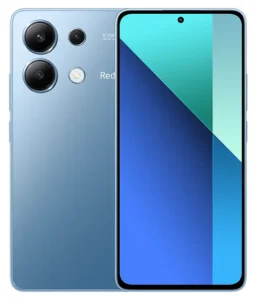
The Xiaomi Redmi Note 13 arrived in January 2024 as a mid-range smartphone that balances performance with affordability. Built around the Mediatek Dimensity 6080 chipset and featuring a striking 6.67-inch AMOLED display, this device targets users who want premium features without breaking the bank. The phone’s 108MP main camera stands out as its signature feature, paired with water resistance and fast charging capabilities that compete well above its price segment.
Xiaomi equipped this model with a 5000mAh battery and 33W charging, ensuring you won’t spend half your day tethered to a wall outlet. The display refreshes at 120Hz and can reach 1000 nits peak brightness, making outdoor visibility surprisingly strong. With multiple memory configurations available—from 6GB RAM with 128GB storage up to 12GB RAM with 512GB storage—buyers can choose based on their budget and usage needs.
The device runs Android 13 out of the box with HyperOS layered on top, and Xiaomi promises up to two major Android upgrades. This commitment to software support gives the phone a longer useful lifespan than many competitors in the same price bracket. The IP54 rating adds peace of mind against accidental splashes, though it’s not designed for submersion.
What Makes the Xiaomi Redmi Note 13 Worth Buying?
The 108MP primary camera represents the most compelling reason to consider this phone. Xiaomi uses a large 1/1.67″ sensor with 0.64µm pixel size and phase detection autofocus, producing detailed shots with good color accuracy in favorable lighting. The f/1.7 aperture lets in plenty of light, helping with evening photography. An 8MP ultrawide camera complements the main sensor, offering versatility for landscape shots and group photos.
Display quality punches well above the phone’s weight class. The 6.67-inch AMOLED panel delivers vibrant colors thanks to its 1B color depth, while the 120Hz refresh rate makes scrolling and animations feel fluid. The 1920Hz PWM dimming reduces eye strain during extended use, a feature typically reserved for flagship models. Peak brightness of 1000 nits ensures the screen remains legible even under direct sunlight.
Battery life consistently impresses with the 5000mAh capacity easily lasting a full day of moderate use. Heavy users who stream video, play games, and browse social media can expect to make it through without hunting for a charger. The 33W wired charging refills the battery reasonably quickly—you’ll get a meaningful charge during a lunch break.
Value-conscious buyers appreciate the memory options. The base model with 6GB RAM handles everyday tasks smoothly, while the 12GB variant with 512GB storage accommodates power users who install dozens of apps and store large media libraries locally. UFS 2.2 storage keeps app loading times brisk compared to slower eMMC solutions found in budget competitors.
Build quality feels solid despite the plastic frame and back. Gorilla Glass 5 protects the front panel from scratches and minor drops. The IP54 rating means the phone shrugs off rain and accidental beverage spills, though you shouldn’t take it swimming.
Things to Know Before Choosing the Xiaomi Redmi Note 13
The Mediatek Dimensity 6080 chipset handles routine tasks well but shows its limitations with demanding games. Titles like Genshin Impact or Call of Duty Mobile require lowered graphics settings for smooth gameplay. The Mali-G57 MC2 GPU simply doesn’t have the horsepower for sustained high-framerate gaming at maximum quality. Casual games and older titles run fine, but hardcore mobile gamers should look elsewhere.
Video recording maxes out at 1080p 30fps for both front and rear cameras. Competitors in this price range increasingly offer 4K recording, making this limitation noticeable. The lack of stabilization beyond basic electronic image stabilization means handheld footage appears shaky compared to phones with optical stabilization.
The 16MP selfie camera produces decent results in good lighting but struggles more than the rear cameras when conditions aren’t ideal. The f/2.4 aperture doesn’t gather as much light as the rear camera’s f/1.7 opening. Social media posts and video calls look fine, but selfie enthusiasts might find the quality merely adequate rather than impressive.
Software experience includes HyperOS, which layers Xiaomi’s customizations over Android. Some users love the additional features and customization options, while others prefer stock Android’s cleaner approach. The interface includes advertising in some system apps depending on your region, though most ads can be disabled through settings.
The hybrid SIM tray forces a choice between dual SIM functionality and expandable storage. If you need two phone numbers active simultaneously, you can’t add a microSD card. This trade-off frustrates users who want both features.
Charging speed at 33W feels modest compared to competitors offering 67W or even 120W charging. While 33W isn’t slow, it takes roughly an hour to fully charge the 5000mAh battery. Users upgrading from older phones won’t mind, but those coming from faster-charging devices might notice the difference.
Is the Xiaomi Redmi Note 13 Right for You?
Students and budget-conscious buyers find excellent value here. The combination of capable performance for productivity apps, long battery life for all-day campus use, and a quality camera for social media makes this phone ideal for young users. The expandable storage (if you skip the dual SIM setup) helps store lecture recordings and study materials.
Photography enthusiasts on a budget can experiment with the 108MP main camera, though serious photographers should temper expectations. The sensor produces impressive detail in good lighting, making it suitable for Instagram, travel photography, and capturing memories. Just don’t expect flagship-level low-light performance or pro-grade video capabilities.
Social media users and content creators appreciate the bright AMOLED display for viewing and editing content. The 120Hz refresh rate makes browsing feeds feel responsive. However, the limited video recording capabilities mean YouTubers and TikTok creators who prioritize video quality might feel constrained.
Business users and professionals seeking a reliable secondary phone or work device benefit from the dual SIM support, decent performance for email and productivity apps, and professional-looking design. The IP54 rating provides basic protection during commutes and business travel.
Mobile gamers should probably skip this model. The Dimensity 6080 handles casual gaming but struggles with graphics-intensive titles. Competitors with Snapdragon 695 or better chipsets offer superior gaming performance at similar prices.
Users upgrading from older budget phones (3+ years old) will notice substantial improvements across the board—better display, faster performance, superior cameras, and more storage. The jump feels significant and worthwhile.
Best Alternatives to the Xiaomi Redmi Note 13
The Samsung Galaxy A25 5G competes directly with similar specifications but offers Samsung’s longer software support commitment and One UI interface. Samsung’s ecosystem integration appeals to users already invested in Galaxy products, though the camera may not match the Redmi Note 13’s 108MP sensor in raw detail.
Realme 11 Pro presents another strong alternative with comparable specs and often competitive pricing. Realme’s UI offers different customization options, and some regional variants include faster charging speeds. The choice often comes down to brand preference and local availability.
Poco X5 shares components with the Redmi Note 13 under Xiaomi’s broader ecosystem but sometimes offers better value through aggressive pricing. Performance sits in a similar range, making this worth checking if you’re flexible on brand identity.
Motorola Moto G54 appeals to users preferring stock-adjacent Android experiences. Motorola’s cleaner software approach and thoughtful features like ready-for desktop mode provide different advantages, though camera performance typically trails Xiaomi’s 108MP offering.
Xiaomi Redmi Note 13 Frequently Asked Questions
Does the Xiaomi Redmi Note 13 support 5G connectivity?
Yes, the Xiaomi Redmi Note 13 supports 5G networks along with GSM, HSPA, and LTE. The Mediatek Dimensity 6080 chipset includes integrated 5G modem capabilities, allowing you to take advantage of faster data speeds where 5G coverage is available. The phone supports both sub-6GHz 5G bands, though specific band support may vary by region and carrier. Keep in mind that 5G availability and performance depend on your carrier’s network infrastructure and your location.
Can the Xiaomi Redmi Note 13 record 4K video?
No, the Xiaomi Redmi Note 13 is limited to 1080p video recording at 30fps for both the rear and front cameras. While the 108MP main camera captures impressive still photos with excellent detail, the video recording capabilities remain firmly in Full HD territory. This limitation applies to all camera modules including the ultrawide lens. If 4K video recording is essential for your needs, you’ll need to consider alternative smartphones in this price range that offer higher resolution video capture.
How long does the battery last on the Xiaomi Redmi Note 13?
The 5000mAh battery typically provides a full day of usage for most users with moderate activity including social media browsing, messaging, email, and some video streaming. Light users can easily stretch battery life into a second day. Heavy users who game extensively, stream video for hours, or use navigation apps with screen brightness maxed out should still get through most of the day before needing to recharge. The 33W fast charging replenishes the battery to approximately 50% in about 30 minutes and achieves a full charge in roughly 60-70 minutes.
Is the Xiaomi Redmi Note 13 waterproof?
The Xiaomi Redmi Note 13 carries an IP54 rating, which means it’s protected against dust and can handle water splashes from any direction. However, this is not the same as full waterproofing. You can use the phone in light rain or near a sink without worry, and it should survive accidental spills. The IP54 rating does not protect against submersion, so you shouldn’t take this phone swimming or use it in the shower. For true waterproof protection, you’d need a phone with IP67 or IP68 rating.
Can I use two SIM cards and a memory card simultaneously?
No, the Xiaomi Redmi Note 13 uses a hybrid dual SIM tray, which means you must choose between using two nano-SIM cards or one nano-SIM card plus one microSDXC memory card. You cannot use both dual SIM functionality and expandable storage at the same time. This is a common design choice in mid-range smartphones to save space. If dual SIM capability is essential for managing personal and work numbers, you’ll need to rely on the phone’s internal storage rather than expansion. The device offers multiple internal storage options up to 512GB to accommodate users who need substantial space without expandable storage.