
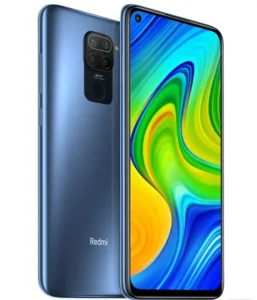
Why Buy the Xiaomi Redmi Note 9?
The Xiaomi Redmi Note 9 represents exceptional value for budget-conscious buyers who refuse to sacrifice essential features. Its massive 5020mAh battery stands as the phone’s flagship feature, delivering two full days of moderate use or easily powering through a demanding workday. This capacity outperforms many devices in higher price brackets, making battery anxiety a thing of the past.
Photography capabilities exceed expectations for this price point. The 48MP primary camera with PDAF captures detailed shots in good lighting conditions, while the 8MP ultrawide lens with its expansive 118° field of view brings versatility to your photography. Whether capturing group photos or sweeping landscapes, the camera system adapts to various shooting scenarios. The dedicated macro lens adds creative options for close-up detail shots.
Storage flexibility sets this device apart from competitors that eliminate expandable memory. The dedicated microSDXC card slot allows users to expand storage without sacrificing the dual SIM functionality. This thoughtful design means keeping both work and personal numbers active while still adding storage for photos, videos, and apps.
The 6.53-inch IPS LCD display delivers sharp visuals with Full HD+ resolution at 395 ppi. Corning Gorilla Glass 5 protection guards against everyday scratches and minor drops. The 450 nits typical brightness ensures readable content in most lighting conditions, though direct sunlight presents some challenges common to IPS technology.
Practical features often missing from modern smartphones make a welcome return. The 3.5mm headphone jack eliminates the need for dongles or adapter tracking. FM radio with a built-in antenna provides entertainment without consuming mobile data. The infrared port transforms the phone into a universal remote for home electronics.
Key Considerations Before Buying the Xiaomi Redmi Note 9
Processing power falls into the mid-range category with the MediaTek Helio G85 chipset. Daily tasks like social media browsing, messaging, and video streaming run smoothly. However, demanding 3D games require reduced graphics settings for optimal performance. The Mali-G52 MC2 GPU handles casual gaming well but struggles with graphically intensive titles at maximum settings.
The display uses IPS LCD technology rather than AMOLED. This means good color accuracy and wide viewing angles, but blacks appear as dark gray rather than true black. The technology also consumes more battery when displaying dark content compared to AMOLED screens. Outdoor visibility at 450 nits works for most situations, though flagship devices often reach 800-1000 nits for superior sunlight legibility.
Video recording maxes out at 1080p resolution and 30fps. Content creators seeking 4K video or high frame rate slow-motion will find these limitations restrictive. The stabilization relies on basic EIS rather than advanced gyro-stabilization, resulting in shakier footage during movement compared to more expensive alternatives.
RAM configurations range from 3GB to 6GB across different variants. The 3GB model shows its limitations when running multiple apps simultaneously, with occasional slowdowns during heavy multitasking. Users who keep numerous apps open should strongly consider the 4GB or 6GB variants for smoother long-term performance.
The plastic frame and back reduce manufacturing costs but feel less premium than glass or metal alternatives. The 199-gram weight and 8.9mm thickness make this a substantial device that won’t suit everyone’s preference for slim, lightweight phones. The water-repellent coating offers basic splash protection but lacks official IP rating for submersion protection.
Who Should Consider the Xiaomi Redmi Note 9?
Students and young professionals on tight budgets find tremendous value here. The combination of large battery, expandable storage, and capable cameras covers essential smartphone needs without breaking the bank. The ability to add a large microSD card means storing extensive study materials, photos, and media libraries without worrying about cloud storage subscriptions.
Travelers benefit from the dual SIM capability and exceptional battery life. Maintaining two phone numbers for different countries while still having emergency power for GPS navigation and communication becomes effortless. The FM radio provides free entertainment during long flights or commutes without draining data plans.
Casual users who prioritize battery life above cutting-edge performance will appreciate going multiple days between charges. Parents buying phones for teenagers, seniors needing reliable communication devices, or anyone tired of daily charging rituals find this battery capacity liberating.
Media consumers who watch videos, browse social media, and read content for hours daily get excellent screen real estate. The 6.53-inch display provides comfortable viewing without straining eyes, while the battery capacity ensures binge-watching sessions don’t end prematurely.
Budget photographers interested in mobile photography as a hobby rather than a profession get solid image quality. The 48MP sensor captures enough detail for social media sharing and casual prints. The ultrawide lens adds creative options without requiring expensive camera equipment.
Alternatives to the Xiaomi Redmi Note 9
The Samsung Galaxy A21s offers similar battery capacity with a slightly different feature set. Samsung’s One UI interface provides a cleaner software experience with longer update support. The trade-off comes in camera resolution, with the A21s using a 48MP quad camera setup but different sensor characteristics and processing.
Realme 6 presents a more gaming-focused alternative with a 90Hz display and MediaTek Helio G90T processor. The higher refresh rate screen and slightly more powerful chipset benefit mobile gamers. Battery capacity drops to 4300mAh, though faster 30W charging partially compensates for the smaller cell.
Motorola Moto G8 Plus provides near-stock Android experience for users who prefer minimal software customization. The 4000mAh battery offers less capacity than the Note 9, but cleaner software potentially improves efficiency. Camera capabilities differ with a 48MP main sensor but different lens configurations.
Nokia 5.3 appeals to buyers prioritizing software updates and build quality. HMD Global’s commitment to Android updates and quarterly security patches exceeds Xiaomi’s track record. The 4000mAh battery and Snapdragon 665 processor represent different compromises, with slightly better processing but reduced battery capacity.
The Poco M2 Pro, also from Xiaomi’s ecosystem, offers more processing power with Snapdragon 720G and 33W fast charging. The higher price point brings meaningful performance improvements for users willing to stretch their budget slightly. Battery capacity matches at 5000mAh while charging speed nearly doubles.
Xiaomi Redmi Note 9 Frequently Asked Questions
Does the Xiaomi Redmi Note 9 support fast charging?
The Redmi Note 9 includes 18W wired fast charging capability, which fully charges the 5020mAh battery in approximately 2.5 hours. While not the fastest charging technology available, this speed balances charging time with battery longevity. The device also supports 9W reverse wired charging, allowing it to function as a power bank for other devices in emergency situations.
Can the Xiaomi Redmi Note 9 be upgraded to Android 12?
Yes, the Redmi Note 9 originally shipped with Android 10 and MIUI 12, but Xiaomi has provided an upgrade path to Android 12 with MIUI 13. This update brings improved privacy controls, enhanced performance optimizations, and newer security patches. Users should check for system updates in the settings menu to ensure they’re running the latest available software version.
How many cameras does the Xiaomi Redmi Note 9 have?
The device features a quad-camera setup on the rear: a 48MP primary wide camera with PDAF, an 8MP ultrawide camera with 118° field of view, a 2MP macro camera with autofocus, and an auxiliary depth sensor. The front houses a 13MP selfie camera. This configuration provides versatility for different shooting scenarios, from wide landscapes to close-up macro photography.
Does the Xiaomi Redmi Note 9 have NFC for contactless payments?
NFC availability depends on the specific model variant. The M2003J15SG model includes NFC functionality for contactless payments and data transfer, while the M2003J15SS variant lacks this feature. Buyers interested in mobile payment services like Google Pay should verify their regional model includes NFC before purchasing, as this feature varies by market.
Is the Xiaomi Redmi Note 9 waterproof?
The Redmi Note 9 is not waterproof but includes a water-repellent coating that provides basic protection against light splashes and rain. This coating helps prevent damage from accidental spills or light exposure to water, but the device lacks an official IP rating for water or dust resistance. Users should avoid submerging the phone in water or exposing it to heavy rain, as the coating provides only minimal protection.